


How "Nadezhda" sailed around the world: the story of the feat of Russian sailors shared at the National Centre RUSSIA
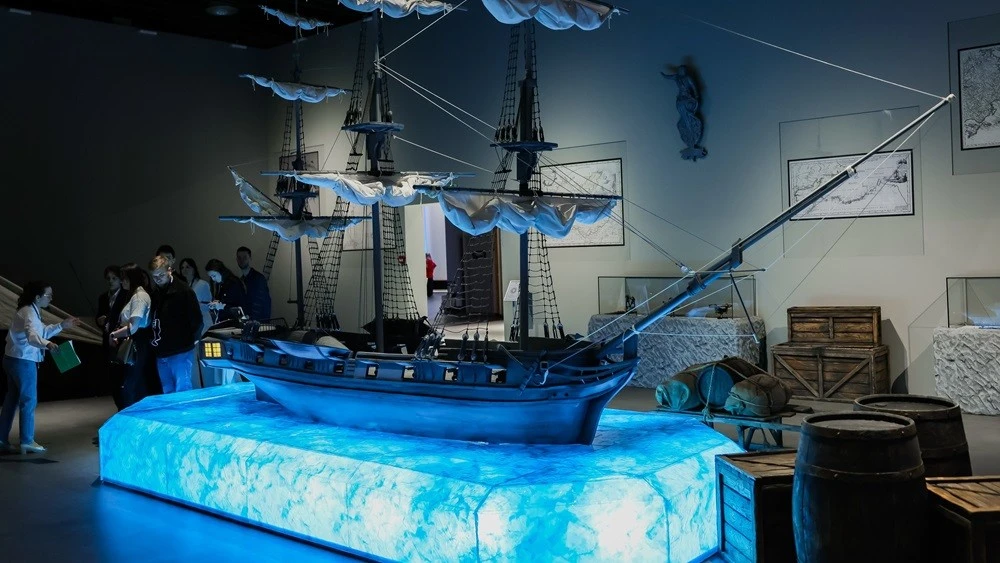
The first Russian circumnavigation of the globe is not merely an important page in history — it is a true human feat. It was accomplished by the sailors of the sloop "Nadezhda" ("Hope") under the command of Ivan Kruzenshtern in 1803–1806. The story of this voyage can be discovered at the exposition "Geography Lessons" at the National Centre RUSSIA. There, visitors can imagine themselves as sailors aboard the legendary vessel, and see how one of the boldest undertakings of its era comes to life.
"The period lasting from the end of the eighteenth century to the beginning of the nineteenth century was the golden age of great Russian expeditions. At the exposition, visitors can see the flagship vessel of the first Russian circumnavigation, undertaken in 1803–1806 under the command of Ivan Kruzenshtern and Yuri Lisyansky. This was a true feat by our sailors. Most interestingly, the crew returned home almost in full, with the exception of only a few people. For such a long voyage, that was a great rarity," said Natalia Didenko, a guide at the National Centre RUSSIA.
"Nadezhda" and "Neva" departed from Kronstadt on 7 August 1803. Their route ran across the Atlantic Ocean, around the harsh Cape Horn, and then into the Pacific Ocean. After calling at the Hawaiian Islands, "Nadezhda" headed for Kamchatka, while "Neva" sailed towards the shores of Alaska.
Preparations for the voyage began long before the ships left Kronstadt. Both sea-going vessels were equipped specially for the expedition with the most advanced instruments of the time — marine chronometers, and astronomical and physical devices. The expedition had several important objectives: to establish regular sea communication between the European part of Russia and its Far Eastern territories, to develop diplomatic relations with Japan, and to open the Chinese market for trade in Russian furs. While the mission to establish diplomatic ties with Japan was unsuccessful, the tasks of developing trade with China and studying the eastern possessions of the empire were fulfilled.
Not only sailors and officers were gathered on board "Nadezhda" and "Neva". Scientists, military specialists and trade agents also joined the voyage. The expedition was at once a maritime journey, a scientific study and a diplomatic mission. Along the route, maps were refined, coastlines were described, and islands and straits — whose existence had previously only been assumed — were recorded. Over the three years of the voyage, Russian sailors accomplished a true feat: Kruzenshtern’s expedition charted thousands of kilometres of the coastlines of Sakhalin, the Kuril Islands and Japan, removing many "blank spots" from the map of the Pacific Ocean.
During the passages, measurements of water temperature at different depths were carried out, currents were studied, and observations were made of sea luminescence, tides and ebb tides. These systematic observations became one of the foundations of a new marine science — oceanography. In addition, the expedition proved that Russia could independently supply its possessions in Alaska by sea, bypassing the long overland route through Siberia. But most importantly, it challenged an established belief. The first Russian circumnavigation permanently dispelled the idea that long ocean voyages were possible only for the English or the Dutch. Russia declared itself a global maritime power, strengthening its prestige on the international stage.
The result of the voyage was not only a triumphant return. Kruzenshtern described the circumnavigation in detail in the three-volume work "Voyage around the world in 1803, 1804, 1805 and 1806 on the ships 'Nadezhda' and 'Neva'". The Atlas of the Southern Seas was also created, and was used for many years by sailors from different countries. The expedition made a major contribution to the study of the World Ocean, helped advance many fields of natural science, became an important milestone in the history of the Russian navy, and influenced the geopolitical balance of the nineteenth century.

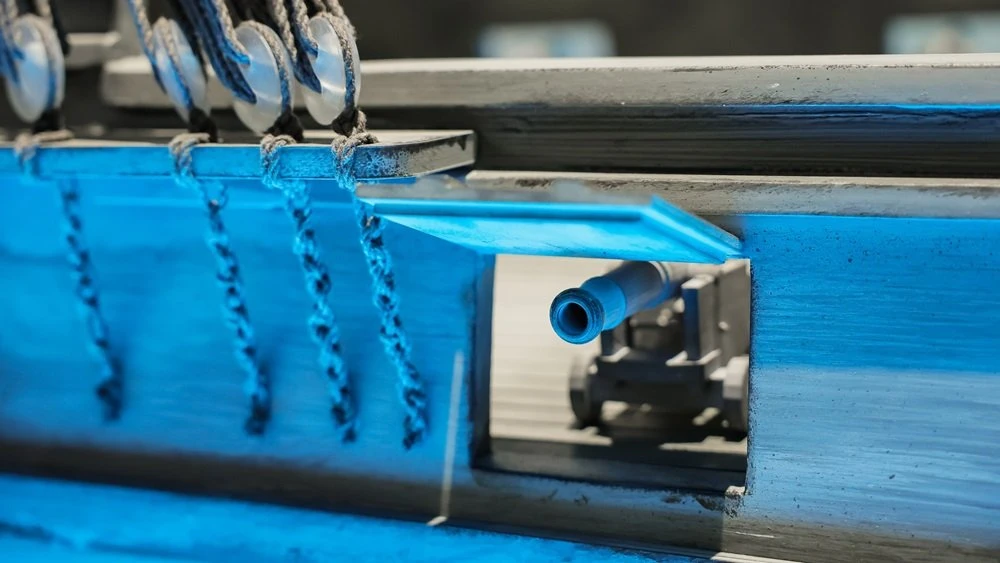
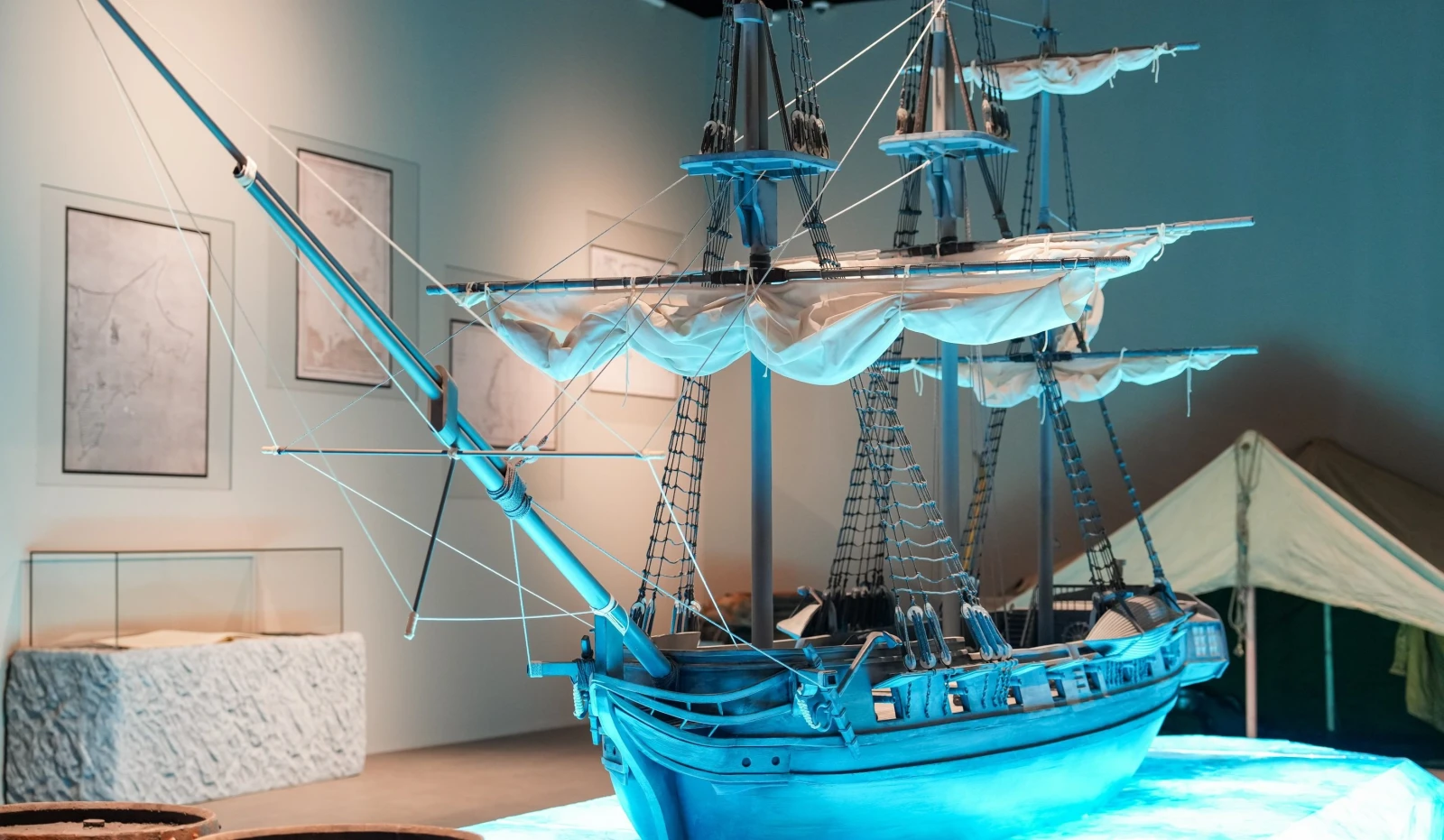
At the exposition "Geography Lessons" at the National Centre RUSSIA, a model of the ship "Nadezhda" is on display. Guests can examine the vessel’s details, imagine how sailors lived and stood watch, and how they endured storms. There is also an unusual little "resident" aboard — a small mouse that interacts with visitors. The exposition does more than simply display artefacts — it tells stories of courage, resilience and faith in the country.


The expert shared with the students not only professional secrets, but also her personal success story.

The results of the 2025-2026 season of the Young Tour Guides School of Russia project were summed up at the National Centre RUSSIA.


