


Anthropologist Stanislav Drobyshevsky opens lecture series at the National Centre RUSSIA with a talk on the peoples of Siberia
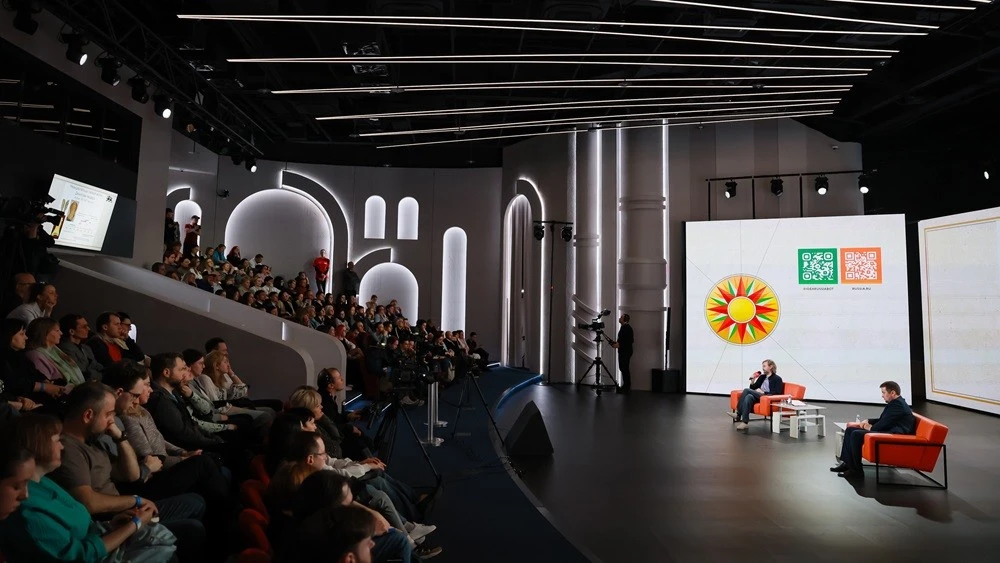
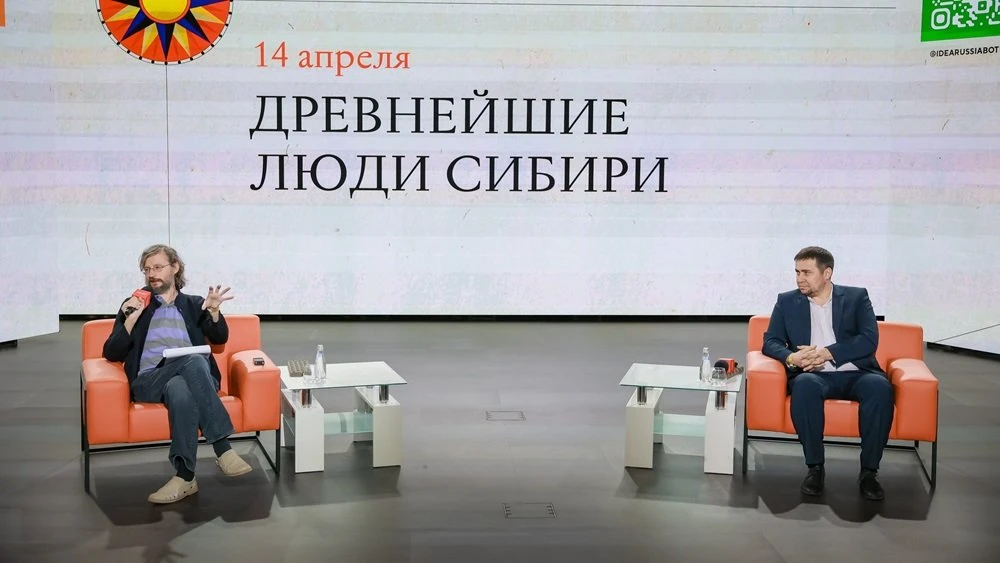
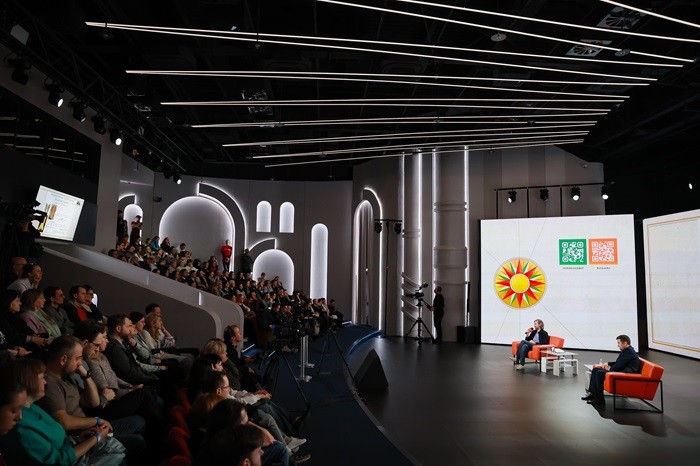
A new educational project, timed to coincide with the exposition "Geography Lessons" and titled "Conversations with Stanislav Drobyshevsky", has launched at the National Centre RUSSIA. The theme of the first meeting was "The Earliest Humans of Siberia". During the session, anthropologist, Associate Professor at Lomonosov Moscow State University and founder of the "Drobyshevsky’s Projects" movement, Stanislav Drobyshevsky spoke about the history of peoples who migrated through this region over centuries, as well as recent discoveries and anthropological research across the country.
According to Stanislav Drobyshevsky, a key role in the study of ancient humans has been played by a unique archaeological site — Denisova Cave in the Altai mountains. The expert noted that traces of three branches of humanity have been discovered there. Researchers continue to uncover new insights thanks not only to physical remains, but also to genetic material, as valuable information can be extracted even from tiny fragments and soil samples.
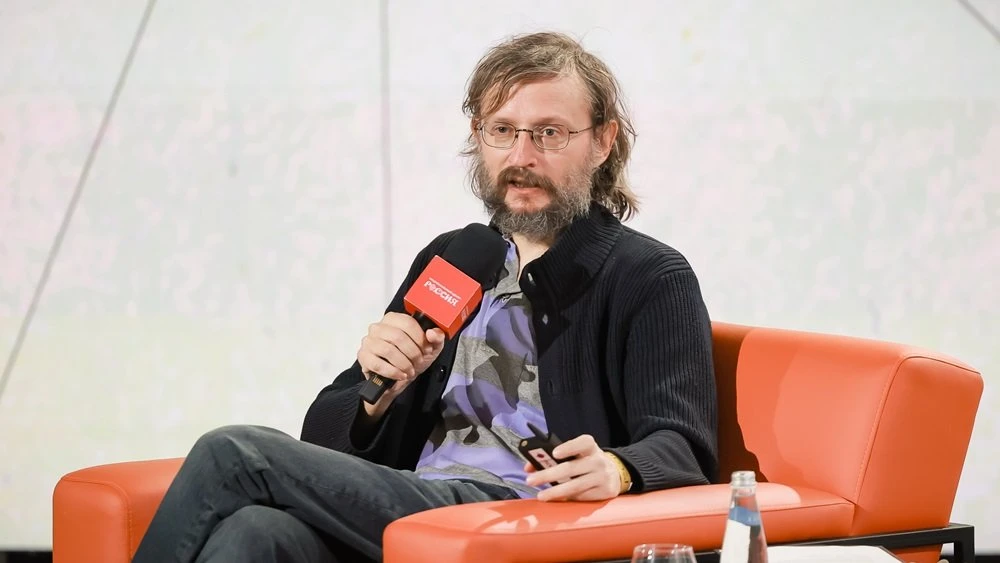
"The Middle Palaeolithic Age was created by Neanderthals; but as it has recently been established, Denisovans who were discovered in the Altai for the first time, also took part in it. Denisova Cave contains remains of all three groups: Neanderthals, Denisovans and sapiens — both ancient and modern. It is no coincidence that anthropologist Marina Mednikova called it the ‘cave of all humans’. The cave’s unique feature is that although bone preservation is poor, DNA is preserved exceptionally well — it can be found in the tiniest bone fragments and even in the soil. Soil samples have yielded a vast amount of genetic material," said the anthropologist.
Continuing his discussion of Denisovans, he also mentioned further discoveries: teeth of this ancient human group have been found in the Caucasus and in Taiwan. He pointed out that, unlike modern humans, they completely lacked wisdom teeth.
The discussion partner of the project’s host was Alexei Vodorezov, Candidate of Geographical Sciences, Associate Professor and Head of the Department of Geography, Ecology and Tourism at Yesenin Ryazan State University, and a lecturer within the Drobyshevsky’s Movement. According to him, Siberia is often perceived in the public imagination as something uniform: taiga, frost and vast distances. In reality, however, this territory is not only enormous but also incredibly diverse. It is precisely this diversity, the expert believes, that has led to the emergence of many different peoples, each with its own unique culture and traditions.
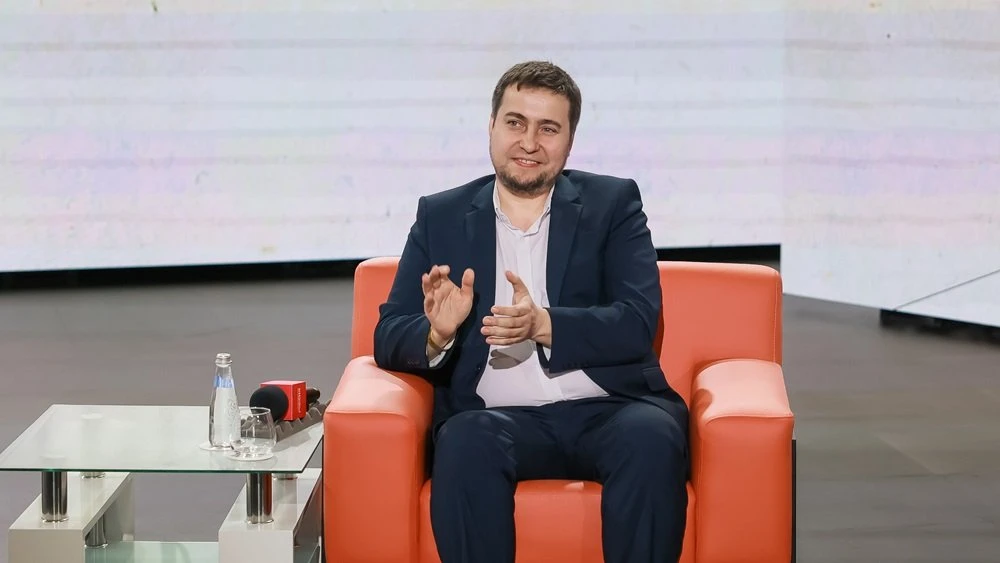
"When studying geography, we usually know the European part of Russia in some detail. But once people move beyond the Urals, distances seem endless, and everything appears uniform and homogeneous. In fact, Western Siberia is flat, Central Siberia rises high like a plateau, and the mountains of Southern Siberia resemble a patchwork of ridges and intermountain basins. In such conditions of isolation and diversity, species formation occurs among animals and plants, while among humans, different peoples emerge, whose traditions and customs are shaped by the landscape and climate of specific territories," explained the geographer.
During the discussion of ecology and natural resources, the speaker addressed Lake Baikal, highlighting its vast water reserves. It contains more than 23,000 cubic kilometres of fresh water, thus exceeding the total annual flow of all rivers in Russia. At the same time, Baikal’s water is exceptionally pure.
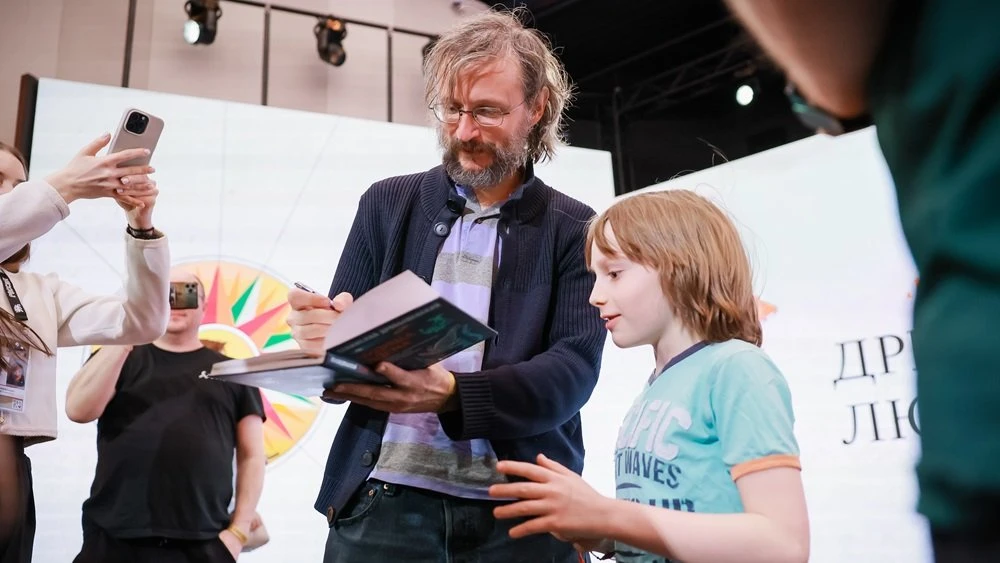
The experts also explored the history of the settlement of Siberia — a region considered by scientists to be one of the most thoroughly studied in terms of human diversity. Guests learned why this vast territory became a kind of crossroads for many peoples, and what distinguishes the culture and daily life of ancient Siberian populations from those of other regions of Eurasia.
For millennia, different tribes passed through Siberian lands: some stayed there, others moved on or disappeared over time, leaving behind mysteries for researchers. Speaking about major discoveries in the study of ancient Siberian populations, Stanislav Drobyshevsky cited recent research at Afontova Gora site on the outskirts of Krasnoyarsk: "There, during bridge construction, a vast ancient human settlement was excavated. It had been known since Soviet times, but only recently was it properly excavated, revealing a wealth of new findings."
Alexei Vodorezov added that archaeological sites in Siberia and across the country are crucial for preserving cultural heritage, and therefore information about them should be included in History and Geography school textbooks:
"People often know something about ancient humans who lived in caves, for example in present-day Spain and France. But when it comes to Russian caves… perhaps someone will recall Kapova Cave in the Shulgan-Tash reserve in Bashkortostan, where the first rock paintings in Russia were discovered. Yet Siberian sites remain largely unknown, which is why they need to be presented and discussed more widely."
The meeting concluded with a Q&A session, where guests had the opportunity to talk with the speakers and share their own observations. The audience asked what archaeological discoveries turned out to be the most interesting and unexpected for the speakers; what are the factors influencing continental movement today; how to distinguish reliable scientific facts from pseudoscientific theories; and what are the trends of the future development of anthropology, genetics and other research fields.
"Conversations with Stanislav Drobyshevsky" is an original educational project of the National Centre RUSSIA, implemented with the support of the public movement for science outreach "Drobyshevsky Projects". Through dialogues with experts, visitors can learn about the cultural and historical heritage of the peoples of the country, and new archaeological discoveries and their role in understanding the evolution of contemporary ethnic and cultural communities.
Visitors can attend the exposition "Geography Lessons" and upcoming events of the project free of charge with prior registration on the website russia.ru. Information about event dates is available in the "Events" section.
Event photobank

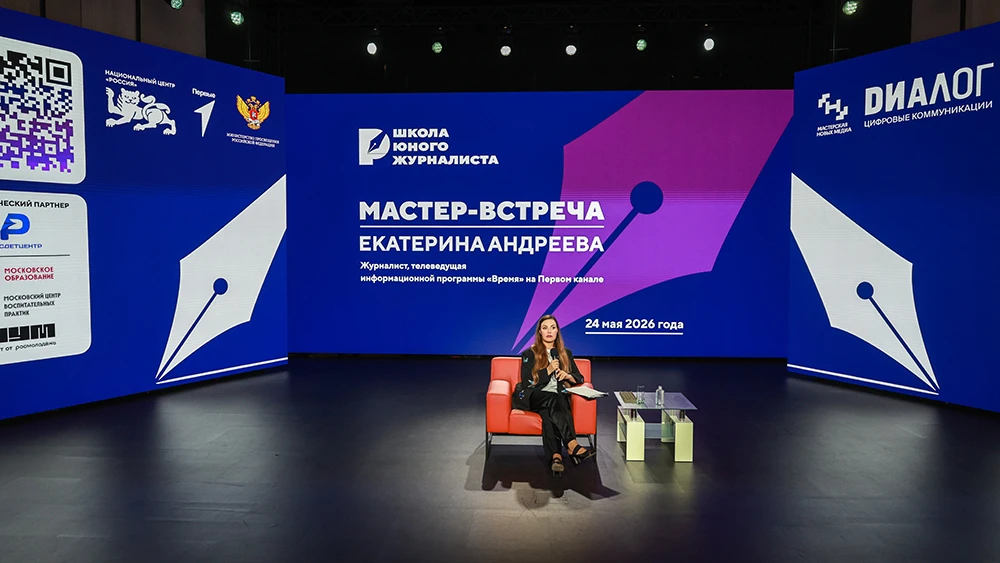
The National Centre RUSSIA is continuing to accept applications for the second season of the Young Journalists School.