


"The epoch of Vrubel": 170th birth anniversary of the genius who transformed Russian art
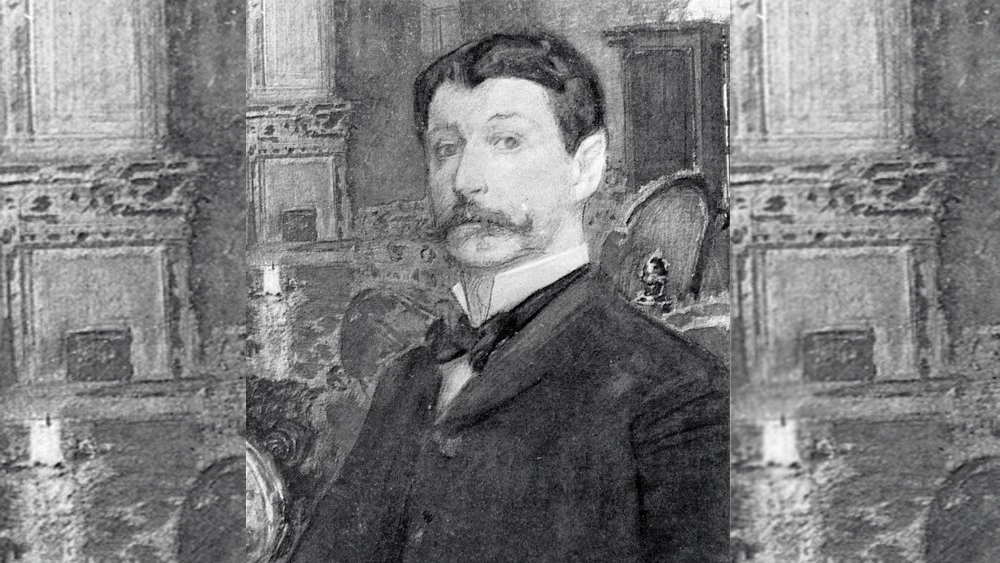
"Future generations... will look back on the last decades of the 19th century as the 'epoch of Vrubel'" — these words by the renowned critic and memoirist Alexander Benois proved prophetic. Today, 170 years after the master's birth, he is still spoken of as the artist who transformed Russian art, and his works are a particular source of pride for the Tretyakov Gallery and other museum collections.
From Kiev to Moscow
Mikhail Alexandrovich Vrubel was born on 17 March 1856 in Omsk, into the family of a military lawyer. The future artist's childhood was spent in constant relocation from city to city: Astrakhan, St Petersburg, Saratov, Odessa. His aptitude for drawing appeared early, yet neither Vrubel himself nor his family considered an artistic career for him. The future artist heeded his father and honoured the family tradition by graduating from the Faculty of Law at St Petersburg University. However, art turned out to be stronger — at the age of 24, he enrolled in the Academy of Arts.
Vrubel's true schooling began in Kiev, where he was invited to restore the frescoes of St Cyril's Church. There, he not only renewed the ancient paintings but also created his own monumental works, such as the "Lamentation", a piece that art historians rank alongside global masterpieces. It was also in Kiev that the artist first experienced the inspiration that would later manifest in his "Demon".
A new chapter in Vrubel's life began in Moscow. In the Abramtsevo art circle, under the patronage of Savva Mamontov, he met a group of like-minded individuals. The artist headed the ceramic workshop, created tiles and majolica sculptures, and designed sets for Rimsky-Korsakov's operas. It was there that his famous "The Swan Princess" was born — an image inspired by the performance of singer Nadezhda Zabela, who became his wife and muse.
A genius of all genres
Mikhail Vrubel's work defied the boundaries of art. It was labelled "decadent", it was debated and misunderstood, yet each time the scale of the artist’s talent was acknowledged. He worked in all genres: monumental paintings, theatrical sets, sculpture, graphics, majolica, stained glass; he created iconostases for churches, designed architectural details, and even painted balalaikas. But the central theme of his work was the tragic confrontation between man and the world, a beauty bordering on pain. His "Seated Demon" against a crimson sunset is not so much an evil spirit as a suffering young man imprisoned in his own loneliness, while his "Fallen Demon" is a true catastrophe: a broken body, mangled wings, sorrow and hopelessness in the eyes. These paintings became symbols of the turn of the century — a time of foreboding and change.
Alexander Benois, the leading art critic of those years, proved right. Today, it is impossible to imagine Russian art without "The Swan Princess", "Pan", "Lilac", or the "Six-Winged Seraph". And Vrubel's manner of painting in "multi-coloured cubes" (as Fyodor Chaliapin described it) influenced entire generations of avant-garde artists.
"Draw like Vrubel"
The National Centre RUSSIA not only preserves but also shares the country's cultural legacy, making it accessible and comprehensible to new generations. Here, not only unique expositions are created, and biographical facts of renowned artists, writers, scientists, musicians, and masters of folk artistic crafts are recalled. Here, visitors are also taught to see the world through these figures’ eyes. Last year, for instance, participants in the original family workshop "Draw Like Vrubel" tried to master the technique of Vrubel's brushstroke and created their own works in the style of the famous artist. For the National Centre RUSSIA, such events are part of a larger mission, because true art does not get stale. It is a living language in which we can and must speak.

At the Gastronomic Rows of the National Centre RUSSIA, guests can find many tasty, healthy and Lenten dishes.
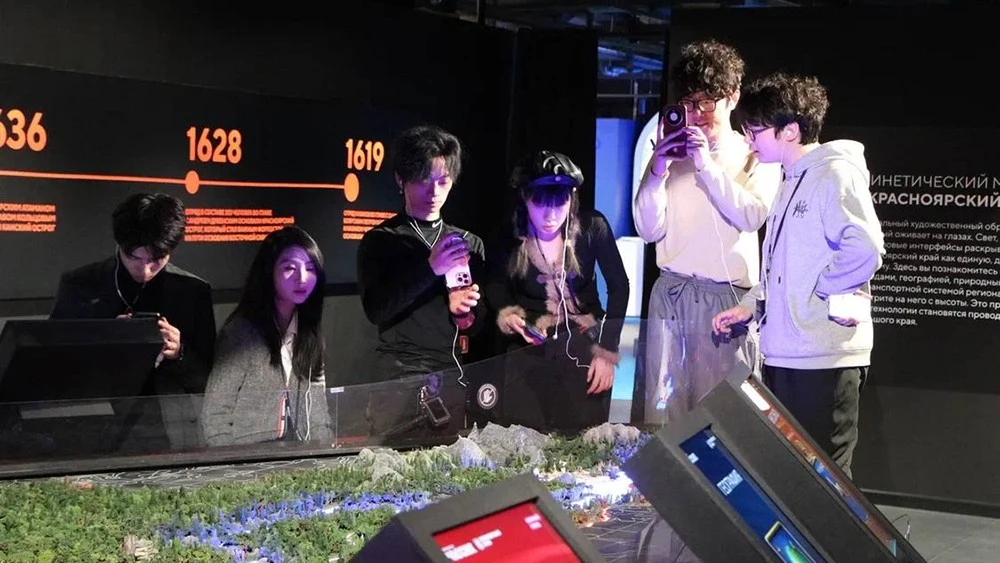
A delegation of bloggers and opinion leaders from the People's Republic of China visited the National Centre RUSSIA in the Krasnoyarsk region.
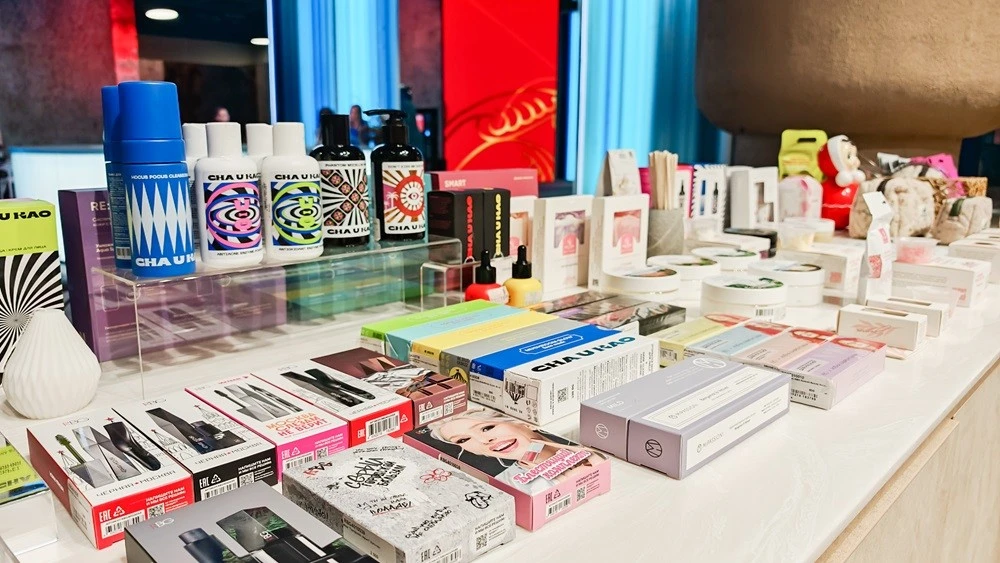
In spring, when the sun shines brighter and everything around begins to bloom, many people want to look their best.


