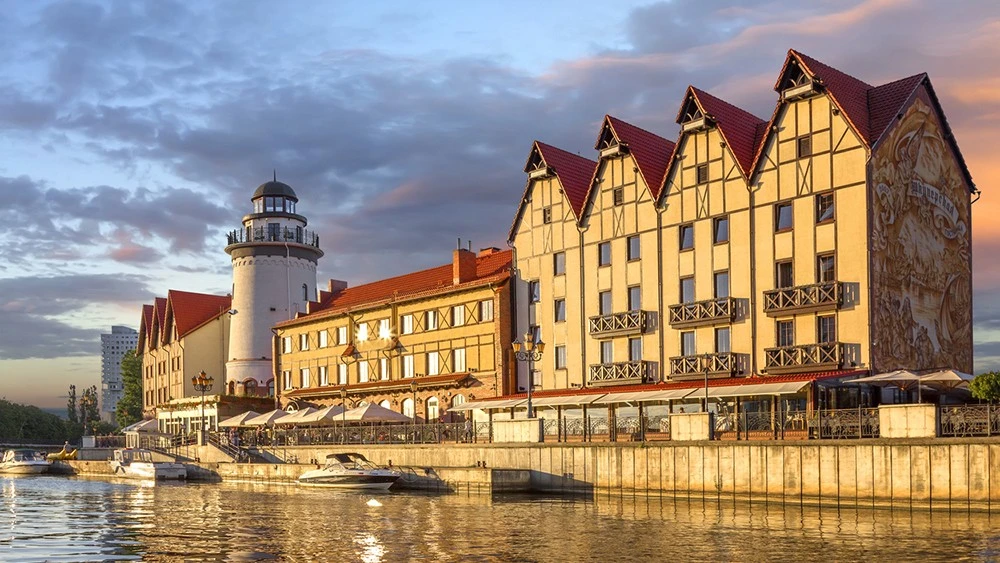
Physics, evolution and the Strugatsky brothers: book recommendations from Russian Science Day speakers at the National Centre RUSSIA

The speakers who took part in the educational programme of Russian Science Day at the National Centre RUSSIA not only discussed the development of the scientific ecosystem and the evolution of engineering thought, but also shared their personal reading recommendations — from classical fiction and science fiction to contemporary prose and popular science books. According to the experts, these works shaped their own scientific worldview or simply left a lasting impression.
The Deputy Minister of Science and Higher Education of the Russian Federation, Olga Petrova, placed her focus on the classics: in her view, some of the key reference points, including for today’s readers, are Dostoevsky and Tolstoy, without whom it is impossible to reflect on the structure of the world and the place of human beings in society.

The Director General of the VCIOM Analytical Centre, Dean of the Faculty of Social Sciences and Mass Communications at the Financial University under the Government of the Russian Federation, Valery Fedorov, turned to the methodology of science. His personal list includes "The Structure of Scientific Revolutions" by Thomas Kuhn and "The Logic of Scientific Discovery" by Karl Popper.

Doctor of Physical and Mathematical Sciences, Professor of the Russian Academy of Sciences, Director General of the AIRI Institute, Dean of the Faculty of Artificial Intelligence at Moscow State University, Ivan Oseledets, admitted his fondness for Soviet science fiction. His choices were "One Hundred Years Ahead" by Kir Bulychev and the timeless "Monday Begins on Saturday" by Arkady and Boris Strugatsky.

Doctor of Biological Sciences, Professor at the Faculty of Biology of Moscow State University, Vyacheslav Dubynin, recommended taking a deeper look at one of the most complex objects in the Universe — the human brain. He believes a wide audience may find the books "The Brain of a Long-Liver" by Alexei Moskalev and "Brain Energy" by Christopher M. Palmer particularly engaging.
Doctor of Physical and Mathematical Sciences, Associate Professor at the Mechanics and Mathematics Faculty of Moscow State University, publisher of the popular science online outlet N+1, Andrei Konyaev, selected two fields for his recommendations — anthropology and art history. He advised reading "Why Giraffes Did Not Become Humans and Other Questions of Evolution" by Stanislav Drobyshevsky and "The Halo and the Cross. How to Read Russian Icons" by Dmitry Antonov.

Doctor of Physical and Mathematical Sciences, First Deputy Head for Research at the Kurchatov NBICS Nature-Inspired Technologies Complex, Vyacheslav Demin, suggested looking into the future through the lens of neurotechnology. His personal choices included the major English-language work "Neuromorphic Computing Principles and Organization" by Abderazek Ben Abdallah and Khanh N. Dang, as well as "Neuromorphic Processors for Spiking Neural Networks" by Denis Larionov and Mikhail Kiselev.

Doctor of Political Sciences, coordinator of the "VYZOV" ("CHALLENGE") community, Valeria Rodina, combined what might seem incompatible — physiology and French modernism. Her list featured "On Aggression, or the So-Called Evil" by Konrad Lorenz and Marcel Proust’s monumental cycle "In Search of Lost Time".
A graduate of MIPT, physicist, blogger and author of the channel "Physics with Pobedinsky", Dmitry Pobedinsky, recommended two iconic works as essential reading: "QED: The Strange Theory of Light and Matter" by Richard Feynman and "A Brief History of Time" by Stephen Hawking. In his view, these books strike a balance between depth and accessibility.

Russian Science Day was held at the National Centre RUSSIA on 8 February. The event brought together more than 2,000 scientists, experts and students from across the country. They discussed how the scientific ecosystem functions, where it is heading and why scientists can be regarded as the heroes of a new era.
The full recordings of the programme sessions are available on the russia.ru website in the "Livestreams and Videos" section.
Event photobank


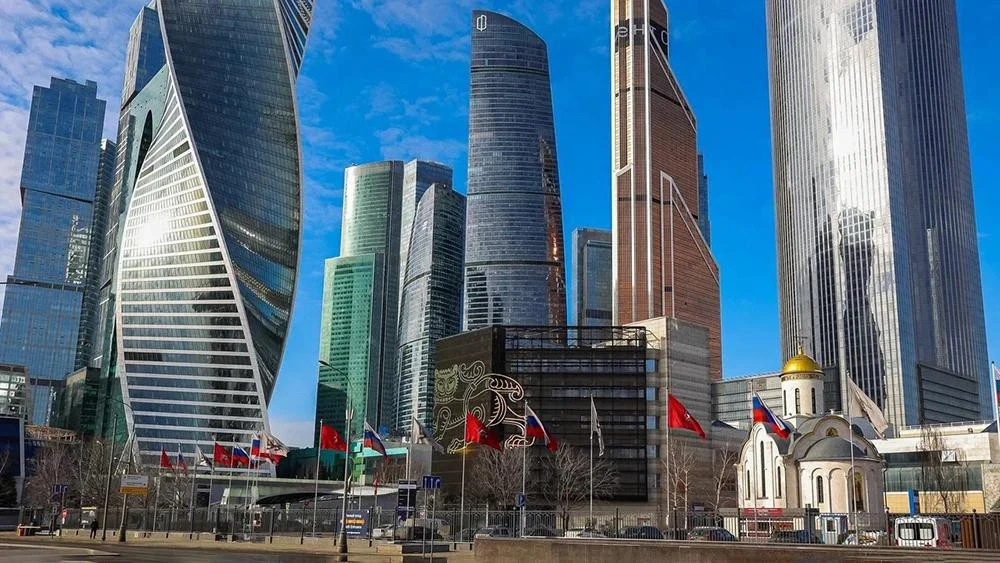
The National Centre RUSSIA has ranked among the top four Russian venues by the number of international events held between 2019 and 2025.
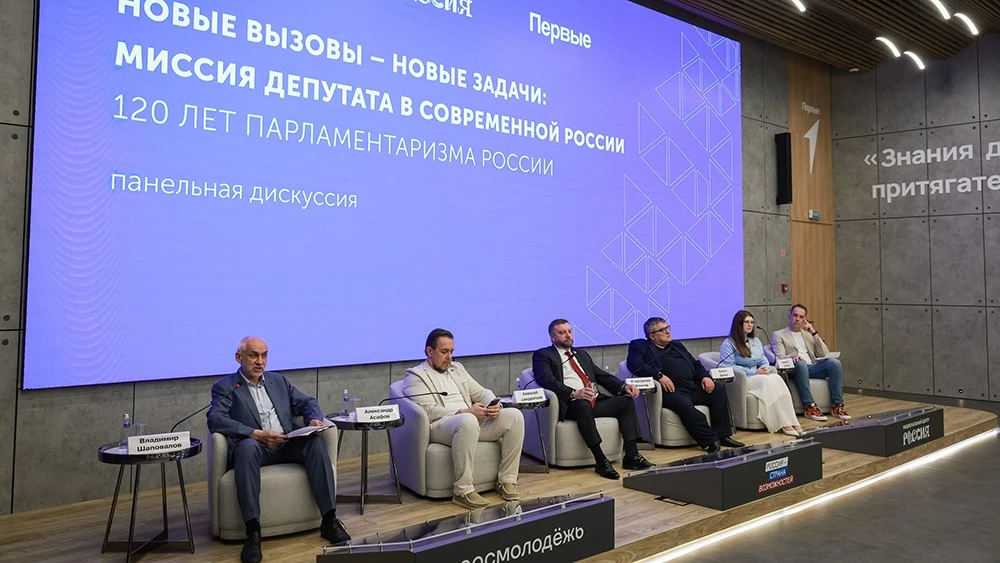
The panel discussion "New Challenges — New Tasks: The Mission of a Deputy in Modern Russia. 120 Years of Parliamentarism in Russia" was held at the National Centre RUSSIA on 3 July.