


Futurist Chen Qiufan explained at the National Centre RUSSIA how AI is moving from science fiction into reality

Science fiction prepares us for the future, and in the race for artificial intelligence leadership, the winner will be the one who offers humanity the most ethical, meaningful and inspiring visions of tomorrow. This was stated at the January Expert Dialogues at the National Centre RUSSIA by science fiction writer and futurist, co-author of the bestseller "AI 2041: Ten Visions for Our Future", Chen Qiufan. In his lecture entitled "The Future of AI: From Imagination to Reality", he presented an illustration of the "Transformation of Humanity in a New Technological Era", one of the five megatrends shaping global development in the coming decades. These megatrends were presented by Deputy Chief of Staff of the Presidential Executive Office of the Russian Federation, Maxim Oreshkin.
According to Chen Qiufan, understanding the changes ahead must be based not only on analytics, but also on science fiction. He noted that it serves as an important tool for comprehension and a key resource in an era of uncertainty, helping to create bold new scenarios for the future.
"How can science fiction help us understand the future? There is always a huge number of reports, studies and infographics. Science fiction gives us a diverse, open and non-linear perspective — a kind of cognitive hedging system that helps balance bias and draw value from uncertainty. It prepares us for the future and should encourage people to imagine the new world we want to leave to future generations," Chen Qiufan explained.

Speaking about the development of artificial intelligence through the lens of culture and world history, the futurist drew attention to the paradox of prediction: "When we tried to predict technology, we were most often wrong. When we tried to understand human nature, we were most often right."
Thus, the expert emphasised that at the centre of technological transformation remains the human being, with their ethics, fears and value systems. As an example, he cited the story of the world’s first robot, described in China thousands of years ago. When an emperor saw a mechanical man flirting with his lover, he ordered it to be dismantled, only to find wooden components inside.
"Here we see the illusion of anthropomorphism — on the one hand, our admiration for technology, and on the other, the fear that blurs the boundary between reality and imitation. This is how we attribute human emotions to a machine that, in fact, does not possess them," Chen Qiufan continued.

The speaker also invited the audience to reflect on the impact of digital platforms on individuals, reminding them that the narratives people create or consume shape our reality.
"We live in an era of multiple crises — geopolitics, economics, climate and technology. And, most importantly, we live in an era of an imagination crisis, which we sorely lack," Chen Qiufan noted.
In the future, humans and machines may coexist harmoniously, the speaker believes. However, this depends not so much on artificial intelligence algorithms as on people themselves.

"Artificial intelligence learns from us, based on all human data — our behaviour, emotions and even our beliefs and convictions. And only if we all become better together as humanity, regardless of any borders, will we be able to train and nurture artificial intelligence so that it becomes a more intelligent being in this world," the expert concluded.
The January Expert Dialogues were initiated by the National Centre RUSSIA in partnership with the Centre for Cross-Industry Expertise "Third Rome", with the support of the Presidential Executive Office of the Russian Federation. The keynote speaker of the event was the Deputy Chief of Staff of the Presidential Executive Office of the Russian Federation, Maxim Oreshkin.
Event photobank



Visitors can see, discover and experience the country through unique products and authentic brands.
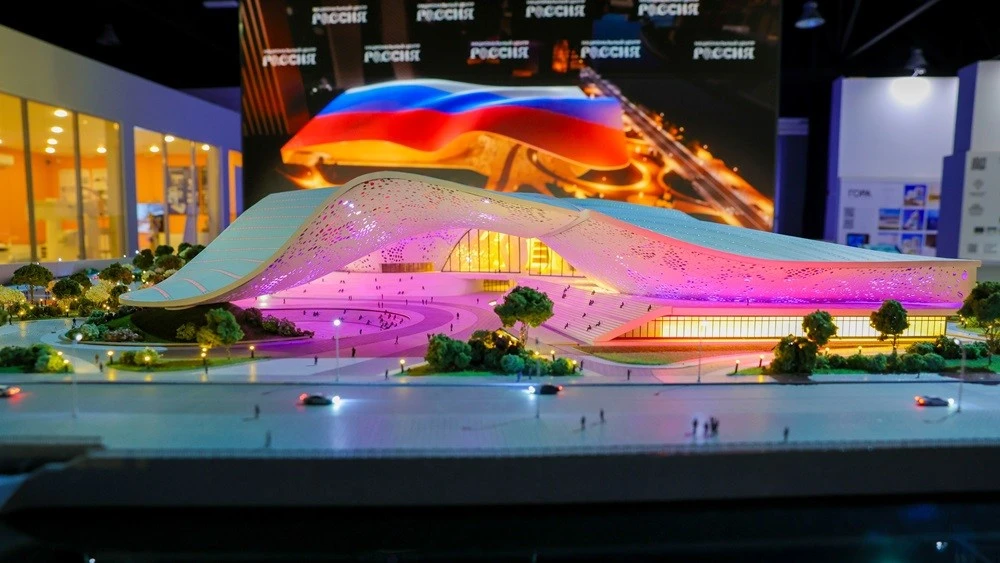
Its future concept was presented on 4 April on the NTV programme "Today in Moscow".
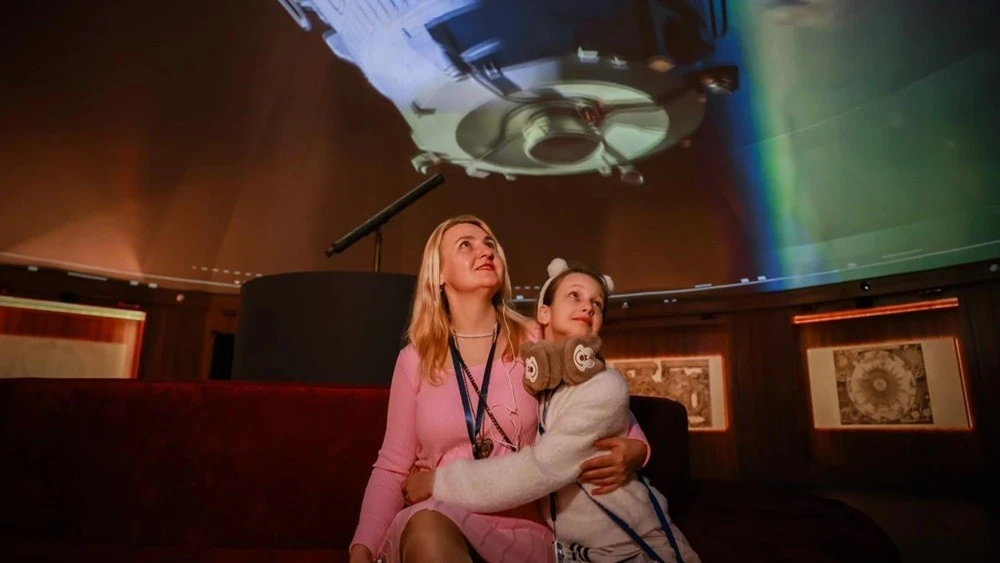
During the spring holidays, the "Geography Lessons" exposition opened at the National Centre RUSSIA.


