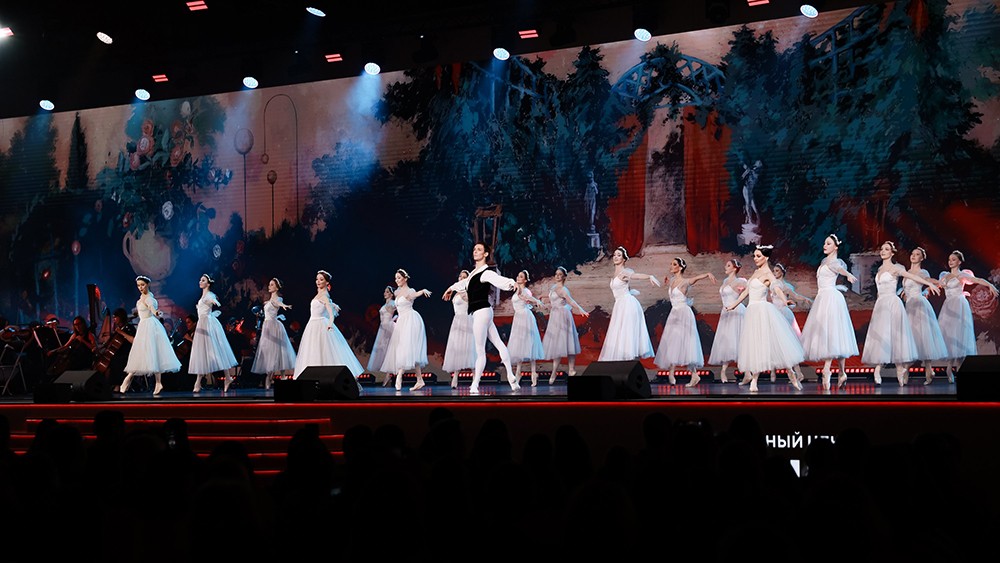
"A story that comes alive on stage": Karina Shebelyan on the premiere of the original production "Russian Seasons. Spring"
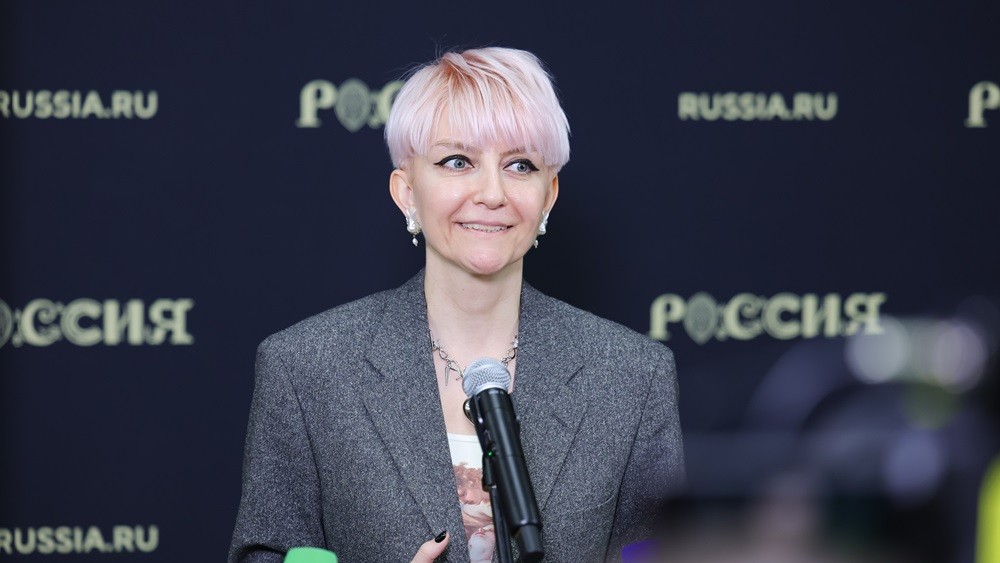
Why the famous tours of the early twentieth century remain more relevant than ever today, and what role women played in the history of the "Russian Seasons". This was discussed at the premiere of the National Centre RUSSIA’s original production "Russian Seasons. Spring" by its playwright, State Prize of the Russian Federation in Literature and Arts laureate Karina Shebelyan.
According to the author of the script, the production is built around the most recognisable opera and ballet fragments that brought fame to the "Russian Seasons" of the early twentieth century. In many ways, they serve as the project’s calling card. However, the aim of the production is not only to remind audiences of the legendary repertoire but also to reveal the inner world behind the impresario productions.
"First and foremost, the performance brings together the most striking ballet and opera pieces that made the 'Russian Seasons' famous. This is the ceremonial, front-facing side of the story. But we also wanted to show what happened behind the scenes: how the 'Russian Seasons' were created, what it took to bring them to life and what relationships developed between the people who worked on them. Alongside well-known facts, we also talk about lesser-known episodes that we believe deserve attention," explained Karina Shebelyan.
Special attention in the production is given to the women of the "Russian Seasons". Alongside Anna Pavlova and Matilda Kshesinskaya, the spotlight also falls on Bronislava Nijinska, the younger sister of Vaslav Nijinsky. Karina Shebelyan emphasised that her story is important both artistically and personally.
"Bronislava Nijinska is an extremely significant figure in Russian culture and one of the first female choreographers of the twentieth century. She began as a ballerina, took part in the 'Russian Seasons' and learned a great deal from her brother, but at a certain point she realised that dancing alone was not enough for her. At that time it was very difficult for a woman to establish herself as a choreographer, yet through her talent she proved that she could work precisely in that role. She staged productions across Europe and was invited to serve as chief choreographer at leading theatres, including the Paris Opera. Unfortunately, she is far less widely known than her famous brother, and it is important for us to restore her rightful place in this story," the playwright emphasised.
"Russian Seasons. Spring" is more than a performance. It is a tribute to the cultural legacy that shaped Russia’s image in the world. The production reflects the country’s contribution to global art, the role of women in the development of Russian culture, the unity and diversity of Russia’s traditions, and the importance of preserving historical memory.
Women’s literature as a cultural phenomenon.