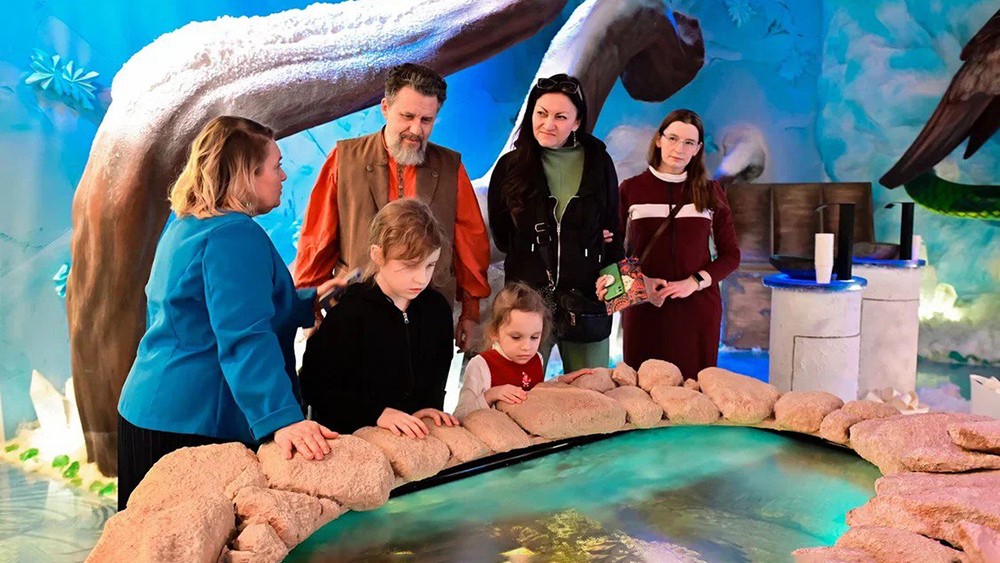
"Ivans who remember their kin": anthropologist Stanislav Drobyshevsky on the link between eras at the "Journey Across Russia" exposition
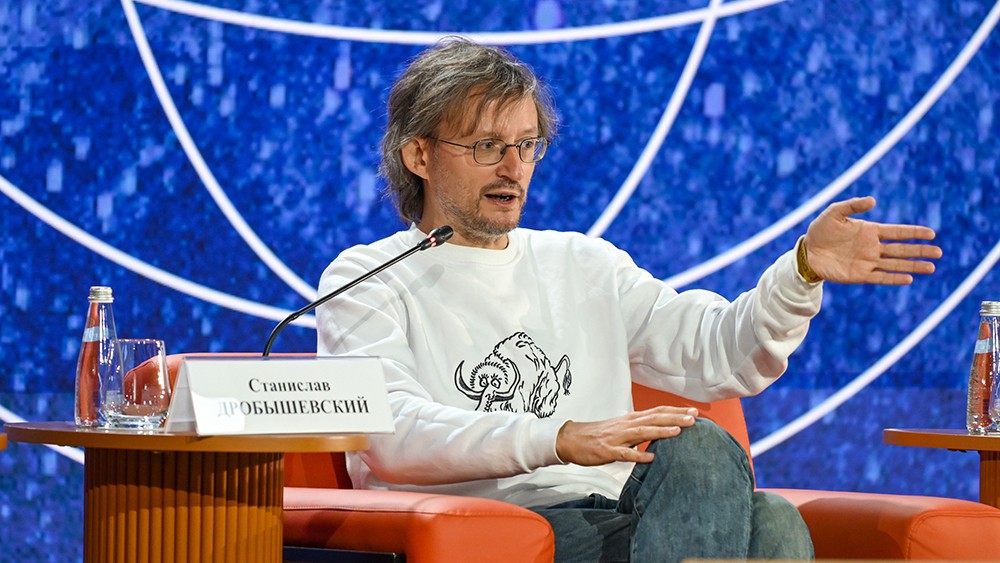
The "Journey Across Russia" exposition at the National Centre RUSSIA helps tell the story of humanity’s past, its roots and evolution, noted anthropologist and Candidate of Biological Sciences, Associate Professor at Lomonosov Moscow State University, and leader of the public science outreach movement "Drobyshevsky’s Projects", Stanislav Drobyshevsky. The exposition, which introduces visitors to the diversity of the country’s regions, prompted the scholar to remind audiences of deeper themes — ancestral memory and the directions of human development.
"Such
projects are absolutely essential, because a person is a product of the past
and of the lives of their ancestors. And it would be good if people knew about
those ancestors. After all, an Ivan who does not remember his kin remembers
nothing — he is nothing. But an Ivan who remembers his kin is a completely
different Ivan," Stanislav Drobyshevsky explained.
According
to the science populariser, such expositions should speak not only about
contemporary life, but also about how and from where it emerged. He believes
that the conversation about the past should begin, quite literally, with the
Mesozoic era.
"Such
expositions help us understand where all the splendour that surrounds us comes
from — and whether it might have been even greater. Of course, the most ancient
times affect us only indirectly (though, incidentally, they are very much
reflected in oil and gas). But the closer we come to the present day, the more
obvious it becomes. Everyone knows about their parents and grandparents. But
our ancestors who lived a thousand years ago are also our ancestors. And those
who lived 20,000 years ago are also our direct personal ancestors. They too did
something that made us who we are today. We might have been different, or
perhaps not survived at all. In this sense, we receive a lesson from them: what
not to do and what to do in order to continue our lineage," Stanislav
Drobyshevsky concluded.
Anthropologist,
Candidate of Biological Sciences, Associate Professor at Lomonosov Moscow State
University, and leader of the public science outreach movement
"Drobyshevsky’s Projects", Stanislav Drobyshevsky served as an expert
at Russian Science Day at the National Centre RUSSIA. During the plenary
session "A Scientist — Hero of Our Time", he emphasised that modern
society is impossible without science, as it permeates every sphere of life.
From the perspective of anthropogenesis, he noted, a hero ensures the survival
of the species and the population. In this sense, the modern scientist is the
successor of the ancient hero-defender, thanks to whom humanity survives,
evolves and develops.
In
addition, Stanislav Drobyshevsky took part in the filming of a new episode of
the educational podcast "Russia Speaks" — an original project of the
National Centre RUSSIA dedicated to discussions about the future of medicine,
science, culture and technology. The studio of the National Centre RUSSIA has
previously welcomed Director General of the VCIOM Analytical Centre and Dean of
the Financial University under the Government of the Russian Federation Valery
Fedorov; Scientific Director of the Hydrometeorological Centre Roman Vilfand;
Roscosmos cosmonaut and Hero of Russia Nikolai Chub; theatre and film actor
Vladislav Miller; singer Tatyana Kurtukova; and others.
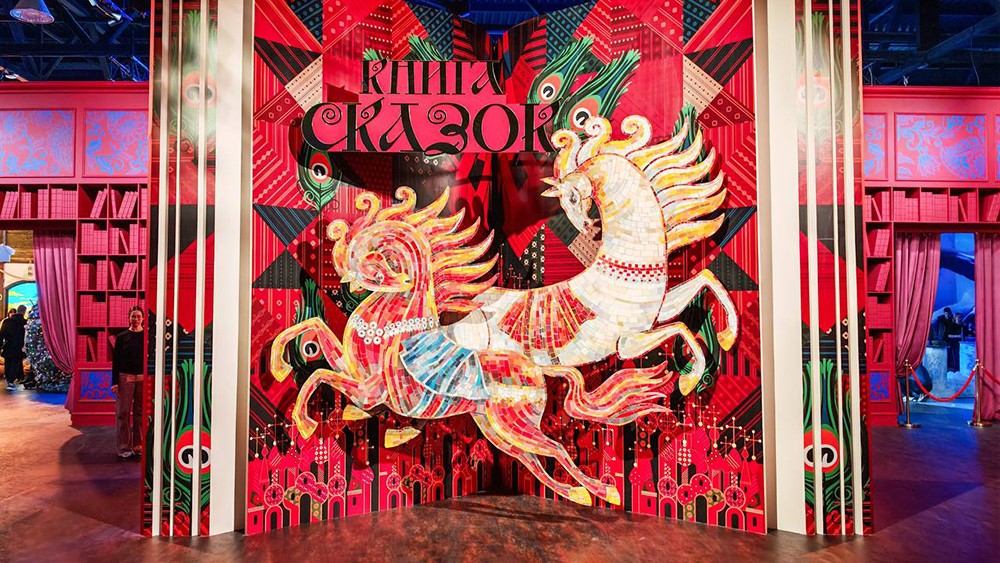
The "Book of Fairy Tales" exposition concluded on 28 February at the National Centre RUSSIA.
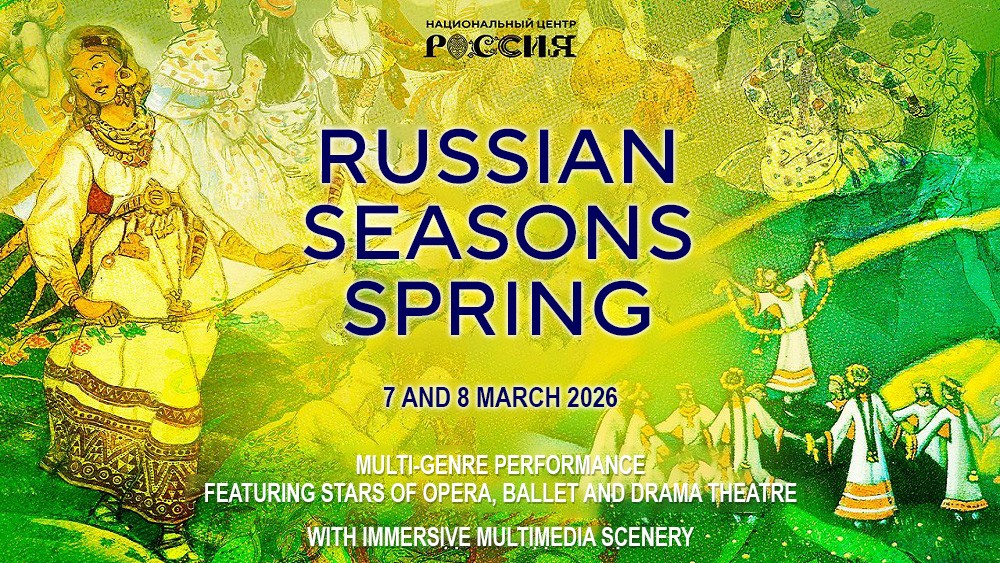
The original multi-genre performance "Russian Seasons. Spring" will be staged at the National Centre RUSSIA on 7 and 8 March.