


The soft scenery workshop at the "Legacy. Theatre. The Greats" exposition: from painted fabric backdrops to three-dimensional projections
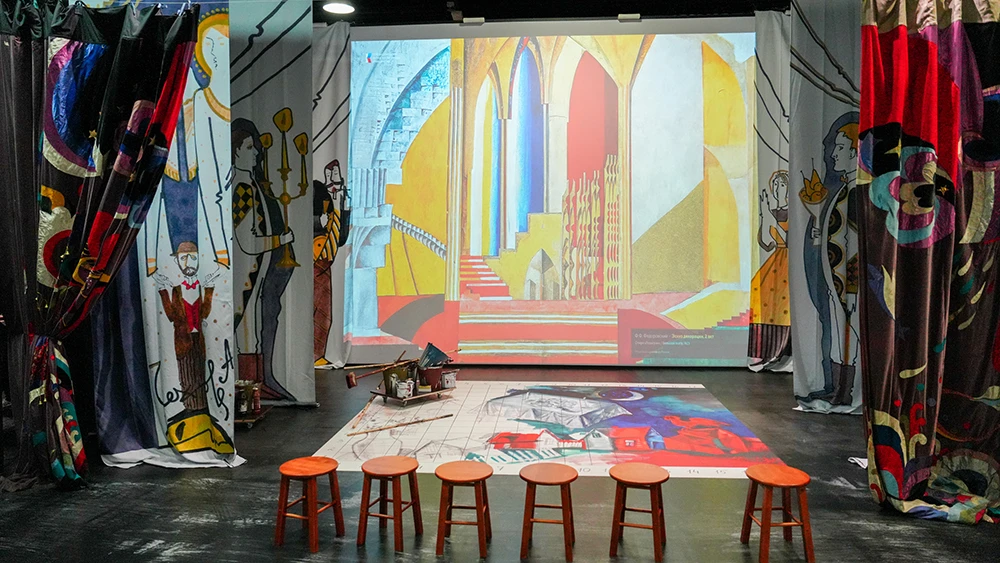
This
workshop smells of glue and paint. It is where the magic is created that
transforms the stage into a boundless sea, a dense forest or a scorching
desert. The thematic section "Soft Scenery Workshop" at the
"Legacy. Theatre. The Greats" exposition at the National Centre
RUSSIA explores how a painted canvas can transport audiences anywhere in the
universe and introduces them to the legacy of outstanding theatre artists.
Soft
scenery became a "leading character" in productions at the turn of
the 19th and 20th centuries. Konstantin Korovin, Leon Bakst, Mikhail Vrubel,
Natalia Goncharova, Nicholas Roerich and other renowned artists transformed
stage design, turning backdrops into enormous painted canvases. In 1908, Sergei
Diaghilev brought the "Russian Seasons" to Paris and amazed European
audiences with sets created by artists from the "World of Art" group:
just painted canvas, velvet and light — with no heavy rigid structures.
Today, the
soft scenery workshop works with dozens of types of fabric, from airy chiffon
to heavy theatrical canvas. Cutters and tailors cut and sew enormous panels,
wings and curtains, while scenic artists treat and paint the fabrics and create
appliqués. Backdrops for productions at the country's leading musical theatres,
such as the State Academic Bolshoi Theatre of Russia, can cover an area of up
to 400 square metres, requiring hundreds of metres of fabric.
One of the
key professions in the workshop is that of the fabric painter. These versatile
specialists understand the properties of theatrical lighting and different
materials and are skilled in appliqué, embroidery and printing techniques.
Using paint and fabric, they can transform the stage into a medieval castle, a
spacecraft or a forest clearing.
Among the
exhibits is a work by Vadim Ryndin, Academician of the USSR Academy of Arts and
People's Artist of the USSR, created for the ballet production "Doctor
Aybolit" at the K.S. Stanislavsky and Vl.I. Nemirovich-Danchenko Moscow
Academic Music Theatre. The scenery depicts a three-masted sailing ship
carrying Aybolit to Africa. A curtain created from a sketch by Albina Tsybikova,
Honoured Artist of the Russian Federation, adorned the main stage of the Ulger
Buryat Republican Puppet Theatre for more than two decades. The image of two
heavenly khatai maidens playing musical instruments and symbolising the
connection between worlds was created using appliqué with silk, velvet, beads
and braid.
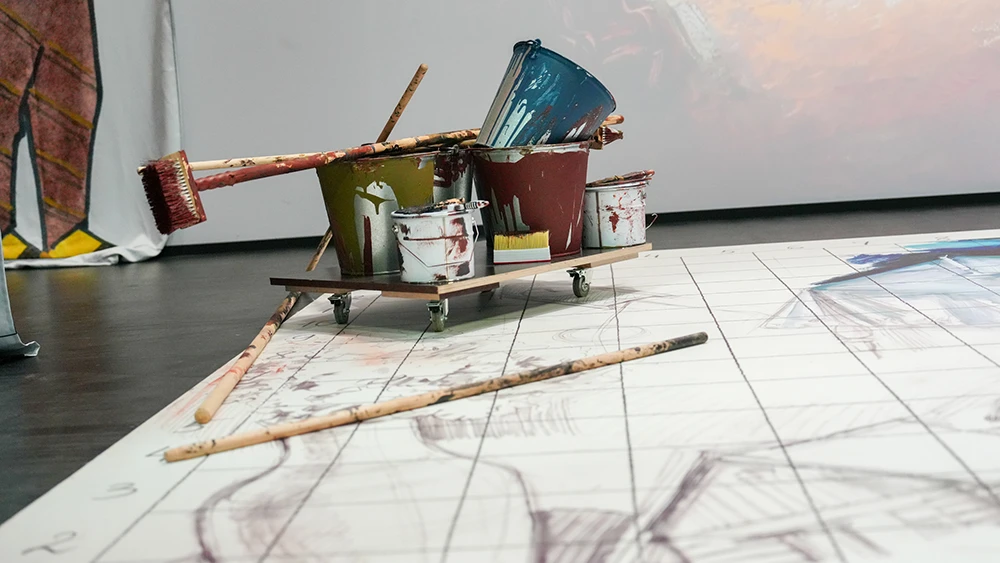
The
workshop features an installation demonstrating the process of creating soft
scenery using Valery Levental's sketch "Wedding Procession" for the
production "Choreographic Miniatures", staged in Leningrad in the
1970s. A canvas divided into squares, paint tins and artists' brushes
are laid out on the floor. Visitors
can see how a large-scale painting takes shape: first, the drawing is marked
out in charcoal or chalk, then each square is filled with colour. Huge stage
backdrops measuring 10 by 15 metres or more are painted exclusively on the
floor. Artists walk across the canvas in socks or slippers, while brushes are
attached to two-metre bamboo poles so they can see the perspective of the image
from their full height. A single canvas can require up to 50 litres of paint,
so artists use buckets instead of palettes. To assess the work in progress, the
backdrop is raised using special winches.
During the
Soviet era, shortages of imported materials led craftsmen to develop their own
formula for treating the canvas — a mixture of PVA glue, chalk and... aviation
kerosene. The smell in the workshop was distinctive, but the resulting scenery
could last for decades.
Scenery
created using projection technologies can also be considered "soft".
Three-dimensional images blur the boundary between the stage and the
auditorium, immersing the audience more deeply in the world of theatrical
illusion. Multi-screen projections can create the effect of characters being
present in several places at once.
The"Legacy. Theatre. The Greats" exposition at the National Centre
RUSSIA is a major project marking the 150th anniversary of the Theatre Union of
Russia, implemented with the support of the Ministry of Culture of the Russian
Federation and the Presidential Foundation for Cultural Initiatives.
Visitors
can see the unique exhibits and discover the world behind the scenes until 25
September. Admission to the exposition is free. Advance registration on the
russia.ru website is required to join a guided tour.
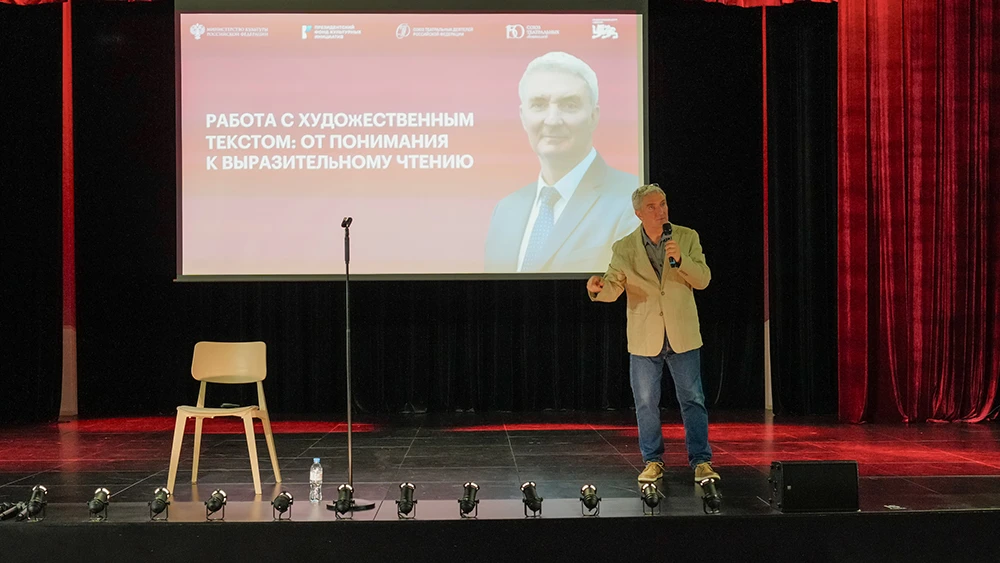
On 19 September, A.A. Bryantsev Youth Theater Day was held at the National Centre RUSSIA as part of the cultural and educational programme of the "Legacy. Theatre. The Greats" exposition.
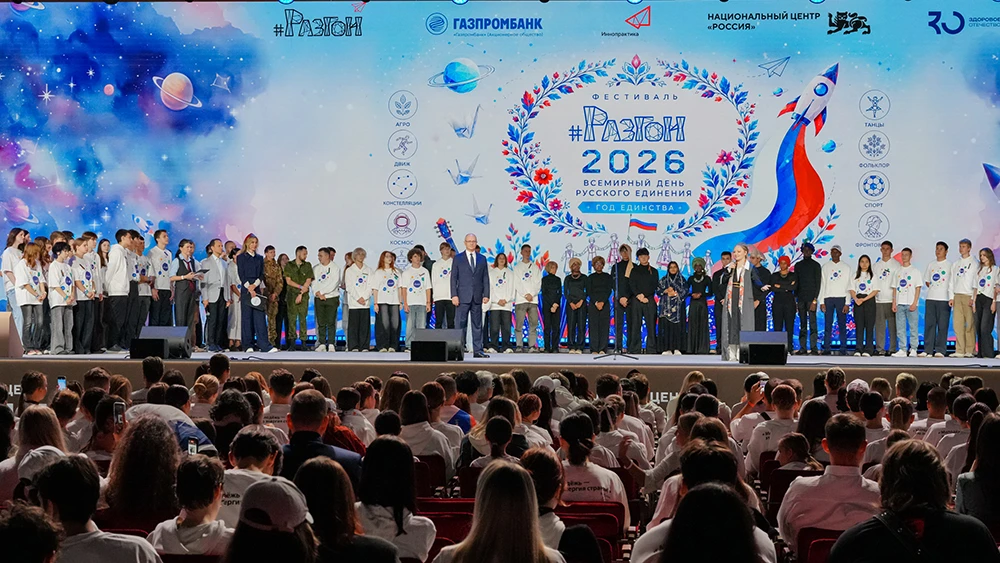
On 19 September, 1,200 participants from different regions of the country — dancers, agronomists, future journalists and robotics enthusiasts — gathered at the National Centre RUSSIA.
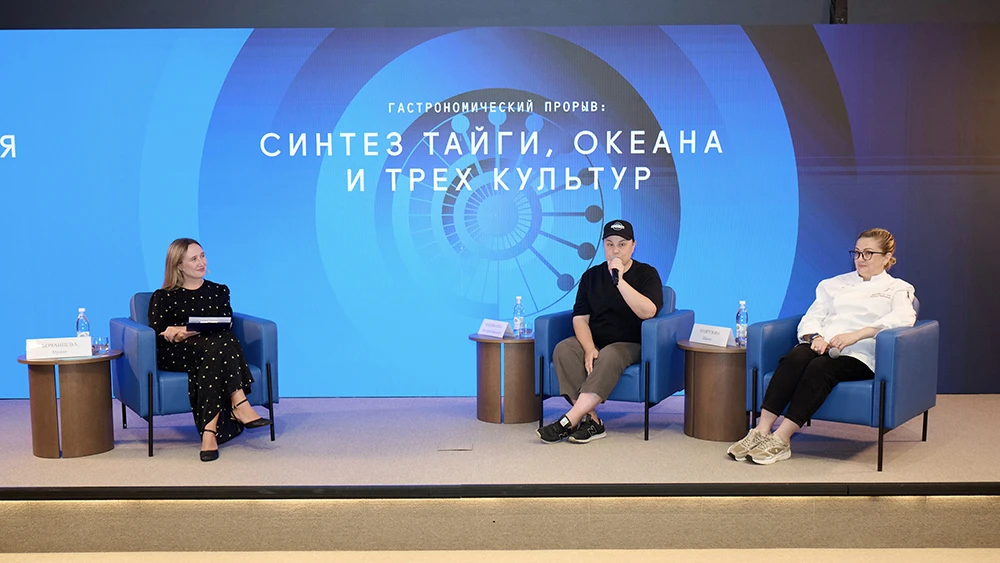
The Open Lecture Hall "Inventing the Future: Pacific Breakthrough" was held at the National Centre RUSSIA in the Primorye Territory.


