


Playgrounds, typefaces and colour: the National Centre RUSSIA discusses progress on projects by the Council for a New Russian Style
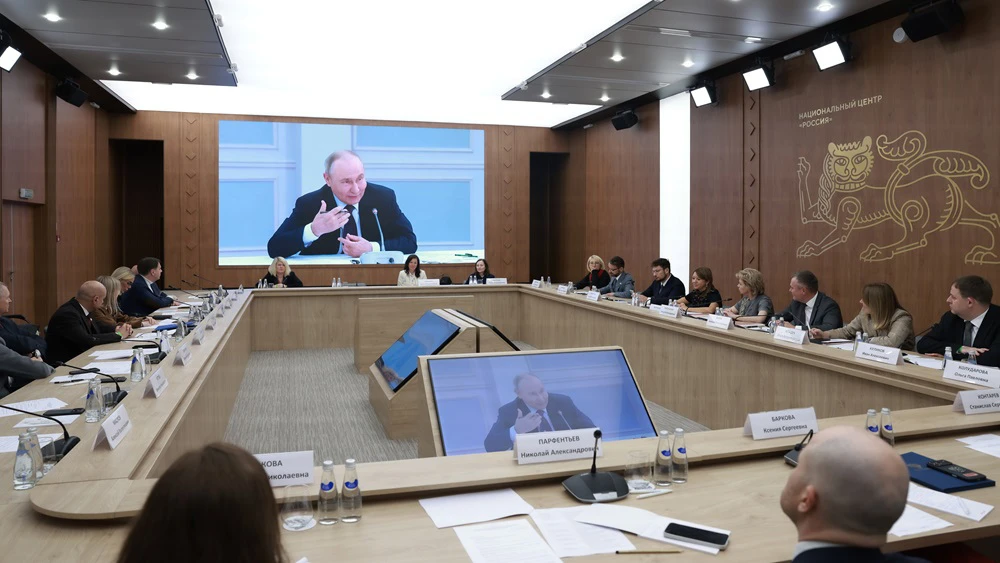
On 23 September, the sixth meeting of the Council under the National Centre RUSSIA for the Development and Promotion of a New Russian Style in Public Spaces was held at the National Centre RUSSIA. The focus was on the results of the Council's projects, including a new-generation children's playground in Yekaterinburg inspired by the Dymkovo toy. Participants also discussed the development of a national colour palette and typeface family, the creation of art installations based on Cyrillic lettering, and new uniform designs for schoolchildren and students taking part in international educational and science olympiads.
Presidential Adviser Yelena Yampolskaya recalled that a new-generation children's playground inspired by the Dymkovo toy had opened in Yekaterinburg during the International Festival of Youth. According to her, it fitted well into the neighbourhood and was warmly received by local residents.
"People from other cities write to us asking: when will we have one like this? That is the best assessment of our work. We cannot stop this work. I suggest creating a subgroup within the Council that will work systematically on children's playgrounds. This is especially important because what a person comes to love in childhood stays with them throughout life. We would like our children to have the opportunity from an early age to love what is native to them. They may also come to love something from world culture — of course. But they must know their own culture. And it is impossible to discover what is ours, what is native to us, and not love it," she said.
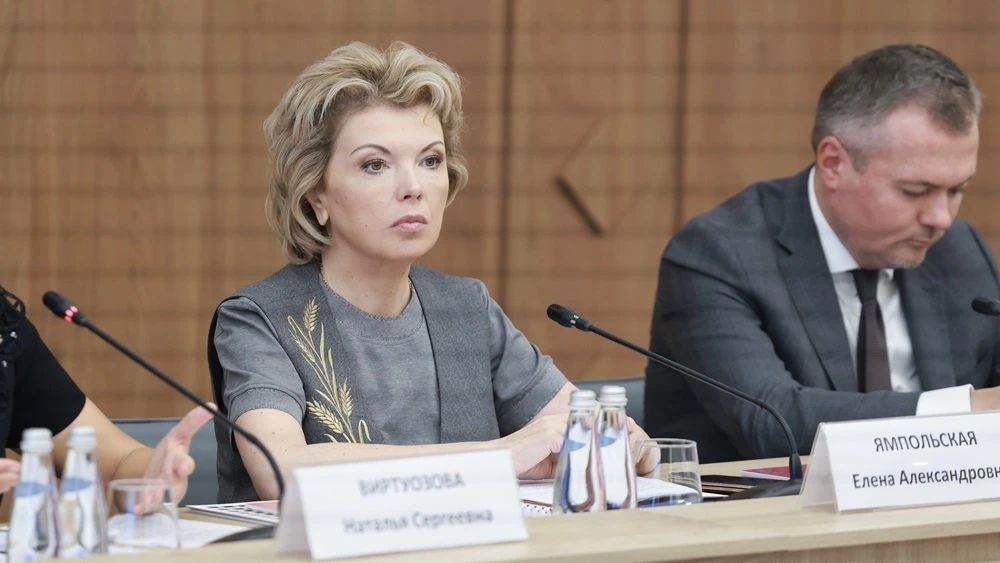
The Presidential Adviser said that during the development of the small architectural forms and play modules, the team consulted specialists directly from the source — representatives of the Dymkovo Toy folk arts and crafts enterprise from the Kirov Region. Therefore, she said, all elements of the playground correspond artistically to the style of authentic Dymkovo toys. She noted that children absorb national cultural traditions simply through play, while parents can follow a QR code to read detailed information about the history of the craft.
Yelena Yampolskaya recalled that when selecting folk arts and crafts for children's playgrounds, the team focused on traditions historically associated specifically with toy-making. According to her, the next such craft could be the Bogorodsk toy, with its wooden texture and tradition of moving figures.
"However, we do not intend to limit ourselves solely to folk arts and crafts. I suggest considering a children's playground together with the All-Russian 'Native Toy' contest, as well as options for a retro playground based on Soviet toys and a playground inspired by Pushkin's fairy tales. Seasonal concepts, such as New Year designs, will surely also be popular. Our task is to make each such playground atmospheric and give children and parents a sense of warmth and home," emphasised Yelena Yampolskaya.
Alexei Zharich, Deputy Chief of the Presidential Directorate for Social Projects, stressed that the Council's work is based on the direct support of the head of state. He also explained why this area is becoming particularly important.
"The joint work of the Council and the National Centre RUSSIA brings all this activity together and consolidates efforts to shape Russian national identity, educate new generations and develop their civic outlook. This work has a practical focus and brings together interested institutions and experienced professionals around the initiatives of the National Centre," emphasised Alexei Zharich, Deputy Chief of the Presidential Directorate for Social Projects.
Natalia Virtuozova, Director General of the National Centre RUSSIA, noted that the Centre provides a platform for turning the Council's initiatives into practical projects and developing cooperation with regions and other countries.
"Under the instruction of President Vladimir Putin, the National Centre RUSSIA continues to expand its network of branches: there are spaces in Vladivostok, Khanty-Mansiysk and Krasnoyarsk. A branch will soon open in Ryazan, followed by Sevastopol and the Kabardino-Balkarian Republic. Modern, well-designed and popular public spaces are emerging around all these branches, and this infrastructure can become a place for integrating the Council's proposals. Another area for cooperation is the National Centre's international projects. Together with our Department Store, we have taken part in fairs in Uzbekistan, China and India, bringing artisans from across the country who demonstrate folk arts and crafts — something that attracts tremendous interest from international audiences. We also plan to develop cooperation with Russian Houses abroad in order to preserve the Russian language and our traditional values. We hope that the Council will take an active part in the branch network and international activities of the National Centre RUSSIA," said Natalia Virtuozova, Director General of the National Centre RUSSIA.
The Dymkovo-inspired children's playground project brought together leading specialist organisations: designers, equipment manufacturers, representatives of the traditional craft and the developer. Their joint work made it possible to create a space that conveys the tradition of folk art while meeting modern requirements for the urban environment.
"Akademichesky is the youngest district in Yekaterinburg and has a record birth rate, so creating spaces here where children can discover culture through play is an important social task for us. We are pleased that the first playground in the series appeared here. The Dymkovo-inspired project brought together aesthetics, education and a comfortable urban environment and showed how a developer can work with the identity of a place. Our goal is for children to grow up in a safe, stimulating and happy environment," commented Stanislav Kiselev, Director General of KORTROS Group, which invested in the project.
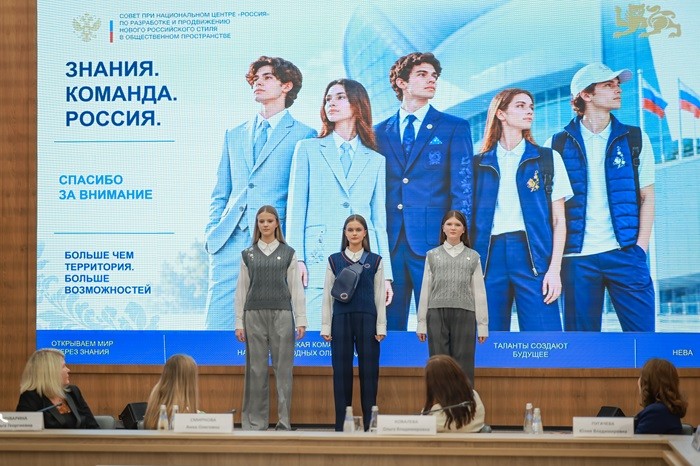
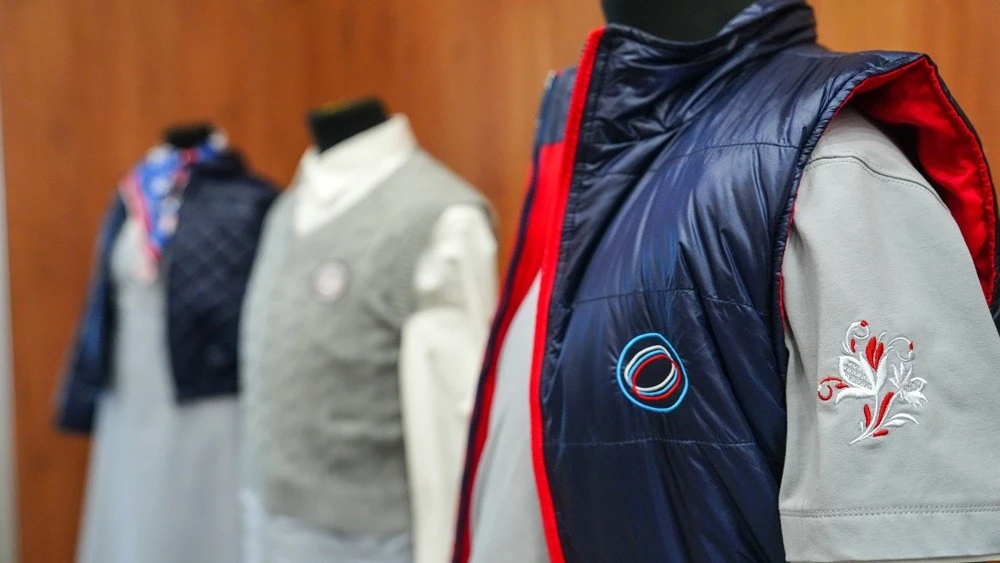
The meeting also included a presentation of approved ceremonial and everyday uniform designs for schoolchildren and students taking part in international educational and science olympiads. Alisa Lobanova presented the uniform concept and explained the principles behind creating a unified visual identity for Russian teams.
"A unified uniform begins with a shared goal. Our uniform should make participants recognisable as representatives of the Russian national team and create a coherent visual image of the team. Their appearance also becomes one of the ways to tell international audiences about modern Russia," said Alisa Lobanova, founder of the Neva brand.
Another area of work is the national colour palette. The project envisages creating a unified colour system for use across various areas of design and manufacturing.
"The development and introduction of a National Colour Palette is an important initiative both for the development of the industrial sector and for the country's technological security and sovereignty. The project can become a soft-power tool conveying our values, cultural code, national tendencies and trends in colour science and helping to shape a sustainable multipolar view of colour across various sectors of the global economy," noted Vitaly Stavitsky, President of the Russia Designers Association.
Vyacheslav Kuteyev, Head of the Council's Communication Design Working Group, presented the results of the first stage of work on the national "Russia" typeface family: "We studied Russian display serifs from the turn of the 19th and 20th centuries, text serifs and earlier examples of Cyrillic typesetting. Our task is not to reconstruct a particular historical typeface, but to create a modern system rooted in the Russian typographic tradition. The research identified two directions for developing the family: an expressive style for headlines and a text style for extended reading."
Participants also discussed a project to create art installations based on Cyrillic lettering. Under the initiative, Cyrillic becomes the basis for artistic and communication solutions in public spaces. At the initial stages, the project is planned to be implemented at higher education institutions.
"Our goal is to turn the university into a place that attracts young people, where Cyrillic can be reinterpreted through contemporary art and art installations. We plan to create a communication space called 'Word for Word and Letter for Letter', which will become a reference point for a new generation of custodians of linguistic legacy and set trends for the modern Russian style," said Lyubov Kozyreva, Head of the National Centre for Design and Costume at Kosygin Russian State University.
Andrei Melentyev, Secretary of the Council and Head of the Directorate for Oversight of State Visual Communications at the National Centre RUSSIA, spoke about further work on the Council's initiatives.
"Children's playgrounds inspired by folk crafts and art installations using Cyrillic lettering show that tradition can be modern and alive. Each such object helps people see their culture in a new way. We invite regions, companies and creators of ideas to become partners of the Council and work together so that there are more such projects. We welcome initiatives that help shape a national identity for public spaces," noted Andrei Melentyev.
Following the meeting, the Council will continue working on the practical implementation of its initiatives and their development in the regions. Areas of work include creating new public-space features, developing visual and communication solutions, and expanding cooperation with the professional community and regional teams.
The Council under the National Centre RUSSIA for the Development and Promotion of a New Russian Style in Public Spaces was established to develop and promote a new Russian style in public spaces. Its work brings together representatives of the state, the professional community, businesses and experts to create a modern visual environment based on cultural legacy, traditional values and the current needs of society.
Event photobank

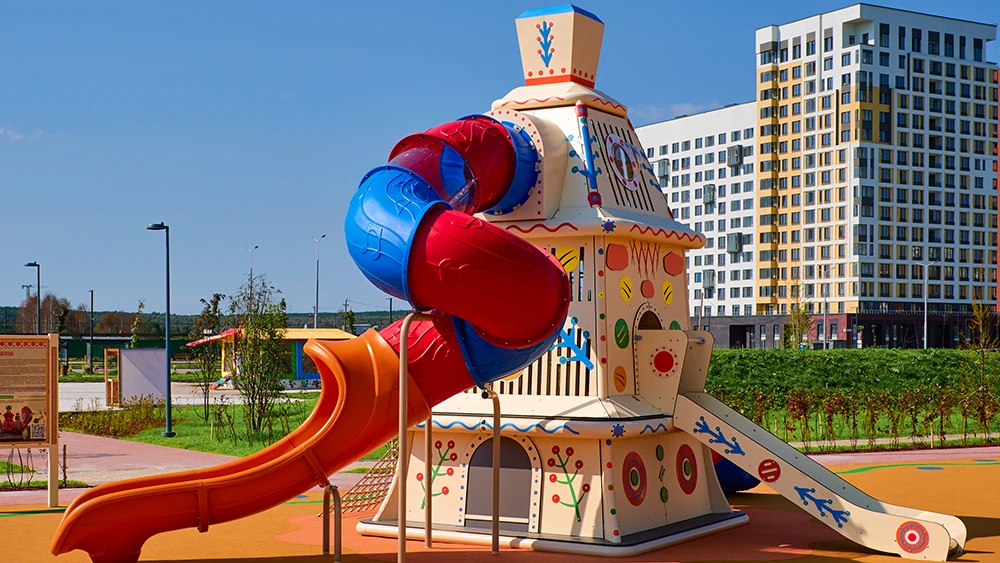
On 15 September, a 558-square-metre children's playground inspired by Dymkovo toys opened in Yekaterinburg's Preobrazhensky Park.
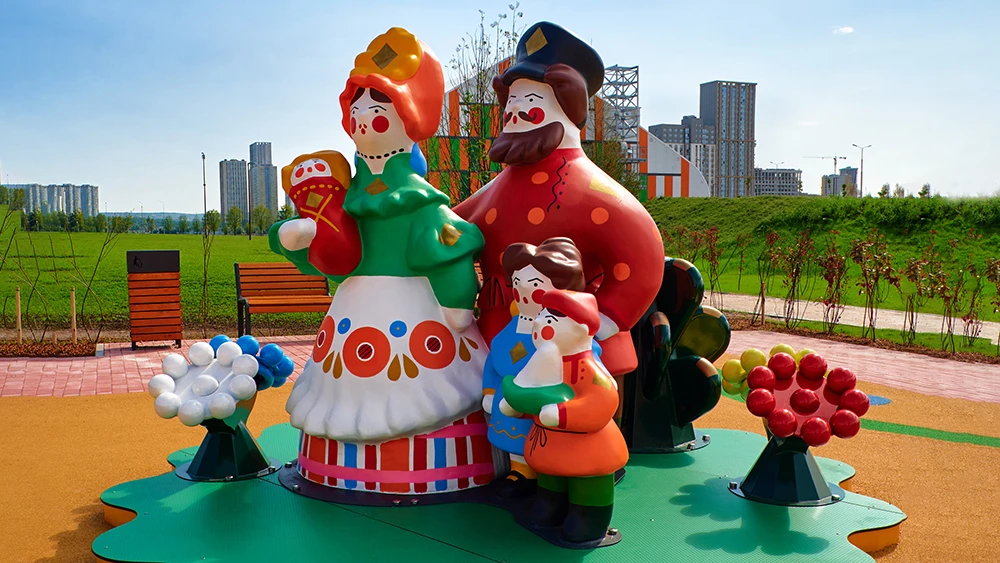
Yekaterinburg has opened the country's first new-generation children's playground inspired by the Dymkovo toy.
Its central theme was the development of visual culture through educational projects, public spaces and new approaches to environmental design.


