

"Trust as soft power" is the main theme of the "Innovative Practice: Science Plus Business" Congress
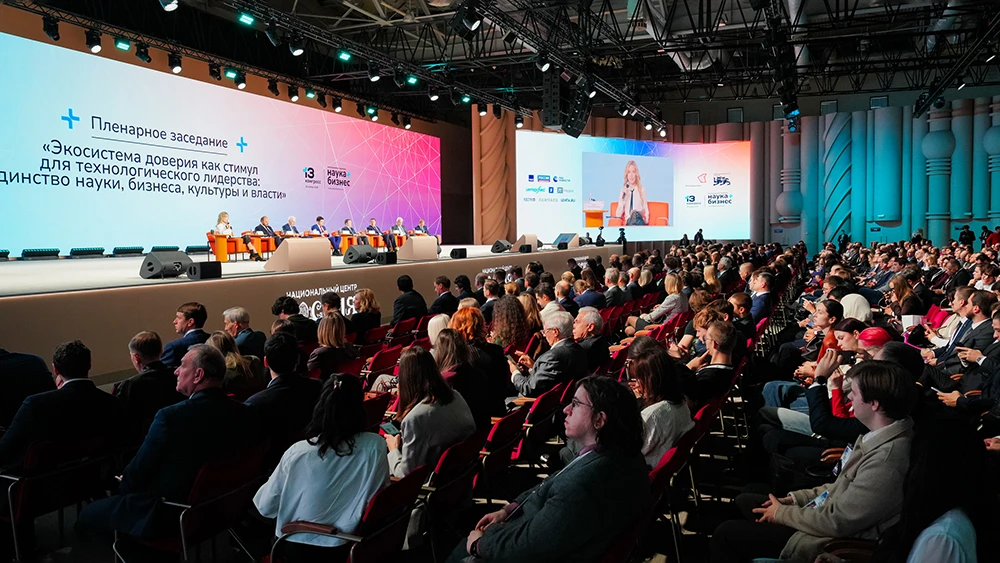
How many percentage points can trust add to GDP growth as an
economic resource, and why do even the most precise agreements fail without it?
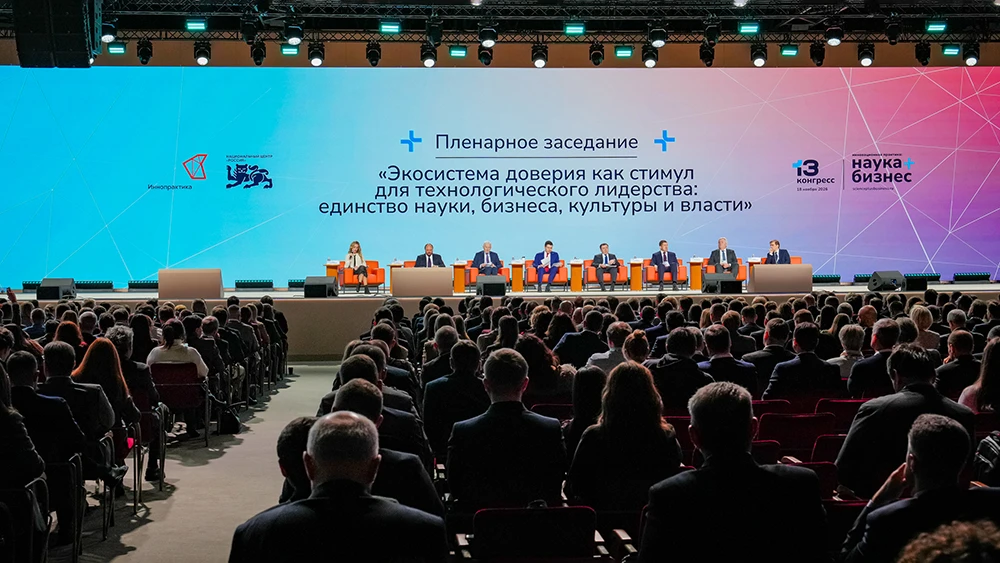
These were the questions discussed at the plenary session "The Ecosystem
of Trust as a Catalyst for Technological Leadership: Bringing Science,
Business, Culture and Government Together", held on 18 November at the
National Centre RUSSIA as part of the "Innovative Practice: Science Plus
Business" Congress. The event brought together more than 2,000
participants, including leaders from government ministries, state corporations,
development institutions and high-tech companies, as well as young researchers.
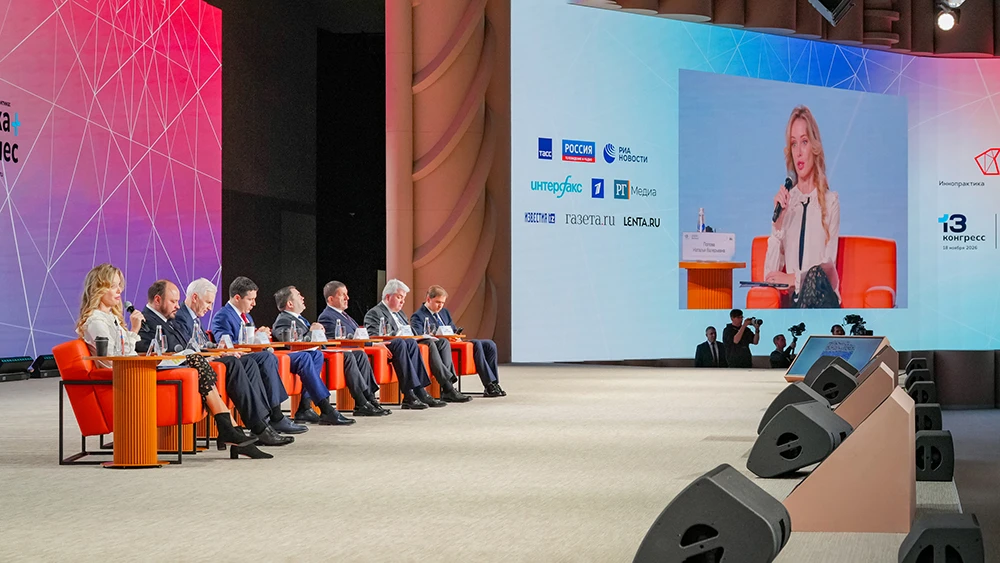
The Director General of Innopraktika, Katerina Tikhonova,
welcomed participants to the Congress. She singled out "trust" as the
main theme of the event. She said projects of real scale could only be built on
trust.
"Today we're holding the Congress with trust as its
central theme. Trust is an essential part of dialogue across society, at both
the micro and macro levels. What is trust? It's a relationship based on
confidence that those involved in a dialogue are acting in good faith, and a
willingness to rely on your partners to honour their agreements and
commitments. As a non-governmental development institution and a forum for
mediation, we always build on these simple principles. They make possible a
whole range of projects that once seemed out of reach. Trust is the soft power
that allows us to create unique products," emphasised Katerina Tikhonova.
She also said that pharmaceuticals had become one of Innopraktika's main areas of work. The trust it built with the Ministry of Science and Higher Education, the Ministry of Healthcare and the Ministry of Industry and Trade made it possible to establish a complete drug development cycle — an interministerial coordination council was set up, and ten research projects on ten unique molecules have already been launched with the ministries' support. Katerina Tikhonova added that work in quantum technology was equally important. With the Ministry of Science and Higher Education and the Kurchatov Institute, the company is working to anticipate how quantum technologies will develop, including for protection against cyber threats. It has also set up an inter-university quantum network with Moscow State University and the Kurchatov Institute and is working with Russian Railways to implement and evaluate the roadmap for developing quantum communications. Agricultural biotechnology is another important area of work.
The Aide to the President of the Russian Federation, Andrei
Fursenko, suggested looking at trust through the reputation of a person, an
organisation or an entire system: "Trust depends on many factors. What is
trust? It's trust in a person, in a regulatory framework, in specific
organisations. That raises the question of what trust is, how it shows itself
and what gives rise to it. What word do we associate most readily with trust?
In my view, it's 'reputation'. A person, an organisation and a system can all
have a reputation. We used to seal a deal with a handshake — we'd reach an
agreement, shake hands and get to work. This system of mutual trust was well
developed in Russia. A reputation takes time and effort to build. Over time,
you find out whether a person or an organisation can be trusted."
He said reputation is backed up by both formal and informal
expert assessment. What matters is whether someone has delivered on the tasks
they took on, whether they can propose an idea and put it into practice
themselves, or whether they understand how others will do it.
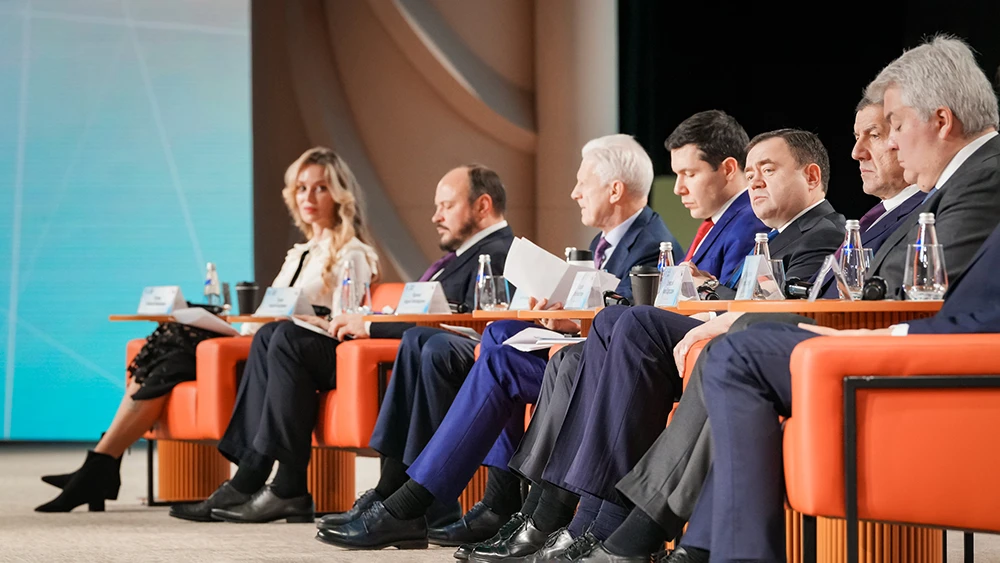
For individuals and organisations, trust rests on reputation. Across society as a whole, it rests on shared values. The Chief of the Presidential Directorate for Social Projects, Sergei Novikov, reflected on this distinction. He said bringing society together around shared values was an existential task.
"Russia is an independent civilisation-state. Vladimir Vladimirovich put it that way in November 2022. Somewhere else in the world, say in Shenzhen, a major event is under way. If we start discussing what sets us apart from other civilisations, such as China or Western Europe, we'll conclude that it's our system of values. So if we want to build a shared identity across Russia and bring all our people together, we need to be clear about which values unite us and hold our society together. It's an existential task, a matter of life and death," said Sergei Novikov.
He recalled that attempts had been made to break the country
apart from the outside at least once a century, sometimes more often, but it
had only ever fractured from within — in the October Revolution, the collapse
of the Soviet Union and the Time of Troubles in the early 17th century, when
society split over its values. This is why, he said, it is important to educate
young people through narratives grounded in values and help them understand
what this means for the country, why it matters and how it will be done.
The Minister of Industry and Trade of the Russian
Federation, Anton Alikhanov, said trust was directly linked to economic growth,
citing research that attributes additional percentage points of GDP growth to
it. Turning to the practical side, he proposed distinguishing everyday and
philosophical ideas about trust from governance at the national level, and said
the most important condition for any agreement was that it be made in good
faith. The minister identified four conditions for science, business and
government to work together.
"First, we need to set common goals and agree on the
basis for our work. Industry and science need shared goals set out in documents
that both have approved, so that scientists and industry colleagues who will
put the research into practice understand our technological priorities in the
same way. Second, we need support mechanisms with clear accountability for the
final result. There has to be room for mistakes, of course, and researchers in
Russia already have tools that allow for that. Research can produce negative
results and things don't always go to plan, but accountability for the outcome
is still essential. Third, the parties need to set out their contractual
arrangements in full and use the same terminology. Fourth, risks need to be
shared between science, business and the state," said Anton Alikhanov.
The Rector of Lomonosov Moscow State University and member of the Russian Academy of Sciences, Viktor Sadovnichy, described how the university is integrating artificial intelligence into education and science: "AI technologies are developing rapidly, and everyone faces the question of how to use them. Our task is to integrate AI into teaching in a way that upholds our standards and improves the quality of higher education. The new educational standards should focus on training specialists who can conduct fundamental and applied research. I would emphasise that in recent years, with expert input from Innopraktika, Moscow State University has built a unique system for developing artificial intelligence."
He said the process began in 2019 with the establishment of
the Institute for Advanced Research in Artificial Intelligence, where research
groups are now working. In 2025, Moscow State University won a grant to set up
an artificial intelligence research centre. This year, its Faculty of
Artificial Intelligence admitted its first cohort and was the most sought-after
faculty, with 129 applicants per place. In October, the university set up a
university-wide council on AI.
Vladimir Mashkov, Chair of the Russian Theatre Society and People's Artist of Russia, noted that the forum brings together science, business and the arts.
"Innopraktika brings together science, technology, business and education.
And I'm delighted that the forum has also made room for the arts. You don't have to be an actor, but if you take the words of those who came
before us and try to say them yourself, to understand them and, in doing so, to
feel them, you can get a sense of how some of the most important decisions are
made, both for an individual and for the whole world. And that's the sequence — attention, imagination, emotions and feelings. These
are all superpowers we can control and use to influence the world," said
Vladimir Mashkov.
He recalled Albert Einstein's remark that logic takes you from point A to point
B, while imagination can take you to any world.
The business programme covered ways to bring participants in
the innovation ecosystem together, meet the economy's staffing needs,
strengthen cooperation between universities and businesses, and share best
practices more widely. In the concert hall foyer and the business area, guests
can see a photo exposition featuring work by finalists in the international
"Picture of the World" ("Kartina Mira") contest and an
installation by the Association of National Champions.
The Congress has been held since 2014 and for 12 years has
served as a forum where representatives of science, business, education and
government seek practical ways to develop the country's innovation economy and
workforce. The main theme of the meeting, which brought together more than
2,000 participants, was how to build a lasting ecosystem that would secure
Russia's technological sovereignty and strengthen dialogue among everyone
involved in innovation.
Speakers at the Congress included Igor Chaika, Head of
Rossotrudnichestvo, Alexei Goreslavsky, Director General of the Internet
Development Institute, Andrei Guryev, President of the Russian Fertilizer
Producers Association, Alexander Dyukov, Chair of the Management Board of
Gazprom Neft, Mikhail Oseyevsky, President of Rostelecom, and Pyotr Fradkov,
Chair of PSB Bank.
Event photobank

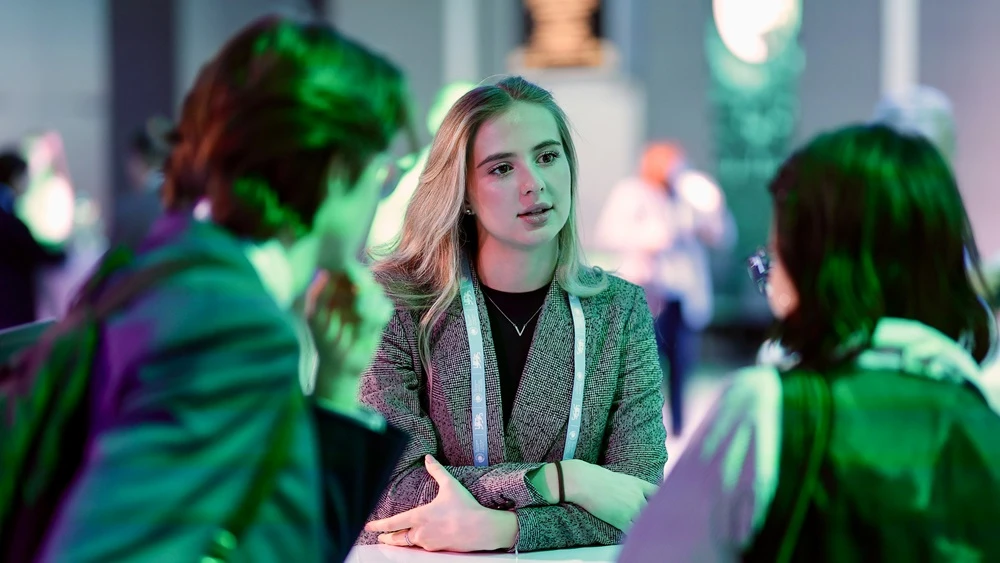
For foreign participants of the III International Symposium "Inventing the Future," its main result was not only new knowledge but also acquaintances with like-minded people.
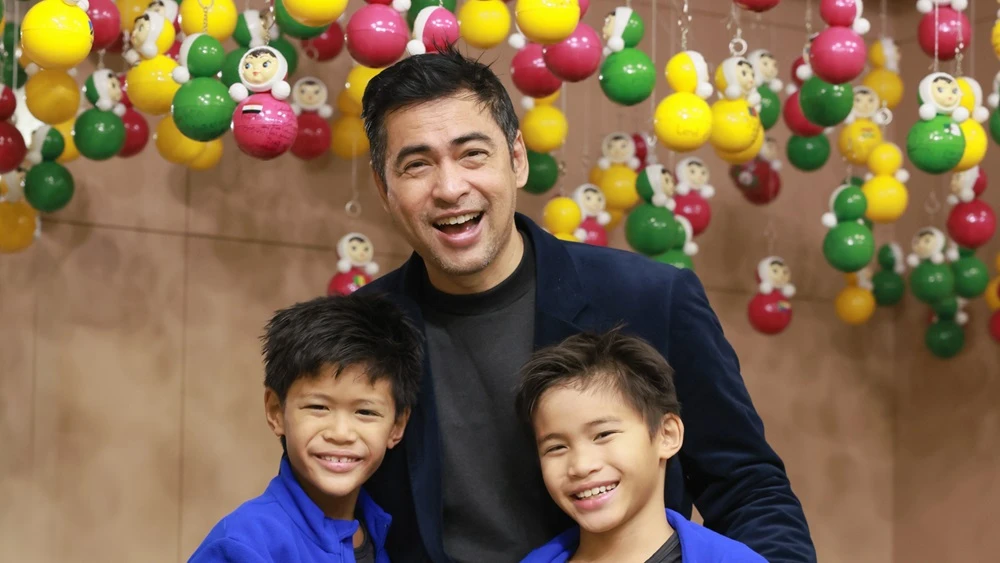
According to Sheikh Muszaphar Shukor, the space of the National Centre RUSSIA made a strong impression on him.
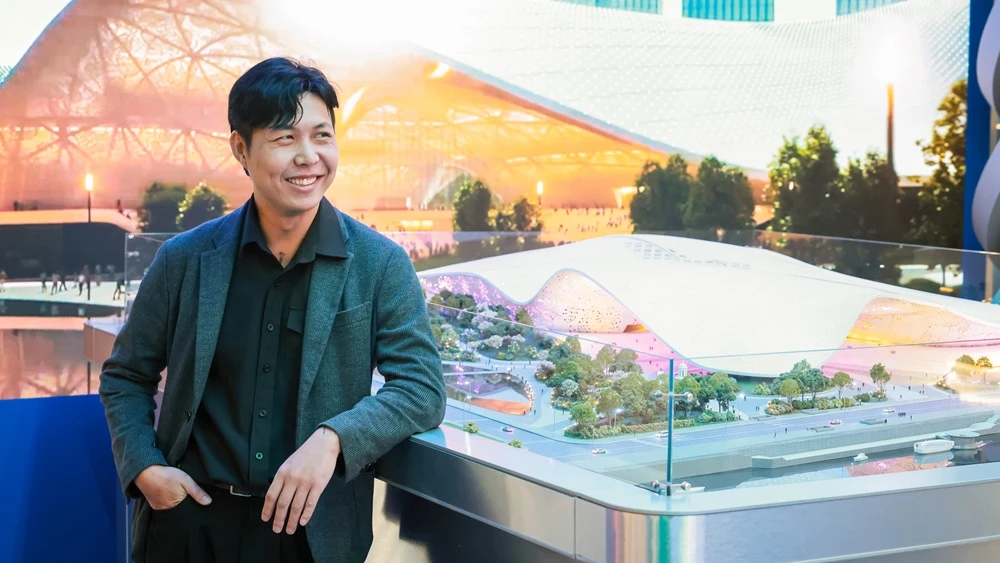
Leading international experts attending the III International Symposium "Inventing the Future" have praised the National Centre RUSSIA's facilities.


