Yulia Ablets told young journalists how media can change the world
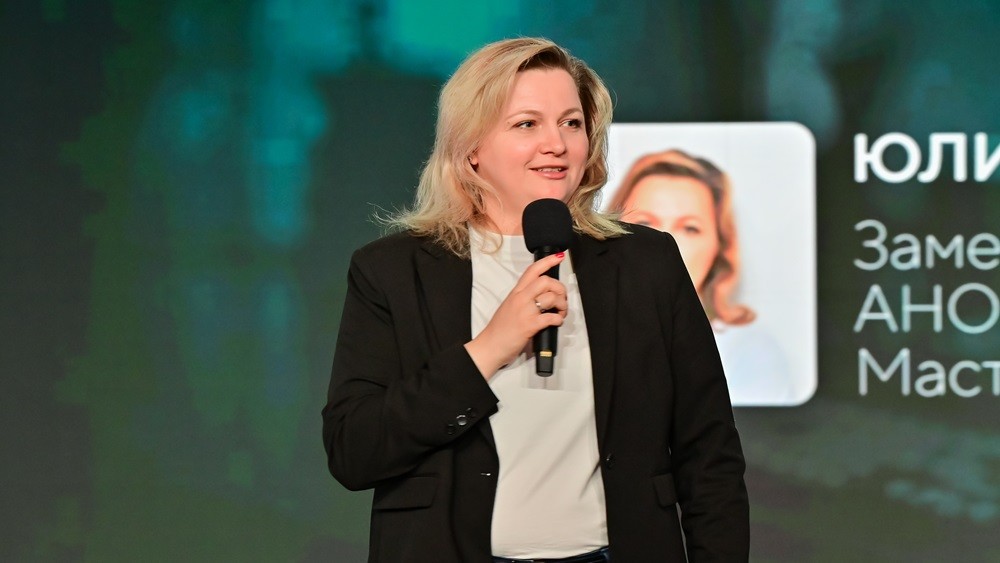
Media today do not simply report on the world — they change it, shaping a new reality. This was the message shared with participants of the Young Journalists School by Yulia Ablets, Deputy Director General of the ANO "Dialogue Regions" and founder of the New Media Workshop. The master meeting took place on 27 March at the National Centre RUSSIA. The students learned how the modern media landscape works and what awaits those who choose a career in journalism.
At the beginning of the meeting, the expert shared her personal professional journey. She started her career in the commercial sector, trained as a lawyer, worked on labour dispute resolution, served as an HR director, and later headed youth policy in Saint Petersburg. However, she considers the creation of the New Media Workshop to be her key achievement.
"Today, people change their career trajectory several times throughout their lives, and this is normal. In the past, if you were an accountant, you remained one for life; if you were an engineer, you were always an engineer. Now you have the opportunity to move between different sectors: business, public administration, and the non-profit sector. It is important not to be afraid to try new things and to make use of the social mobility opportunities that truly work," Yulia Ablets noted.
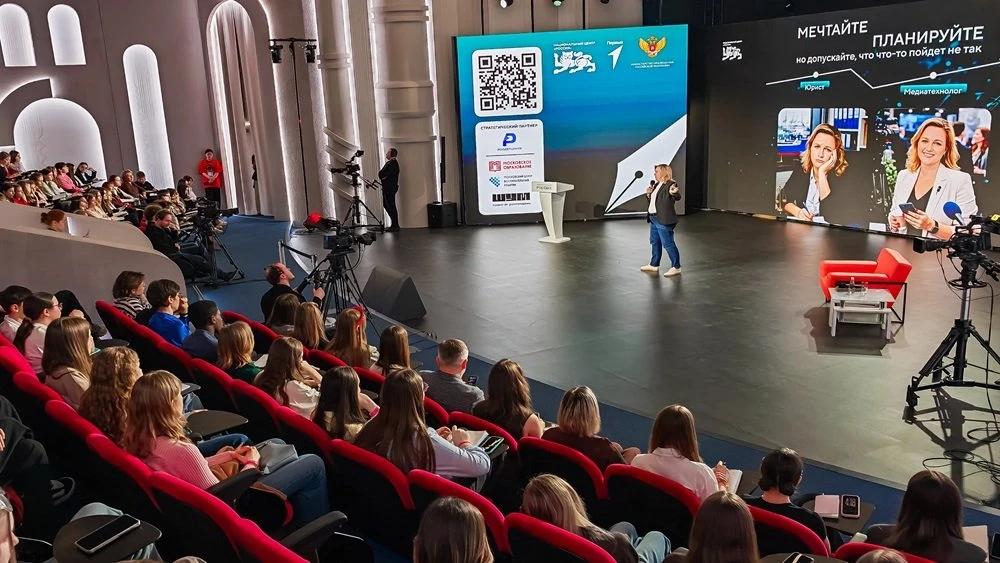
According to her, experience in different environments helps to understand which rules apply where and what contribution one can make. She explained that those who prefer clear regulations and stability feel more comfortable in the state system. People who can quickly adapt and respond to change are better suited to the dynamic commercial sector. For those who want their work to improve people’s lives, the public sector is likely the right choice.
The expert also noted that there used to be fewer sources of information. Today, everyone has a phone in their hand, which means that anyone with a social media account is already a media outlet — and this requires a high level of personal responsibility: "You shape the information space for your audience; you influence how they see life. Therefore, the key quality of any media professional today is responsibility for what you say and show to your audience."
The students also learned why audiences increasingly trust author-driven content. According to the expert, modern audiences do not want "content about everything and nothing" — they choose specialised topics and convenient formats such as short videos, long reads, and analytical materials. Authors must understand their audience’s needs and be able to work across different formats. In addition, Yulia Ablets noted that a journalist must continuously learn, broaden their horizons, and develop critical thinking. In her view, without a strong foundation in history, culture, religious studies, and politics, it is impossible to explain complex events to an audience quickly and accurately.
In the final part of her speech, Yulia Ablets shared her view on the role of Russian media in the world: "Our country has everything it needs to be strong: science, industry, culture, and people. It is important for us to have an equally strong idea and to be able to communicate our position. Media are that very smart power that can change the world, explain our point of view, and show that we want to develop."
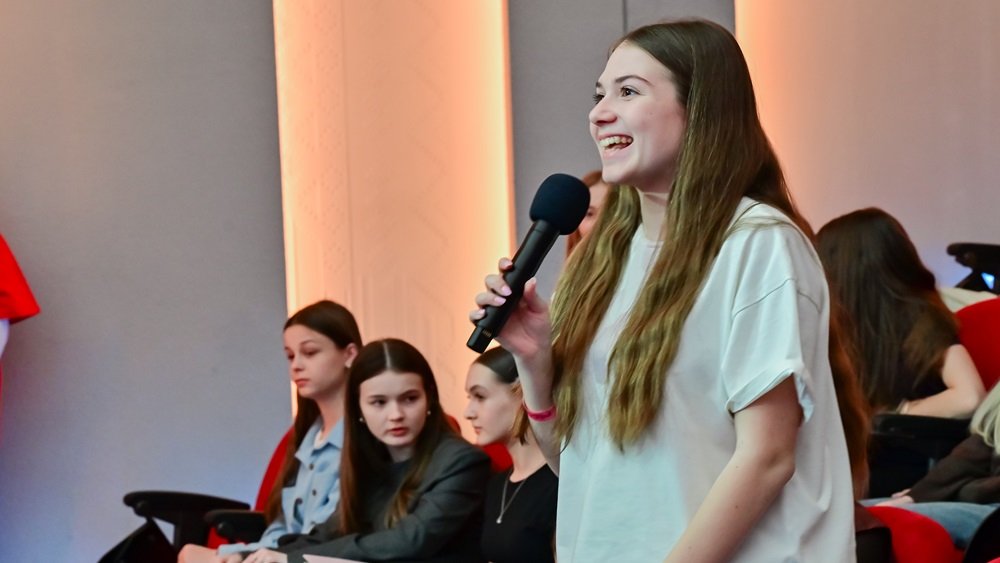
At the end of the master meeting, one of the participants asked how to remain an honest and meaningful author when social media algorithms promote light and superficial content. In response, the expert said that the task of young media professionals is to make deep, value-driven materials attractive to a wide audience.
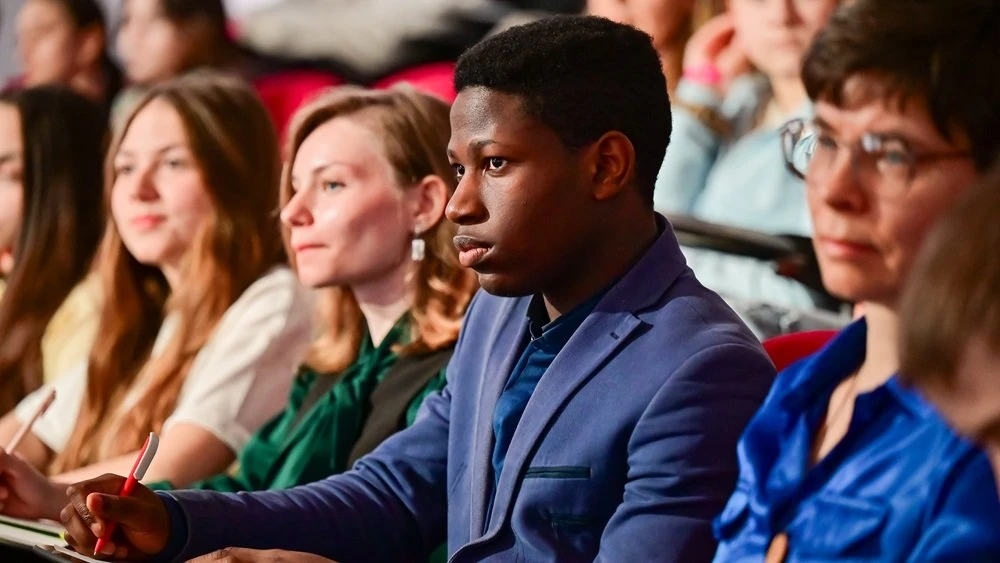
"You need to take the best from creators of light content — strong presentation, modern formats, the ability to capture attention — and package meaningful stories within them. It is important to build teams that include people who can generate ideas, shape them into engaging formats, and promote them. Then value-driven content can also reach millions of views," Yulia Ablets concluded.
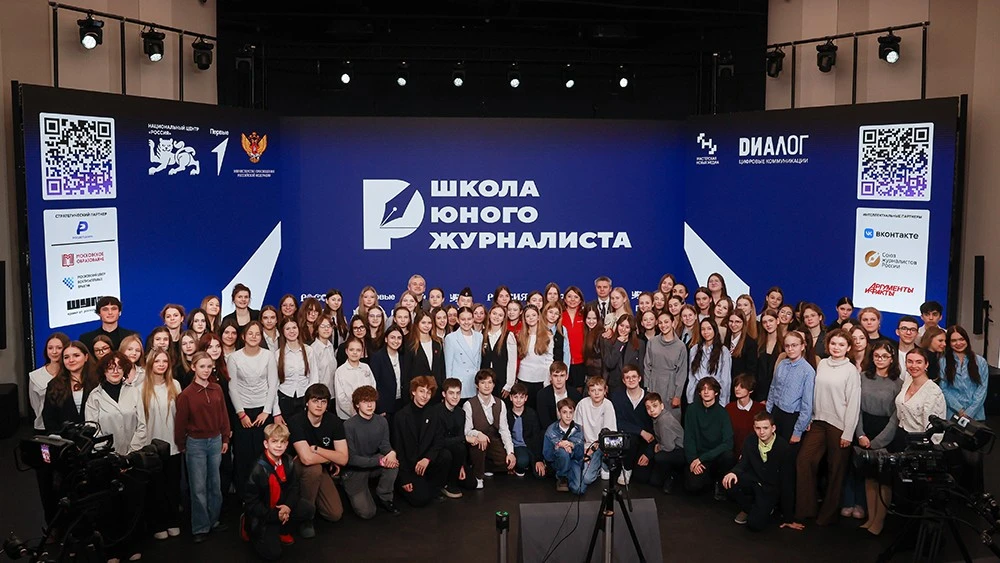
The master meeting format allows school students to better understand the practical side of the profession through examples of successful career paths. Participants of the Young Journalists School can communicate directly with media experts who are shaping approaches to working with information in Russia today.
The "Young Journalists School" project is organised by the National Centre RUSSIA and the Movement of the First with the support of the Ministry of Education of Russia. Programme partners of the project are ANO "Dialogue" and the New Media Workshop. The strategic partner is the Russian Children and Youth Centre.
Event photobank
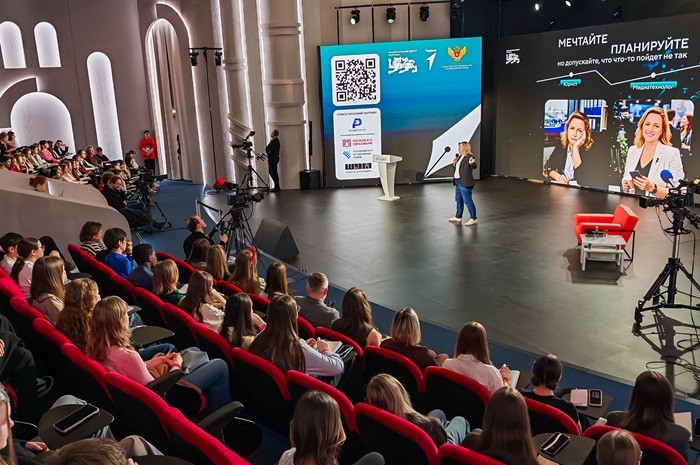

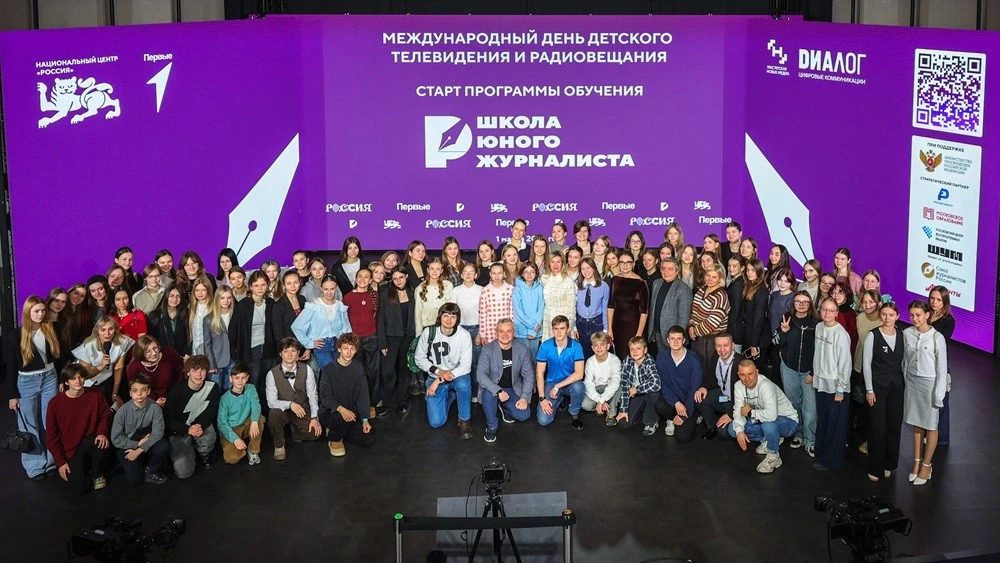
The Young Journalists School at the National Centre RUSSIA is not only about theoretical and practical classes, but also about live communication with industry professionals.