


Future journalists learned about the power of words at a class at the National Centre RUSSIA
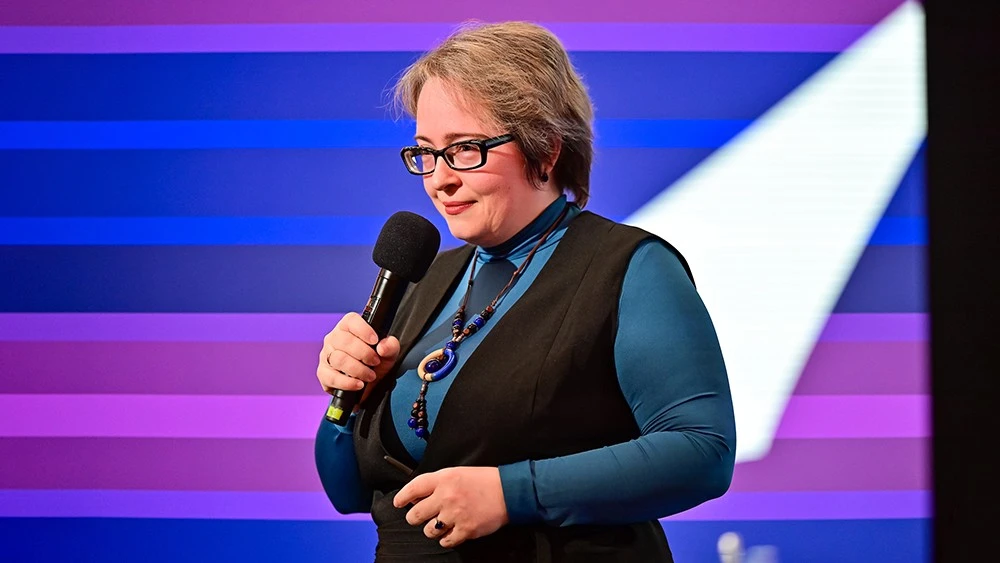
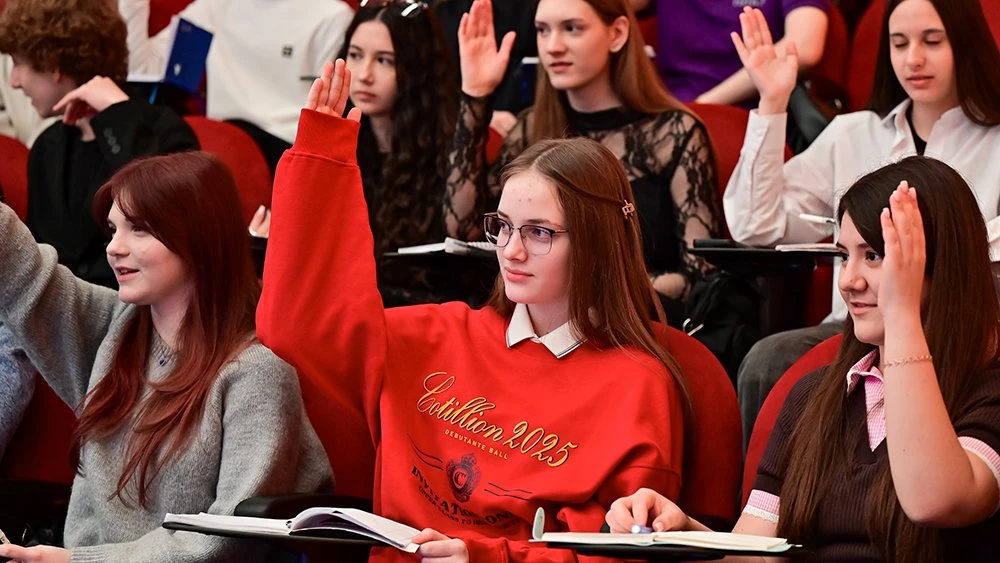
Why does a journalist’s future depend directly on how they speak and write? How can the same word unite and inspire — or, on the contrary, repel? And where is the line between what is "correct" and what is "appropriate" in language? These questions were discussed at a session of the "Young Journalists School" at the National Centre RUSSIA. The lesson "The Russian Language as a Tool of Unity and Influence. The Word as a Carrier of Meaning and Values" was delivered by philologist, lecturer, and scientific editor of the popular science media project about the Russian language "Izbornik", Nadezhda Voskresenskaya.
She explained what is meant by the concept of the Russian language and outlined its origins. The students traced its development from Proto-Indo-European to Proto-Slavic, Old Russian, and modern Russian, and discussed its relationship with other languages. Nadezhda Voskresenskaya explained how the Glagolitic script differed from the Cyrillic script and why the Cyrillic tradition became the foundation of modern writing.
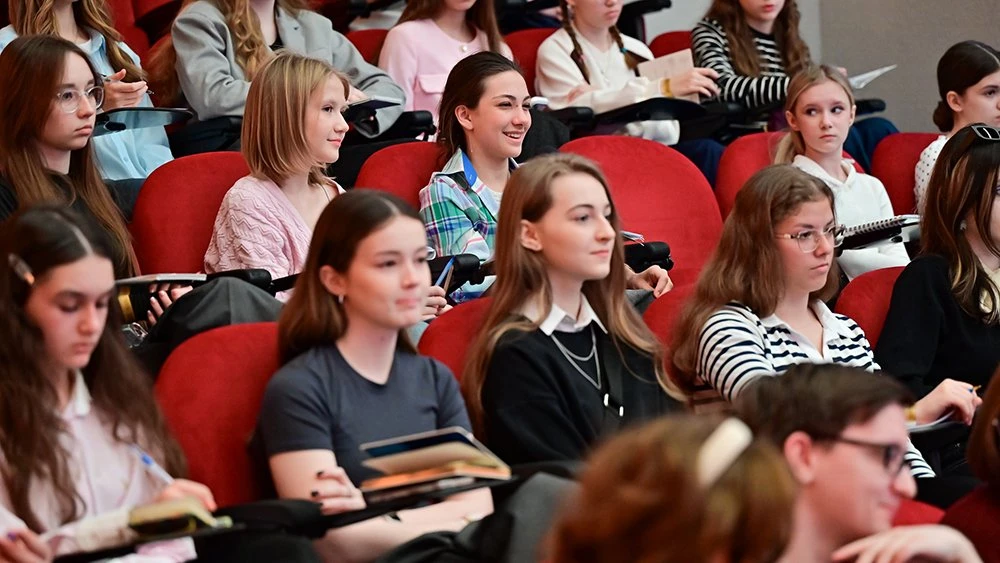
The lecturer then turned to the Russian literary language and the role of Alexander Pushkin in its formation. Together with the teacher, the students saw that the language included both solemn Church Slavonic vocabulary, various borrowings, and rich, expressive folk speech. As the lecturer emphasised, Pushkin demonstrated how these layers could be combined: "He showed that any word can be used if there is a place for it, and that all means are acceptable if they are appropriate." The literary language moved closer to everyday speech while preserving its traditions.
The students also examined what constitutes a literary norm and why it is important for future journalists. They learned about the publicistic style and its functions. Speaking about the importance of the Russian language for aspiring journalists, Nadezhda Voskresenskaya emphasised its dual role — both professional and value-based.
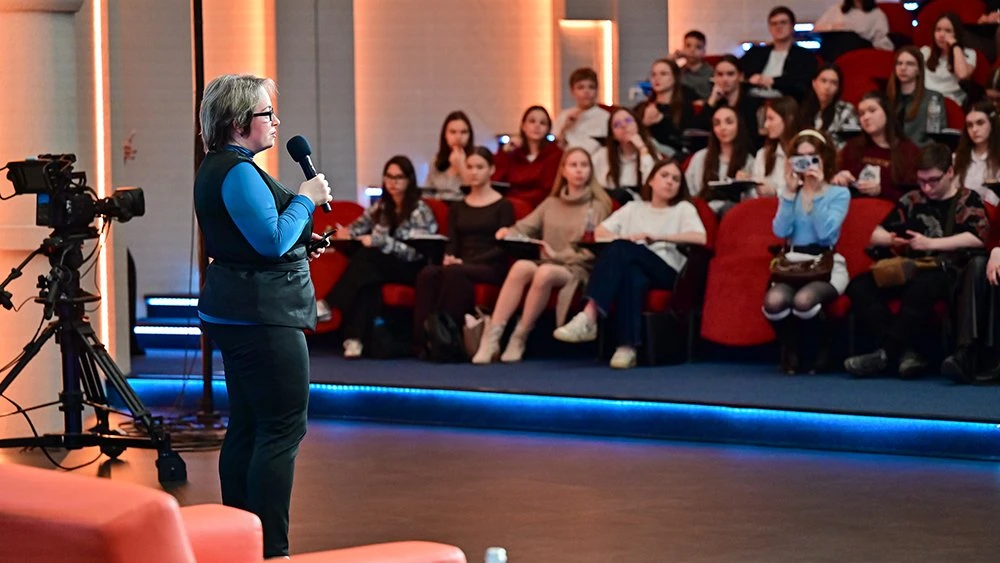
"First of all, it is a professional tool, and any professional tool must be mastered professionally. It would be strange to ask a machinist why they should be skilled at operating their machine. Secondly, journalists bear significant responsibility, because everything they say plays not only an informative role but also an influential one, and we are not always aware of this. Journalists are also carriers of language, and the way they speak shapes our future language," she noted.
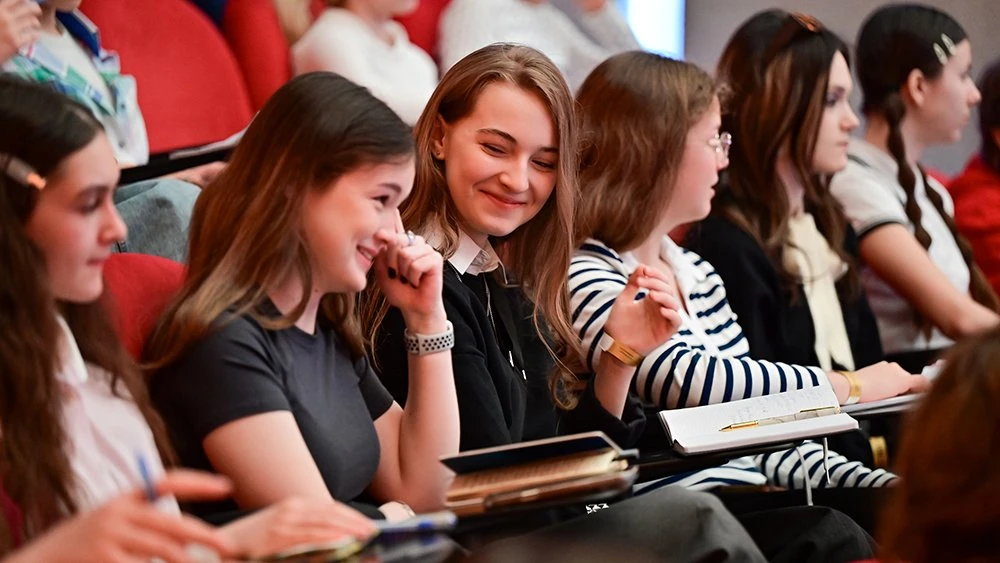
Classes at the "Young Journalists School" help students not only to gain new knowledge but sometimes even to reconsider their life priorities.
"I really enjoy studying at the 'Young Journalists School', although I am currently training to become an agronomist. After these classes, I am seriously considering trying myself in journalism. Today’s lesson revealed many new things to me, especially about the history of the Russian language. We also examined what a publicistic text is, its types, and discussed literary and non-literary forms. All of this proved useful — many of these things I simply did not know before," said Milana Pasechnikova.
The "Young Journalists School" project is organised by the National Centre RUSSIA and the Movement of the First with the support of the Ministry of Education of Russia. Programme partners include ANO "Dialogue" and the New Media Workshop. The strategic partner is the Russian Children and Youth Centre.


On 20 March, the National Centre RUSSIA hosted a meeting of the Literary Club "What to Read?!" on the topic "Women in Literature and Around It".


