

How art residencies transform people and entire cities: discussion at the National Centre RUSSIA
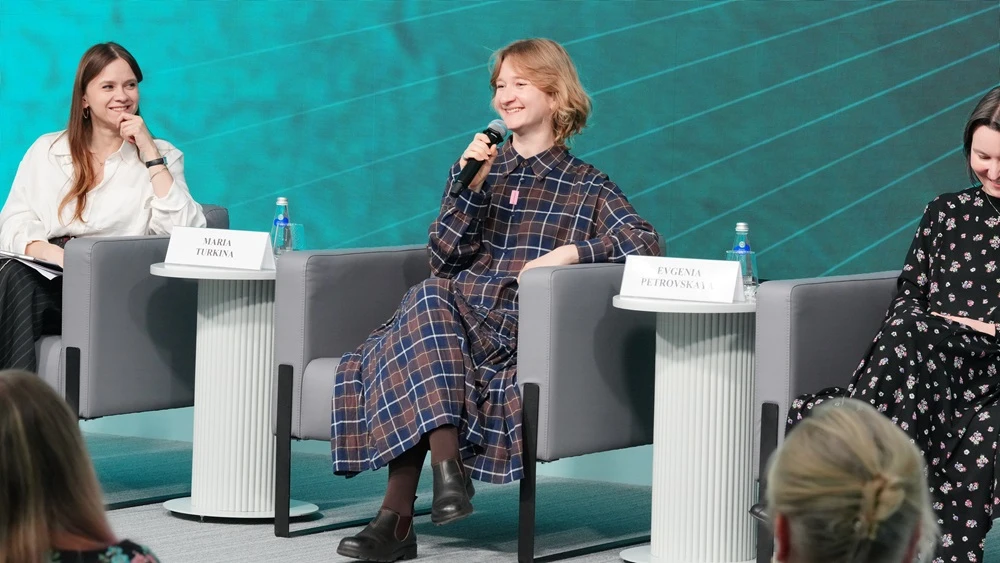
Can an artist's brief stay leave a lasting mark? And who changes more through this interaction — the artist or the place they visit? These questions were explored by participants in the discussion "Temporarily Local: The Art Residency as an Art of Being Present". The event took place at the National Centre RUSSIA as part of the III International Symposium "Inventing the Future".
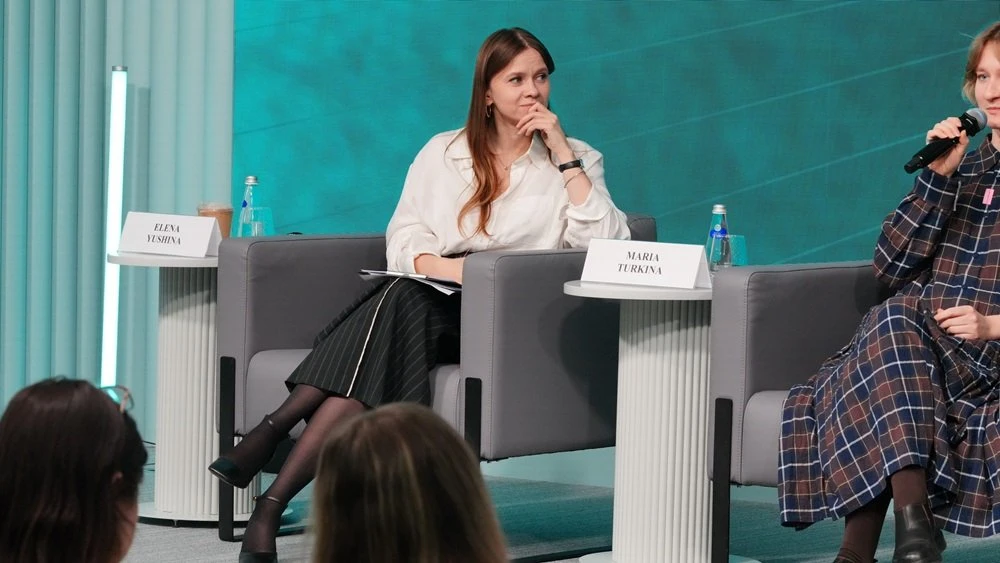
Yelena Yushina, Head of the Exposition and Curatorial Directorate of the National Centre RUSSIA and the International Ethnographic Triennial (IET), noted that the discussion was being held in partnership with the International Ethnographic Triennial.
"In June this year, we announced the launch of the International Ethnographic Triennial in Zaraysk, Moscow Region. In January 2027, we will begin the 'Towards the IET' programme, which will include educational, awareness-raising and publishing projects. And today, as part of this discussion, we are starting a conversation about how the Triennial will develop. We are currently looking for locations where art residencies and expeditions could be organised. We are interested in learning how artists can work with urban spaces, engage with scientific communities and what kinds of projects could emerge from this," Yelena Yushina explained.
The discussion of a territory as a co-author of the artist marked one of the first steps in the "Towards the IET" programme. According to Yelena Yushina, the Triennial is still at a very early stage, with its concept and methodology taking shape. Meetings such as this one help identify potential locations for future residencies and expeditions. The discussion's title points to the same idea: an artistmay arrive for only a short time, but this temporary presence can leave a lasting mark — on the place, its residents and the artist themselves.
Zhenya Chaika, Chair of the Association of Art Residencies of Russia, explained how unusual the residency format was when it first emerged and how it has evolved in recent years. She suggested looking at it in the broader context of the history of cultural institutions.
"Residencies in Russia began to develop in the early 2010s. This is a relatively new format — it has been around for just 15 years. Think about how long displays and museums have existed, as well as other practices such as plein-air painting. These are all more familiar concepts. Peter the Great established the first museum in Russia. Museums have been around for 300 years, and we are used to their existence. Residencies are young — they have been around for just 15 years — so it is understandable that not everyone has yet got used to them or fully accepted their existence," Zhenya Chaika noted.
In her view, the situation has improved in recent years: Russian artists have learned to make use of art residencies in their own country, and the format, having moved away from the exchange model that was once common, has become an effective way of supporting artists, writers, curators and researchers within Russia. It also encourages artistic mobility between regions. Thanks to residencies, more and more artists are discovering Russia's different cities, regions and natural landscapes.
Yevgenia Petrovskaya, Curator of Cultural Projects at the Creative House of Writers in Peredelkino, shared her experience of running a writers' residency. She clarified an important detail: although the venue also welcomes artists, it is primarily a place for people who work with text.
According to her, more than 700 residents have stayed at the renovated Creative House since 2021. Her work, she explained, is concerned less with hospitality itself than with management and project development.
"As it usually goes, a resident arrives, spends between 10 and 21 days with us, and then leaves. But this part of their life — their stay at the Creative House of Writers in Peredelkino — does not end when they go home. We do a great deal of work to support our connection after their residency. This is not just about hospitality; it also involves human resource management, so that we can keep them connected with the Creative House as residents for good," Yevgenia Petrovskaya explained.
These efforts include pitching sessions for writers and other residents, held once or twice a year. Representatives of major Russian publishing houses listen to their projects, and around 20% of participants secure publishing contracts. The residency reports to its founding organisation through books that acknowledge the work carried out at the Creative House. Residents can also meet their future publishers at ordinary events held there. The venue has even assembled a special collection: visitors are greeted by a shelf in a glass display case bearing the inscription "Written and Translated at the Residency".
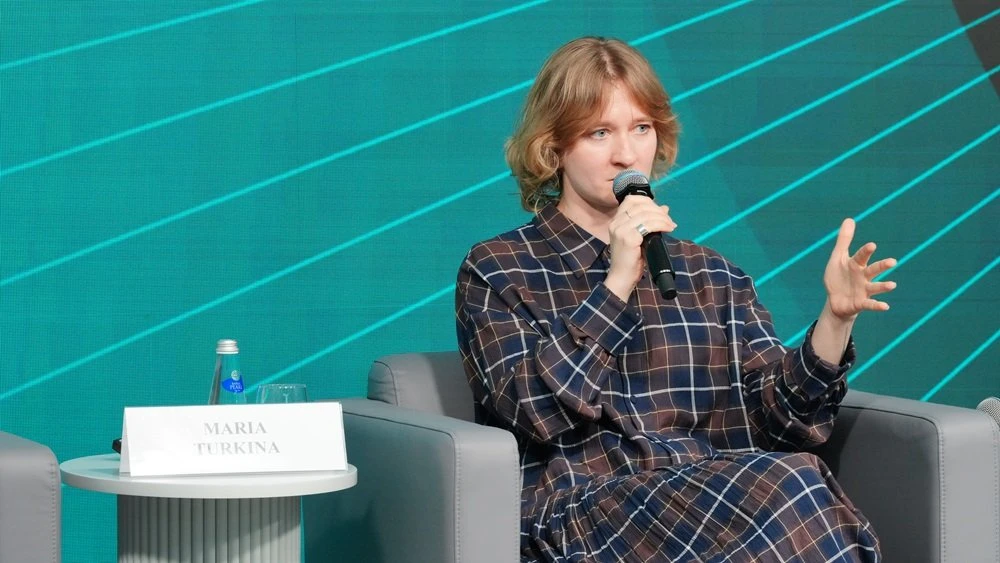
Maria Turkina, Programme Director of the Galo Art Residency in Chernogolovka, spoke about how to bring art to a small town. Her example was not about an artist making a quick visit, but about long-term preparation. In this science city, which has neither a museum nor an art gallery, the residency first had to be "grown" through a series of laboratories before it could open its doors.
"In 2022, setting up a residency straight away or immediately building a cultural centre would not have been the right approach. We needed to prepare local residents for it first. So, before moving on to the residency itself, we launched a sociocultural programme in the form of laboratories. One of these produced a group of guides — local tour guides who now work professionally and officially. At last, the town had people who could show visitors around. We also worked with older school students in a podcast laboratory. They were interested in the technical side of how the process went, but as they prepared their episodes, they also learned facts about their own town. The highlight of the programme was an 'art and science' laboratory, where we brought in artists, introduced them to researchers and local residents, and explored augmented reality. We visualised scientific concepts, showing what a singularity or solid flame might look like," Maria Turkina said.
It was only two years later, she explained, that the residency began operating in full. Each season, artists are selected for the Chernogolovka "little house" through an open call or by curatorial invitation to explore the concept of a "science-city-ness". Working alongside researchers, they help establish what distinguishes Chernogolovka from other Russian science cities and from an industrial town, gradually, layer by layer, building a "library of knowledge" about what makes it unique. They also find ways to communicate science to people who cannot get past the concrete fence surrounding a research institute. An artwork, for example, can demonstrate the process of depositing metals onto a substrate and let visitors listen to eight samples from a laboratory.
The participants also discussed how quickly a place changes after hosting an art residency. According to Zhenya Chaika, this is a long-term process that takes three to five years. The first changes are felt in people's hearts and only later become visible in the urban environment — in improved public spaces, cafés, hotels and art around the city. Maria Turkina described how expositions held in a former registry office and a flower shop at a greenhouse complex encouraged Chernogolovka residents to rediscover their own town. Yevgenia Petrovskaya spoke about how the Creative House in Peredelkino builds relationships with its neighbours in the writers' community and why an artist's residency does not end on the day they leave. Ultimately, the participants agreed that residencies are not designed to deliver quick results. They involve long-term work, in which building human relationships with the place where creative work takes place is essential.
The III International Symposium "Inventing the Future" is taking place at the National Centre RUSSIA on 12–13 November. The flagship event brings together government officials, scientists and researchers, representatives of business, the creative industries and civil society organisations, as well as young professionals from different countries, to work together on shaping positive scenarios for the future.
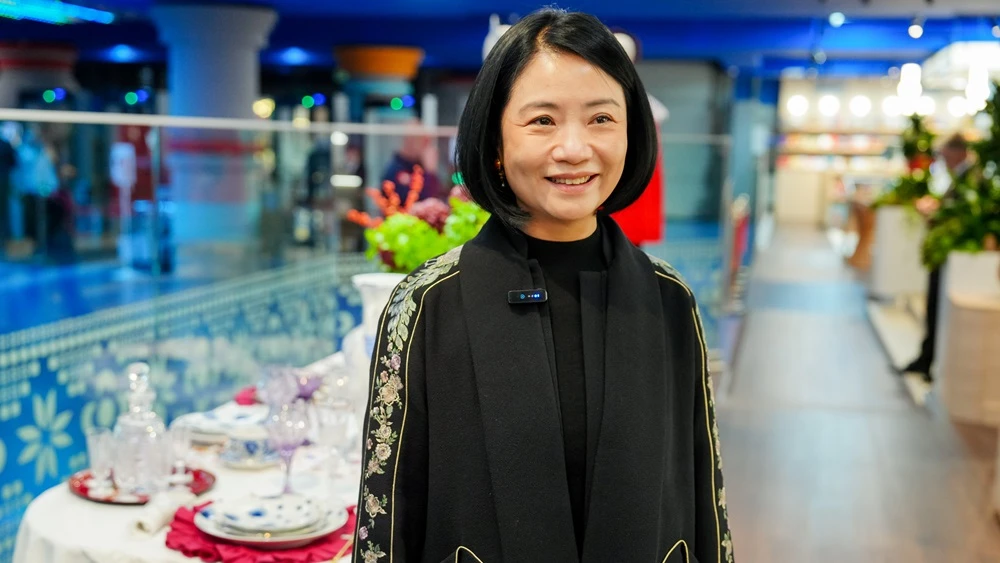
The designer was particularly impressed by the flagship project, the Department Store RUSSIA, where she saw Russian culture reflected in traditional crafts.