


Space, the Arctic and expeditions: Geography Teachers Forum explores how a school subject can help people find their vocation
The
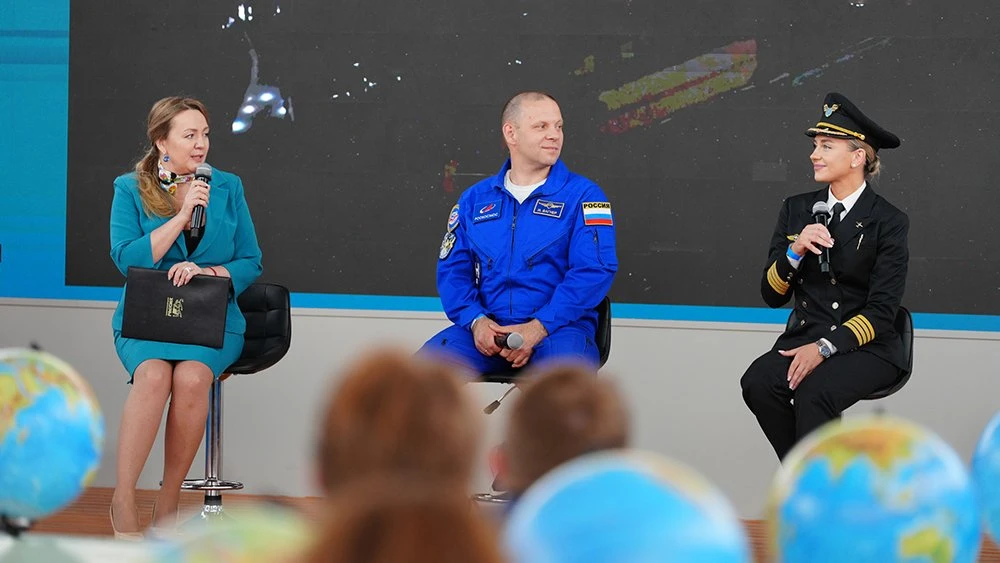
"Compass of Vocation: Motivational Routes" session was held at the
National Centre RUSSIA as part of the Forum of Geography Teachers and Students
of Specialised Universities. The discussion with schoolchildren, students and
teachers featured cosmonaut, Hero of Russia and participant in the Arctic stage
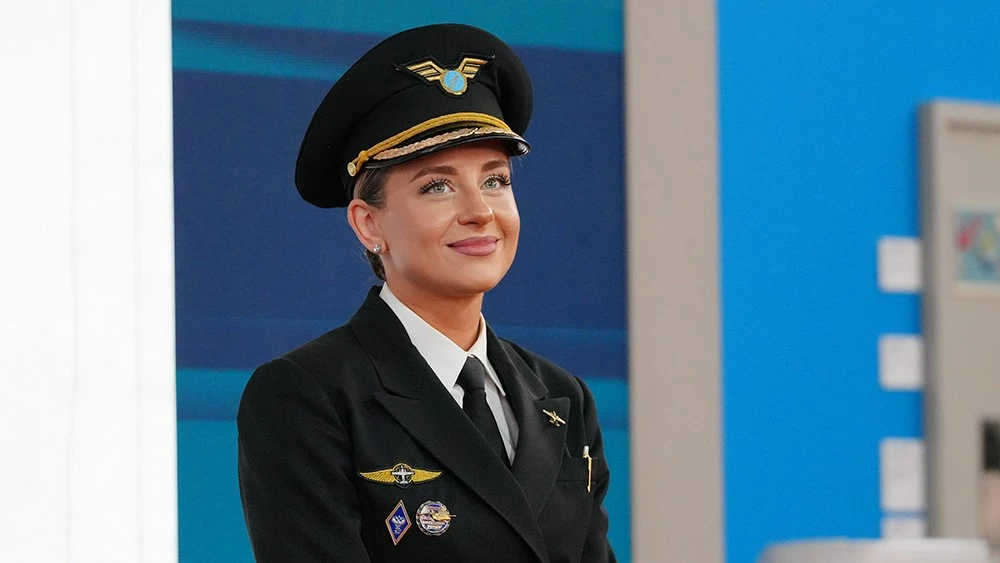
of the "Path of the Ancestors" expedition Ivan Vagner; civil aviation
pilot and aircraft commander in the Arctic Valeria Minina; and extreme
traveller and expedition tourism expert Dmitry Barabanov.
The participants
explained how school geography had helped them find their professions, taught
them to make decisions in challenging conditions and transformed childhood
interests into lifelong pursuits. They also shared their success stories,
inspiring guests to follow their dreams with confidence.
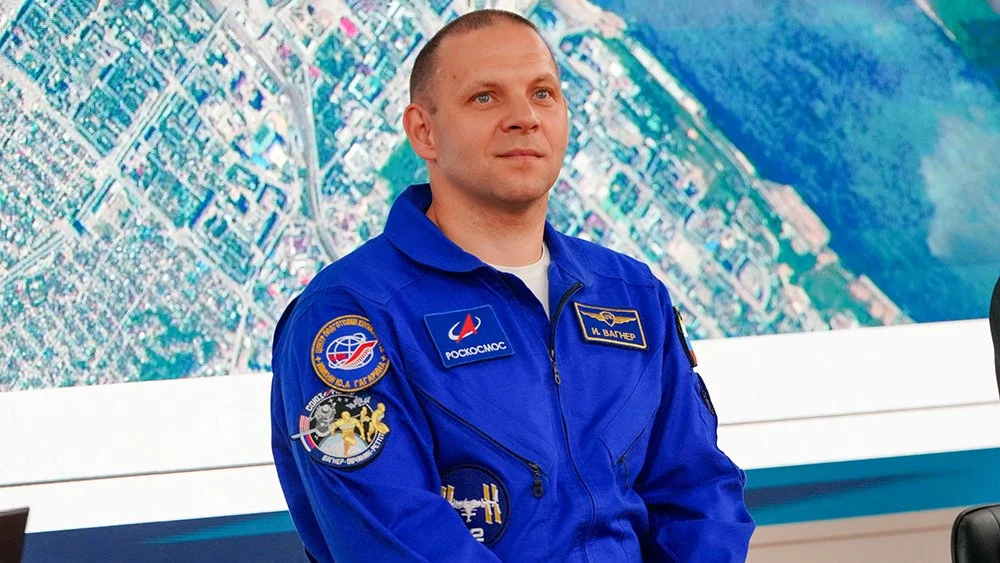
"At
that time, almost no one dreamt of becoming a cosmonaut. Everyone wanted to be
a lawyer or an economist. People laughed at me, to put it mildly. But the most
important thing on the path towards your dream is to be genuinely passionate
about it. When you care about what you do with all your heart, things begin to
work out," Ivan Vagner said.
The
cosmonaut noted the role of his school geography teacher. According to him, in
a small rural class, it was the teacher who managed to spark an interest in the
subject by combining strictness with genuine enthusiasm. Those who wanted to
learn really did know geography well, even though they attended an ordinary
school.
His
practical interest in geography grew when he began applying his knowledge in
real life: "My father was a long-distance lorry driver and took me with
him on work trips. There were no gadgets or navigation systems, so you began
finding your bearings with an atlas and following your route on a map. Then came
hiking and water tourism. When you begin applying theoretical knowledge of
geography in practice, it becomes more interesting and gradually draws you
in."
Ivan Vagner
admitted that the path to spaceflight was long and required him to give up some
of the risks he had been accustomed to taking, but not the dream itself. He
described taking small daily steps towards a goal and being able to stay the
course over the long term as essential conditions.
Valeria
Minina said that her father was the first person to tell her that women could
fly and that there were female pilots in aviation. The subject immediately
sparked a strong interest and became the starting point in choosing her future
profession. Her parents noticed her enthusiasm and supported it, but decided not
to rush to conclusions, giving her time to make sure that the decision was a
conscious one. Several years later, when she was choosing the examinations
required for admission, they asked her once again about her intentions and,
after receiving a firm answer, fully supported their daughter’s choice.
"The
path was not easy, but seeing geography lecturers and teachers here, I want to
say that this science is extremely important. At school, I did not fully
understand or realise how broad and fascinating it was. I have now worked as a
pilot for nine years and as an aircraft commander in the North and the Arctic
for five years, and every day I am reminded that geography is indispensable in
our profession," Valeria Minina shared.
She
emphasised that the ability to work with maps and coordinates is not an
abstract skill for a pilot but part of everyday practice: "I can still use
longitude and latitude to find the necessary point along a flight route. We
calculate everything, and we need all of it in our actual work."
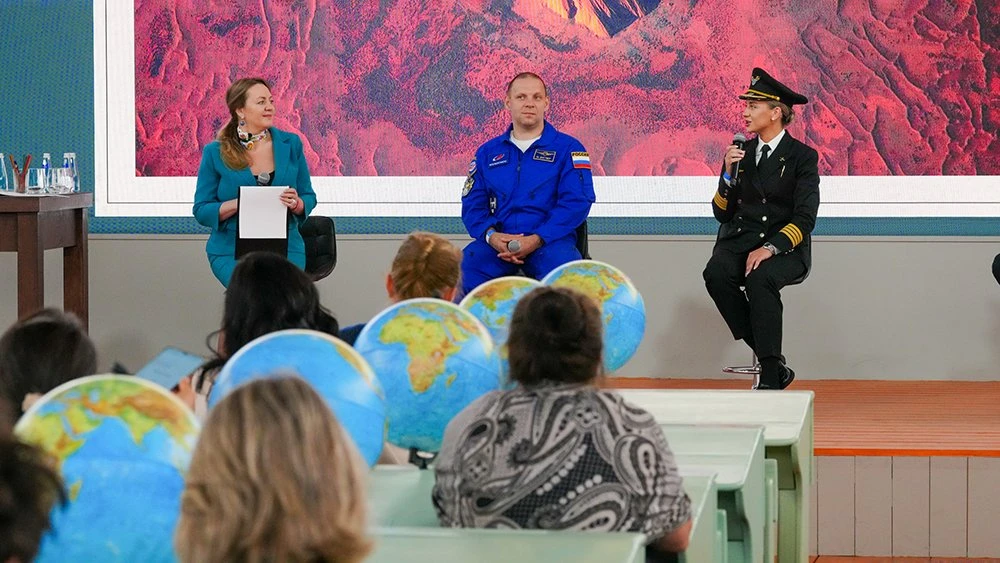
Explaining
how she progressed from an applicant to an aircraft commander, Valeria Minina
quoted her favourite words by aviator Amelia Earhart: "If you are going
into this profession, take an axe with you, because you will have to cut your
way through."
"I
think this phrase can be applied to any profession. Everyone has their own path
and their own difficulties. You should not see them as a dead end: any
difficult experience, when approached correctly, turns into three or four steps
forward," Valeria Minina noted.
The pilot
also addressed the teachers directly: she still keeps in touch with her school
geography teacher and emphasised that it is schoolteachers who establish the
very "beginning of the trajectory" without which no professional
journey can succeed.
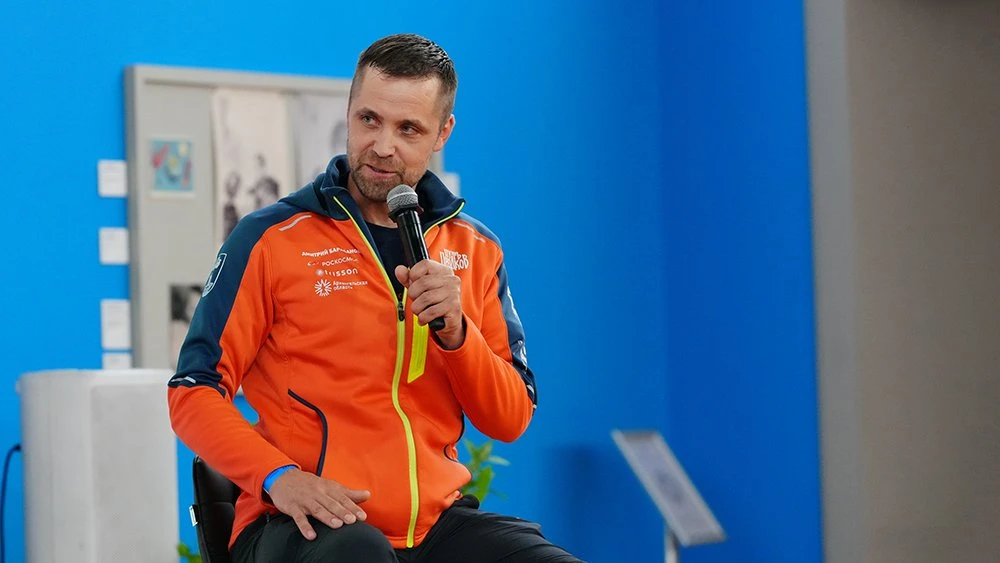
Extreme
traveller and expedition organiser Dmitry Barabanov described his approach to
geography as "practical": "I did not study it only from books.
It all began for me in the fourth year of school, when we went on a school
hike, I was put into a small kayak, and unexpectedly, I was good at it. That
was the beginning of rafting trips, contests and hikes."
He recalled
the school "round-the-world journeys" along northern rivers and
lakes, during which the class covered hundreds of kilometres by water: "Every
time we went somewhere, we had to find out which region we were travelling to,
which river we would follow and what we would see along the way. We studied the
routes on maps, and geography stopped being an abstract subject and became part
of preparing for a real journey."
Speaking
about extreme sports, Dmitry Barabanov emphasised that behind the apparent
excitement lie considerable responsibility and serious geographical
preparation: studying the terrain, water, weather, logistics and evacuation
options. According to him, this knowledge makes it possible to approach nature
consciously and make considered decisions in difficult situations rather than
"playing with risk at random".
He also
noted that Russia offers unique opportunities for active recreation and travel,
from the northern seas to the mountains and lakes of the central part of the
country. The important thing is to recognise how many fascinating places are
located "close to home" and not to be afraid of moving beyond
familiar routes.
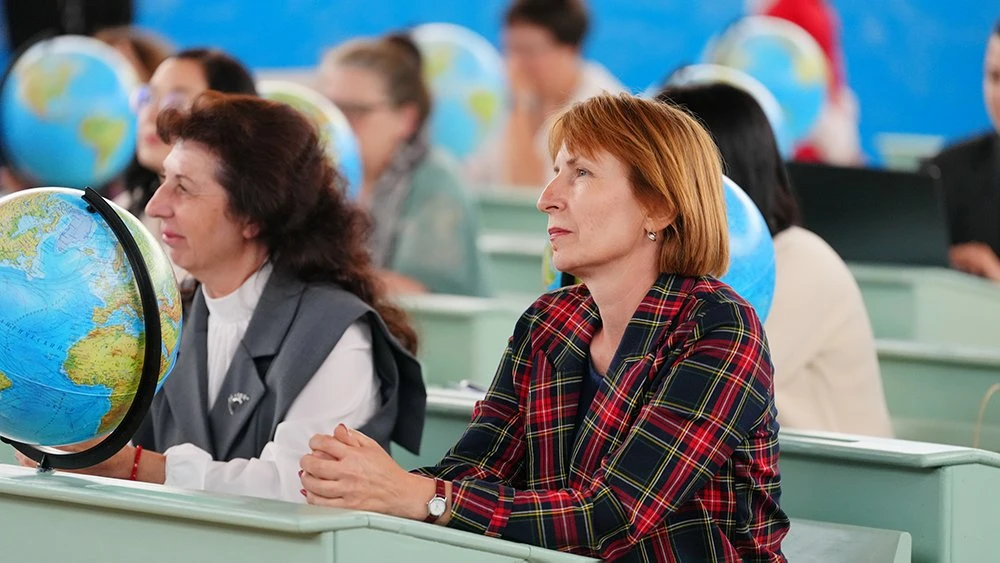
Answering
questions from the audience, the speakers advised schoolchildren and students
not to be afraid of dreaming, to take small steps towards their goals, to seek
practical applications for any theoretical knowledge and to "test
geography with their own feet" through hiking, travel and expeditions.
They encouraged teachers not to lose faith in their work and to remember that,
for many children, the path to space, aviation, polar stations or expeditions
to remote parts of the country begins in their lessons.
The Forum
of Geography Teachers and Students of Specialised Universities was held at the
National Centre RUSSIA on 25 June as one of the key events of the
"Geography Lessons" exposition. The forum brought together more than
800 participants from all federal districts of Russia: schoolteachers,
university lecturers, students, teaching methodology specialists, school heads
and representatives of education authorities.
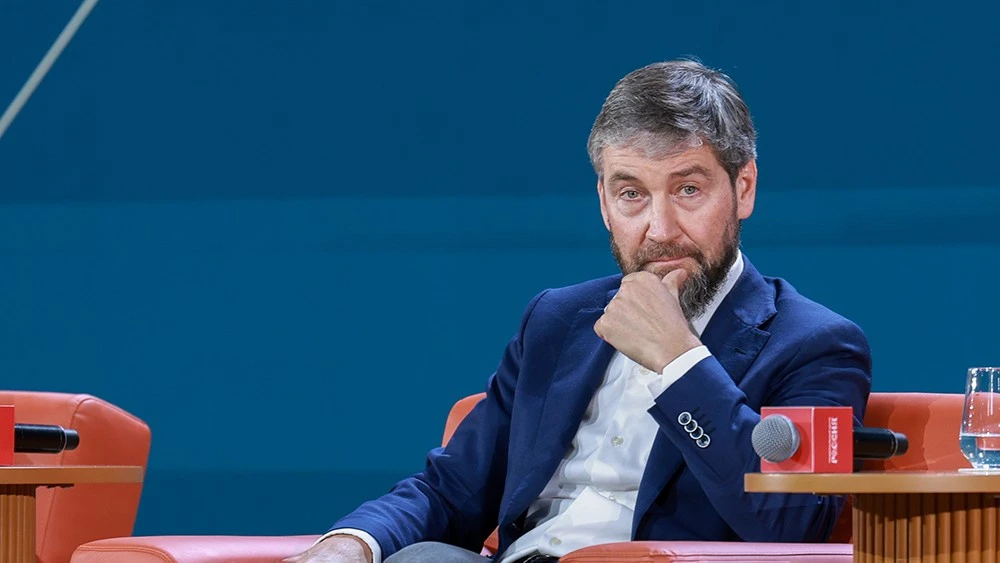
The Head of Fedor Konyukhov’s Expedition Headquarters, Oskar Konyukhov, shared the personal story that sparked his love of the subject.
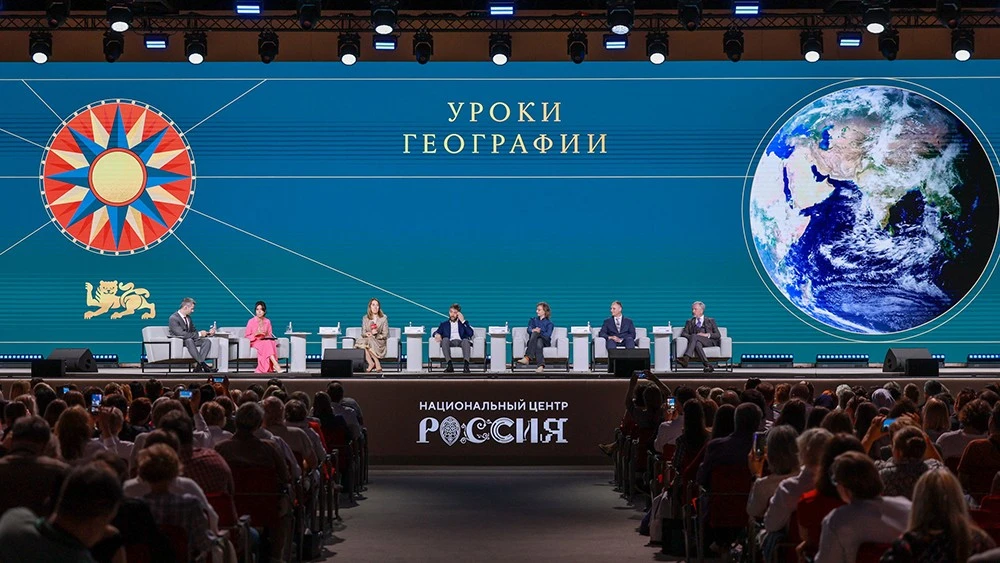
The Forum of Geography Teachers and Students of Specialised Universities was held at the National Centre RUSSIA on 25 June.
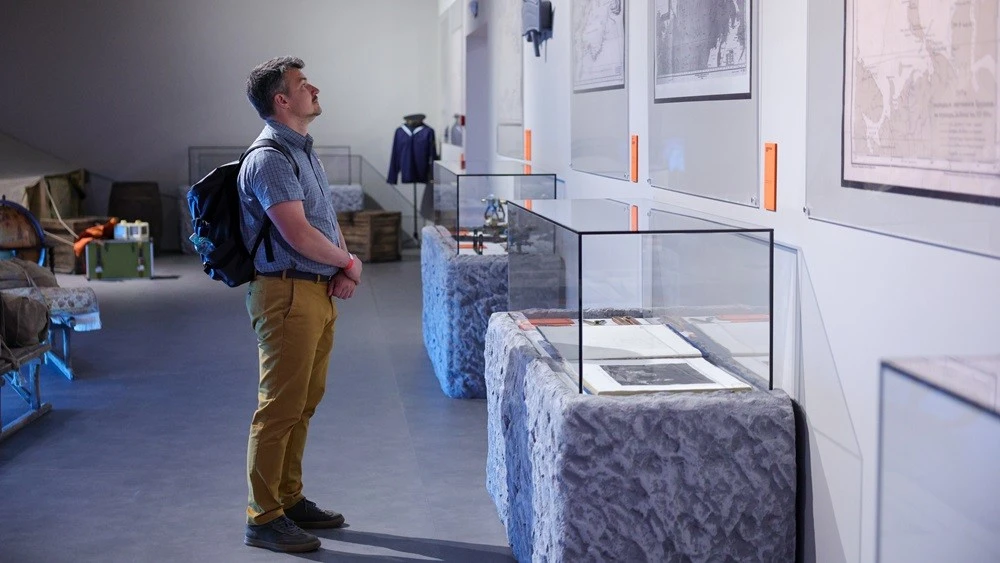
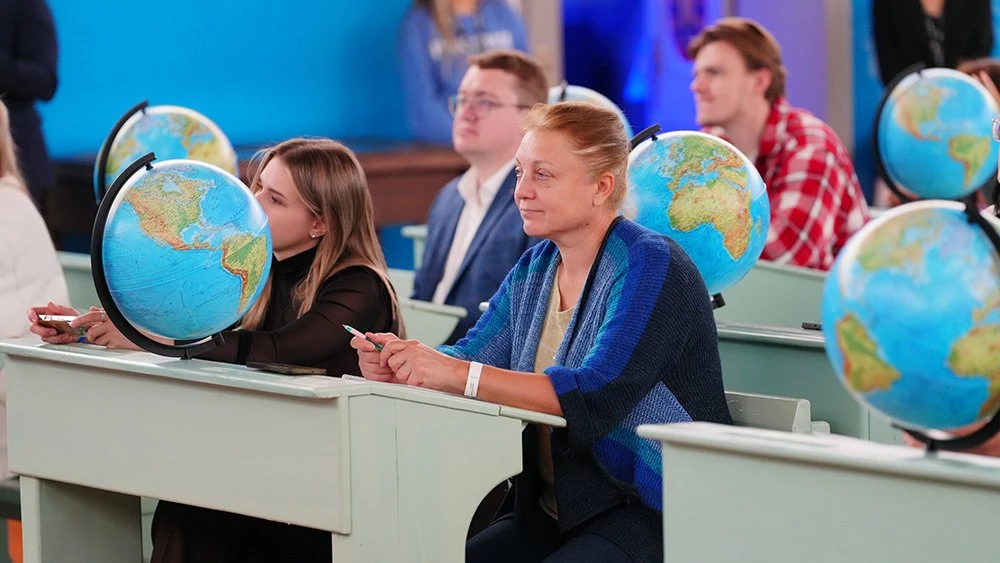
Teachers from a wide range of regions are arriving at the National Centre RUSSIA for the Forum of Geography Teachers and Students of Specialised Universities.


