


Literature, art and folk traditions bring together participants in the All-Russian Wedding Festival
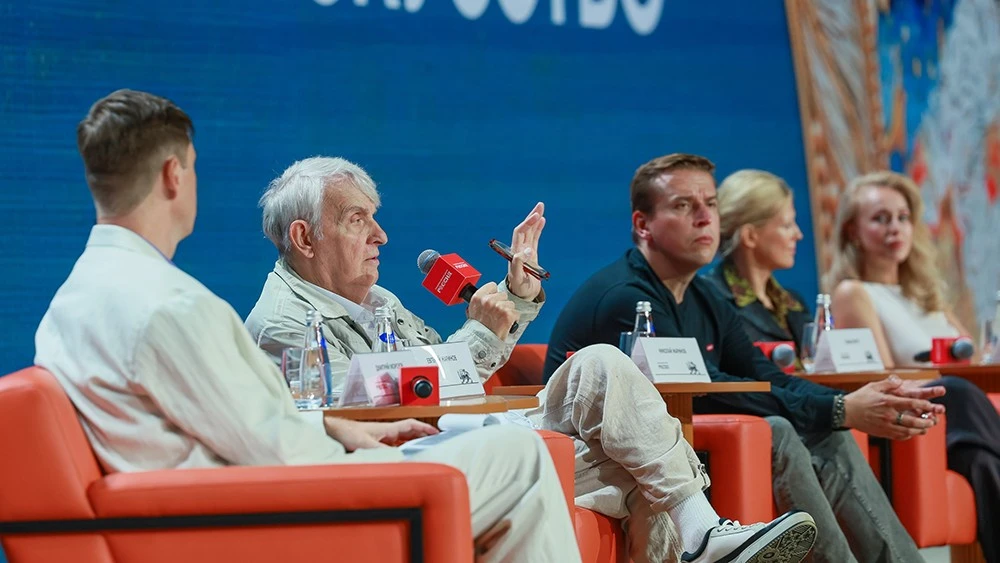
Books, theatre, cinema, music, contemporary art and an
introduction to folk traditions help people reflect on love, family
relationships and mutual responsibility. This was the conclusion reached by
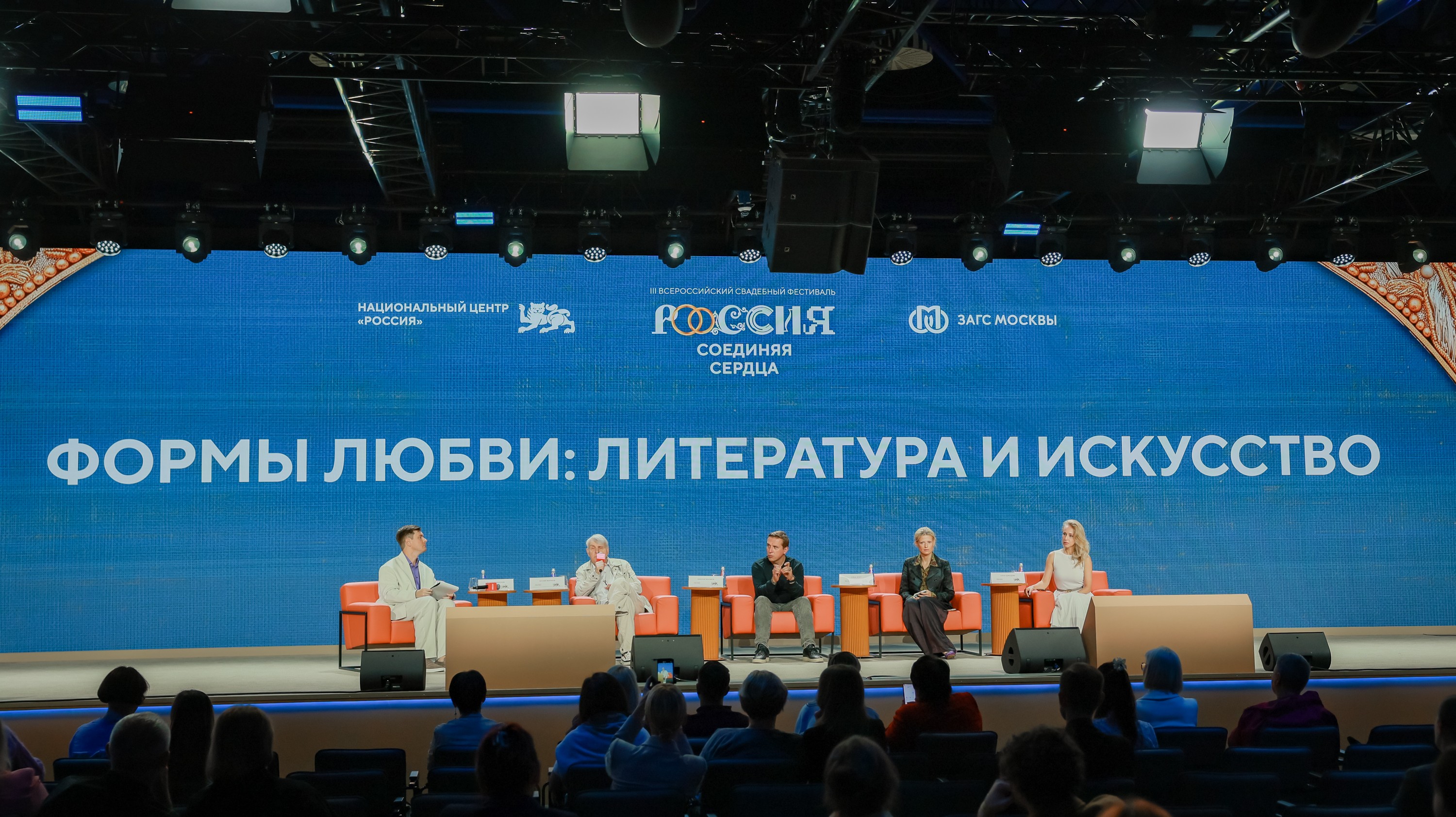
experts at the Open Dialogue "Forms of Love: Literature and Art". The
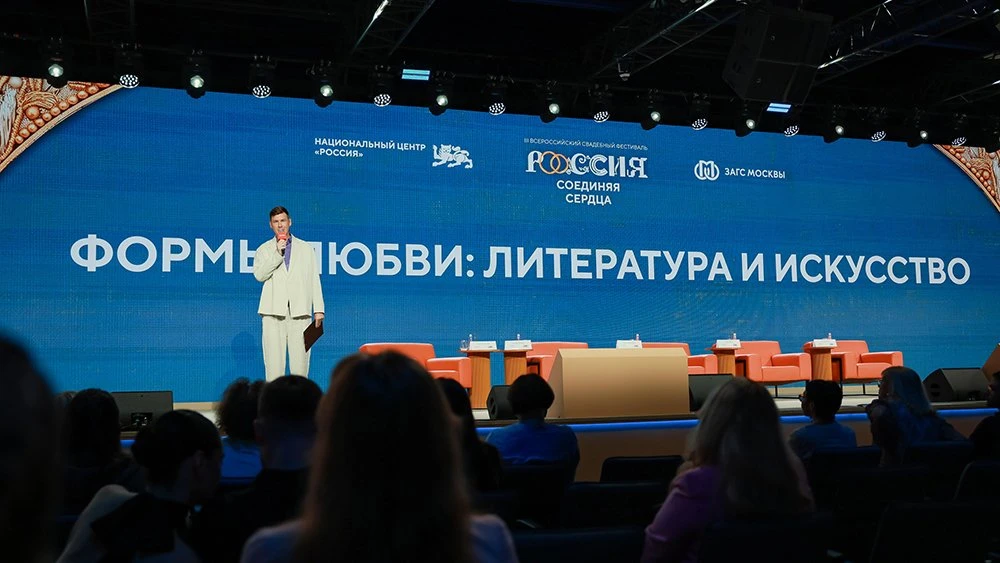
session was held at the National Centre RUSSIA as part of the III All-Russian
Wedding Festival "Russia. Uniting Hearts".
The discussion began with how love is portrayed in famous
literary works. Yevgeny Zharinov, Professor at Moscow Pedagogical State
University, Doctor of Philological Sciences, writer and translator, spoke about
the work of Leo Tolstoy and his views on family, using such works as "Anna
Karenina", "War and Peace" and "The Kreutzer Sonata"
as examples. He noted that the writer was a great psychologist who deeply
understood the dialectics of the soul and the metaphysics of love, how the
feeling of love and passion can arise from a simple touch, a fleeting physical
sensation, as happened to Vronsky when he met Anna at a station in Moscow. But
if people stay together for a long time and marry, it is a very difficult path
on which they must be prepared to "bear the burden".
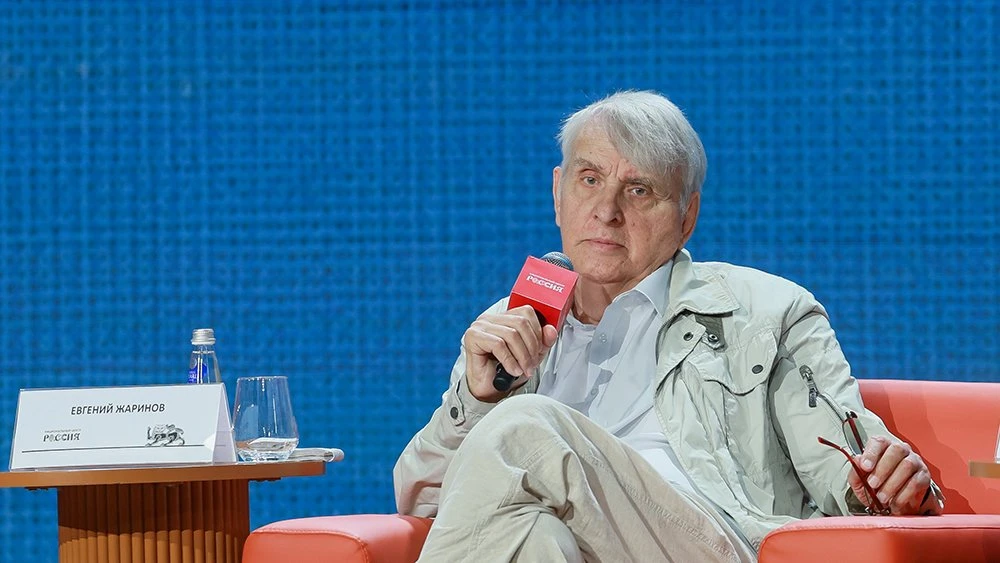
"Tolstoy looked at both marriage and relations between
men and women according to the principle of a 'dragonfly's eye' — from
different angles — showing all the complexity, all the dialectics, the
combination of all the contradictions that a person encounters in marriage.
However, it cannot be said that Lev Nikolayevich rejected marriage. He said,
'Yes, it is a difficult process, sometimes a painful one', but as a Christian
he believed that the family was a small church. He was absolutely certain of
that," he said.
Speaking about the writer's personality, Yevgeny Zharinov
noted that Leo Tolstoy was a difficult man by nature and had a complicated
relationship with his wife. Sofya Andreyevna Tolstaya helped him greatly with
his literary work, deciphering the writer's illegible handwriting and preparing
fair copies. For example, she copied out the novel "War and Peace"
six times. She also frequently dealt with publishers. At the same time, the
spouses were very different people, yet they lived together for many years, and
what helped them most was patience.
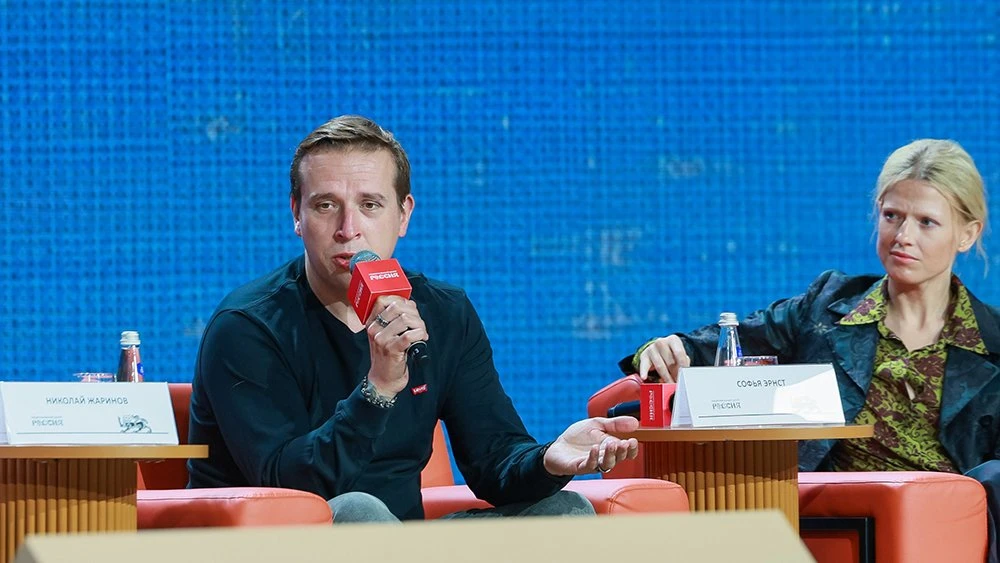
Philologist, cultural studies expert and writer Nikolai
Zharinov spoke about the work of another great writer, Fyodor Dostoevsky. He
analysed the characters in "Crime and Punishment", "The Brothers
Karamazov" and "The Beggar Boy at Christ's Christmas Tree",
drawing parallels between the writer's work and his life. Love in Dostoevsky's
works is generally linked with suffering, while he saw children as the greatest
value in relations between men and women.
"The central idea in Fyodor Dostoevsky's work is that
if a person has even one happy memory from childhood, it will later help keep
them from any act of meanness, because it will take them back to that happy
childhood," Nikolai Zharinov explained. "This came from his personal
experience, because Fyodor Mikhailovich's life was extremely difficult, while
childhood was the brightest part of it, something he constantly returned to and
which continually gave him strength. That is why, in his image of the family,
he focuses above all on childhood. And, essentially, his main message is that
you must make sure your children have a happy life. Because in doing so, you
make the greatest contribution to the future."
The Open Dialogue continued with theatre and film actress,
producer and founder of the Istok House of Culture and the Istok music label
Sofya Ernst, who shared her thoughts on how two separate "I"s can
become one shared "we" and explained why folk traditions never become
outdated.
In folk tales, as well as in many other works of art, a
wedding is seen as the happy ending of a story, but in real life and in the
traditional cultures of the peoples of Russia it is the beginning of a journey
that our ancestors approached with great responsibility, she believes. She
added that she had visited many regions of the country while filming stories
about wedding rituals — more than 30 episodes in total.
"Studying folk culture and wedding customs shows that a
wedding is not just the union of two hearts in love, as we often see it today.
It is a transition to an entirely new status. And it is a union not only of two
people, but of two family lines, a union of families. And it is a very
important, responsible event," Sofya Ernst emphasised.
She also added that one of the most striking discoveries
during the expeditions was the realisation of the major role played in a
traditional wedding by relatives, friends and other people living close to the
bride and groom. Guests did not come to a wedding expecting to be entertained,
as they often do now, but put their own energy into helping the young couple
build a successful union: they danced with all their might and offered kind
wishes to the bride and groom.
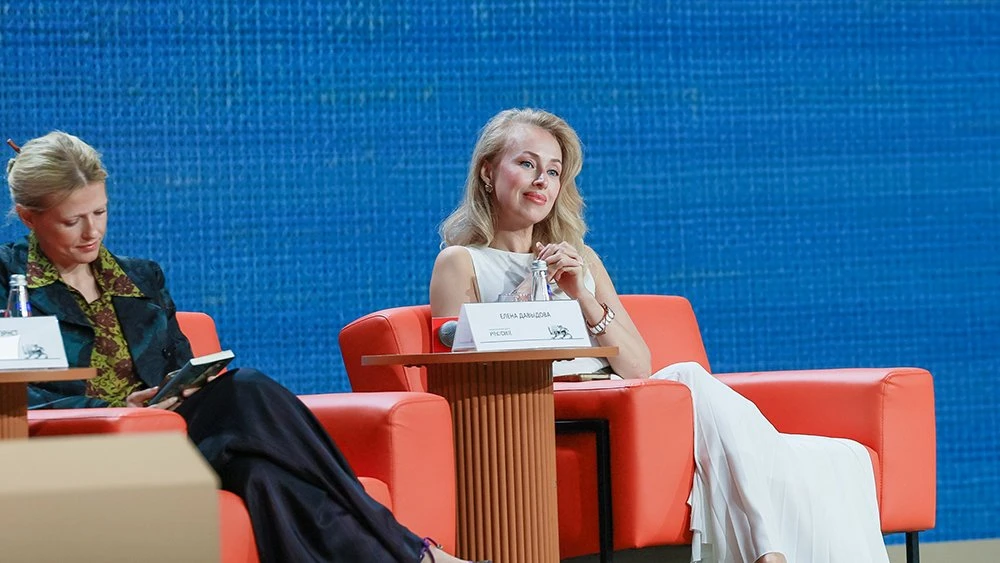
Yelena Davydova, Director of the M'ARS Centre for
Contemporary Art, spoke about the role of contemporary art in shaping family
values and cultural dialogue. She noted that contemporary exposition projects
and museum spaces are becoming meeting places for different generations, where
important topics that bring people together can be discussed.
Summing up the meeting, the participants noted that
literature and art not only help people gain a deeper understanding of
themselves and those around them, but also become an important tool for
preserving family values, cultural memory and continuity between generations.
It is through creativity that the conversation about love, fidelity and mutual
responsibility remains relevant to people of all ages.
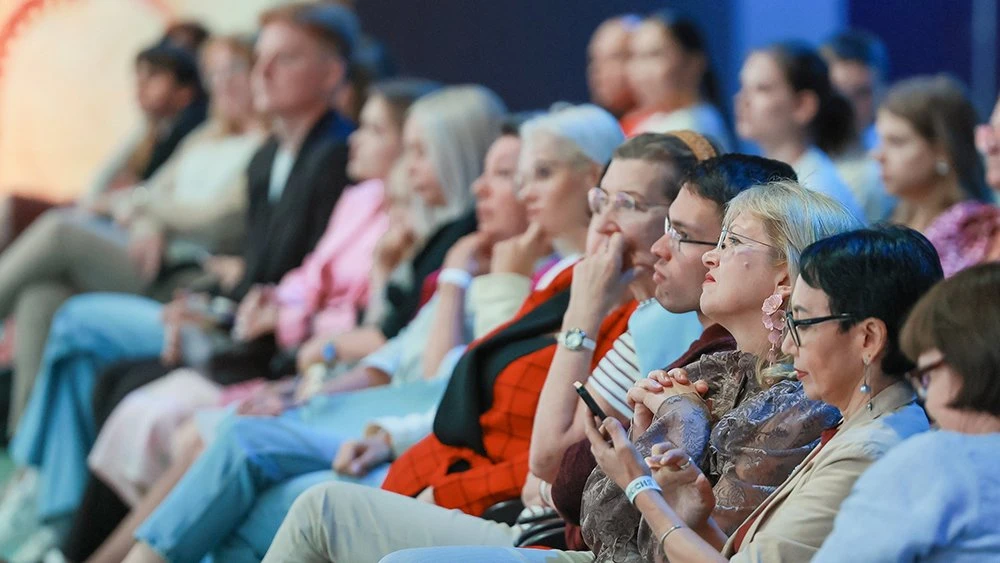
The Open Dialogue "Forms of Love: Literature and
Art" was one of the events in the business programme of the III
All-Russian Wedding Festival "Russia. Uniting Hearts".
The festival is being held at the National Centre RUSSIA and
brings together newlyweds, families, representatives of culture and the arts,
and public figures from across the country, emphasising the importance of the
family as one of the main values of Russian society.
Event photobank

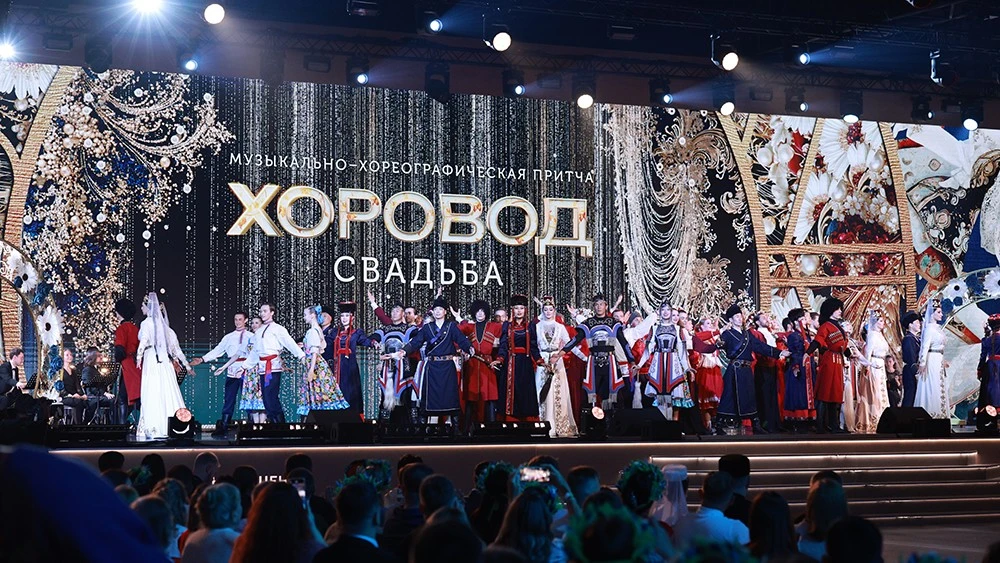
The musical and choreographic parable "Khorovod. Wedding" became the culmination of the III All-Russian Wedding Festival "Russia. Uniting Hearts".
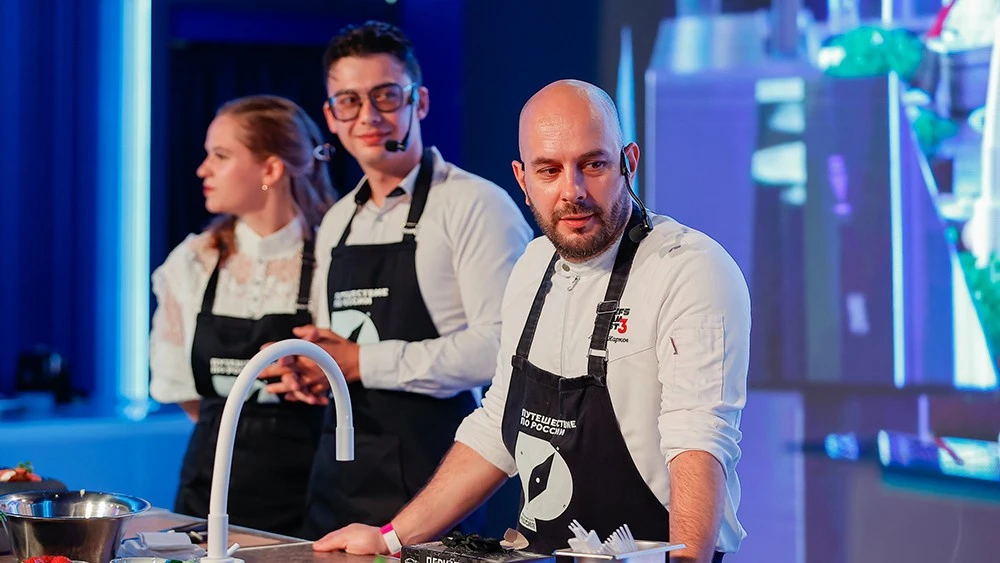
At the National Centre RUSSIA, couples took part in culinary and floristry workshops.
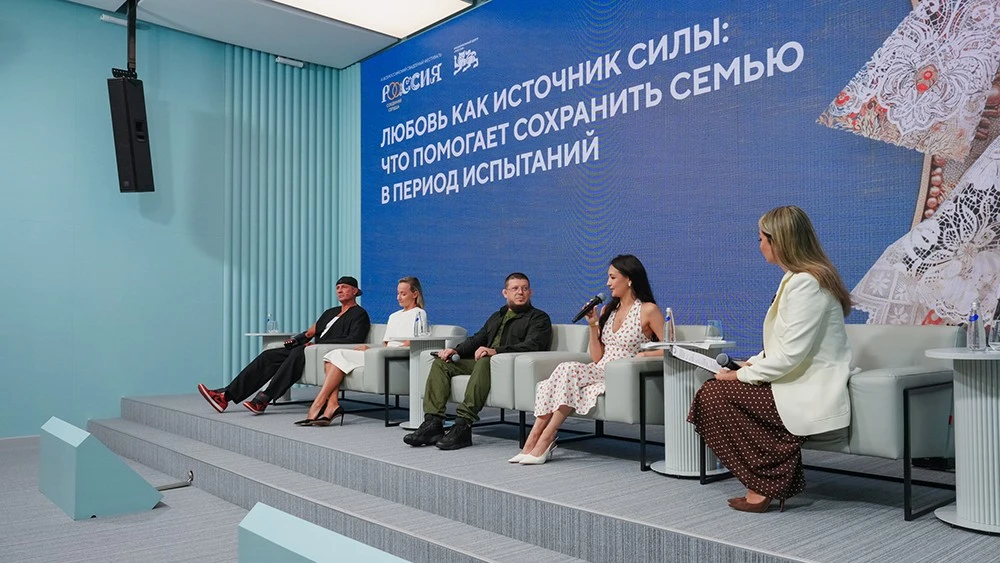
The care and attention of loved ones are what make it possible to overcome any difficulties, recover and move forward.


