


"Mother as a symbol of Russia’s values": why the figure of the mother is once again at the centre of literary attention

The image of the mother is one of the most revered in Russian literature. It embodies family values, traditions and moral guidelines. The theme of love for a mother has been reflected in many classical works — by Ivan Goncharov and Ivan Turgenev, Leo Tolstoy and Fyodor Dostoevsky, Maxim Gorky and Ivan Bunin, Sergei Yesenin and Andrei Platonov, Alexander Tvardovsky and Chingiz Aitmatov. All of this was discussed on Mother’s Day, which is celebrated in our country on 30 November. The holiday became the central theme of a meeting of the literary club "What to Read?!" at the National Centre RUSSIA.
"In Russia, the image of the mother and the image of the country are closely intertwined. It is no coincidence that one of the main symbols of the nation is the Motherland monument. The sculpture on Mamayev Kurgan in Volgograd is a vivid example of how visual representations of the mother reflect society’s attitude to the family, to values and to the state as a whole. This shows that in Russian culture the mother is not only the keeper of the home but also a symbol of national identity and moral and spiritual orientation," said the Head of the Academic Council of the Centre for Political Conjuncture, Professor at the National Research University Higher School of Economics, and author of the Telegram channel Chesnakov.Library, Alexei Chesnakov.

According to him, in Russian literature, fairy tales and classical works, the image of the mother occupies a central place and is one of the fundamental elements of the cultural code, through which ideas about morality, social responsibility and the values of the state are expressed. Russian literature creates a space of meanings and shapes the ideology of our society, he added.
Marina Kim, First Deputy Chair of the State Duma Committee on Information Policy, Information Technology and Communications, emphasised that the traditional image of the mother is being revived in the modern media space. According to her, this is evident across all types of content — from blogs to television and series — and is rooted in deep cultural and historical traditions formed over many centuries.

"The origins of this image go back to ancient history — from the symbol of ‘Mother Earth’ to 19th-century literature, where the mother embodied moral and spiritual choice, symbolised the beginning of life and served as a moral guide. In Soviet literature and culture, the image of the mother retained a central role, expressing care, labour, and the upbringing of a new generation. However, since the 1990s, this image gradually lost its visible relevance, and public attention to it became limited. Only in recent years has the modern image of the mother begun to regenerate, and this process deserves particular attention," said Marina Kim.
She noted that the State Duma is preparing recommendations on the image of the mother that should be taken into account when creating media content. This involves the development of standards for family and children’s content, in which the mother occupies a key place. According to her, specialists from various fields – screenwriters, directors, producers – are actively participating in the discussions, giving feedback and exchanging views on how this image should be correctly and truthfully represented.

"The main advice is to avoid both idealisation and marginalisation. There should be no idealised image of a mother who manages everything, looks flawless, has given birth to a dozen children and fully realised herself in her career – that does not exist. But marginalisation, where the mother is depicted solely in difficulties and hardships, is also unacceptable. It is important to speak the truth – the truth about life, labour, worries, and the self sacrifice that accompanies motherhood," added Maria Kim.
Anastasia Gacheva, Head of the Department of the Contemporary Russian Literature and Literature of the Russian Diaspora at the Institute of World Literature of the Russian Academy of Sciences, Chief Librarian and Research Fellow of Library No. 180 named after N.F. Fedorov of Moscow's State Budget Cultural Institution "Mosrazvitie", Doctor of Philology, agreed that the image of the mother holds special significance in Russian culture.

"The image of the mother in Russian culture is connected with the idea of the eternal values that a person carries. In folklore, in folk tradition, the image of the woman mother is closely linked to the image of Mother Earth, Mother Nature, to the theme of inexhaustible life. Christian Rus’ especially venerated the Mother of God, the merciful intercessor – and female images in Russian literature are correlated with the image of the Mother of God. In Russian classics of the 19th century, the mother appears as the guardian of the family way of life and moral values. She raises and brings up the children, protects them from life’s adversities, yet is ready to let them go into the world, understanding that a child is an independent individual, that he or she has their own path," said Anastasia Gacheva.
Referring to the works of Leo Tolstoy, Ivan Goncharov and Fyodor Dostoevsky, she emphasised that for these writers the sanctity of the family was of particular importance. The family appeared as the "practical beginning of love", and the focal point of this love was the love between children and parents. Russian writers were troubled by the problem of the disintegration of family and kinship ties, the rift between generations; they saw in this disintegration a painful and dangerous condition for society.
In the 20th century, the image of Woman Mother, while preserving its inherent traits – love, mercy, care, responsibility – acquired new shades. Motherhood itself appears here as a responsibility not only for one’s own family, but also for other people, for the world, for nature, for history, noted Anastasia Gacheva.

"A vivid example is Maxim Gorky’s novel ‘Mother’, where Nilovna begins to see the friends of her son Pavel as her own children, where she continues her son’s work and, following him, is ready for sacrifice. This same sacrificial love of a mother, letting her children go to perform the feat of defending the Fatherland, is manifested in works about the Great Patriotic War. And in the second half of the 20th century, in the era of rapid technical and industrial progress, the environmental theme sounds ever more persistently in literature, and Russian writers counterpose the root connection of man with the earth to the man’s lumpenisation. The mother appears here as the guardian of this connection, as the bearer of the memory of generations, which cannot be erased or betrayed. Let us recall "Farewell to Matyora’"by Valentin Rasputin," she said.
The Literary Club "What to Read?!" is an original project of the National Centre RUSSIA. It is a place for discussing literary heritage and exchanging ideas and experience. The meetings focus on thoughtful writing and the development of a reading culture. Detailed information about upcoming meetings of the Literary Club and other educational projects is available in the "Events" section of the official website of the National Centre RUSSIA at russia.ru.
Event photobank



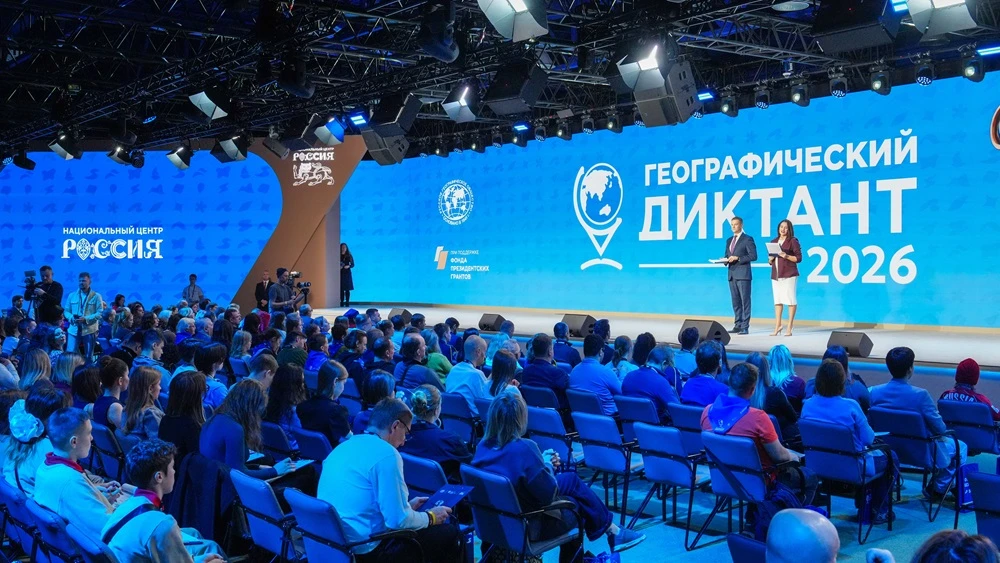
At the same time, more than a million participants from all regions of Russia and around 121 countries took the dictation at more than 10,000 venues.
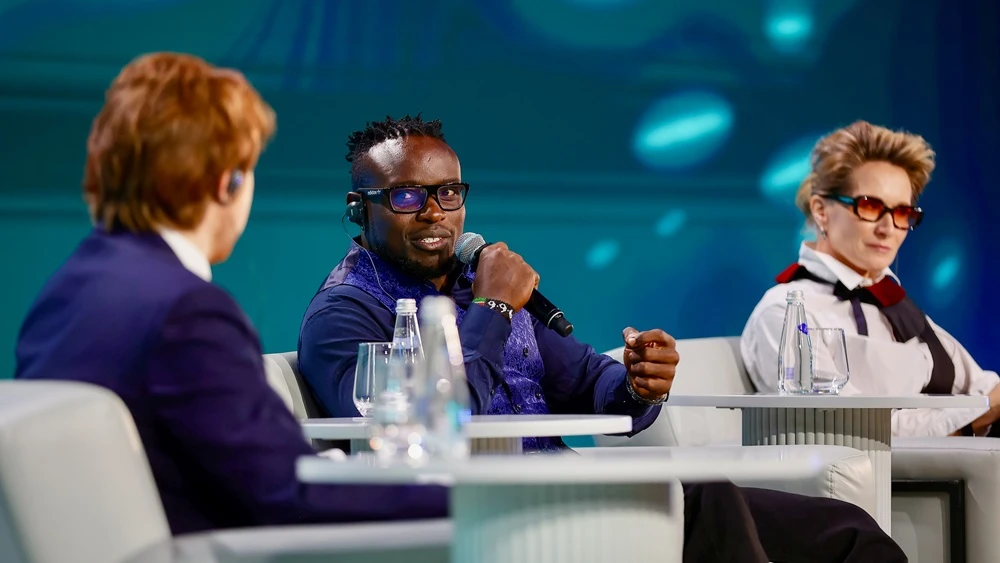
The panellists were asked to compare two kinds of victory: beating a strong opponent and overcoming your own limits.


