


"Russia’s Media Image": strategies for overcoming stereotypes in the international information space

Mechanisms and practices for overcoming stereotypes about Russia in the international information space, as well as strategies for promoting an objective image of the country, the Russian World and culture through modern media tools, were discussed by Russian and international experts at the session titled "Russia’s Media Image". The event was held on 20 December at the National Centre RUSSIA as part of the II Catherine Forum.
"The media image of a country is shaped by many factors. These include political and managerial decisions, as well as the media traces that remain with us: we read the news, listen to podcasts, and consume art. Today, we are discussing how different fields contribute to shaping Russia’s media image, breaking stereotypes and promoting the right values and an accurate, objective image of the country to an international audience," said the session moderator, Igor Pavlov, Director of the Department for Government Relations at RUTUBE.

Despite changes of eras and modern challenges, TASS has for many years preserved its core mission and authority, including internationally, said Mikhail Kalmykov, First Deputy Director General of the TASS news agency. According to him, the agency consistently follows the fundamental principles laid down at its foundation: accuracy, quality and efficiency of information delivery.
"The state has evolved and changed, yet our honest state news agency, which retains its status as the unified source of official information, has remained. We, the current generation of TASS journalists, follow this internally. Today, if we look around, the situation mirrors what existed 121 years ago. The same information isolation, or at least attempts at it by part of the world. At the same time, we have allies — those who are interested in ensuring that international information and perceptions of the world as a whole are not dependent on the work of certain national information corporations. This is a serious argument for those who exert pressure on Russia," Mikhail Kalmykov said.

He noted that TASS is consistently adopting new technologies and platforms, with an emphasis on domestic solutions to preserve information sovereignty. According to Mikhail Kalmykov, the agency maintains a global presence, operating in around 70 countries, including unfriendly ones, where correspondents continue to access key events. Thanks to its principles of accuracy, quality and efficiency, TASS continues to be regarded by the international community as a reference and authoritative agency. This is confirmed, among other things, by the Director General’s chairmanship of the Organisation of Asia-Pacific News Agencies (OANA), he added.
The value and success of RT lie in its ability to offer an alternative perspective on the global agenda, which provokes strong reactions and attempts at bans by Western countries, said Alexei Nikolov, Deputy Editor-in-Chief of RT. According to him, these attempts to "silence" the channel only confirm its relevance and drive it to seek new paths of development and new audiences.
"We are glad that they are so afraid of us. That a US official says: 'Stop it, we shut it down, banned it, declared it a foreign agent, took everything away, and did not allow RT to operate.' And yet today RT is watched in America more than CNN. When this is said by a former US Director of National Intelligence, James Clapper, it is actually quite gratifying," he said.
Russian-American blogger Alexandra Jost described her personal mission as dismantling Western stereotypes about Russia through her blog and everyday content, showing the country’s real, human, culturally rich and welcoming side. She believes that this approach can become a true "bridge" between cultures and countries.

"When I was living in the United States and studying at school, I often encountered stereotypes about Russia. I saw what the media wrote and heard it from my classmates and teachers. They called me a 'commie' there — simply because I am half Russian. My mother is from Russia, my father is from Texas. As a child, I spent every summer in Siberia with my grandmother, took photographs, then returned to the United States and showed my class what Russia actually looks like. It is not some Hollywood stereotype where everything is grey and scary and bears roam the streets. That is why I always had a goal — to show Russia from a different perspective, the country I know and love. Three years ago, I moved to Russia and immediately decided that the moment had come — I started a blog. I showed my everyday life, travelled to different cities, interviewed people on the streets, and shared traditions, holidays, culture, food and history. There was nothing political in the blog. It gained an audience quite quickly, and I realised that people are genuinely interested and want to know the truth about Russia. Foreigners had never seen that Russia has clean streets, beautiful metro stations, decent people and hospitality — this is never shown there. I began working on this more actively and saw that there was demand and real interest," said Alexandra Jost.
Music, cinema, art and humour are powerful tools of dialogue and "soft power" capable of bringing nations together, believes Scott Ritter, a retired US Marine Corps intelligence officer and military analyst. However, according to him, Russia must use these tools consciously and carefully, preserving its unique civilisational identity and protecting itself from mental and cultural influence that the West may use not for dialogue, but for internal erosion.
"How can we create an environment in which Americans and Russians can overcome cultural and language differences, where they can communicate sincerely, from the heart? There are several very, very effective means. One of them is music, which is inherently a unifying medium. It attracts people all over the world, and words carry immense power. Take, for example, the influence of Bob Dylan on American culture. At the same time, we can listen to Russian songs of the same calibre, whose lyrics are capable of bringing people to tears. Think of the song 'Zhuravli' (Cranes) — about the souls of fallen Russian soldiers. It brings tears to the eyes. Nothing else works with such force <...> It is very important that Russia uses its soft power — music, cinema, art and humour — to convey Russian reality to Western audiences. But this must be done with caution," Scott Ritter said.
The II Catherine Forum is being held at the National Centre RUSSIA on 20 December. It is devoted to key issues such as the integration of foreign citizens, the role of Russia in preserving traditional spiritual and moral values, and the historical legacy of Catherine the Great. The First International Catherine Forum, held in December 2023, brought together more than 750 participants from 35 countries and 50 regions of Russia.
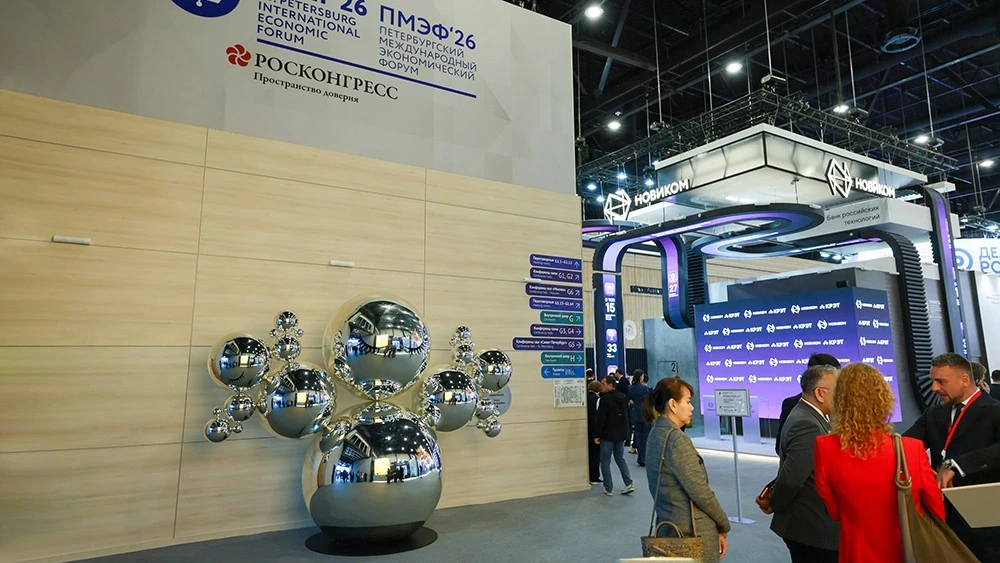
The art object of the National Centre RUSSIA and the Tambov Region is one of the striking artistic accents of the St Petersburg International Economic Forum 2026 venue.
The survey was conducted among readers of the Mail News project. More than 10,000 people from over 50 regions of Russia took part.
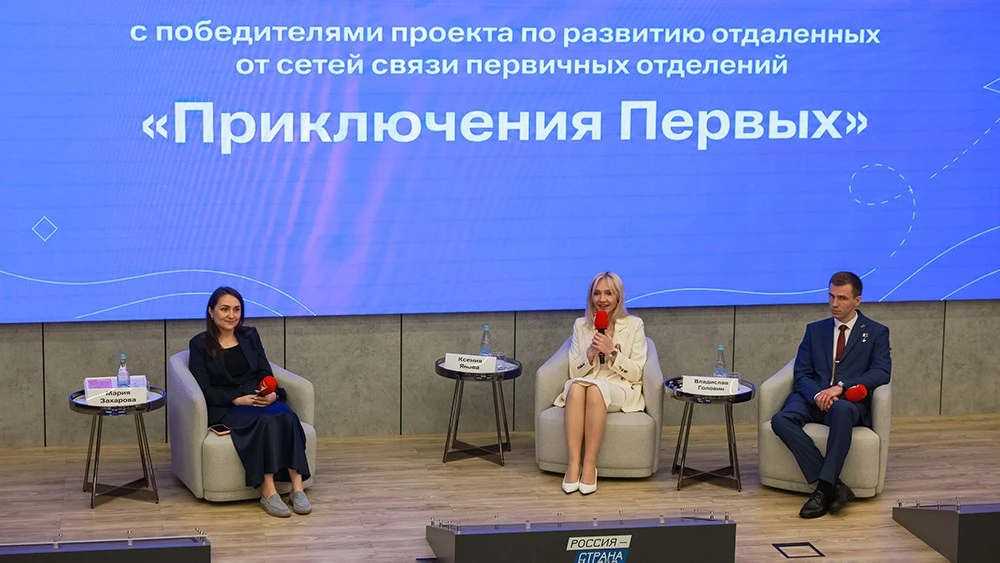
A meeting with the winners of the "Adventures of the First" project was held at the "Space of Opportunities" of the National Centre RUSSIA.


