Myths and facts about 22 June: major misconceptions about the outbreak of the Great Patriotic War examined at the National Centre RUSSIA
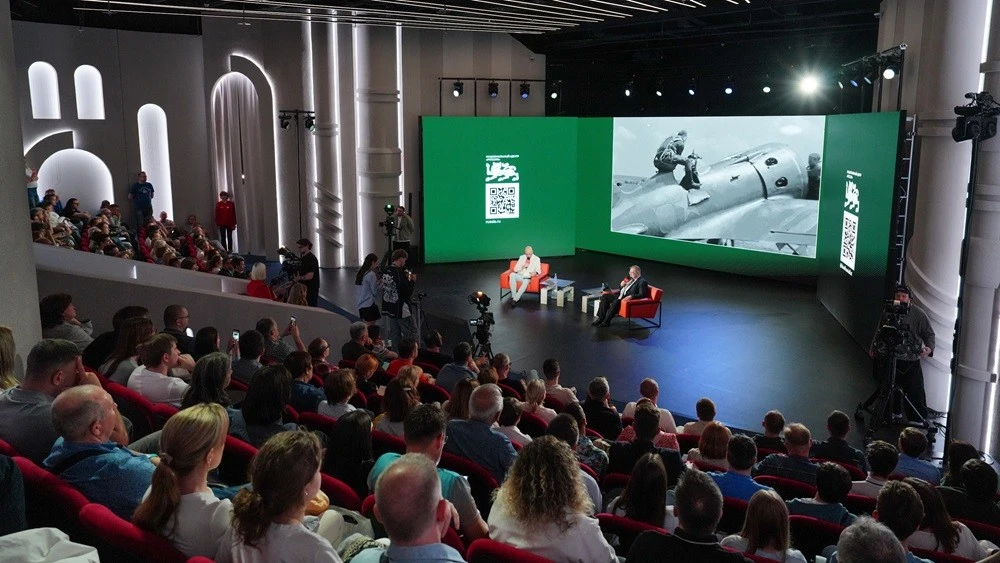
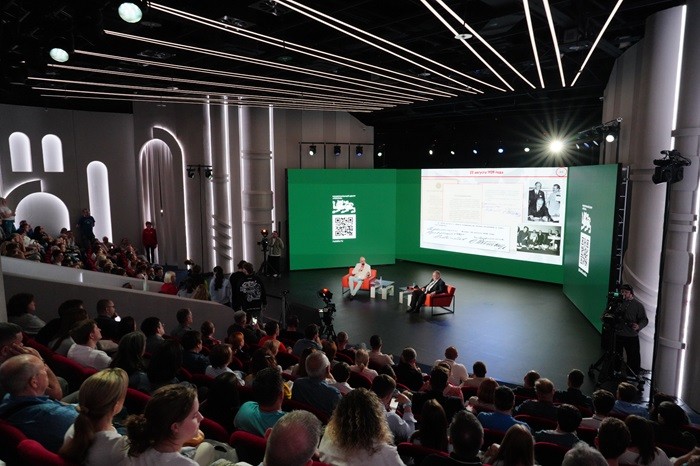
Hitler's invasion of the Soviet Union was not a sudden crisis of 1941. It was the inevitable outcome of a long process in which ideology, economics and diplomacy converged. Key misconceptions and lesser-known facts about the first day of the Great Patriotic War were explored at the Open Lecture Hall "Myths and Facts About 22 June 1941", held at the National Centre RUSSIA on 23 June as part of an authorial series of historical discussions.
The discussion was moderated by Artyom Drabkin, Director of the "I Remember" Foundation and a member of the Scientific Council of the Russian Military Historical Society (RMHS). The keynote speaker was Alexei Isayev, Candidate of Historical Sciences, military historian and member of the Scientific Council of the RMHS. The conversation began with an examination of how Europe gradually, step by step, moved towards another major conflict after the First World War. Artyom Drabkin traced the chain of decisions that made a confrontation with the Soviet Union increasingly unavoidable.

"I would draw attention to 1935. It was in March of that year that Hitler announced the creation of an army — not the Reichswehr, but the Wehrmacht. Immediately afterwards, the Stresa Conference was convened, where Italy, France and the United Kingdom appeared ready to present a united front. Yet only two weeks later, France signed a treaty with the Soviet Union behind Britain's back. London saw this as an attempt to exert pressure, and in June the United Kingdom concluded the Anglo-German Naval Agreement with Germany. That was it — the moment when the idea of collective security collapsed. Everything that followed and eventually led to the Munich Agreement, and later to the Pact, began, in my view, in 1935. That period became the point after which war was largely inevitable," explained Artyom Drabkin.
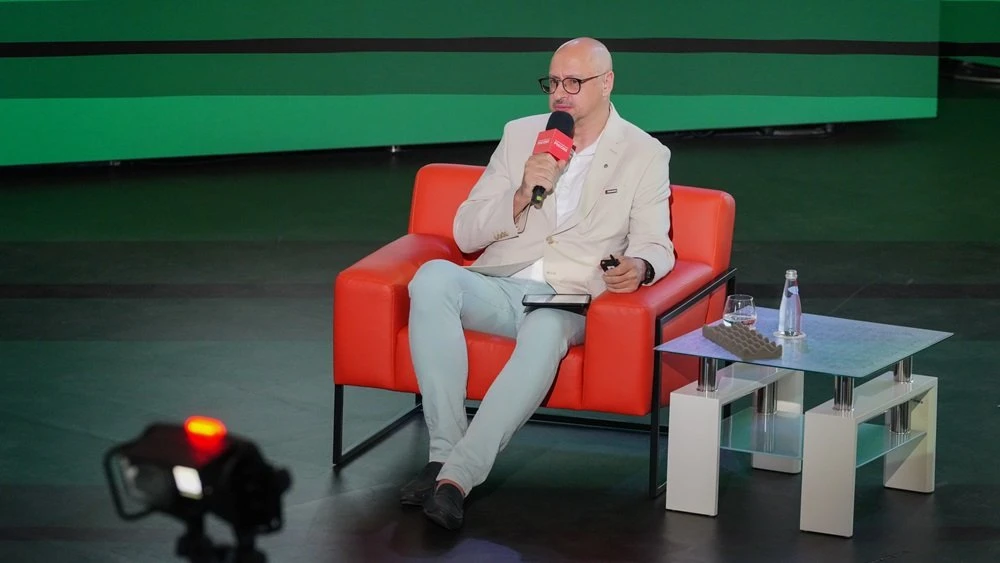
A separate part of the discussion focused on the Molotov–Ribbentrop Pact. According to Alexei Isayev, the agreement was, on the one hand, a sign of the failure of the collective security system in Europe and, on the other, an opportunity for the Soviet Union to gain time and strengthen its armed forces.

"The first thing the Pact gave us was the reorganisation of the Soviet Armed Forces. The infantry core of the Red Army received significant improvements, and most importantly, the army entered a stable path of development in 1939–1940. The Molotov–Ribbentrop Pact also provided us with territory extending south to the Carpathian Mountains. We pushed the border further away from Leningrad. We acquired fortifications at key locations — Brest, Sokal, Grodno and Augustów. They were in a high state of readiness, and that was another achievement of the Pact. Whatever people may say, they came under attack on the first day of the war and played their part in slowing the enemy's advance," said Alexei Isayev.
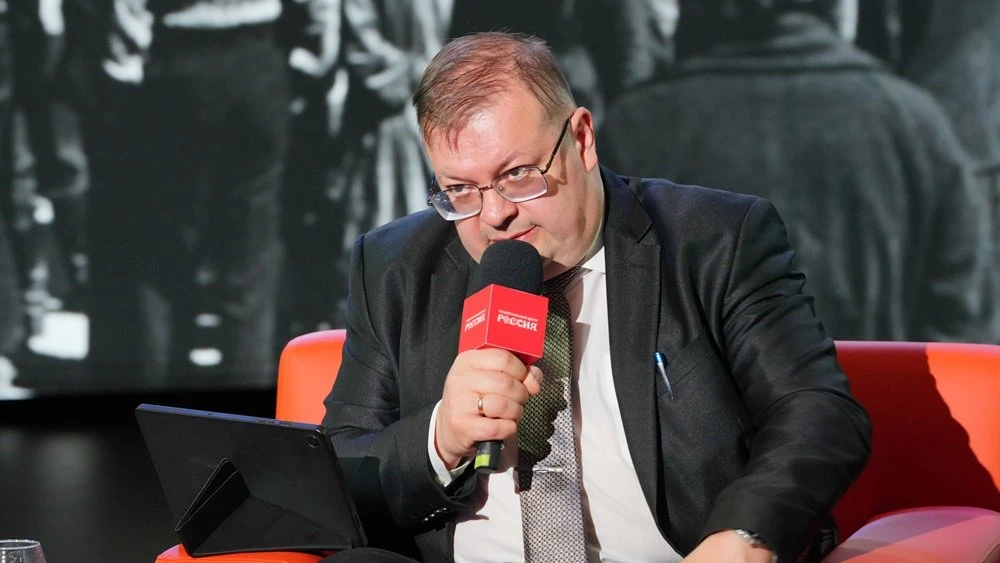
According to the military historian, one of the most widespread myths concerns a supposed "miracle order" that could have been issued on the evening of 21 June and prevented millions of casualties. Alexei Isayev stressed that Joseph Stalin was aware of German plans, but the key mistake made by Soviet strategists was underestimating Germany's readiness to launch a war in the summer of 1941. He noted that the possibility of an attack had been taken into account, but Soviet commanders assumed the Red Army would have time to complete its deployment. The first days of the war proved otherwise, as Germany committed its main forces from the outset.
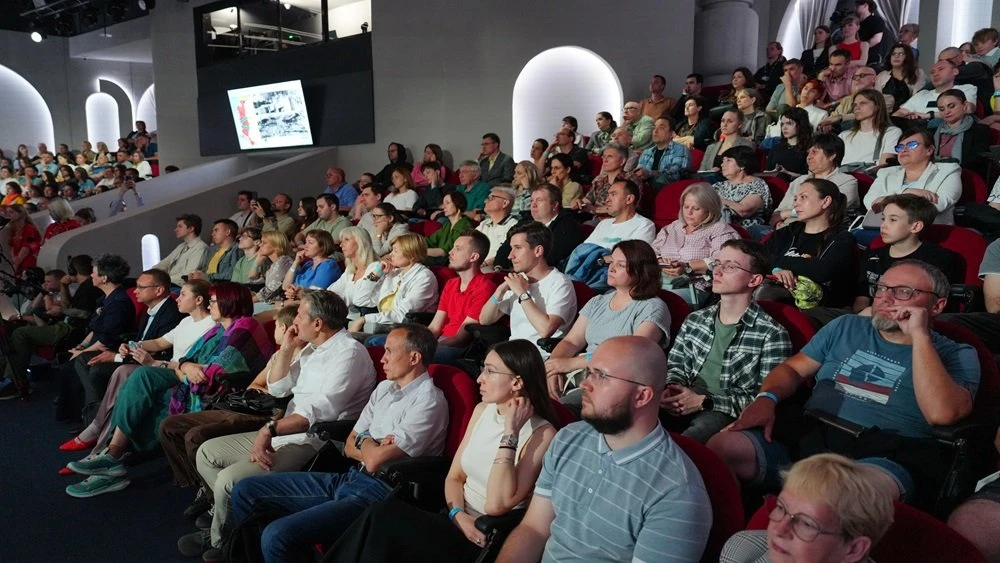
"Soviet military theory generally did not envisage an attack launched immediately with the enemy's main forces. The expectation was that a war would formally begin, but that the main strike formations would not yet have been concentrated. The assumption was that 'we are not Poland' and that 'we will not be deceived as Poland was'. In reality, however, a fully formed strike force was concentrated on the border from the very beginning, and that was the crucial difference. In Poland's case, the situation developed differently and, to a large extent, by chance: Germany had planned to begin the war on 26 August before postponing the decision. By 22 June 1941, however, this had become a deliberate military model. We were not prepared for it because we were operating on the basis of a different concept — a phased deployment model. Therefore, no belated orders could have changed the balance of forces during the first days of the war," Alexei Isayev explained, dispelling a common misconception.

Speaking about the actions of the Soviet leadership in the opening days of the war, the military historian noted that public addresses were delivered on 22 June, mobilisation was announced, an intensive transition from peacetime to wartime conditions began, and new governing bodies were established. Contrary to a widespread myth, Joseph Stalin did not fall into paralysis or inactivity. Documentary evidence shows that he continued to participate in decision-making.
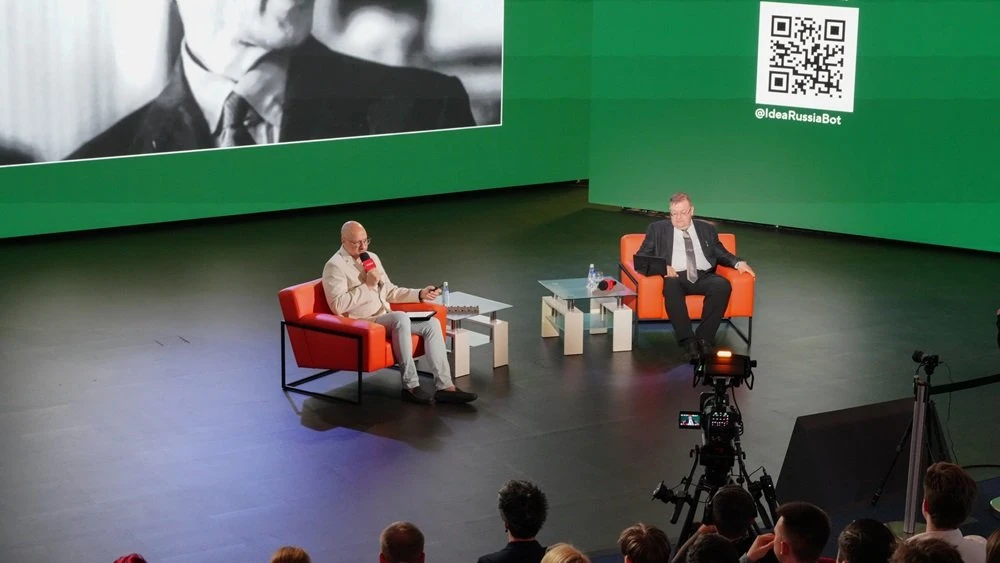
The final part of the discussion was devoted to the heroes of the first day of the war. The defenders of the Brest Fortress, border guards, sailors and pilots all performed extraordinary acts of courage during those dramatic hours. Military pilot Ivan Ivanov carried out one of the first aerial rammings and was posthumously awarded hero status. The 41st Rifle Division under Commander Georgy Mikushev repelled an attack on the Romanian border and even crossed beyond the Soviet frontier. Border guard Ivan Buzytskov sustained seven wounds yet continued fighting; he is believed to have eliminated around 40 enemy soldiers on 22–23 June alone. According to Artyom Drabkin, these and many other examples demonstrate that the foundations of the Great Victory were laid during the very first days of the war.
"War is, in many ways, the sum of individual acts of heroism. Without those actions on the first day, there would have been no delay that allowed the conflict to be transformed from a blitzkrieg into a war of attrition. That was achieved effectively within the first weeks of fighting. Even German General Franz Halder, who wrote on 3 July that the campaign in Russia was already over, was writing a month later that they had been premature in their conclusions: 'the Russian colossus ... was underestimated by us'. This change in the perception of the enemy resulted from the actions of those people, real people — not abstract millions, but specific defenders who stood their ground from the very first day and began resisting, buying time at the cost of their own lives," concluded Artyom Drabkin.

The event concluded with a question-and-answer session, allowing the audience to continue the discussion. Participants sought clarification on the numerical balance and deployment of forces of the two countries at the outbreak of the war, the configuration of state borders, the significance of the Molotov–Ribbentrop Pact for Germany, and a range of other issues.
The new monthly series of historical discussions was launched at the National Centre RUSSIA on 22 May with the support of the Russian Military Historical Society, the "I Remember" Foundation and the Presidential Foundation for Cultural Initiatives. Its purpose is to familiarise participants with reliable historical facts in order to promote an objective understanding of the course and significance of the Great Patriotic War, foster patriotism and encourage respect for the heroic legacy of the country. The first lecture, "The Storming of Berlin: The Last Battle", was devoted to the decisive battle of May 1945 that changed the course of world history.
Event photobank


The survey was conducted from 3 to 8 June. A total of 1,712 women from across Russia took part.
The National Centre RUSSIA will serve as the main venue for a major event in the field of education — the Forum of Geography Teachers and Students of Specialised Universities.