


Draw your own circle: interactive installation "Once Upon a Time, Giotto…" opens at the National Centre RUSSIA
The
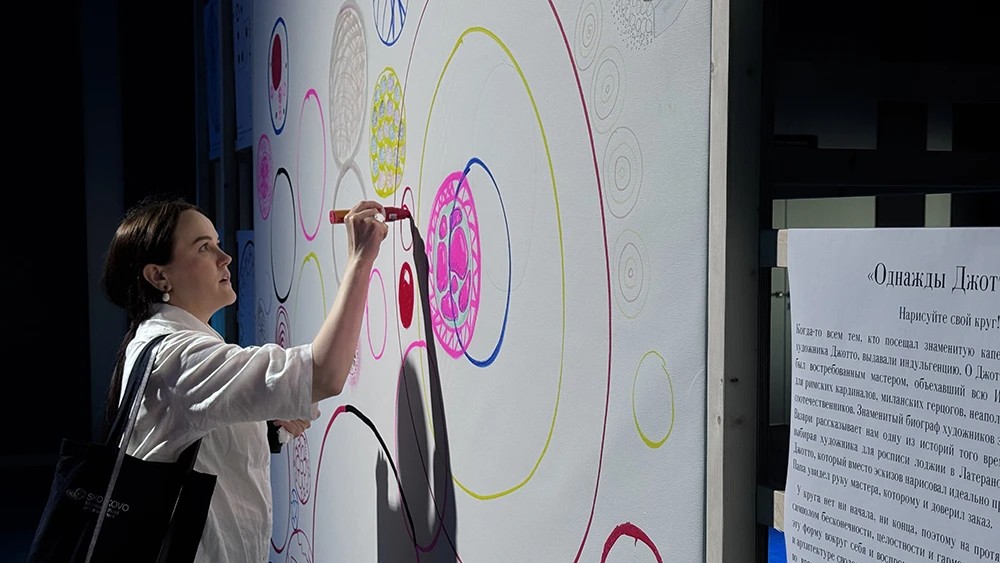
interactive installation "Once Upon a Time, Giotto..." opened on 26
September in the business area of the National Centre RUSSIA as part of the
Open Lecture Hall "Inventing the Future: Limits of the Human". Guests
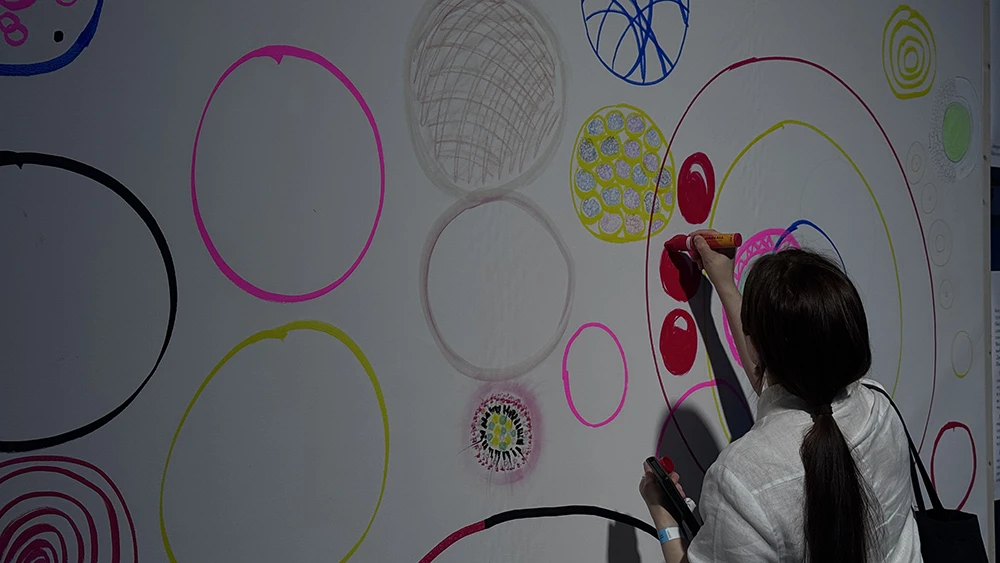
can become co-creators of the work and draw their own circle on a blank canvas
— by the end of the day, numerous individual lines will come together in a
single composition created by all the participants.
The
installation is based on the history of the circle as one of the oldest and
most universal forms through which people have sought for centuries to
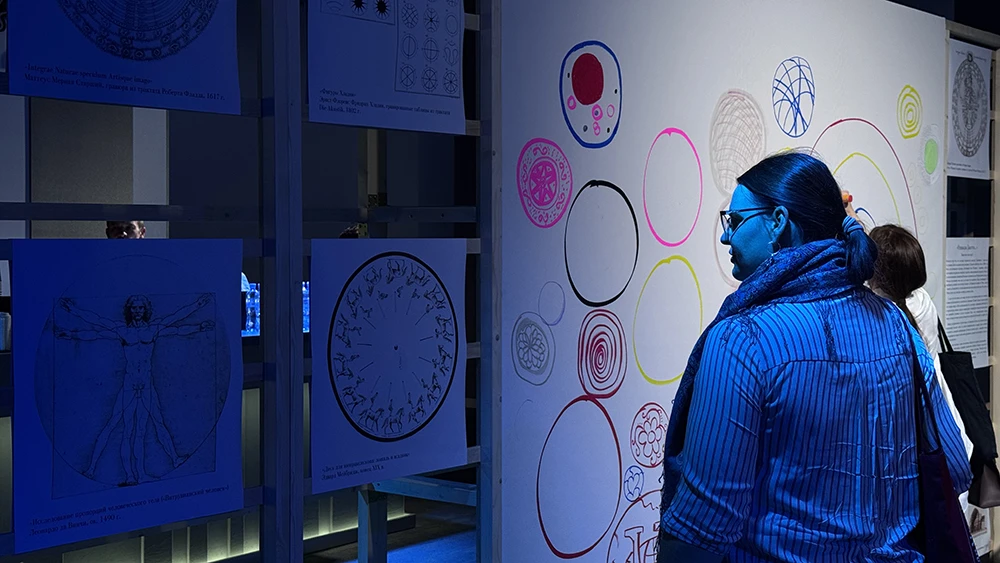
understand the world and themselves. Around the central canvas, guests will see
fragments of this history — from an ancient bronze disc depicting the starry
sky to works by Leonardo da Vinci and Wassily Kandinsky, as well as scientific
and cultural objects in which the circle takes on new meaning.
The project
title refers to the famous story of Giotto. According to legend, when Pope
Boniface VIII was choosing an artist to paint the loggia of the Lateran Palace
in Rome, Giotto drew a perfectly round circle without a compass instead of
submitting sketches — and in doing so demonstrated his skill.
A circle
has neither beginning nor end, which is why for centuries it has served as a
symbol of infinity, wholeness and harmony. The form can be found everywhere: in
the movement of celestial bodies and the architecture of domes, arches and
amphitheatres, clock faces, musical notation, the spinning of a dervish and a
ballerina's fouetté.
The
exposition surrounding the canvas will bring together different manifestations
of the circle. Among them are a bronze disc with gold images of the Sun, Moon
and Pleiades, one of the earliest known depictions of the starry sky; Leonardo
da Vinci's "Vitruvian Man", which links geometry and the human body;
"Chladni Figures", in which sand forms symmetrical patterns under the
influence of vibrations; a zoopraxiscope disc by Eadweard Muybridge, which
turned the circle into a tool for studying movement; and Wassily Kandinsky's
"Several Circles".
On 26
September, Russian and international experts at the Open Lecture Hall
"Inventing the Future: Limits of the Human" will discuss how
technology is changing memory and attention, emotional well-being and the human
body, and where the limits of our capabilities lie today.
Physician
and neuroscientist Vladimir Alipov will explain how memories, including
traumatic ones, are formed and transformed. Neuroscientist and Professor Suzana
Herculano-Houzel will explain what makes the human brain special and how it
acquired its unique capabilities.
"I am
looking forward to the opportunity to talk to young people in Russia about the
future — about what they want it to look like and why it is important not
simply to wait for it to arrive, but to take part in creating it
themselves," the expert noted.
The
discussion will then move from the brain to how people feel in a rapidly changing
world. Psychologist and Candidate of Sciences in Sociology Anetta Orlova will
discuss how to listen to the signals from your own body, maintain psychological
flexibility and manage your energy, while Associate Professor and Head of the
Department of Computer System and Technology at the University of Malaya
Amirrudin Kamsin will explain why anxiety arises and how technology can affect
a person's emotional state.
"I
hope not only to share my experience here, but also to gain new knowledge from
the other experts. Most importantly, however, I hope that everything we share
will genuinely benefit the audience. Perhaps in the future we will be able to
establish cooperation and partnerships so that together we can make the world a
better and safer place while preserving humanity as a shared value," said
Amirrudin Kamsin.
The
discussion will conclude with the topic of neurotechnology and new human
capabilities. Professor and neurotechnologist Mikhail Lebedev will discuss the
development of brain-computer interfaces and the prospects for restoring lost
sensations, while Professor of Neuroscience Romulo Fuentes Flores will speak
about spinal cord stimulation technologies and the restoration of motor
function.
"It is
important that people are not afraid of new technologies. Artificial
intelligence will not destroy humanity. Neural networks and other technologies
exist for our benefit, not to harm us," the expert emphasised.
Follow the
Open Lecture Hall livestream throughout the day and join the discussion about
the limits of the human.
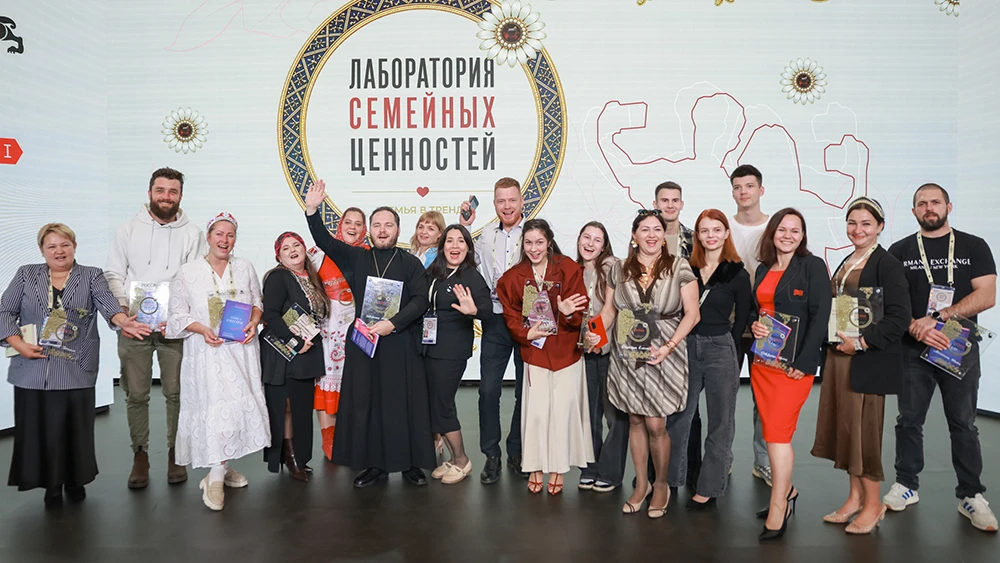
The "Family Values Laboratory" — a four-day programme for those working with family-related topics in the media — was held at the National Centre RUSSIA from 22 to 25 September.
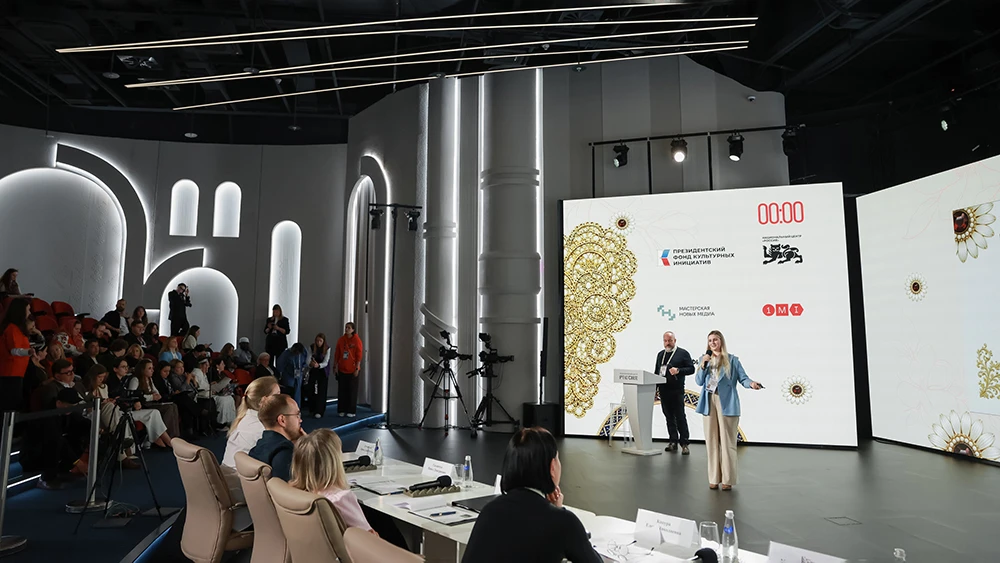
On 25 September, the "Family Values Laboratory" concluded at the National Centre RUSSIA — a large-scale programme for those working with family-related topics in the media.
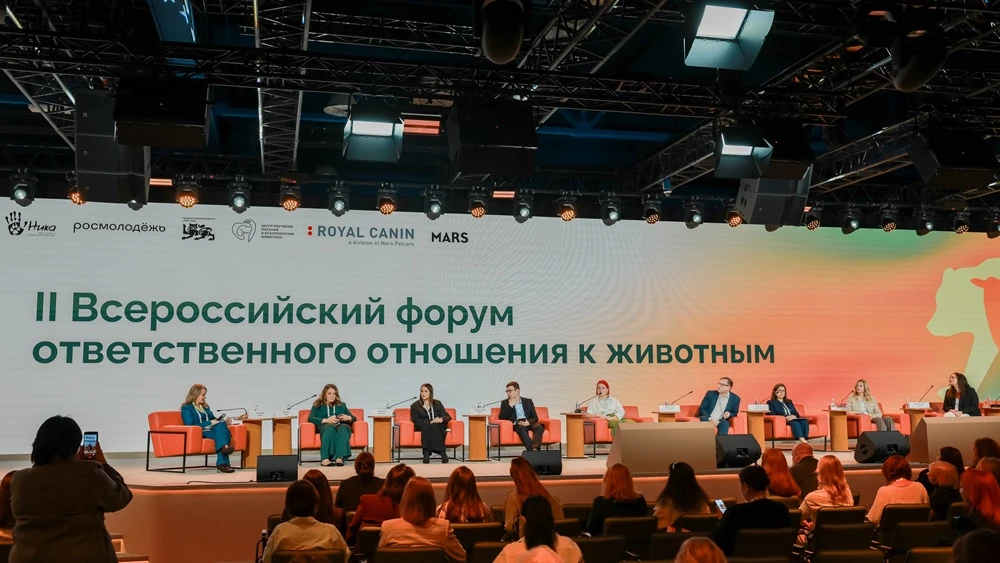
The Forum is organised by the Nika Charitable Foundation for Homeless Animals and the Centre for the Study of Animal Nutrition and Welfare.


