Opening the world to children: exhibits from the Saratov Regional Museum at the "Geography Lessons" exposition
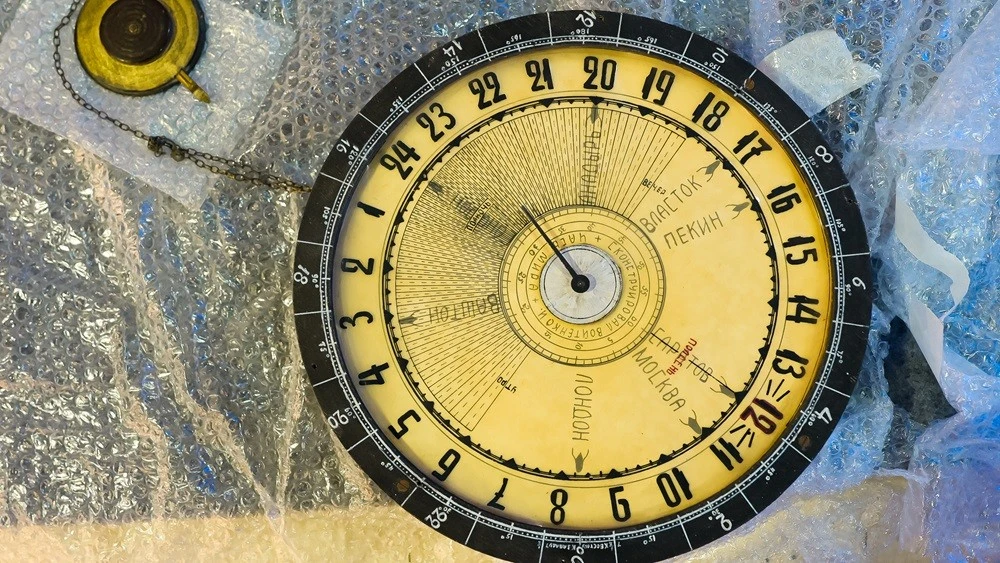
Educational instruments created by a school teacher to explain the movement of the Earth to children are now presented at the "Geography Lessons" exposition at the National Centre RUSSIA. The "Small School Planetarium", the Tellurium and the "World Clock" by Ivan Voytenko once stood in Saratov classrooms and will now become part of a federal project about how our country studied and explained geography.
Marina Provotorova, Chief Curator of the Saratov Regional Museum, presented unique items from the museum’s collection that will be exhibited at the "Geography Lessons" exposition: "These are items from the main collection — the original versions of the "Small School Planetarium", the Tellurium and the "World Clock", for which Voytenko himself obtained patents and which at the time underwent expert review and were recommended for industrial production as teaching aids for Soviet schools. It is important for us that a wide audience will see them at the exposition and learn about the inventor who spent his life searching for ways to explain how the world works to children."
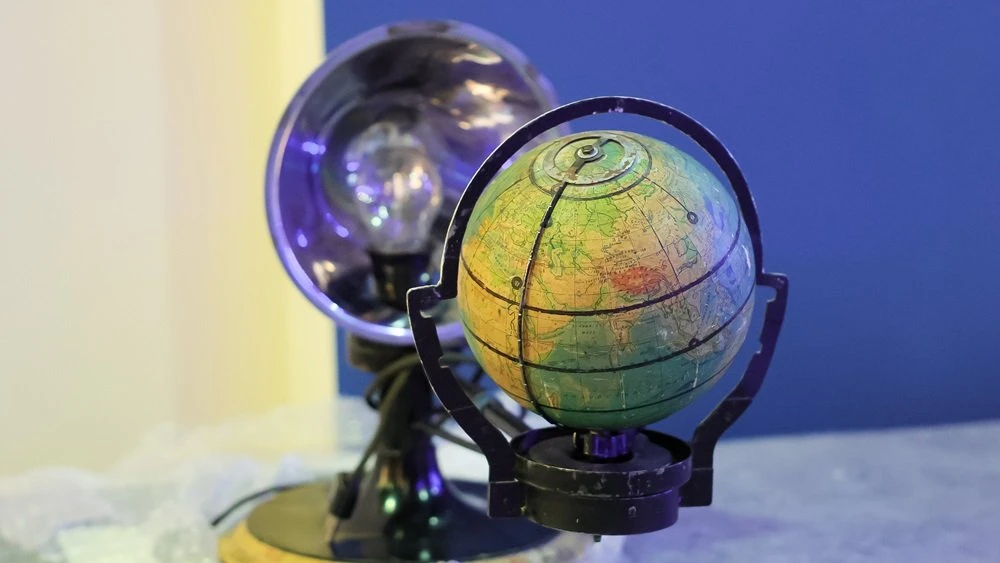
These educational instruments in astronomy and geography were designed and built by the Saratov teacher Ivan Voytenko. Over 27 years of teaching in schools and other educational institutions in Saratov, he created a whole range of visual aids to make complex topics more accessible for students. His developments received high praise from the Saratov Institute for Advanced Teacher Training, the Department of Physical Geography of Saratov University, and the Academic Council of the Ministry of Education of the RSFSR.
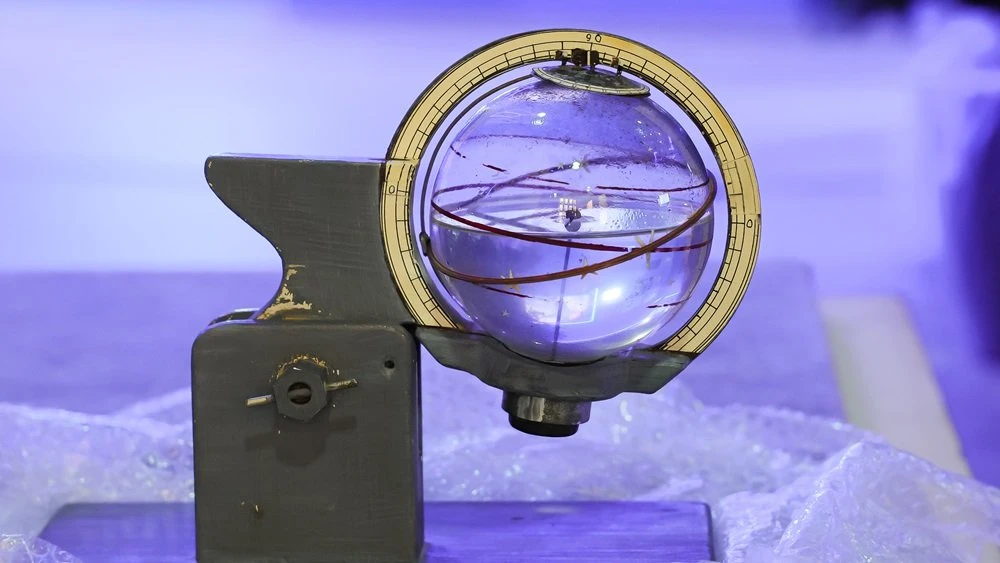
Voytenko created his first device in 1939 — the "Small School Planetarium". In the early 1950s, he designed and patented the Tellurium — an instrument for demonstrating the Earth’s annual orbit around the Sun and its daily rotation on its axis. This Tellurium replaced several instruments previously produced for schools and began to be manufactured by the Ministry of Education of the RSFSR. The "World Clock" was designed to indicate time in different parts of the globe and to study standard and local time. In 1965, a "World Clock" designed by Voytenko was installed in the Main Post Office building in Leningrad.
The transfer of the exhibits for the "Geography Lessons" exposition took place on 1 April. Natalia Shchelkanova, Minister of Culture of the Saratov Region, noted that the museum’s participation in the project is especially symbolic in the year marking the 140th anniversary of the Saratov Regional Museum.
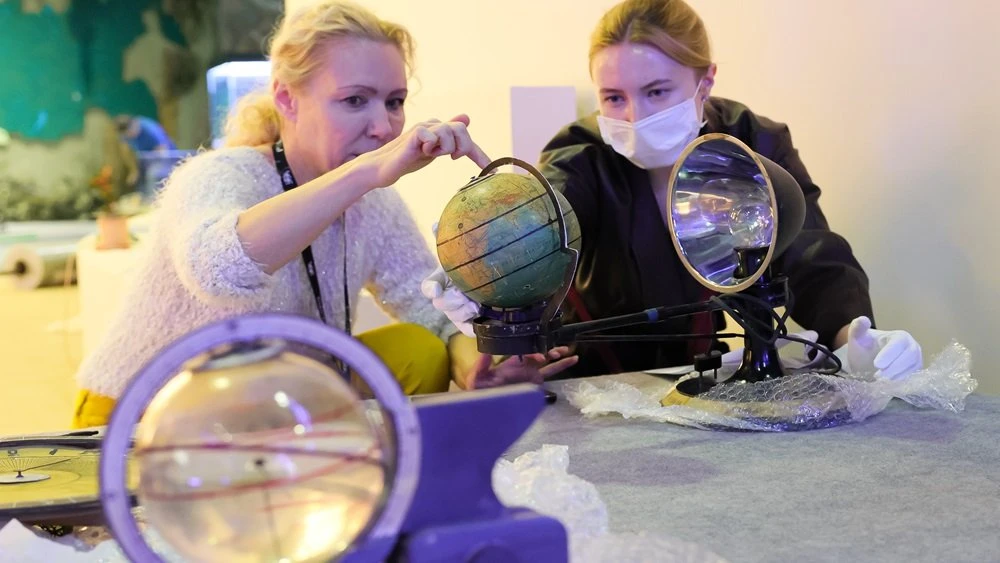
As part of the "Geography Lessons" exposition at the National Centre RUSSIA, unique cartographic treasures from the country’s largest repositories — the Russian State Library, the Russian Geographical Society, archives of the Ministry of Defence, leading universities and research centres — will be brought together for the first time. Many of the exhibits have never left museum collections before and can now be seen in person. Rare items from the Saratov Regional Museum have also joined this collection.
The Saratov Regional Museum has also provided a number of digital copies of its items, the images of which will be used in the design of the exposition.
The "Geography Lessons" exposition will run from 3 April to 9 July at the National Centre RUSSIA. Admission is free with prior registration on the website russia.ru.
A press conference was held at the National Centre RUSSIA in Primorye with the participation of Admiral HC General Manager Viktor Gordiyuk and Head Coach Oleg Bratash.