Winners of the "Adventures of the First" project share teamwork practices used in remote communities
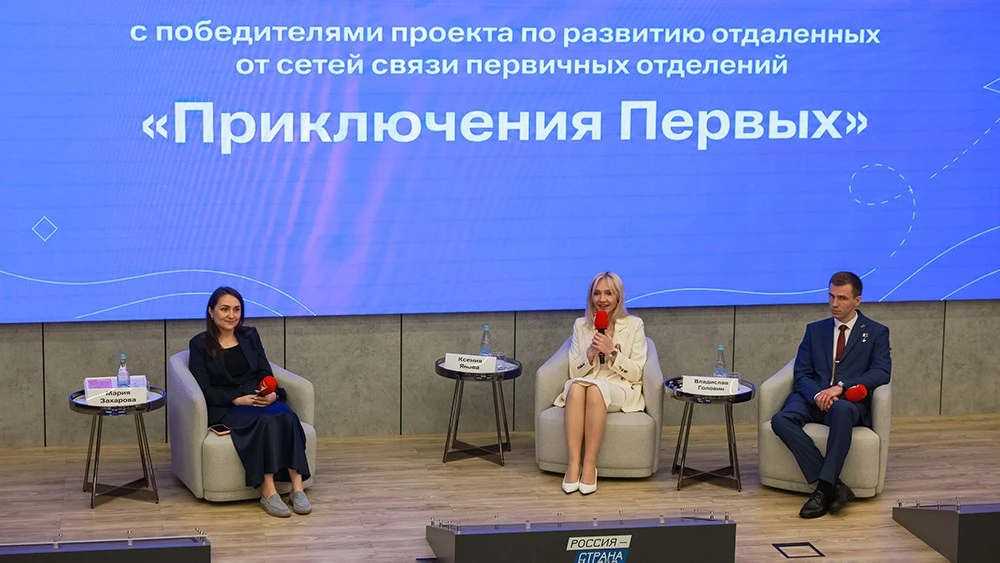
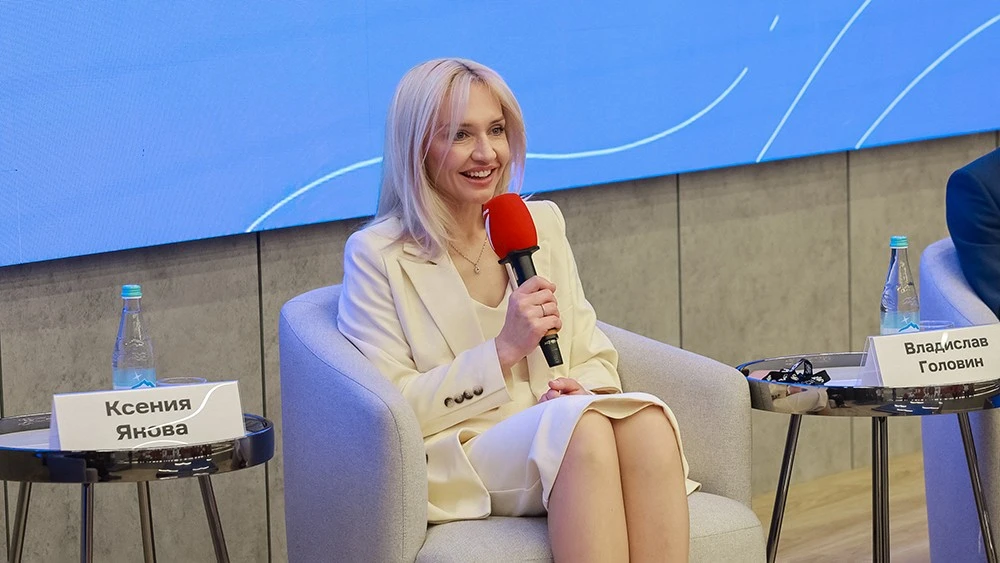
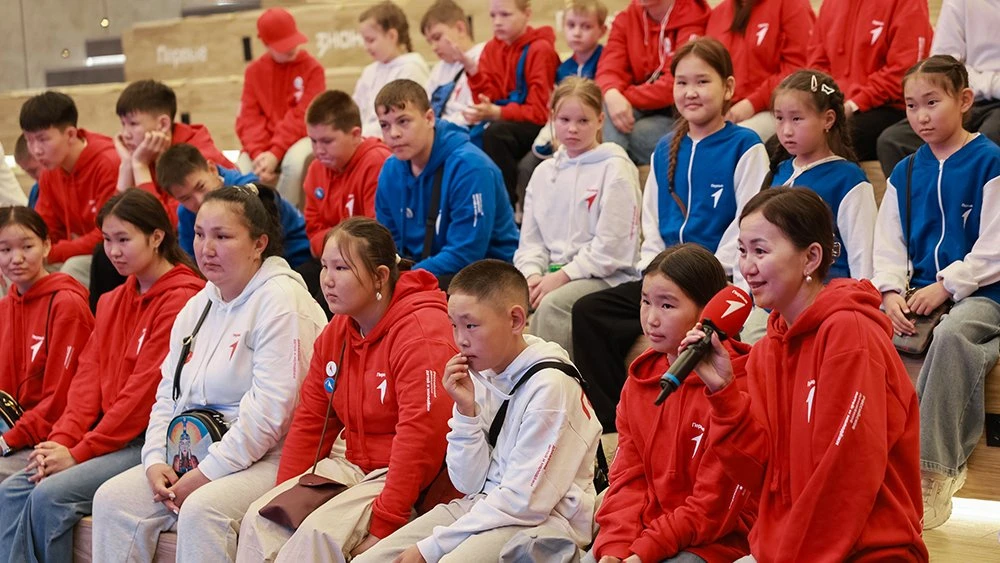
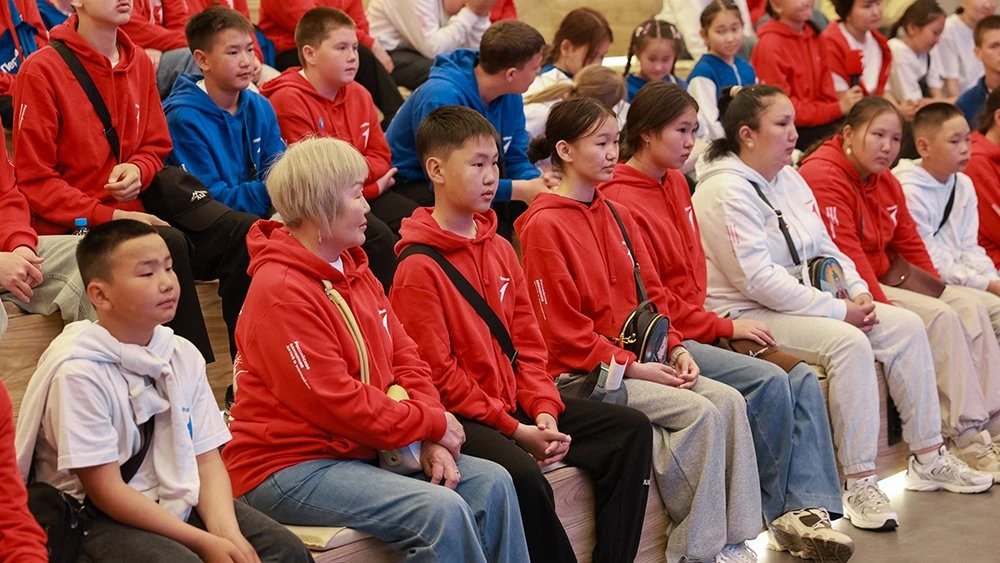
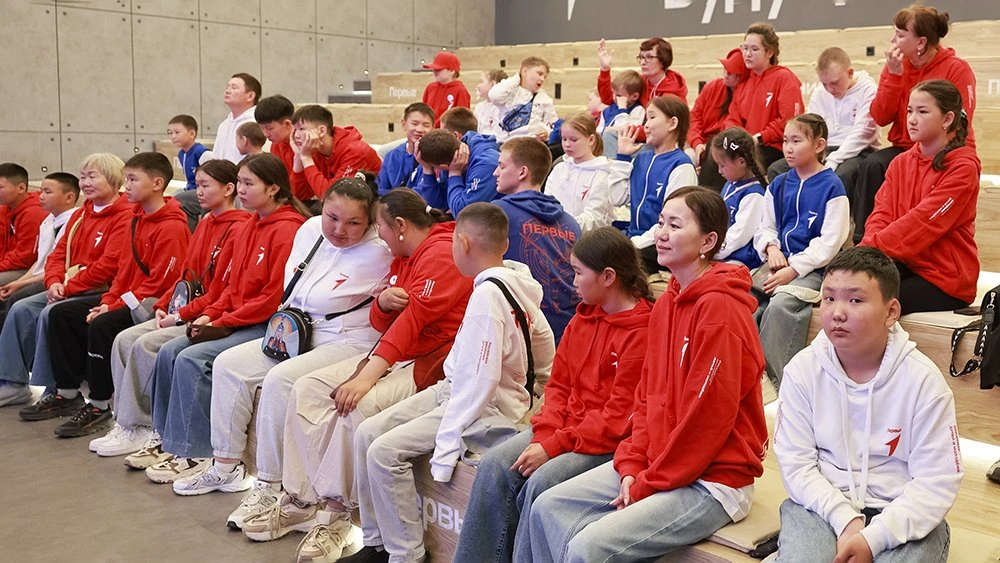
A meeting with the winners of the "Adventures of the First" project was held at the "Space of Opportunities" of the National Centre RUSSIA. The participants were young people from primary branches of the Movement of the First living in remote settlements with limited access to communication networks.
The winners
met with Ksenia Yanova, Deputy Chair of the Board of the Movement of the First,
and Vladislav Golovin, Hero of the Russian Federation, graduate of the "Time
of Heroes" presidential programme, Deputy Chair of the Board of the
Movement of the First and Chief of Main Staff of the Yunarmiya (Young Army)
movement.
"For
the Movement of the First, it is important that young people from even the most
remote communities feel part of our large national community. They may not
always have reliable internet access, but they have a strong desire to take
action, develop their primary branches and contribute to their schools,
settlements and regions. The "Adventures of the First" project helps
such teams receive support, necessary equipment and new opportunities for
growth. This season, 636 teams from 24 regions of Russia joined the project.
Over five months, participants completed tasks across 12 areas of the Movement
of the First’s activities, exploring creativity, science, volunteering, sport
and teamwork. The winners have shown that distance and limited connectivity are
not barriers to civic engagement, initiative and the determination to be
first,” said Ksenia Yanova, Deputy Chair of the Board of the Movement of the
First.
During the
meeting, the experts discussed with the participants what experience they
gained in the project, what tasks they completed, and how they dealt with
challenges of working with limited internet access. The winners shared their
experience in developing their primary branches, organising important community-focused
activities and engaging their peers in these initiatives.
"It is
extremely important that the Movement of the First runs projects for primary
branches situated in remote areas, where there is often no stable connection,
and access to opportunities is limited. Many active, talented and caring young
people live in such places. Our task is to support them in time and show them
that their ideas matter and can become reality. Yunarmiya runs similar
initiatives: today, nearly 480 Yunarmiya Houses have been established across
the country, and an annual contest provides winning participants with material
and technical support. This equipment is used in the regions, helps organise
training sessions, meetings and games, including Zarnitsa 2.0. That is why I
always encourage young people to share their ideas and take initiative in
improving their skills and knowledge," said Vladislav Golovin, Hero of the
Russian Federation, Chief of Main Staff of the Yunarmiya movement.
Throughout the project, participants organised book clubs, held championships in traditional Soviet games, carried out environmental experiments and arranged clothing and toy exchange events. Teams were provided with starter kits and materials to support their activities. At the end of the project, ten teams from six regions received incentive prizes, including equipment, furniture and edutainment materials for their primary branch spaces. The three highest-scoring teams were awarded a trip to Moscow.
The winners
included teams from the Republic of Buryatia, the Tomsk Region and the Kemerovo
Region. These were the primary branches of Sayany Secondary School in the
village of Sayany, the Oktyabrsky branch of Secondary School No. 1 in the
village of Alexandrovskoye, and Basic School No. 164 in the settlement of
Amzas. During their visit to Moscow, participants attended the Movement of the
First Festival and visited the National Centre RUSSIA, the Victory Museum, the
Tretyakov Gallery, the Pushkin Museum and other cultural venues.
Natalia
Kunovskaya, mentor of the winning "Impulse" team from the settlement
of Amzas in the Kemerovo Region, said the contest had been a real challenge for
the participants. The team represents School No. 164, which has only seven
students. The settlement is far from major population centres, trains there run
only every other day, and stable internet access is almost non-existent.
Despite these difficulties, the team completed every stage of the contest.
"We
come from a small settlement and a very small school with only seven
schoolchildren, so this victory is not just a contest result for us — it is a
major event for our entire team and probably for the whole settlement. We
completed all the tasks, although it was not easy. When we learned that we had
won and would be travelling to Moscow, it felt like a fairy tale. Some of the
children cried, others jumped with joy, and I still cannot completely realise
that we succeeded. For our students, many of whom had never visited Moscow,
this is an incredible experience – to visit our capital, to be at such a
meeting, to feel that their efforts have been recognised and appreciated.
Today, I am especially happy for the children, as they have learned that
anything is possible, even if you live in a small settlement, as long as you
have a team, mentors and belief in yourself," said Natalia Kunovskaya,
mentor of the "Impulse" team and curator at the Movement of the
First.
Dominika
Cherepanova, a member of one of the winning teams from the village of
Prokhorkino in the Tomsk Region, said that winning the contest brought a great
deal of excitement to both her and her teammates. The children represent a
small rural school with only four students, and the village itself is located
far from major population centres. During the contest, the team completed a
variety of tasks, including growing different types of herbs and greens, while
the most challenging stage for the participants was carrying out practical
assignments involving experiments.
As winners,
the team travelled to Moscow, where they attended the Fifth International
Festival of Childhood and Youth of the Movement of the First. There, they had
the opportunity to perform on stage and take part in workshops. During the event,
Dominika presented a badge she had made by hand at the Festival to Hero of the
Russian Federation and Chairman of the Board of the Movement of the First Artur
Orlov as a token of gratitude.
"I am
very happy that we managed to win and come to Moscow. We are from the small
village of Prokhorkino in the Tomsk Region. When we were told that we had won,
I could hardly believe it at first. I was so immensely happy that I almost
cried. During the contest, we completed many tasks, and the most difficult challenge
for us was conducting experiments. At the Movement of the First Festival, I
enjoyed most of all learning first aid skills and making a badge. I gave it to
Artur Valeryevich Orlov, and he was delighted. After visiting Moscow, I
realised that people living in small communities have access to many
opportunities. They undoubtedly can win contests like this, travel to the
capital and discover many new things," said Dominika Cherepanova, a member
of one of the winning teams.
Primary branches of the Movement of the First operate in schools, colleges, universities, children's camps, cultural institutions, sports centres and other organisations. Today, more than 55,000 primary branches have been established across all 89 regions of Russia, enabling children to begin their journey in the Movement of the First. For student participants, joining a primary branch provides opportunities to find like-minded peers, develop their own projects individually or as part of a team, receive support from mentors and apply for grants to advance their ideas. It is a platform through which children and young people gain teamwork and leadership skills while making a meaningful contribution to the country's development. During the Fifth International Festival of Childhood and Youth, the Movement of the First also summed up and announced the results of the third season of the "Contest for the Primary Branches", which aims to select the best projects for children and young people in 2025–2026. The contest's total prize fund amounted to 475 million roubles. Over a period of more than six months, teams from 88 regions of Russia completed community-focused tasks, organised vibrant events and implemented socially significant projects. Following expert evaluation, 2,000 winners were selected to receive cash awards ranging from 200,000 to one million roubles. The funds may be used to improve infrastructure, purchase equipment and launch new projects.