


Journey through time at the National Centre RUSSIA: an imperial-era phaeton at the exposition "Geography Lessons"
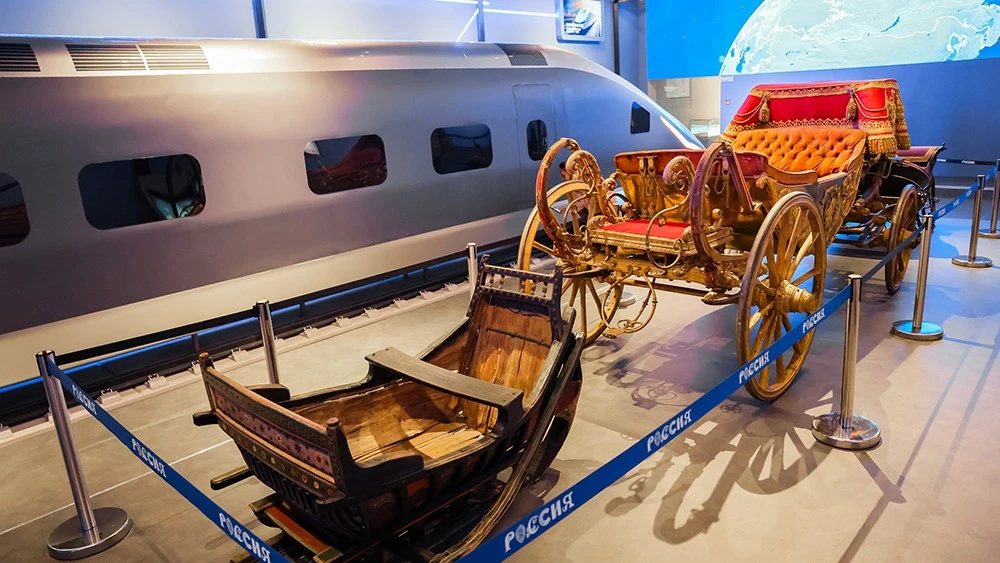
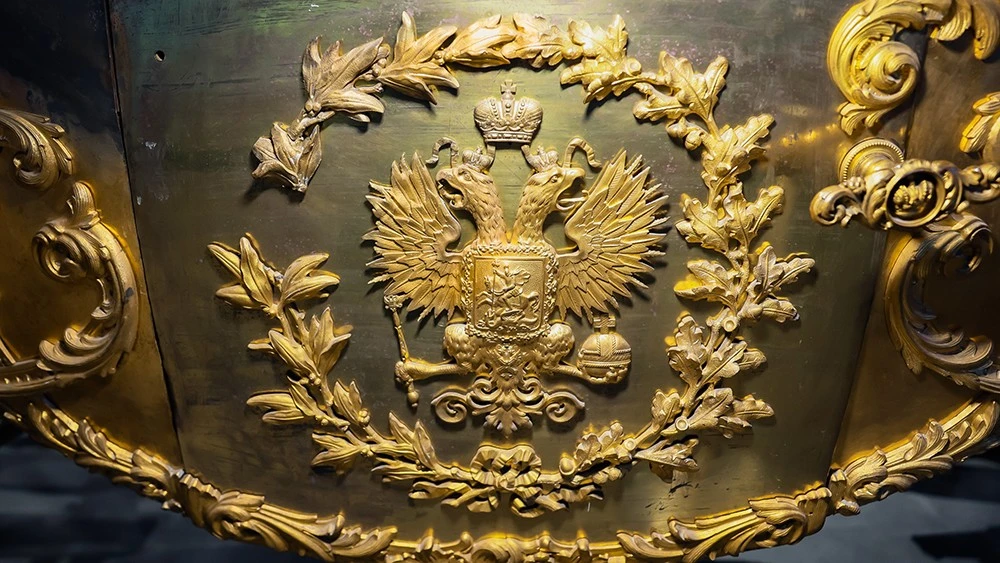
A ceremonial phaeton from the mid-19th century, decorated
with gilded bronze and red velvet, took part more than once in the coronations
of Russian emperors. It has been brought from the Tsarskoye Selo State
Museum-Reserve specifically for display at the exposition "Geography
Lessons". Irina Bredikhina, curator of the "Carriages. Harness"
collection, shared with the Press Office of the National Centre RUSSIA how the
phaeton came to the museum, what makes it unique, and how this show piece has
survived to the present day.
Elegant, ceremonial, and one of a kind
— When did the phaeton become part of the museum’s
collection, and how long has it been in Tsarskoye Selo?
— The phaeton, together with several dozen other carriages,
was transferred in 1969 to the Catherine Palace Museum in Tsarskoye Selo (now
the Tsarskoye Selo State Museum-Reserve) from the State Hermitage Museum. The
carriages had earlier come to the Hermitage from the Court Stable Museum, which
was disbanded in the 1920s. By 1971, restorers had prepared 14 carriages for an
exposition in the Cameron Gallery. In 1990, they were moved to the "Duty
Stables" pavilion, where they have been remaining up to present day.
— What makes the phaeton unique and historically valuable,
and what can it tell us about the epoch when it was made, and lifestyle and
transport culture of that time?
— The phaeton was produced using the most advanced
technologies of that time, including a system of vertical and horizontal
springs. While its overall silhouette corresponds to the fashionable style of
open carriages popular in the mid-19th century, its decoration is absolutely
unique. Only two such phaetons were ever made, and this is the only surviving
example. Since each carriage was handmade, every piece was distinctive even
when produced according to the same design.
The artistic design follows the neo-Rococo style — a
fashionable trend at the time, intended to evoke memories of the epoch of Peter
I and Elizabeth Petrovna. The same "elegant and festive" manner was
used to decorate the new carriages, the liveries and triangular hats for
coachmen, and the harness for pedigree horses. To prepare the coronation
carriages and harnesses, craftsmen from the Court Stable Office and private
firms were engaged. In total, 16 new gilded carriages were produced, 17
historic vehicles were restored, and 30 sets of ceremonial tandem harnesses
were made.
An enormous sum — more than 740,000 silver roubles — was
spent on the coronation procession. Such costs were considered justified, as
they were necessary to "impress the imagination" of subjects and
foreign guests alike. The production of this phaeton alone was valued at 6,295
silver roubles.
Behind the scenes of court production
— How complex was the
process of producing the phaeton?
— Preparations for the coronation celebrations were
completed within a very limited timeframe. The Court Carriage Office undertook
to repair two historic carriages and a sedan chair, as well as to create two
new ceremonial carriages, two four-seat phaetons and two two-seat phaetons. The
director of the office, Major General Vakhtin, was instructed to hire
additional craftsmen, order materials from the best manufacturers, and ensure
the highest quality in all purchases.
The master carriage maker’s main responsibility was to
ensure that the final result corresponded precisely to the original design. A
skilled carriage master needed to possess both theoretical and practical
engineering knowledge, artistic taste and the ability to organise the work of
carpenters, locksmiths, blacksmiths, bronze casters, spring makers,
wheelwrights, upholsterers, gilders and passementerie craftsmen. The work on the
coronation carriages was overseen by master craftsman John Bannister, who had
held this position for more than 20 years. For structural reliability, only the
finest materials were used: high-quality steel and seasoned wood, which were
always available at the Court Carriage Factory.
The exhibit has been remarkably well preserved to the
present day. In 2020, specialists from the restoration workshop
"Phenomenon" restored only the cover of the coachman’s seat.
Three coronations and a railway
— What interesting facts or historical events are associated
with this exhibit?
— Like other carriages used in ceremonial processions, the
phaeton was kept at the Court Stable Museum on Konyushennaya Square in St
Petersburg so that it could be used in official ceremonies — for example,
during the coronations of Alexander III in 1881 and Nicholas II in 1896, as
well as the celebrations marking the 300th anniversary of the House of Romanov.
The precious carriages were transported to Moscow on freight railway platforms.
First time outside Tsarskoye Selo
— Has the phaeton been showcased elsewhere before, or is
this its first public presentation on a wider scale?
— The phaeton is normally displayed in the permanent
exposition "Court Carriage in Tsarskoye Selo" in the "Duty Stables"
pavilion near the Catherine Palace. Its presentation at the National Centre
RUSSIA is the first time the phaeton has been exhibited outside Tsarskoye Selo.
The new exposition project "Geography Lessons"
welcomed its first visitors at the National Centre RUSSIA on 3 April. It offers
a true journey through the centuries — from ancient scrolls to digital maps,
from the earliest geographical discoveries to the exploration of space. Each of
the eight thematic halls presents fascinating stories of discoveries,
expeditions, scientific achievements and the exploration of territories.
Schoolchildren can try themselves in the role of explorers, learn to read maps
and understand the scale of the country not only intellectually but also
emotionally.
The exposition is based on rare cartographic materials from
the collections of the Russian State Library, the State Historical Museum, the
Central Naval Library, the Polytechnic Museum, as well as leading Russian
archives, universities and research centres. These include historic maps and
atlases, educational publications, globes of the Earth and other planets, and
books that shaped the understanding of the world for several generations of
explorers. The exposition is designed for family audiences and schoolchildren
aged 9–16. Visit the exposition "Lessons of geography" and rediscover
the map of your country!

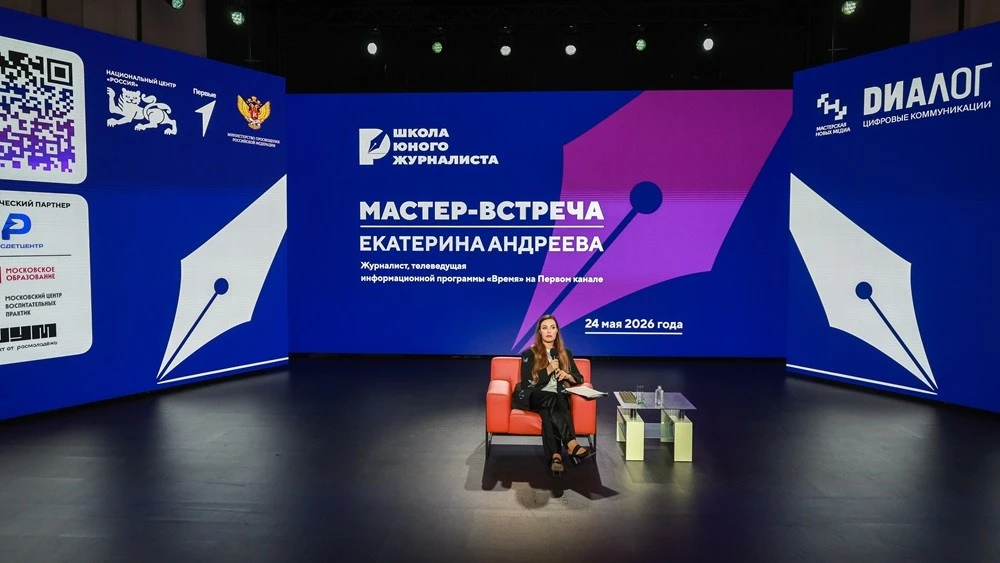
The expert shared with the students not only professional secrets, but also her personal success story.
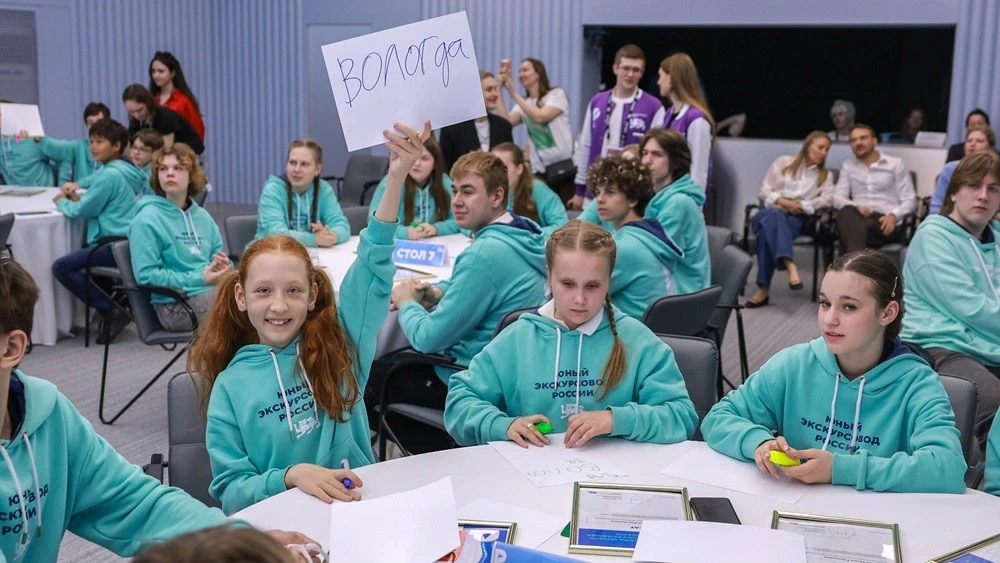
The results of the 2025-2026 season of the Young Tour Guides School of Russia project were summed up at the National Centre RUSSIA.


