


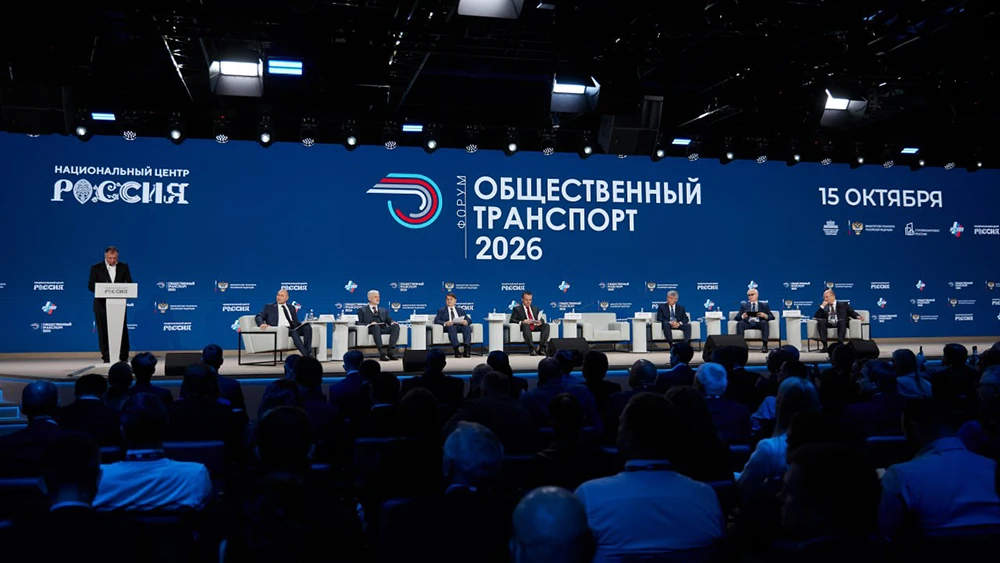
Public transport development was the key theme of an industry forum at the National Centre RUSSIA
The
modernisation of passenger transport in Russia is undergoing a fundamental
shift: from individual fleet replacement programmes to comprehensive
infrastructure development and the systematic transformation of urban
agglomerations. Modern public transport is setting fundamentally new standards
of reliability and accessibility for citizens. These issues were the focus of
the plenary session "The Federal Project 'Public Transport Development':
From Technological Momentum to a Better Quality of Life" at the
"Public Transport 2026" forum, held on 15 October at the National
Centre RUSSIA. Participants included the Deputy Prime Minister of the Russian
Federation, Marat Khusnullin, the Minister of Transport of Russia, Andrei
Nikitin, the President of the Russian Union of Industrialists and Entrepreneurs
(RSPP), Alexander Shokhin, representatives of federal authorities, regional
heads and transport industry experts.
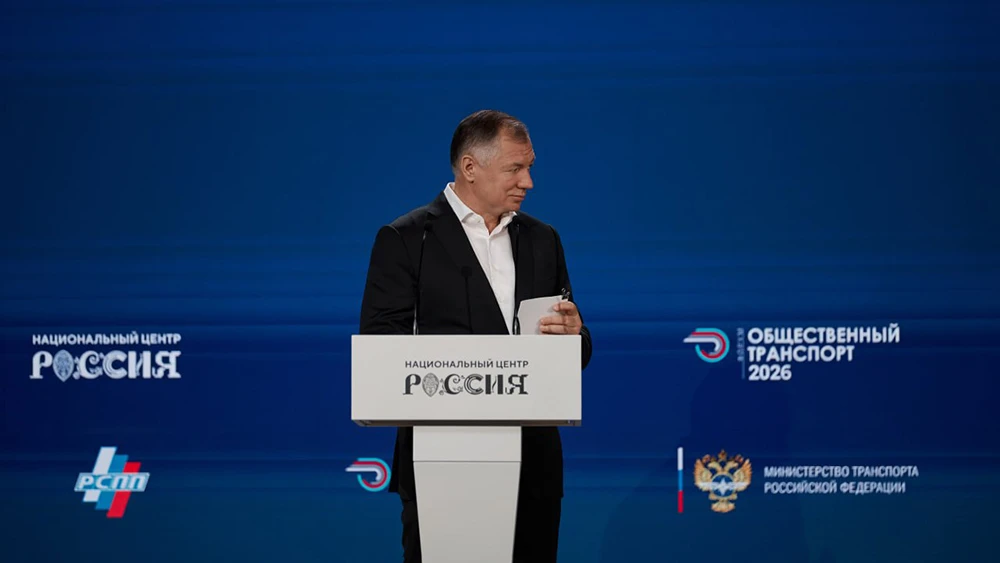
Marat
Khusnullin noted that measures to improve people's living environment are being
implemented under the national project "Infrastructure for Life". He
said the national project aligns priorities in spatial development,
infrastructure, construction, housing and utilities, directly contributing to
an environment where people can live, work and develop comfortably. The Deputy
Prime Minister stressed that the outcome of this work is directly linked to
achieving the target of improving the quality of the living environment in key
settlements by 30% by 2030. He added that this is a particularly challenging
task, as it requires a 30% improvement in quality of life across 16 key
indicators within this period.
"With
people becoming increasingly mobile, the transport system now needs to develop
rapidly. This includes public transport, the development of street and road
networks, the introduction of intelligent transport systems and a rethink of
how parking is organised. Federal support mechanisms and measures have helped
replace more than 23,000 vehicles since 2020; transport concessions are being
implemented and the regulatory framework is being refined. Steady fleet renewal
has become possible thanks to the support of the President of Russia, Vladimir
Vladimirovich Putin. We are now at a stage in public transport development that
requires systemic organisational and financial changes. Particular attention
should also be paid to suburban and urban rail infrastructure. Public transport
also holds particular promise for expanding IT services and should be among the
most advanced sectors in this area. I am confident that, thanks to Mikhail
Vladimirovich Mishustin's continued attention to transport infrastructure and
the coordinated work of the Government team, we will overcome every
challenge," he said.
The Deputy
Prime Minister observed that the level of public transport development directly
affects how satisfied Russians are with their quality of life. The transport
system therefore needs to develop rapidly. This includes public transport, the
development of street and road networks, the introduction of intelligent
transport systems and a rethink of approaches to parking management. Marat
Khusnullin recalled that a roadmap to improve parking regulation was approved
in December 2025. Its main purpose is to help regions develop their own parking
policies. Parking management is a matter of regional planning that
significantly affects the comfort of the urban environment, with federal
support mechanisms and measures available to assist.
The Deputy
Prime Minister stressed the need to address staff shortages, improve drivers'
working conditions and make the profession more competitive and attractive in
the labour market. Public transport holds particular promise for expanding IT
services and should be among the most advanced sectors in this area. Marat
Khusnullin noted that the planned changes would provide a foundation for
successful cooperation between government and business, encourage new forms of
collaboration and give manufacturers a stable three-year production plan.
The
Minister of Transport of the Russian Federation, Andrei Nikitin, outlined the
key challenges facing the industry today. He said the main problem with public
transport concerns organisation and management rather than technology: even a
new bus will not satisfy passengers if it fails to arrive on time. To change
this, regions have been advised to finance transport through ring-fenced road
fund allocations, introduce a guaranteed service operator model and move to the
"Infrastructure Menu" of federal support.
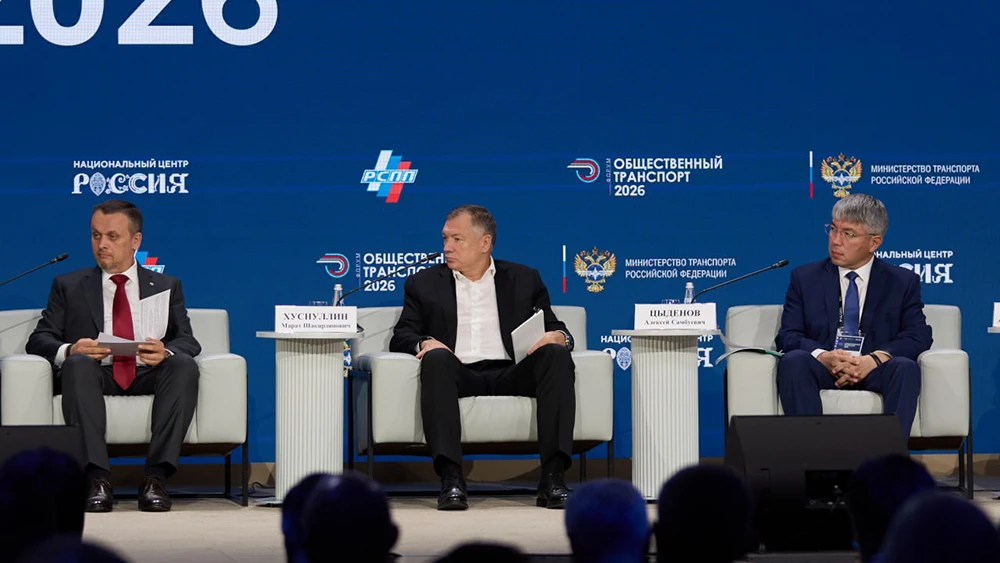
"The
key is how public transport services are organised. They must arrive on time.
We need to encourage people to use public transport and address parking
provision. If it is convenient, people will switch from private cars to buses,
trolleybuses or urban trains," noted the Minister of Transport of the
Russian Federation, Andrei Nikitin.
The
President of the Russian Union of Industrialists and Entrepreneurs, Alexander
Shokhin, discussed the industry's development from the manufacturers'
perspective. He said public transport is also a manufacturing issue for the
RSPP, as it generates substantial demand for products from a range of
industrial sectors.
"In
recent years, Russian industrial enterprises have developed their own
technological solutions. We often cite high-speed rolling stock as an example
when discussing the development of new import-substituting technologies, but we
are seeing the same thing in urban transport. A number of companies compete to
manufacture trams, modern low-floor trolleybuses, electric buses and buses.
Many companies are developing this production, there is competition, and
customers really do have a choice. There are also neighbouring countries
willing to supply these vehicles. These are powerful incentives for
technological development in mechanical engineering and related
industries," added Alexander Shokhin.
A meeting
of the interdepartmental working group on public transport development was also
held that day. It discussed the implementation of major government objectives
for developing and modernising passenger transport. Speakers noted that this
requires close coordination between the Government of the Russian Federation,
the relevant State Council Commission, federal and regional authorities, major
manufacturers and investors. The interdepartmental working group's meeting is
intended to facilitate an exchange of views and the development of agreed
solutions.
The
"Public Transport 2026" forum runs on 14–15 October, bringing
together leading representatives of government and business, alongside industry
experts, to discuss strategies for developing passenger transport in the
regions. The forum is organised by the Ministry of Transport of the Russian
Federation and the Russian Union of Industrialists and Entrepreneurs.

The Russian State Library for Young Adults is holding the All-Russian Youth Contest for Illustrated Stories (Comics) "Tales of the Northern Winds".

What makes up the "American dream", and why has its meaning changed along with America itself? The new episode of "The Nature of Values" podcast explores these questions.

The scientist was interviewed by Anastasia Maltseva from the Movement of the First and a graduate of the Young Journalists School, Semyon Nikitin.


