


Machine tools, chips and skills: how people are building Russia's technological independence
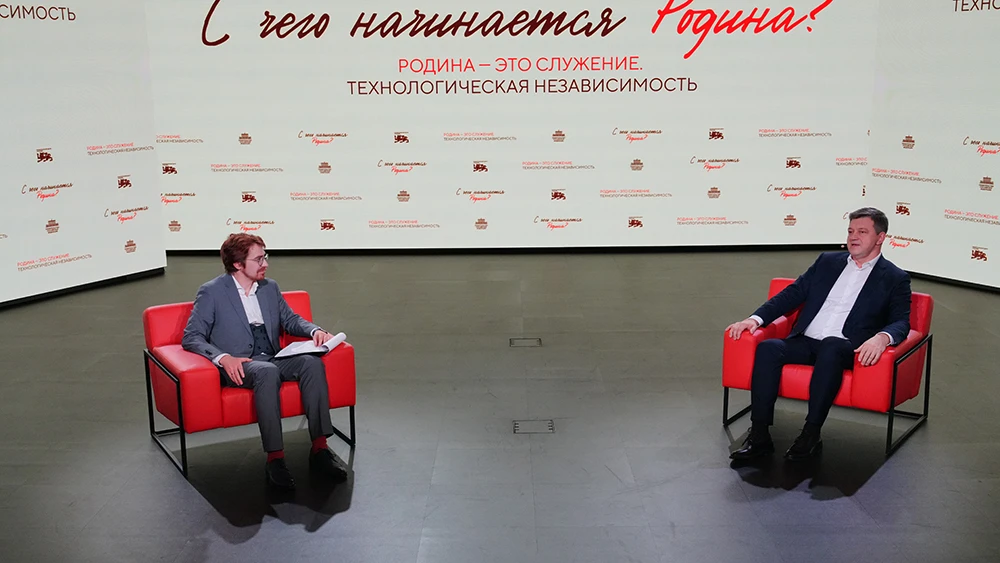
Technological sovereignty is not an abstract goal: it means machine tools, alloys, microchips, test rigs and the people who design, launch, test and turn the best initiatives into tangible results. These were the subjects discussed on 23 October at the thematic meeting "Motherland Is Service. Technological Independence" at the National Centre RUSSIA. Continuing the "Motherland Is Service" series, the meeting covered the entire industrial chain, from fundamental engineering solutions, machine tool manufacturing and microelectronics to testing systems and development strategy. Speakers discussed how the experience of successive generations combines with new technologies, how production chains are being established in Russia and what role young people can play in these processes.
Taisiya Ryabinina, a Category I Engineer at NRC "Kurchatov Institute" — CRISM "Prometey", who has devoted 75 years to shipbuilding, recalled her first steps in the Soviet engineering tradition, the introduction of new materials at shipbuilding enterprises and projects to conserve and recover precious metals, including the establishment of a silver recovery facility at the "Krasnoye Sormovo" plant. She advised young specialists to begin their careers in production, learning how it works from the inside, studying drawings and loving their chosen profession. In shipbuilding, she said, as in music, constant practice is essential.
"Love what you do and try to gain experience in production. I started as a Grade 4 welder. This profession is akin to being a pianist or a musician: if a skilled welder takes two weeks' leave, they have to submit test samples for full radiographic inspection again when they return. After all, we are talking about ships and aircraft, so the quality must be impeccable. You need to learn at least something of the trade, study drawings and manufacturing processes, and only then move on," Taisiya Ryabinina emphasised.
Service, she said, means sharing everything you know, passing on your experience and taking pleasure in what has been achieved. The speaker admitted that she had never once considered changing her profession in her 75 years in the industry. Her work had taken her across the country to study production, introduce technologies directly at factories and conserve precious metals at industrial enterprises. She noted that much work still lay ahead, including opening up the Northern Sea Route with icebreakers, where Russia has vast expanses yet to develop.
Anton Ryazantsev, Director General of "IK TsTO", discussed modern machine tool manufacturing and reverse engineering. He explained how zero-point positioning and workholding systems reduce workpiece set-up time, the difficulties involved in working with heat-resistant nickel alloys when restoring blades and hot-section components of foreign-made gas turbines, and how the company's testing laboratory provides the full range of fire safety testing for aeroplanes and helicopters. Addressing his future colleagues, Anton Ryazantsev stressed that practical experience and a commitment to continuous development are essential.
"Gaining production experience comes first. And you must accept that you need to keep learning throughout your life: knowledge is advancing so rapidly that you have to undertake some form of education every five years. Read widely and talk to people, use artificial intelligence, but do not become its slave — it is a good servant but a very bad master. Find teachers and learn from their experience, love what you do and give it everything, understanding that the result may not be what you planned. But there will be a result — and it will certainly be a good one. Do your duty, come what may," Anton Ryazantsev noted.
The third account focused on machine tool manufacturing, the foundation of all production. Roman Bukarev, Director General of the "Ulyanovsk Machine Tool Plant" and an Honoured Machine Builder, described the types of machine tools the enterprise produces, which are most critical to import substitution, how a machine tool plant's success is measured and the technological and workforce challenges it faces.
"Machine tool manufacturing is the foundation of the entire mechanical engineering industry. The modern aircraft and engines now being produced in our country would be impossible without machine tools. Having your own design and manufacturing documentation is fundamental to obtaining Russian manufacturer status. When foreign companies entered the market, they established production here but severely restricted the transfer of their designs: it was assembly from imported components. We are now revising the documentation ourselves, working with universities in Ulyanovsk. One machine tool has already been recognised as Russian-made, and we have submitted the paperwork for a second," Roman Bukarev said.
The plant's cooperation with universities and colleges was another subject of discussion. The speaker noted that the plant welcomes students and is ready to offer placements from their third year of study. He said the enterprise particularly needs electronics engineers and design engineers: it is introducing modern Russian CNC systems and moving away from imported solutions, creating demand for these specialists.
Vadim Medvedev, Director General of the NTI Foundation, discussed the current priorities for ensuring technological independence, how projects are supported from idea to implementation, and the tools available to students, young scientists and small technology companies. Asked what serving the Motherland meant to him, he said that it begins with love.
"For me, the Motherland is, above all, about love. I love our land, our air, our sky, our clouds. When I fly back from somewhere and step outside, I think: that's it, I'm home, this is my Motherland. I love all our distinctive qualities, our cheerfulness, our humour. But service is an important word for me. Service means putting the public interest above your own. Honour seems to me a very important human quality. A person must have a sense of honour, must serve in that sense, respect and defend the interests of their friends. A person must serve their Motherland in the sense that, if there is a threat or trouble, they must lend a shoulder, stand up and protect their loved ones, their land and their home. In that sense, service means putting our shared interests, the interests of our people, above our own. Very beautifully put," said Vadim Medvedev, Director General of the NTI Foundation.
The meeting concluded with a discussion of microelectronics, a field where technological independence means being able to create your own tools and equipment. Konstantin Gorovoy, Technical Director of "Nanotronica", explained why equipment for critical manufacturing stages, including the 90 nm process, is becoming central to the industry's sovereignty. He also described how an idea becomes a working prototype: the company has already assembled an experimental scanning electron microscope with a resolution of up to 3 nm.
He began his journey into the industry at an electrical engineering club, where he picked up a soldering iron and "successfully burnt his mother's carpet". This taught him that physics is not just about electrons in transistors, but also about heat generation. Later came studies in Germany, work on silicates at a gymnasium and, from the age of 22, work in Fraunhofer institute laboratories. According to Konstantin Gorovoy, his first mentor was Professor Ivar Angelov, who "made an engineer out of him": first sending him from theoretical work into the laboratory, then making him integrate an array into a system.
"The key to every device is a chip. And the key to a chip is the equipment, in other words, machine tools. But these are no ordinary machine tools. It is like a kitchen: without one, you can be an outstanding chef and have plenty of ingredients, but you have nothing to cook on," Konstantin Gorovoy emphasised.
He noted that the company already uses its own chips in its equipment — for example, an "Elbrus" microprocessor controls one of its systems. By 2032, it plans to manufacture 60–65 systems in series for producing microelectronics at the 90 nm node, before moving on to 9 nm, where artificial intelligence begins. The speaker also discussed cooperation with universities, including an industry-based department at MIPT, and the search for specialists across the country, in Ryazan, Novosibirsk and other cities, visiting them to offer hybrid working arrangements and laboratory facilities.
According to Konstantin Gorovoy, microelectronics brings together design engineers, programmers, circuit designers, chemists and physicists, and artificial intelligence will not replace this field: "It is quite good at programming, but it falls apart when dealing with the physical world, with making something that requires hands-on work." The speaker defined service to the Motherland as a willingness to "give 150% to the work you love, whether that means microchips or bread rolls" — and to do so in Russia.
"Motherland Is Service" is part of the National Centre RUSSIA's original project "What Does the Motherland Begin With". The series comprises several stages involving representatives of the Russian Government, heads of federal executive bodies, regional leaders and opinion leaders.
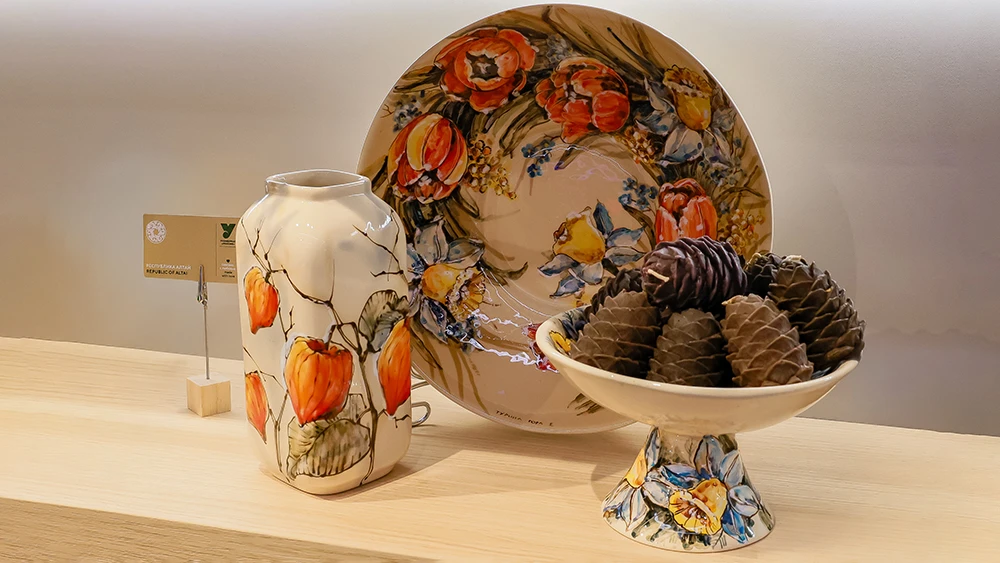
The Department Store RUSSIA has brought together pieces for an autumn table setting that combine folk motifs, natural forms and the craftsmanship of Russian manufacturers.


