


Technological sovereignty of the country: development of the rare earth metals industry discussed at the National Centre RUSSIA

A session entitled "Rare and Rare Earth Metals as the
Basis of Industrial Technological Sovereignty" was held at the National
Centre RUSSIA. The discussion took place as part of the 3rd International Forum
of Advanced Materials, Chemistry and Technologies "AMTEXPO 2026",
with the National Centre RUSSIA acting as a co-organiser. The development of
the rare and rare earth metals industry is one of the initiatives under the
national project "New Materials and Chemistry". Experts discussed
ways to scale up the rapid extraction of rare metals in order to strengthen
Russia’s own raw material base and technological sovereignty, as well as the
ambition to become one of the leading players in the global rare metals market.
Deputy
Director for Technological Development at the Rosatom State Corporation, Dmitry
Ivanets, noted that "the connection between industry and science is the
key to the successful implementation of any endeavour, especially one as
important as the formation and development of the rare earth industry in the
Russian Federation".

According
to experts, Russia has a unique mineral resource base — one of the largest in
the world — covering almost all types of rare metals, including lithium,
beryllium, niobium, tantalum, titanium and zirconium, as well as rare earth
metals such as scandium, vanadium and others. However, the potential for
extracting these minerals has not yet been fully realised: their recovery with
the production of finished commercial products is currently carried out at only
a small number of deposits, for example at the Lovozero and Pavlovskoye sites.

"A
federal project dedicated to the development of rare earth metals has been underway
in Russia for the second year now. In 2026, a special support instrument
will be introduced — a subsidy to compensate costs incurred by rare earth metal
producers. Today, competition in global markets is extremely intense, and our
task is to ensure that products manufactured, for example, at the Lovozero
Mining and Processing Plant are as cost-effective and competitive as possible,
first and foremost within the Russian Federation," said Konstantin
Fedorov, Deputy Director of the Department for Metallurgy and Materials at the
Ministry of Industry and Trade of Russia.
Rare and
rare earth metals are used across many areas of everyday life. For
example, neodymium, dysprosium and terbium are used in the production of hard
drives, smartphones, headphones and other electronic devices. These materials
also play a major role in the manufacture of wind turbines, electric vehicles,
engines, automotive braking systems, solar panels, lasers and radar systems. In
addition, the chemical element gadolinium is used in medicine as a contrast
agent for magnetic resonance imaging.

Each
production chain involving rare earth metals has been digitised and will
include instruments of state support, as well as customs and financial
regulation mechanisms. According to Konstantin Fedorov, the
metallurgical industry faces the task of reducing import dependence to 48%. To
achieve this goal, plans are in place to reach production volumes of 50,000
tonnes in large-scale output and 80,000 tonnes in small-scale output.

A number of
private investors, together with the Rosatom and Rostec corporations, are
preparing to launch complex projects aimed at reducing the raw material
deficit. A project for the extraction of beryllium concentrate at the
Yermakovskoye deposit in the Republic of Buryatia is at an advanced stage of
readiness. The second phase will involve hydrometallurgical production of
metallic beryllium, which is in demand in electronics, medicine and the nuclear
industry. The launch of such projects has become possible thanks to support
measures provided through the cluster investment platform.
In addition, the industry is tasked with creating 15 new
facilities and modernising existing large-scale production sites to manufacture
65 critical products based on rare and rare earth metals. According to experts,
this will significantly improve the efficiency of rare earth material
extraction: in locations where, due to logistical and infrastructure
constraints, only one material is currently extracted, it will become possible
to obtain several at once.
Event photobank


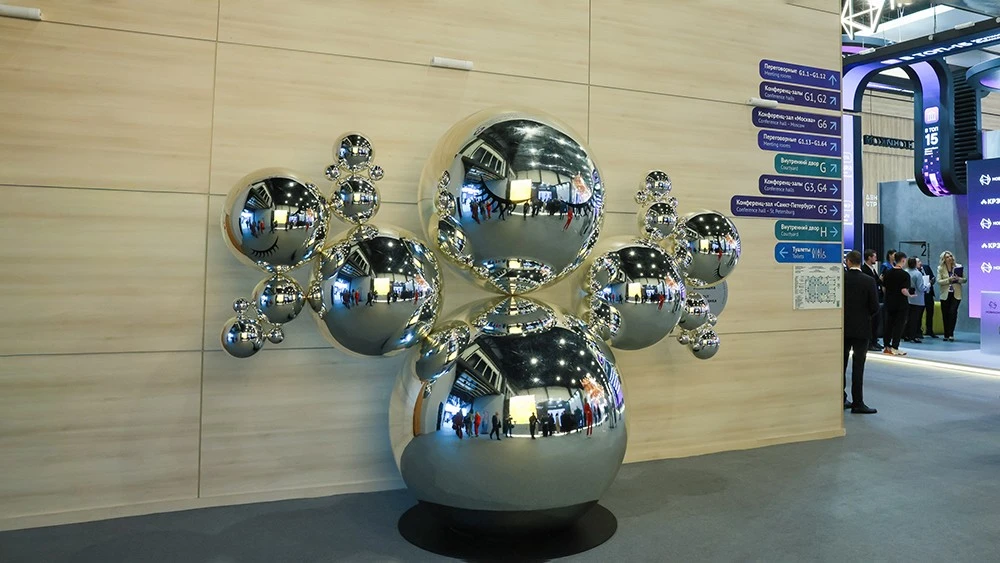
The unusual art object was created by the National Centre RUSSIA together with the Government of the Tambov Region and the Kotovsk Nevalyashka Factory.
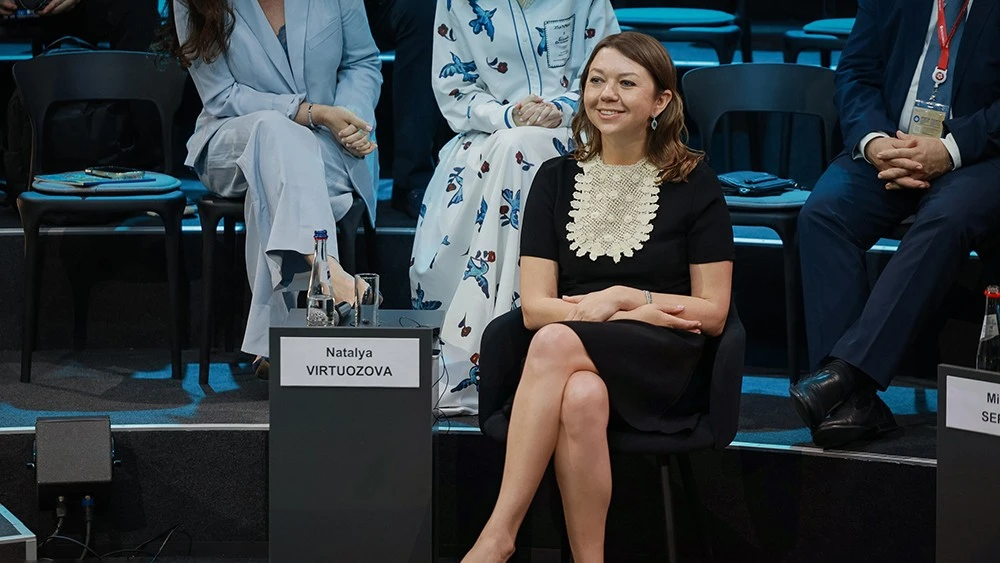
Natalia Virtuozova is convinced that visiting expositions in person remains especially important.


