


Scientists swap the lectern for a comedian's microphone at the "Inventing the Future" Symposium
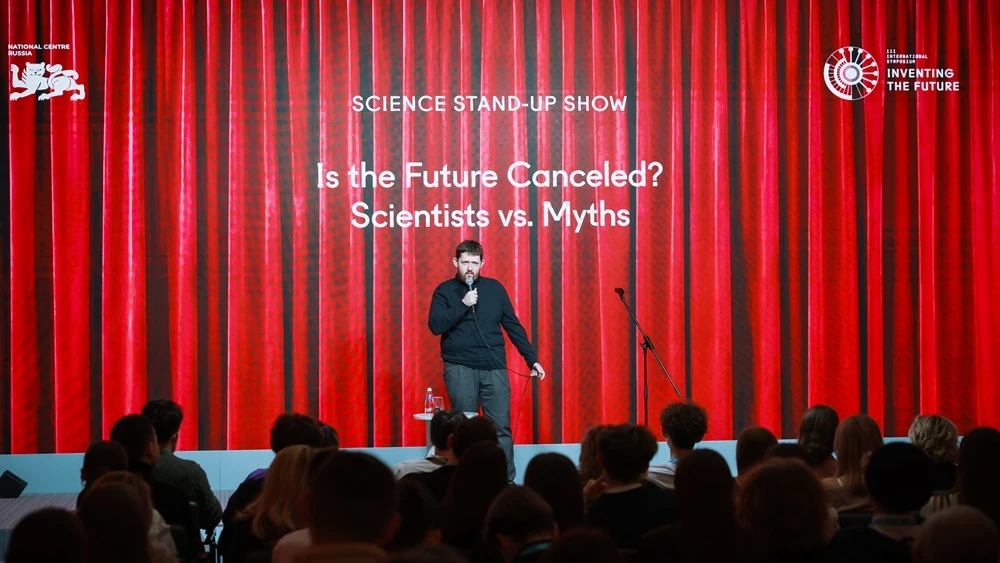
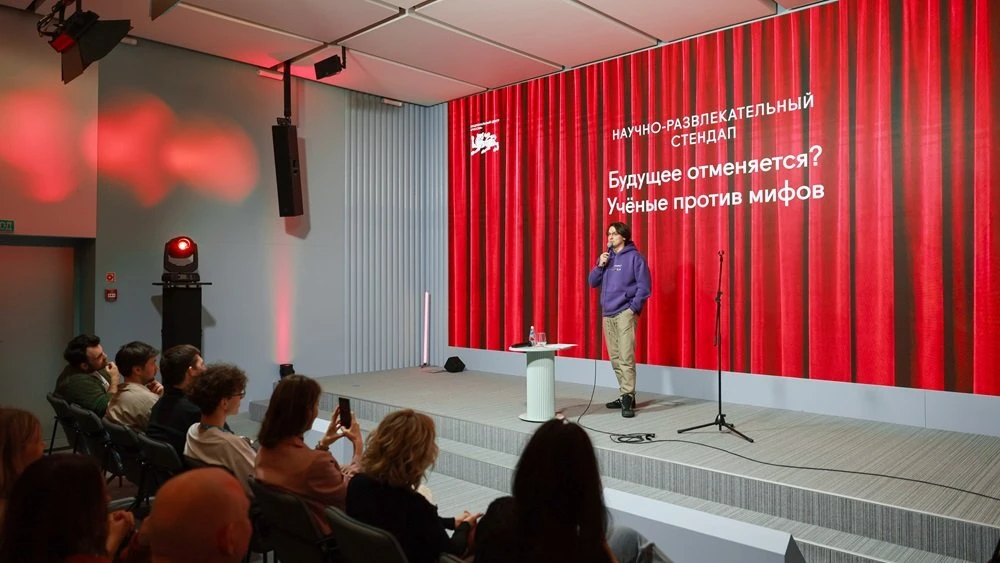
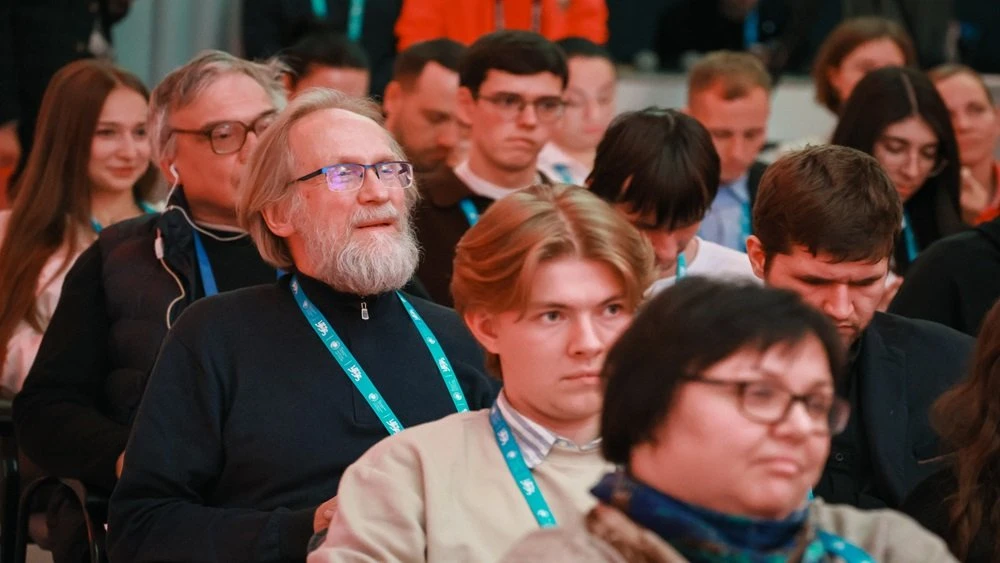
Could scientists talk about their work through stand-up comedy instead of from behind a lectern? That was the experiment tried on 13 November at the III International Symposium "Inventing the Future" at the National Centre RUSSIA. As part of the youth programme, a space engineer, a physicist, an oncologist and a robotics engineer took to the stage for "Is the Future Cancelled? Scientists vs. Myths", sharing surprising scientific facts and debunking popular misconceptions.
The performers were scientists rather than professional comedians, and for many it was their first time doing stand-up. They mixed facts about space, physics and medicine with jokes and stories from their own work. The show was hosted by stand-up comedian Alexei Shamutilo, winner of "Open Mic" and a performer on TNT's Stand Up and at Stand Up Club #1.
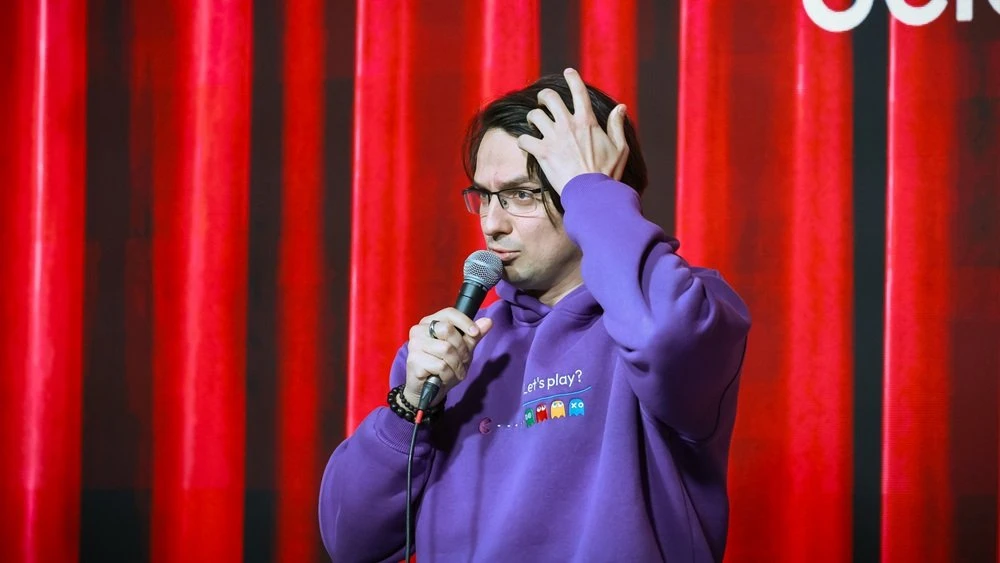
Marat Ayrapetyan, Deputy Director General of the National Centre for Space Competencies, satellite developer, head of mission control for a simulated Mars mission and author of the blog "Yura, We Can Do It!", explained how preparations for a crewed flight to Mars are made here on Earth. On the simulated mission he worked on, a signal from the mock Mars took about ten minutes to travel one way, much as it would from the real planet. The engineer also took aim at Moon landing conspiracy theorists who still insist that Stanley Kubrick filmed the American landing in Hollywood.
"I've been to Houston myself, spoken to people who flew to the Moon, and seen and touched lunar soil. Even Soviet newspapers covered the lunar programmes, and Soviet scientists picked up signals from the lunar missions," noted Marat Ayrapetyan.
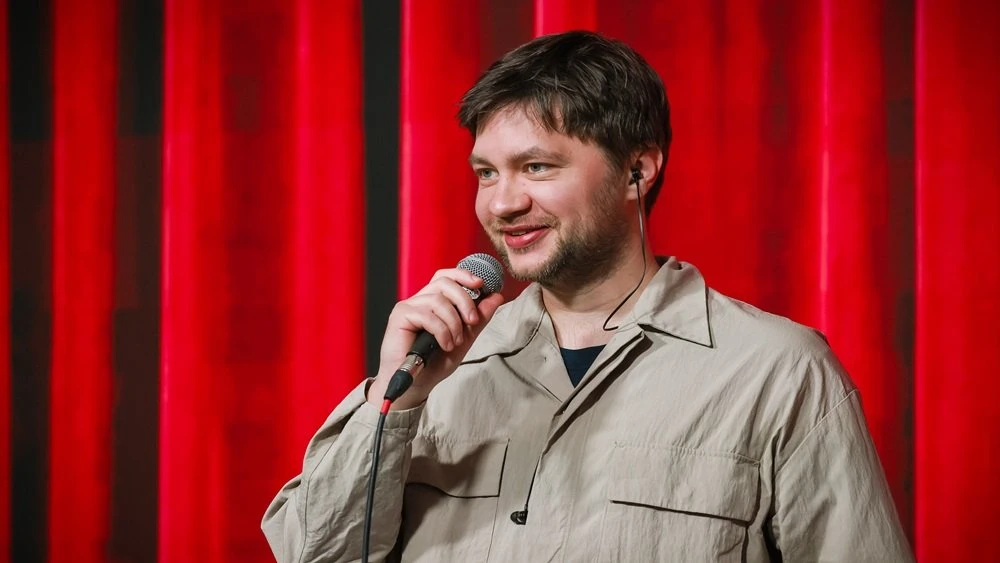
Maxim Vyalkov, a researcher at the National Centre for Physics and Mathematics (NCPM) and a doctoral student at the Faculty of Physics at Moscow State University, studies neutrinos, particles that are extremely difficult to detect because they barely interact with matter. The NCPM is developing a detector based on superfluid helium to look for low-energy neutrinos. As part of the myth-busting, the physicist turned to astrology, a subject he often finds himself debating with its followers.
"We're all made of bits of stars, and that's the only evidence that the stars influence our lives. Birth charts don't prove a thing," emphasised Maxim Vyalkov.
Maxim Kotov, a surgical oncologist, Candidate of Medical Sciences and nominee for the 2022 Forbes "30 Under 30" list in the "Science and Technology" category, listed the most popular "folk" remedies for cancer he had come across in more than a decade of practice, from bicarbonate of soda to kombucha. He reminded the audience that medicine had brought about real change, with antibiotics, anaesthesia, organ transplants and modern cancer treatments helping to at least double average life expectancy over the past 100 to 150 years.
"The point of my work is that I can save someone's life or help them live longer. If that's unfortunately impossible, I can give them the best possible quality of life," said Maxim Kotov.
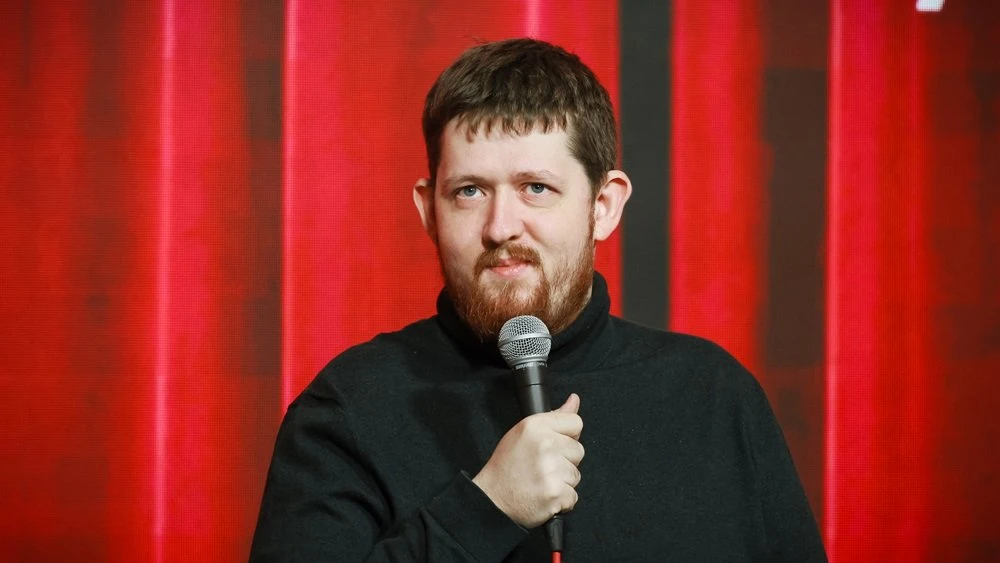
Ilya Chekh, founder and CEO of the Frontiers of Science Guild, engineer, robotics specialist, astrophysicist and technology entrepreneur, said the guild studies gravity and develops technologies for future bases on the Moon and Mars. More and more often, though, people send him proposals of a different kind to assess, such as an "electromagnetic shield" over the entire country or a claim to have "cracked" quantum gravity from people who refuse to show their calculations and ask him to send them money.
"It feels like pseudoscientists are trying to cash in on the hype. They throw different concepts together and call it new physics," remarked Ilya Chekh.
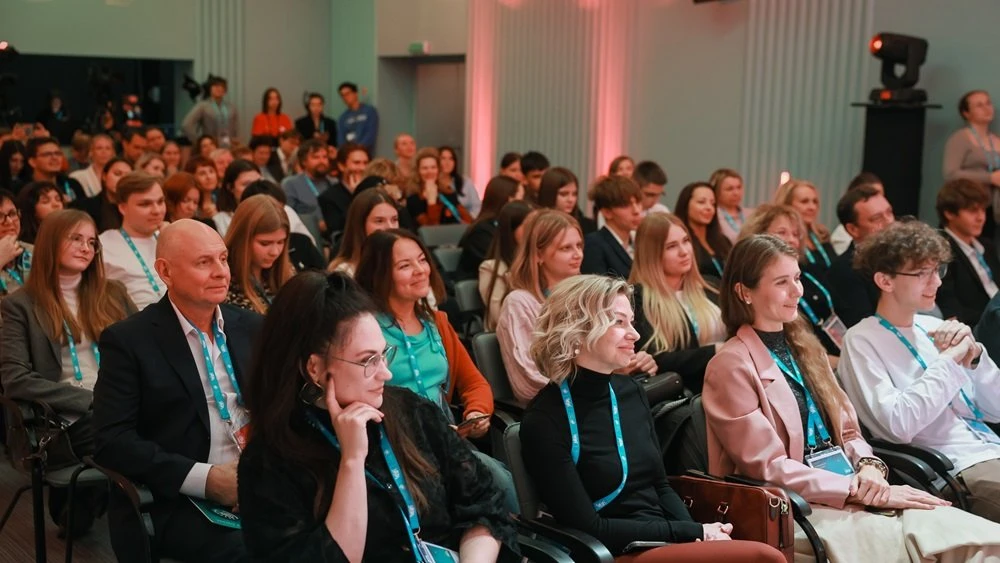
The audience applauded the speakers, and the host picked up on themes from their sets. After the oncologist's set, Alexei Shamutilo promised to give up kombucha for good, and at the end of the evening he asked the audience to applaud all the scientists who had tried their hand at stand-up.
The III International Symposium "Inventing the Future" was held on 12–13 November at the National Centre RUSSIA and brought together more than 8,000 participants from 109 countries. The event was organised at the direction of the President of the Russian Federation, Vladimir Putin, under the auspices of the Decade of Science and Technology, with the support of the Russian Ministry of Foreign Affairs and the Ministry of Science and Higher Education.
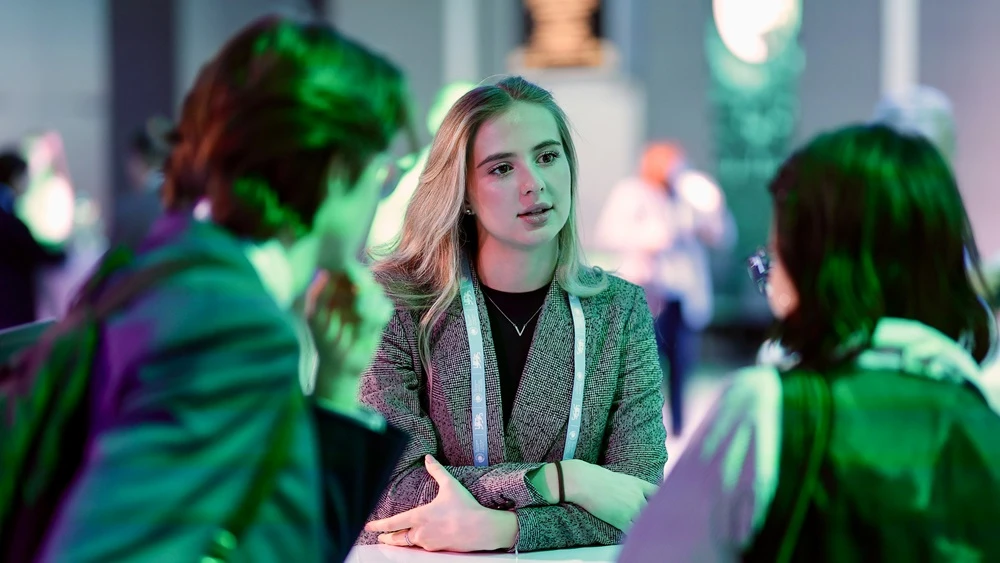
For foreign participants of the III International Symposium "Inventing the Future," its main result was not only new knowledge but also acquaintances with like-minded people.
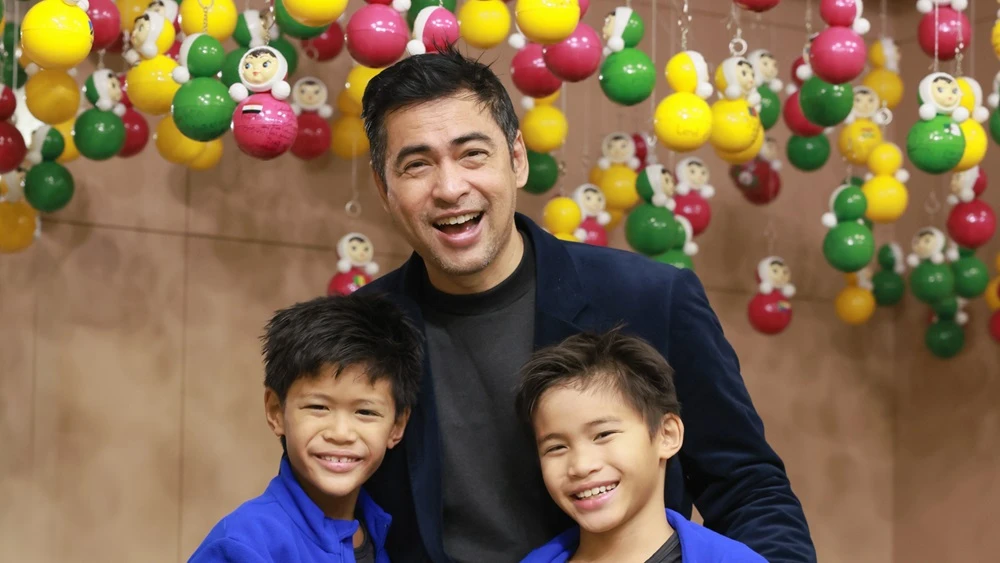
According to Sheikh Muszaphar Shukor, the space of the National Centre RUSSIA made a strong impression on him.
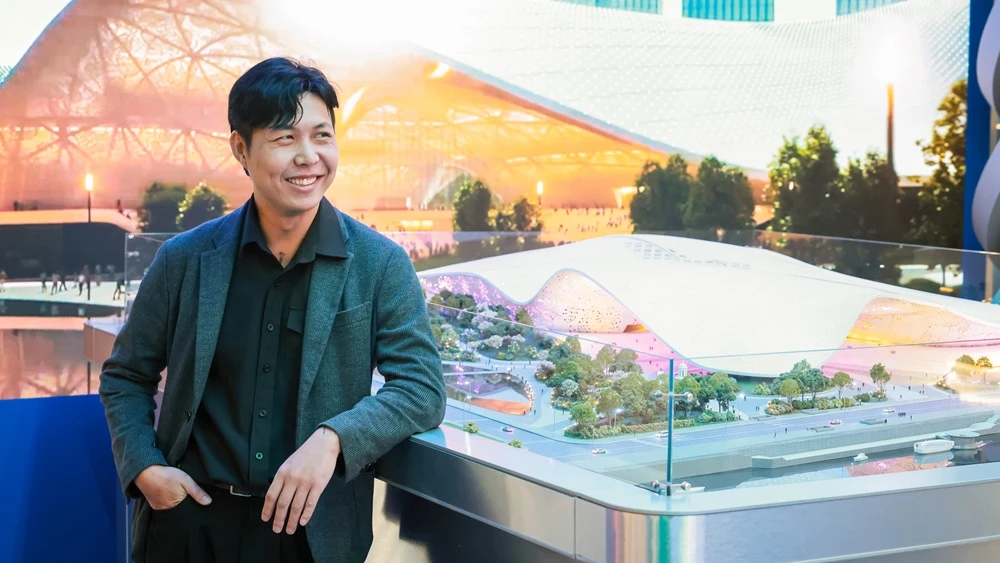
Leading international experts attending the III International Symposium "Inventing the Future" have praised the National Centre RUSSIA's facilities.


