


Vyacheslav Dubynin named five key healthy habits

The five key habits that can strengthen health and improve quality of life were named at the National Centre RUSSIA by Vyacheslav Dubynin, Doctor of Biological Sciences and Professor at the Faculty of Biology of Lomonosov Moscow State University. During his speech on Russian Science Day, he formulated the main principle of modern-day biohacking — not to let the body reach a state of illness, but to care for it in a timely manner through physical activity, physiotherapy, and other measures.
"You need to know as much as possible about your brain and body, and use them consciously. In this case, you will be both more effective and healthier, and to some point, even happier, because a healthy body also creates a positive mood in us," said Vyacheslav Dubynin.
The scientist named conscious movement as the first fundamental habit: "At least those very eight to ten thousand steps a day — it's no joke, it really works. But you need to move correctly and sensibly, because both physical inactivity and excessive physical exertion are not very good. And if you, more than that, injure some joint — there will be nothing beneficial in that at all."
The second important component of health, according to the expert, is sensible nutrition, which should be varied but not excessive. The third healthy habit concerns the quality of sleep, which is called the body's most underestimated resource, added Vyacheslav Dubynin.

"Today's lifestyle often involves sleep deprivation and poor sleep. This is almost the main problem, it is even more important than poor nutrition and physical inactivity. Sleep duration and regularity are very important. Sleep occurs in cycles, each lasting about an hour and a half; and each of these cycles has a resource restoration phase and a paradoxical phase of information processing, visible on an electroencephalogram. The reasonable minimum sleep is four cycles (about six hours), and five cycles (approximately 7.5 hours) are even better. It's optimal to wake up at the end of a cycle, then the brain switches to wakefulness more easily. Fluctuations in long sleep are also undesirable — for example, sleeping more than nine to ten hours disrupts lymph drainage. Daytime sleep is also beneficial, but only if it is short — 15–20 minutes — or takes a full 1.5-hour cycle. Such sleep effectively restores the brain, especially during intense work or creative activity," emphasised Vyacheslav Dubynin.
The fourth important habit of a healthy person, according to Vyacheslav Dubynin's ranking, is developing stress management skills: "You constantly assess your level of acute and chronic stress. Acute stress is easier: you step aside, breathe using 'the square method', massage your fingers. As for the chronic stress — here you'll have to analyse your entire life and change some priorities."
As the fifth beneficial habit, he named positive cognitive load and emphasised that it has nothing to do with aimlessly 'scrolling' on social media.

Separately, the biologist noted the importance of a sixth, social component — positive communication with colleagues, family, loved ones, and even pets, which, according to the scientist, people don't get without reason.
"Selfish people live shorter lives, and are far less happy. In the previous times, people would be raised differently; and then this fashionable ideology came: 'take everything from life' and 'I live only for myself.' But this, it turns out, is directly harmful to health. A selfish person who has gone through 20, 30, 40 years of life, at some point feels how much they are lacking. Because family, students, communication — this is the most important part of our lives. And our brain has entire parts that say: 'I want to interact with other people, communicate with them, see their smiles, exchange opinions, do something together.' This is very important. So seek loved ones, seek friends, cherish them, and start some big, interesting endeavors together," urged Vyacheslav Dubynin.
Russian Science Day, held on 8 February at the National Centre RUSSIA, brought together over 2,000 scientists, experts, and students from across the country. They discussed how the scientific ecosystem is structured, where it is heading, and why scientists can be considered heroes of the new era. The event was organised by the National Centre RUSSIA with the support of the Ministry of Science and Higher Education of the Russian Federation, the Analytical Centre of VTSIOM, and the Russian society Znanie.
The full recording of the session with Vyacheslav Dubynin on the topic
"Scientific Foundations of a Healthy Lifestyle" is available on the
website russia.ru.
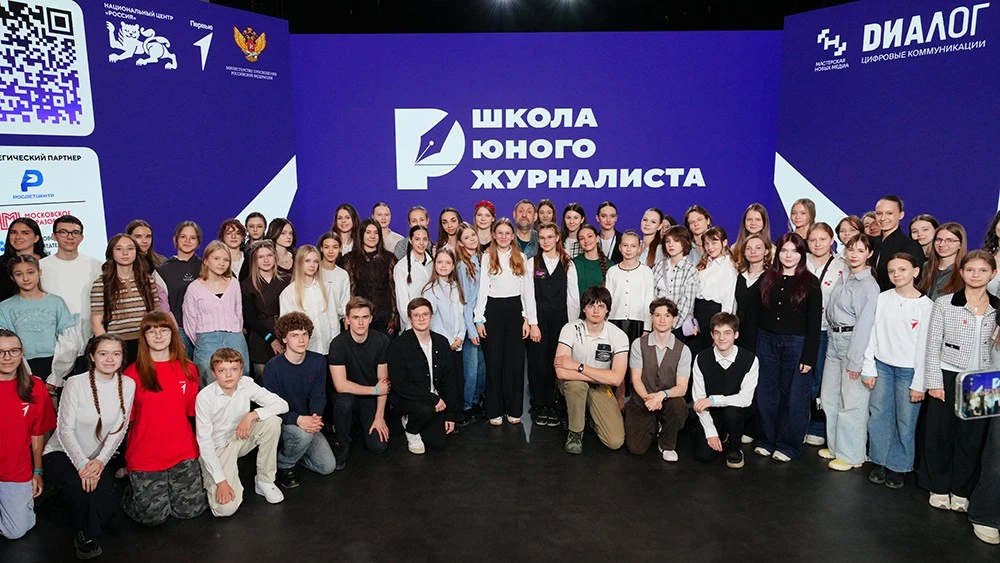
The war correspondent also shared key principles of professional discipline with the young journalists.
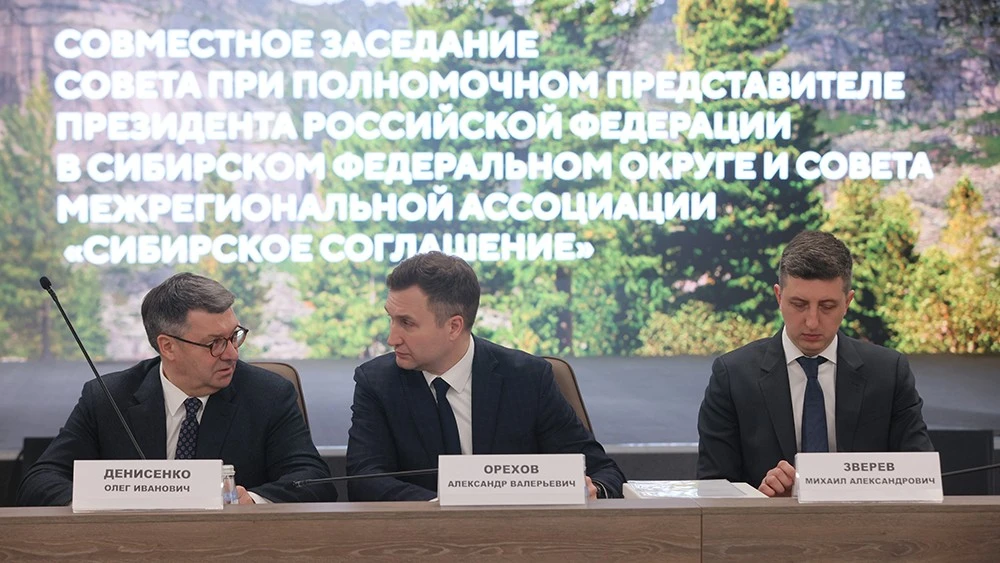
A meeting of the Tourism Council under the Plenipotentiary Representative of the President of the Russian Federation in the Siberian Federal District was held at the National Centre RUSSIA in Krasnoyarsk.
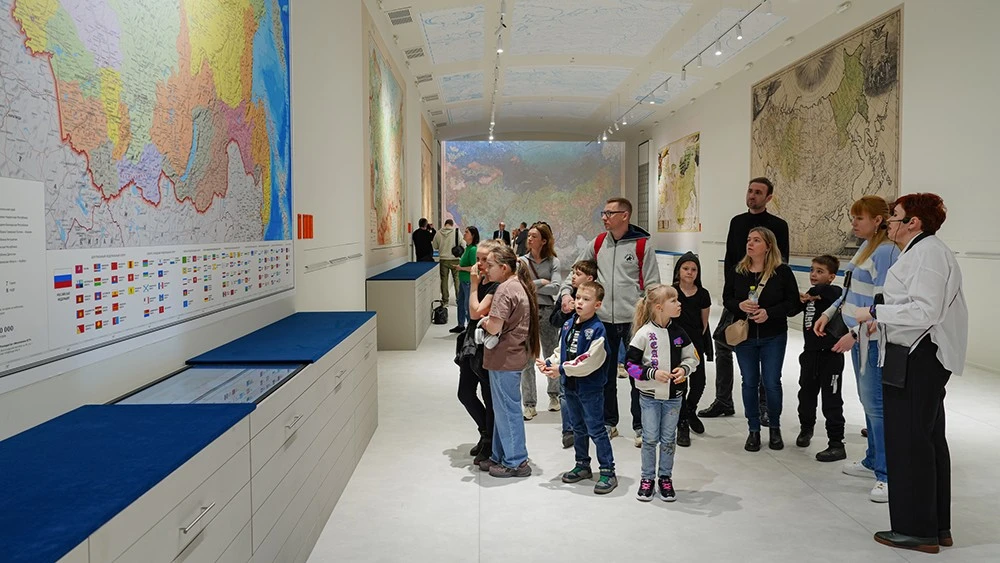
Authentic treasures from leading museums and archives across the country can be seen at the exposition "Geography Lessons".


