
Military historians explained at the National Centre RUSSIA how geography influenced the storming of Berlin
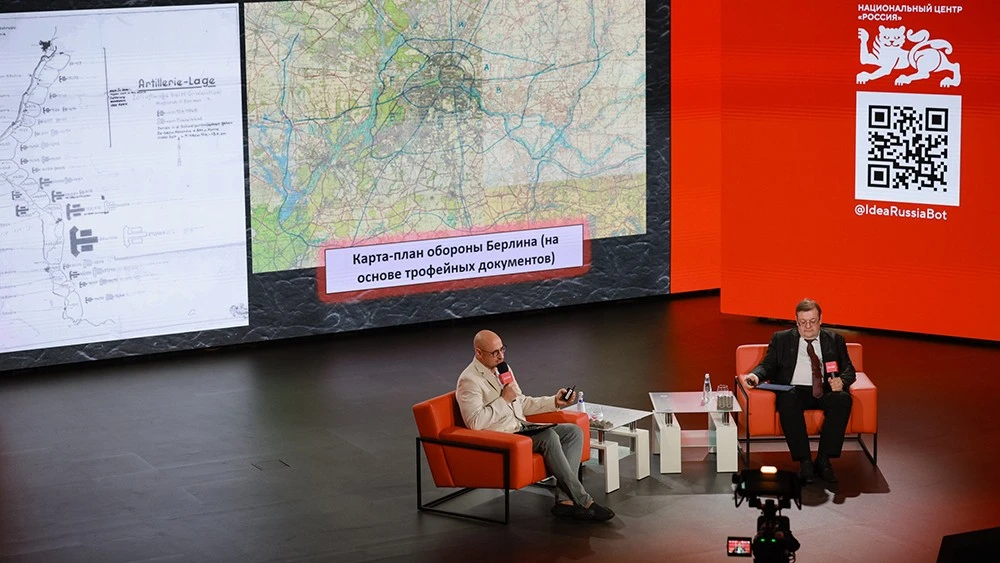
Geography largely determines where and how combat operations take place during wars and armed conflicts. This was fully confirmed during the storming of Berlin in May 1945. This statement opened the first lecture of a new cycle of historical meetings at the National Centre RUSSIA, dedicated to examining persistent myths about the decisive battle. Before the event began, the experts visited the "Geography Lessons" exposition and highly praised its importance not only for education, but also from a practical point of view: as the historians noted, understanding geography is the foundation of the military art of future defenders of the Fatherland.
"We will begin the lecture with how the geography of Berlin influenced the military operation, and this is primarily connected with the fact that the National Centre is hosting an excellent exposition dedicated specifically to geography," said Artyom Drabkin, Director of the "I Remember" Foundation and Member of the Scientific Council of the Russian Military Historical Society.

The experts examined in detail the geography of the combat operations of May 1945, which did not help the Soviet troops achieve victory, but rather hindered them. The terrain itself, with its dense forests and network of rivers and canals, was by no means conducive to success, and every water obstacle and forested area became an additional defensive line.
"If we look at the map of Berlin and the surrounding territories, we immediately see two things. First, extensive forests. Even the symbol of Berlin, the bear, is no coincidence. Second, the blue colour on the map. These are numerous rivers, lakes and canals. The city was cut through by the Spree River and several canals, which within the city limits were lined with stone and represented a serious obstacle even for such a trained and experienced army as the Red Army of 1945," said military historian and Member of the Scientific Council of the Russian Military Historical Society Alexei Isayev.

He also explained that there was virtually no alternative to the direction of the main strike. The bridgehead on the Oder captured in January 1945 became the starting point for the offensive on Berlin, but at the same time meant that the enemy understood where to expect the attack from. It was impossible to deceive the enemy at that stage: according to the military historian, the troops had to operate along limited directions, which required the highest tactical skill and unconventional solutions from the Soviet forces.
"The Seelow Heights were not exactly a stumbling block, but they did delay Marshal Zhukov’s troops. To take the Reichstag, it was necessary to force a crossing of the Spree using the only remaining bridge. In turn, Marshal Konev ensured the successful breakout of the 9th Army from encirclement. It was possible only along one route, where there were no lakes or rivers. Konev calculated this perfectly, setting up blocking positions precisely there, because it is impossible to be strong everywhere. So geography leaves a major imprint on how and where combat operations will be conducted," added Artyom Drabkin.
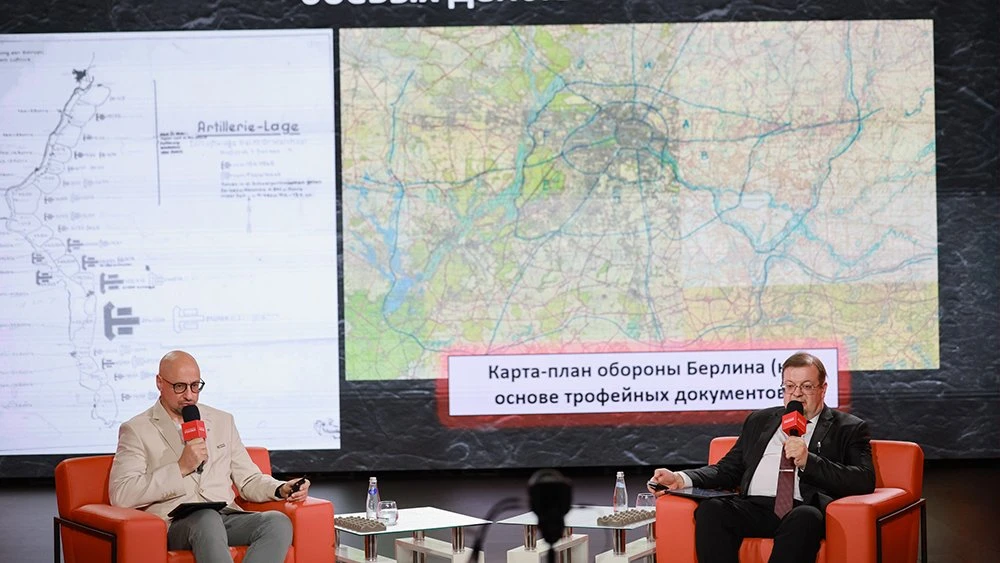
The new cycle of historical meetings began on 22 May at the National Centre RUSSIA with the support of the Russian Military Historical Society, the "I Remember" Foundation and the Presidential Foundation for Cultural Initiatives. Its main goal is to tell the history of the country in an accurate and engaging way, awakening in listeners a sense of involvement in the great events of the past. The events in the cycle will be held monthly.
The next meeting in the cycle will take place on 23 June. The open lecture "Myths and Truths of 22 June 1941" will dispel the main myths about the first day of the Great Patriotic War using figures and facts. The event can be attended free of charge by registering in advance on the russia.ru website in the "Events" section.
The "Geography Lessons" exposition is being held at the National Centre RUSSIA until 9 July. The exposition invites visitors on a journey through the centuries: from ancient scrolls to digital maps, from the first geographical discoveries to space exploration. The exposition will be of interest to people of all ages. Like all events at the National Centre RUSSIA, it can be visited free of charge.
Event photobank



1 June marks International Children's Day in Russia and around the world.