


135th anniversary of Mikhail Bulgakov’s birth: how the National Centre RUSSIA preserves the writer’s memory
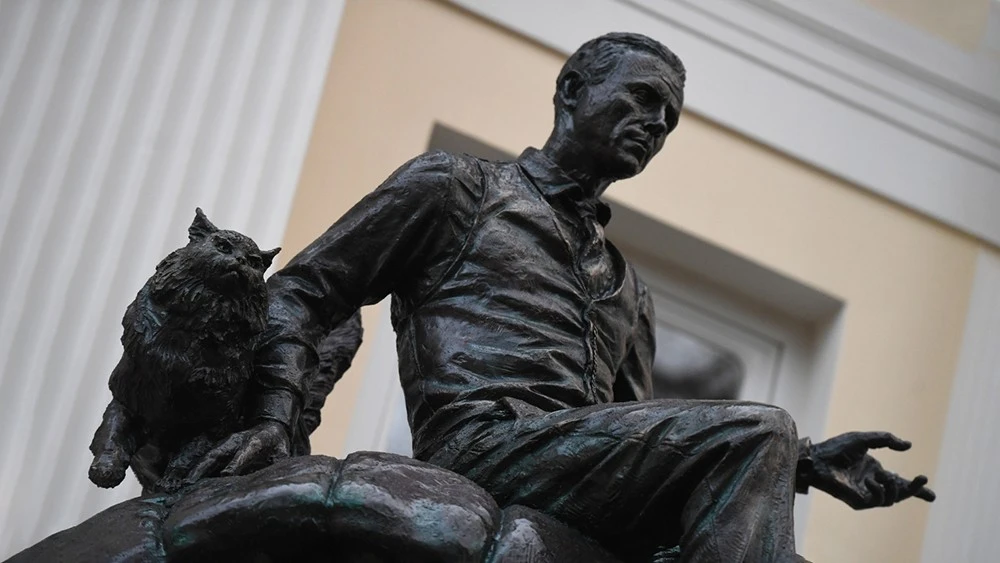
15 May marks the 135th anniversary of the birth of Mikhail
Afanasyevich Bulgakov, one of the most widely read Russian writers of the 20th
century. His novels, novellas and plays have long gone beyond Russian
literature and become part of the world’s cultural code. "The Master and
Margarita", "Heart of a Dog", "The White Guard",
"The Days of the Turbins" — these titles are familiar even to those
who have not yet discovered them. Bulgakov is quoted, adapted for the screen,
staged in theatres and republished in millions of copies. Most importantly,
however, people continue to read and reread him, finding new meanings each
time.
The writer’s own life was no less dramatic than the plots of
his books. Born in Kiev into the family of a professor at the Theological
Academy, he chose medicine as his profession and worked in frontline hospitals
during the First World War. Then came his practice in the village of
Nikolskoye, a difficult recovery from typhus and, finally, his move to Moscow,
where his true literary life began. It was here that he wrote "The White
Guard", "Heart of a Dog" and, of course, "The Master and
Margarita", the novel that was not published during the author’s lifetime
but ultimately brought him worldwide fame.
"Manuscripts don’t burn" — this phrase from
"The Master and Margarita" proved prophetic not only for the novel’s
protagonist, but also for the writer himself. He experienced persecution,
censorship and bans on his works, but never stopped writing. The play "The
Days of the Turbins" was enthusiastically received by audiences, while
critics branded the author for his "wrong ideology". In 1930, driven
to despair by the bans, Bulgakov wrote a letter to the government of the USSR,
pleading either to be allowed to work or to leave the country. Stalin
personally answered him by telephone, and soon afterwards the writer was hired
by the Moscow Art Theatre as an assistant director.
Mikhail Bulgakov worked on his main novel for a total of 12
years, rewriting it, burning early versions and starting again. He already
understood that the work was unlikely to be published in the USSR, yet he
stubbornly continued to bring the text to perfection. Even when he was already
terminally ill, he dictated the final edits to his wife. The novel was
published only a quarter of a century after the author’s death — first in the
magazine "Moskva" in abridged form, and later in full abroad. Since
then, "The Master and Margarita" has remained one of the most quoted
books in Russia and around the world.
Today’s Moscow preserves the memory of Mikhail Bulgakov in
dozens of places: from the "bad apartment" on Bolshaya Sadovaya
Street to Patriarch’s Ponds, where Woland met Berlioz and Bezdomny. Preserving
the writer’s creative legacy is also an important part of the mission of the
National Centre RUSSIA. Mikhail Bulgakov was discussed more than once at the
International RUSSIA EXPO, where a screen adaptation of his famous novel was
also presented. Drawing considerable inspiration from the master’s legacy, the
National Centre RUSSIA, together with the Union of Writers of Russia,
established the annual Russian Science Fiction Literary Award. Bulgakov’s works
have been discussed by experts and audiences as part of the "What to
Read?!" Literary Club. The house where the writer lived in the 1930s also
became an important point on one of the original walking routes around Moscow
prepared by the National Centre’s guides.

From 17 to 21 May, the National Centre RUSSIA will present its flagship project, Department Store RUSSIA, at the 10th Russia-China EXPO in Harbin for the first time.
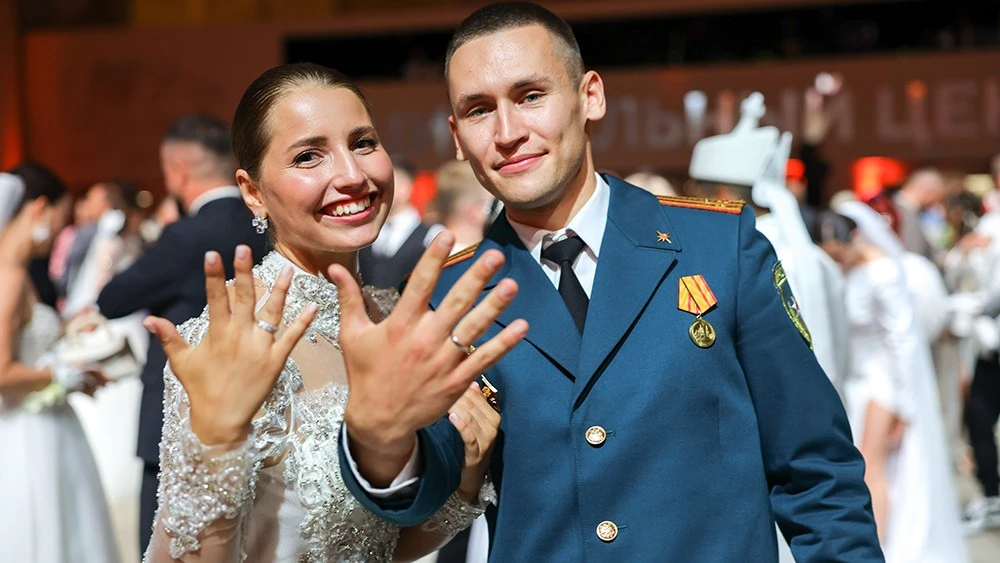
On the Day of Family, Love and Fidelity, the National Centre RUSSIA will once again become a place where new families are born.
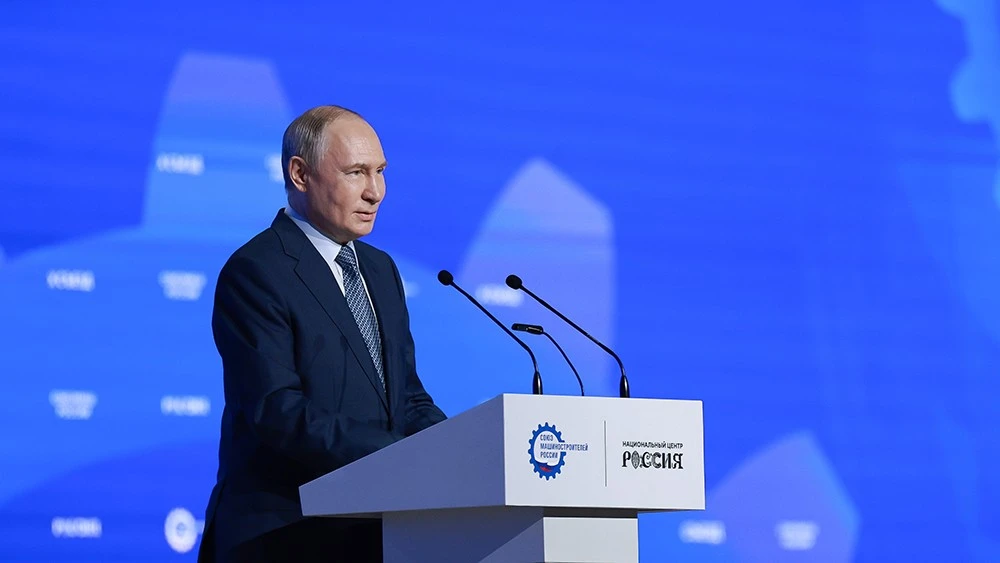
The 10th anniversary Congress of the Union of Mechanical Engineers of Russia was held at the National Centre RUSSIA.


