

"17 wonderful ideas": results of the Open Dialogue essays in the "Investments in Environment" track announced
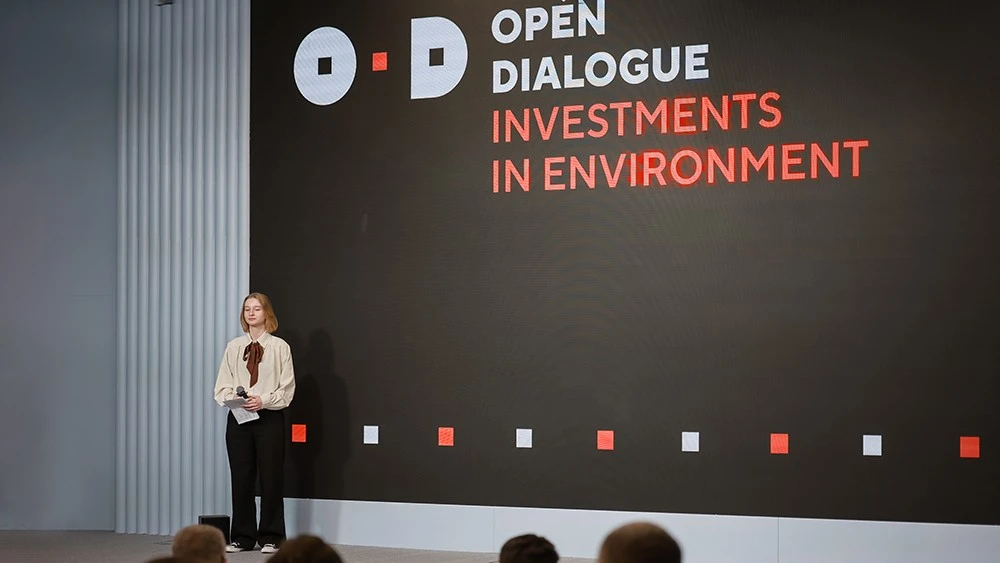
The second
day of the Open Dialogue "The Future of the World. A New Platform for
Global Growth" was marked by public discussions of ideas proposed by
essayists across four areas: investments in human capital, connectivity,
technology, and environment. Four semi-finalists presented in the
"Investments in Environment" track: Tatiana Pecherkina (Russia),
Milena Milic (Russia), Soumya Bhowmick (India), and Daria Zorko (Belarus).
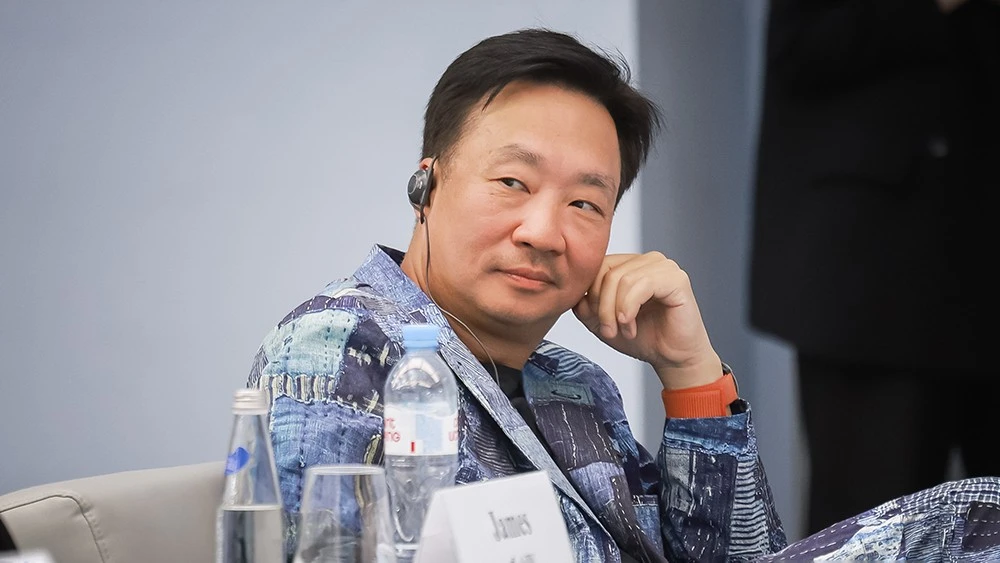
James Law
(China), the founder and Director General of Cybertecture, served as the lead
expert for the final pitchings dedicated to the living environment and its
impact on human well-being and overall economic productivity. Summarising the
"seventeen wonderful ideas" presented during the pitches, he
figuratively noted that the environment plays the role of a canvas on which
each of us can paint a picture of an amazing future.
"I
have learned so many wonderful ideas over the last 24 hours, and I am sure this
is only the beginning. They will certainly give people the opportunity to
understand much about our future. To understand that if we continue to act with
greed and simply pump resources out of the earth, then this future may turn out
to be very bleak. One of the essayists reminded me of childhood, when we were
taught to share toys and treats. Today at the Open Dialogue, we are sharing our
knowledge. And tomorrow, perhaps, we will share energy or food. And when even a
few people start sharing, changing the situation for the better becomes very
easy," noted James Law.
He added
that the world is not only about money and economics. It is also about ecology,
cities, and each of us: our friends, families, and the human community as a
whole.
"We
are constantly talking about whether GDP has grown or fallen. But GDP is a very
narrow approach. It says nothing about whether you are healthy, joyful, or
whether you have hope and a home. Perhaps we just need to learn to look
differently to see the real state of things?" the expert invited the
audience to reflect.
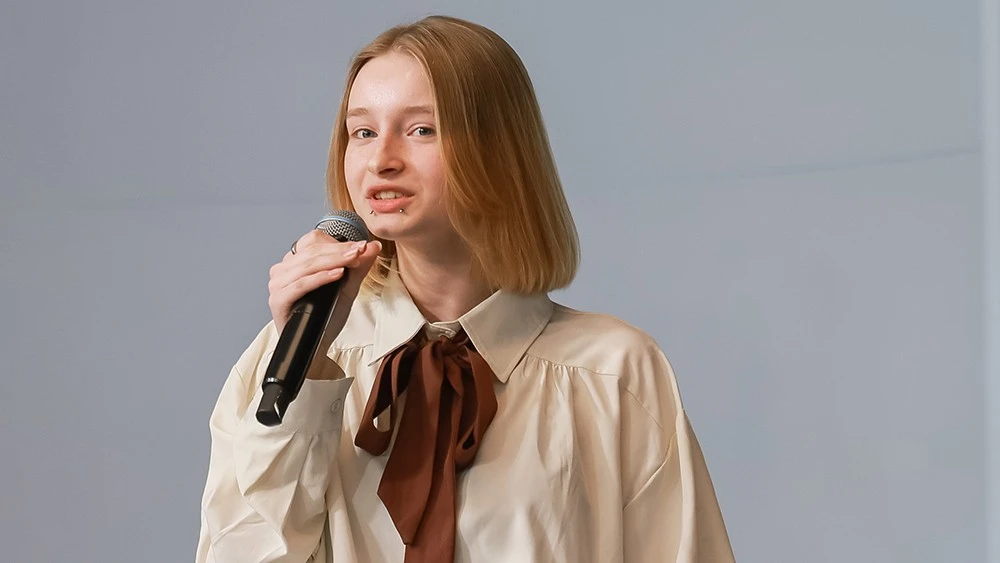
The
youngest participant in the "Investments in Environment" track was
Daria Zorko, a student at the Belarus State Economic University. She called for
a reversal of the usual logic: to make a comfortable and safe environment the
main driving force of economic growth, rather than its consequence.
"Investment in the environment is not charity or green PR. It is a path that shows how we must change our thinking to ensure millions of new 'green' jobs by 2030, more than a trillion dollars in business opportunities by 2050, and millions of lives saved. 87% of the global economy is already striving for carbon neutrality, and the World Bank is making huge investments in nature and the oceans. Investing in the environment is investing in the only future that is possible for everyone and which is better for everyone," said Daria Zorko.
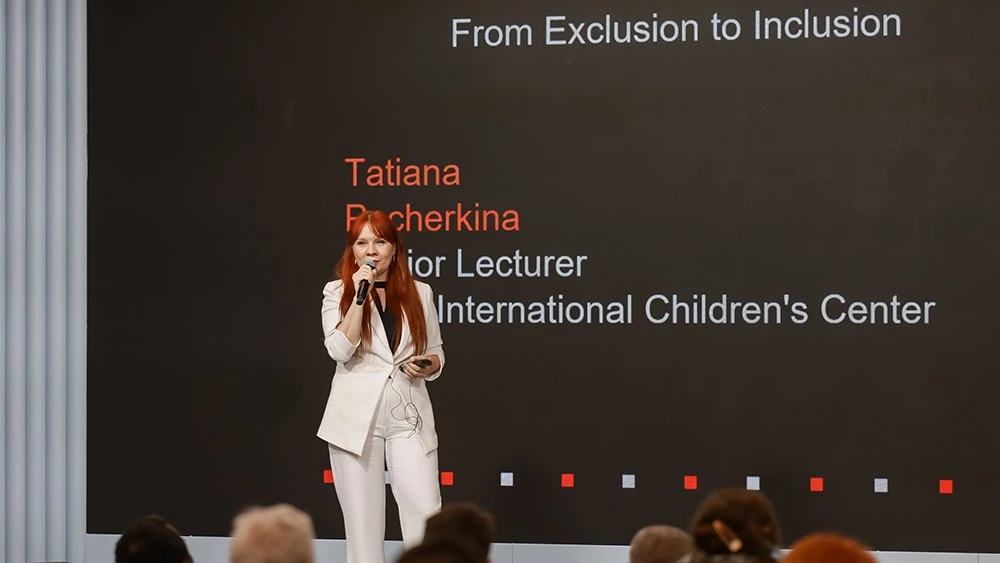
Semi-finalist
of the II Open Dialogue for the "Investments in Environment" track
and senior lecturer at the Artek International Children's Centre, Tatiana
Pecherkina, proposed creating a single digital ecosystem for people with
disabilities, where everything — from work and friends to benefits and travel —
would be gathered in one account. A personal story added a particularly
touching note to her presentation.
"Today I spoke about figures, plans, and ideas. But in reality, I am here as a daughter. My father has a disability; I called him yesterday and said: 'Dad, I'm in the final'. And he said to me: 'The whole world probably knows you by now'. He said he was proud of me and thanked me for what I am doing for him and for everyone. Investment in the environment is not a luxury; it is our future. Let us build a world where there is a place for everyone," urged Tatiana Pecherkina.
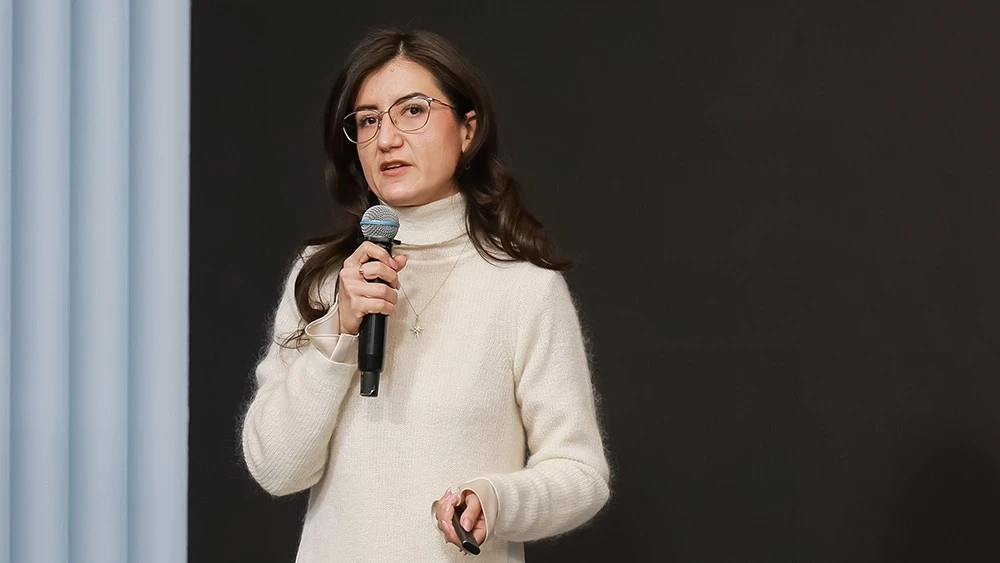
Semi-finalist
of the II Open Dialogue for the "Investments in Environment" track,
special representative of the Governor of the Sakhalin Region on climate and
sustainable development, and chair of the Russian Regional Climate Club, Milena
Milic, suggested looking at ecology from the bottom up rather than the top
down, noting that not only countries but also regions can reach agreements.
According to her, while countries argue with each other, real changes occur on
the ground.
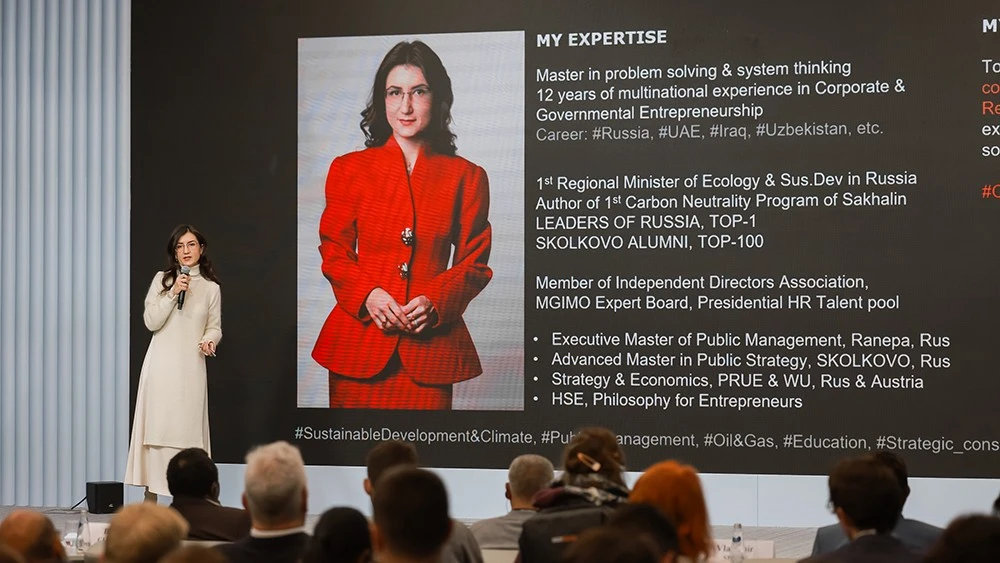
"Ecology and climate issues are often resolved at the national level, but real changes happen in the regions — where people live. Imagine: Russia, the USA, and China are trying to agree on something. You understand yourselves that sometimes this is impossible. Now imagine Sakhalin, California, and Hainan, which are striving for carbon neutrality. The three of us have much more in common than entire countries, and we will reach an agreement faster. Therefore, I believe that the correct scale for ecology is the region, and experimentation is the method that will lead us to higher quality solutions and new discoveries," concluded Milena Milic.
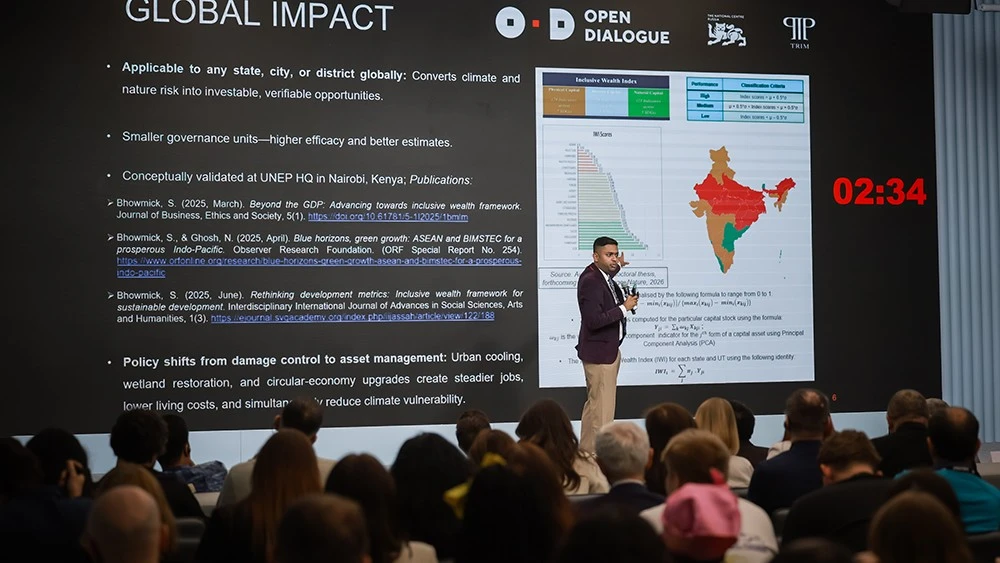
By the
decision of the expert commission, Soumya Bhowmick, a researcher at the
Observer Research Foundation, was named the winner of the "Investments in
Environment" track. He will speak at the concluding round table of the
Open Dialogue on 29 April. In his presentation, the track finalist stated that
for almost 100 years the world has been occupied with measuring GDP, which says
nothing about the real wealth of nations. He compared the economy to a
"wedding cake", in which GDP is merely the beautiful topping, beneath
which human, natural, and physical capital are hidden. According to the
speaker, it is long overdue to include these in the primary indicators of
well-being and prosperity.
"Every economy in the world creates a balance sheet that actually shows nothing. We feverishly measure GDP every quarter, but it takes into account neither labour productivity nor land resources. GDP is merely flows, but it does not measure the assets that underlie them. In 2011, it was discovered that GDP per capita was growing, while wealth per capita was shrinking. Therefore, we need to stop patching holes and start managing assets in the form of resources. And the closer the decision-maker is to a specific asset, the better they will be able to manage it," explained Soumya Bhowmick, outlining the key thought of his essay.
The Open
Dialogue "The Future of the World. A New Platform for Global Growth"
is an annual international event initiated by the National Centre RUSSIA in
partnership with the Centre for Cross-Industry Expertise "Third Rome"
and with the support of the Presidential Executive Office of the Russian
Federation.
The final
summary of the II Open Dialogue results is ahead. On 29 April, Maxim Oreshkin,
Deputy Chief of Staff of the Presidential Executive Office and Deputy Chairman
of the National Centre RUSSIA Organising Committee, will hold an informal
meeting with young people, followed by a final epilogue session where the main
conclusions will be formulated and directions for further work outlined.
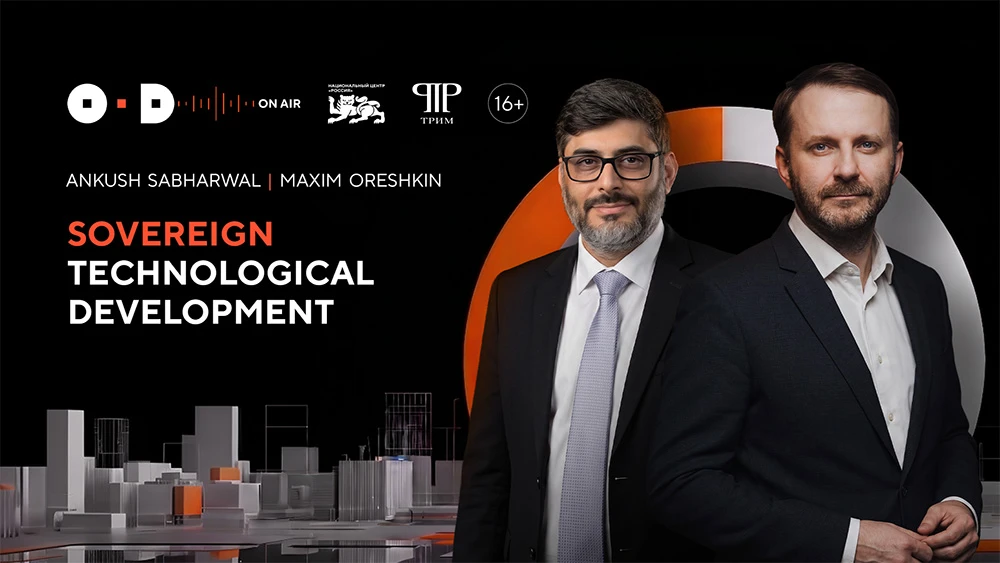
The new episode of the National Centre RUSSIA Open Dialogue podcast explores key questions of the digital age: who owns AI and data.

The new episode of the National Centre RUSSIA Open Dialogue podcast begins with the idea that artificial intelligence is no longer merely a digital tool.