Six of the most unusual wedding traditions of the peoples of Russia
A Russian wedding is always a grand celebration. But while in some parts of the country newlyweds simply exchange rings, take a bite of a traditional wedding loaf, and chant the customary "Gorko!" ("Bitter!"), elsewhere the groom's father may receive a ritual beating from the bride's father, or wedding guests might find themselves tied to sledges. Here are six of the most unusual wedding customs from across Russia, with traditions dating back centuries.
1. Mordovia and Kabardino-Balkaria: rituals of pursuit
In Mordovia, matchmaking could resemble a scene from a comedy. The groom's father would bring a ceremonial loaf of bread to the bride's home, knock loudly on the window, and then run away. If the bride's relatives caught him, they would give him a symbolic beating, return the loaf, and reject the proposal. If he escaped, it was taken as a sign that heaven blessed the match, and marriage negotiations could begin.
A similar ritual, known as "The Grandmother's Escape," existed in Kabardino-Balkaria. When a new bride first entered her husband's home, the family's eldest woman would dramatically run out carrying a bag of ritual food. She would call for help and pretend that the young bride was driving her out of the house, where she had lived for many years. The bride had to catch up with her, persuade her to return, present a symbolic gift, and promise to honor the family's elders. In both traditions, the chase served as a test — of determination among the Mordovians and of respect among the Kabardians.
2. Mari El: the goose above all
Among the Mari people, who have preserved many ancient pagan traditions, the
goose was the central symbol of the wedding feast. The sacred bird was boiled
whole and served as the main ceremonial dish.
The goose's heart was removed, spread on bread, and eaten by the bride and
groom as a symbol of future harmony and mutual understanding. The remaining
organs were shared first with the parents and then with the guests. One
important rule remained: the goose had to be eaten completely. The ritual took
place in a sacred grove, where an elder lit a candle and offered a prayer.
3. Kalmykia: Matchmaking and the wedding in a single evening
While many cultures spent weeks or even months preparing for a wedding, the
Kalmyks completed every formality in a single evening. The engagement,
matchmaking, and negotiations over the bride price all took place at once, with
the wedding often following the very next day.
This remarkable speed reflected the nomadic lifestyle, where important decisions
had to be made before the encampment moved on. Before the ceremony, a lock of
the bride's hair, a fingernail clipping, and a thread from her dowry were
burned, symbolising the end of her previous life. Upon entering her husband's
family, she was also given a new name.
4. The Abaza: the bride's vow of silence
One of the strictest customs belonged to the Abaza people of
Karachay-Cherkessia and Adygea. After the wedding, a daughter-in-law was
forbidden to speak to her father-in-law for anywhere between five and ten years
— and sometimes for the rest of his life. In some families, she was not even
allowed to say his name aloud.
The custom was seen as a sign of respect for family hierarchy and senior male
relatives. At the same time, during her first days in her new home, the bride
was showered with millet and sweets as wishes for prosperity, while her lips
were anointed with honey and butter so that, when she finally spoke, her words
would be gentle and her family life peaceful.
5. The Veps: matchmaking under the cover of darkness
Among the Veps, an Indigenous people of Karelia and the Leningrad Region, matchmakers arrived at the bride's house late in the evening — or even in the middle of the night. The timing had little to do with romance and everything to do with practicality. If the proposal was rejected, the matchmakers could return home unnoticed under cover of darkness. A refusal was never spoken aloud. Instead, if the bride's parents opposed the marriage, they silently placed a wooden whisk on the table. If they agreed, the groom presented money to the bride's father, symbolically marking her departure from her birth family.
6. The Nenets: the split staff and guests tied to sledges
Among the Nenets, a nomadic people of the Russian North, a ceremonial staff
played a central role during the matchmaking process. The matchmaker carved
notches into the staff to indicate the agreed bride price. Once both families
reached an agreement, the staff was split in two, with one half remaining in
the bride's home and the other kept by the groom's family.
On the wedding day, the newlyweds stepped over a fire to cleanse themselves of
evil spirits. The most honored guests were then jokingly tied to traditional
Nenets sledges (narty) to make sure they would not "escape" before
the celebration was over.
Wedding traditions across Russia's many peoples are like a magical mirror,
reflecting each community's character, beliefs, and way of life. These customs
remain an important part of the country's shared cultural memory, and many
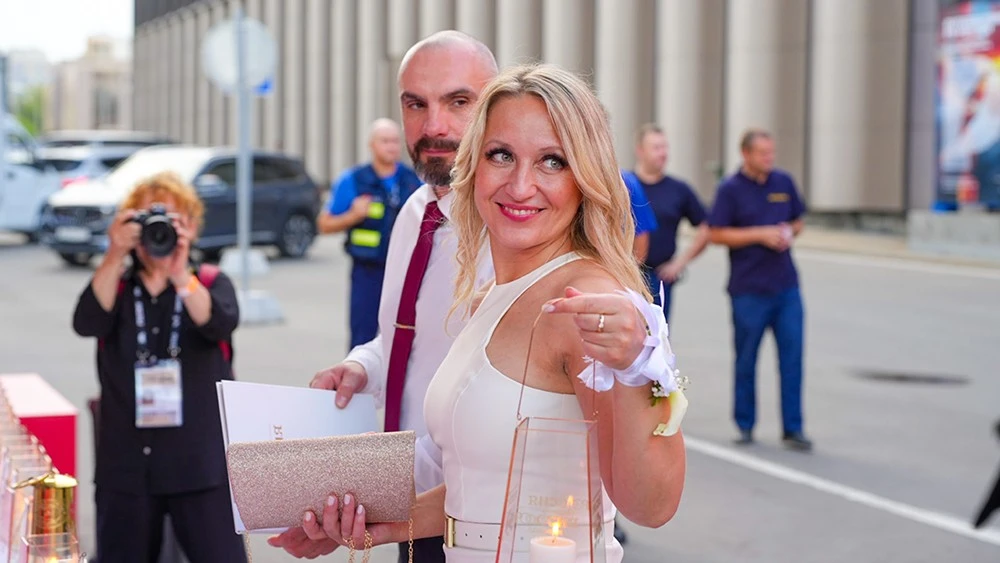
continue to inspire modern couples. Unique wedding ceremonies featuring traditional customs and national costumes
will be showcased at the III All-Russian Wedding Festival "Russia. Uniting Hearts", which will take place at the National Centre RUSSIA very soon —
on 8–9 July.
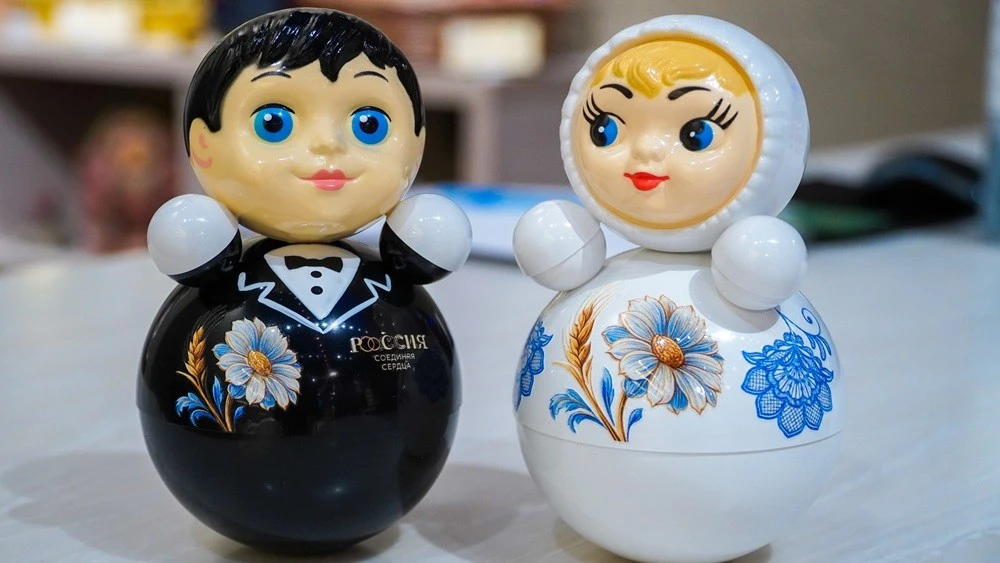
The dolls have been specially produced for the festival and will be presented as commemorative gifts to every couple.