Alexei Overchuk at the National Centre RUSSIA: Eurasian integration directly affects the well-being of Russians
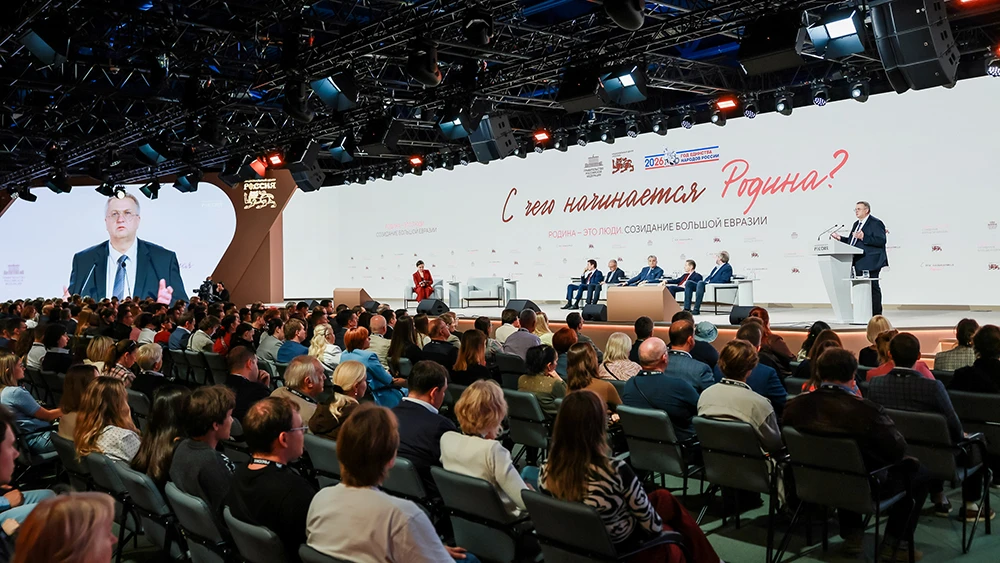
Eurasian
integration is not an abstract foreign policy issue, but a tool that directly
affects the well-being of Russian citizens. By building Greater Eurasia through
trade and economic mechanisms, Russia and its EAEU partners are creating
conditions to increase the competitiveness of Russian products, expand sales
markets and strengthen shared values. The Deputy Prime Minister of the Russian
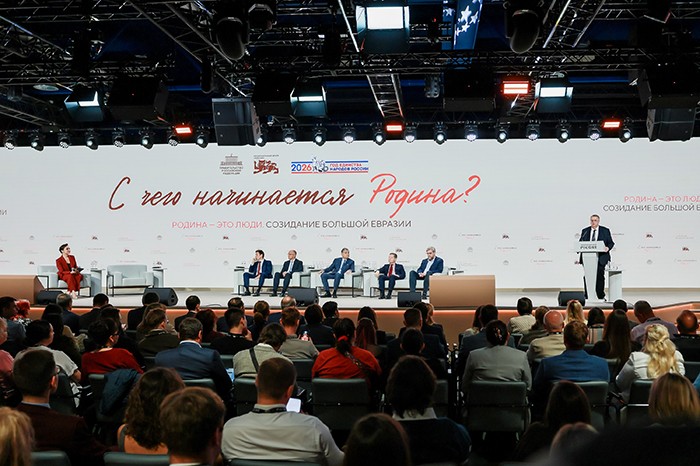
Federation, Alexei Overchuk, discussed this on 28 August at the National Centre
RUSSIA as part of the project "What Does the Motherland Begin With?".
"Two major themes are being discussed here today: 'Motherland Is People' and 'Building Greater Eurasia'. The challenge is to explain how these areas are interconnected. Countries and economies do not exist in isolation from one another, and the global market continues to operate. Yes, processes of fragmentation and the formation of macro-regions are under way, but competition is becoming increasingly complex. The future well-being of our citizens depends directly on participation in international trade and the ability of Russian companies to enter foreign markets. Everyone wants access to a good education, well-developed infrastructure and high-quality goods. This requires joint efforts, including the creation of a Greater Eurasian space," noted Alexei Overchuk.
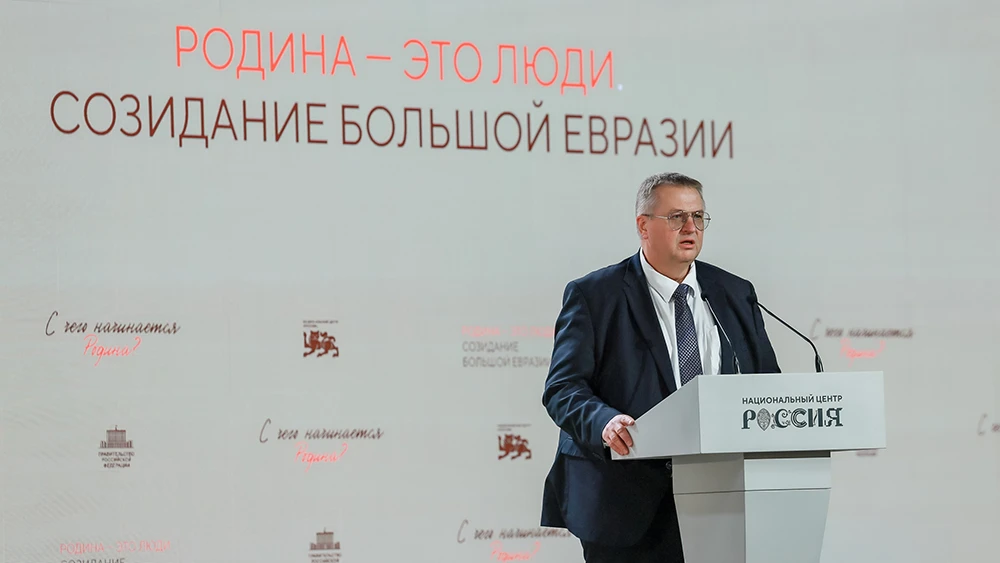
During his
address, the Deputy Prime Minister highlighted the growth of investment in
science, research and development, as well as in the creation of Russian
technologies and manufacturing facilities. He cited the development of the
Russian aircraft industry, including the MC-21, Il-114-300 and the new Sukhoi
Superjet with imported components replaced by Russian-made alternatives, as
well as the emergence of new Russian metalworking machines and medical and
pharmaceutical technologies. However, Alexei Overchuk emphasised that
sustainable demand for Russian products must be created if these investments
and developments are to deliver results.
"This
is the only way to achieve a return on investment and scale up production to
make it profitable and sustainable. This brings us to integration and Greater
Eurasia, which enables us to expand our opportunities and markets, primarily
through the development of integration processes. We are referring to the Union
State of Russia and the Republic of Belarus, the Eurasian Economic Union, the
CIS and a broader free trade area. Together, these mechanisms enable us to
adopt a flexible approach to different partners and provide our manufacturers
with additional opportunities in various markets," explained the Deputy
Prime Minister of the Russian Federation.
The Deputy
Prime Minister added that Russia's ambition to remain competitive and
manufacture products with high added value requires access to larger markets
and reductions in tariff and non-tariff barriers, particularly in transport and
logistics, as such barriers directly affect production costs and product
competitiveness. According to him, the Government of Russia is focusing on
developing transport and logistics links in response to growing demand on
eastern routes. He discussed improvements to port infrastructure and the
development of the "North — South" Corridor, including its western
route through Iran and the Rasht — Astara section, which already provides a
rail link from Saint Petersburg to Bandar Abbas. He also discussed the
development of the Caspian and eastern sections of the corridor, the launch of
container services to Iran through Kazakhstan and Turkmenistan, and talks with
Pakistan on the possibility of establishing a rail link.
Alexei
Overchuk noted the importance of the cultural and humanitarian dimension of
Greater Eurasia and highlighted the role of the Russian language in preserving
cultural ties and shared values. He said that interest in the language is
growing abroad and that Russia supports its study through educational
programmes.
"When
we discuss the common labour market of the Eurasian Economic Union, we are
talking about the closeness of our cultures and values. This raises the
question of a common language. We are actually very fortunate to have one, and
that language is Russian. We devote considerable attention to supporting it and
expanding its use abroad. Language is, of course, a means of communication: it
is always easier when your business partner speaks your language. We live in
independent countries, but Russian continues to be spoken there, and we are
seeing growing interest in it and a desire to learn it. We regularly receive
requests from the leaders of these countries to send teachers, provide assistance
with textbooks and share successful practices from our education system. And
that is what we do."
Prominent
examples of this work include the preparation of educational materials and the
development of education projects in partner countries. These include the
"Russian Teacher Abroad" programme, the "Class" programme
in Uzbekistan and the International Organisation for the Russian Language in
Kazakhstan, as well as the construction of schools and the creation of modern
campuses in Kyrgyzstan.
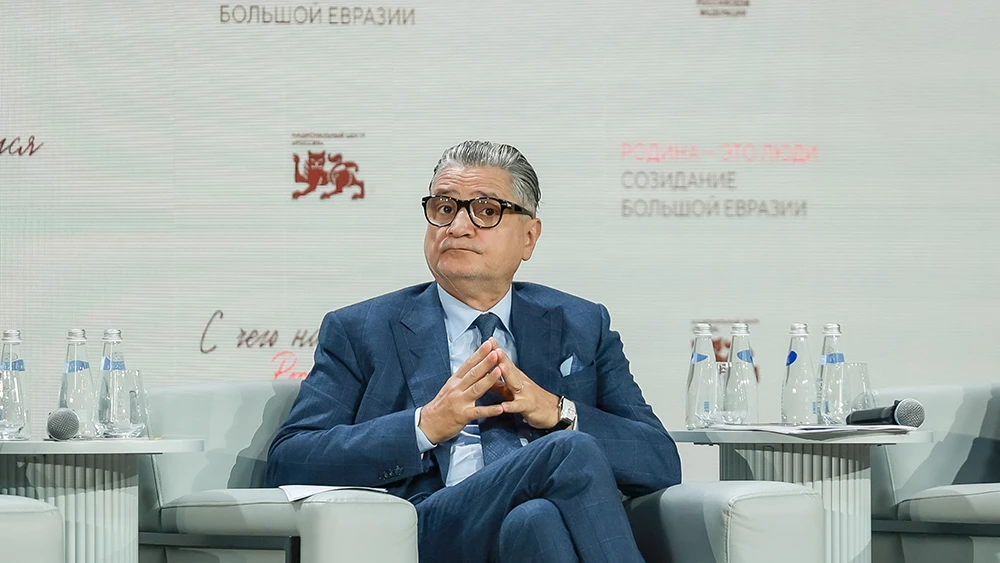
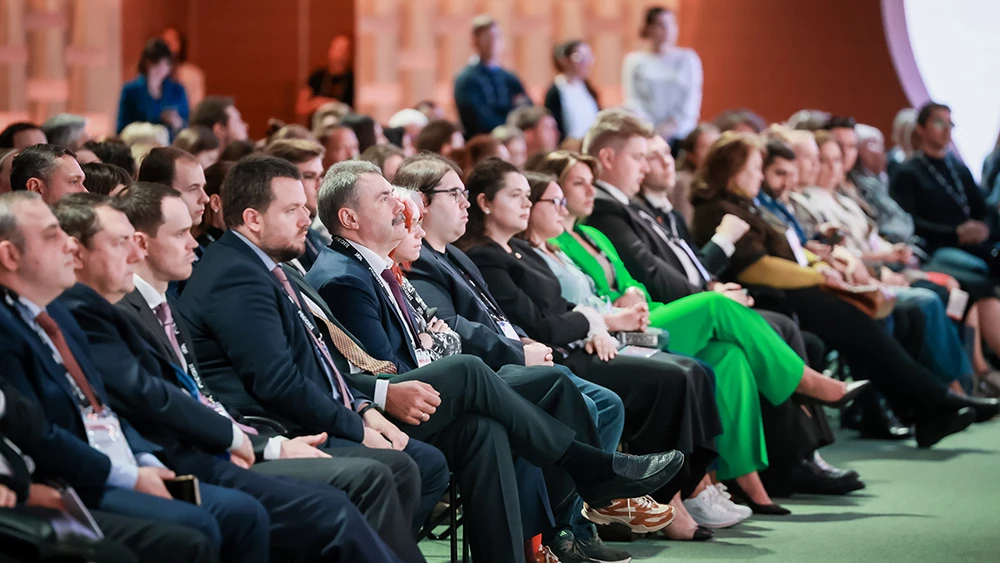
The event
was also attended by the Member of the Board and Minister in Charge of Trade of
the Eurasian Economic Commission, Andrei Slepnev; the Head of the Federal
Accreditation Service, Dmitry Volvach; the Deputy Chairman of the Management
Board of the Eurasian Development Bank, Tigran Sargsyan; MGIMO University
Professor Andrei Bezrukov; and the Editor-in-Chief of the journal "Russia
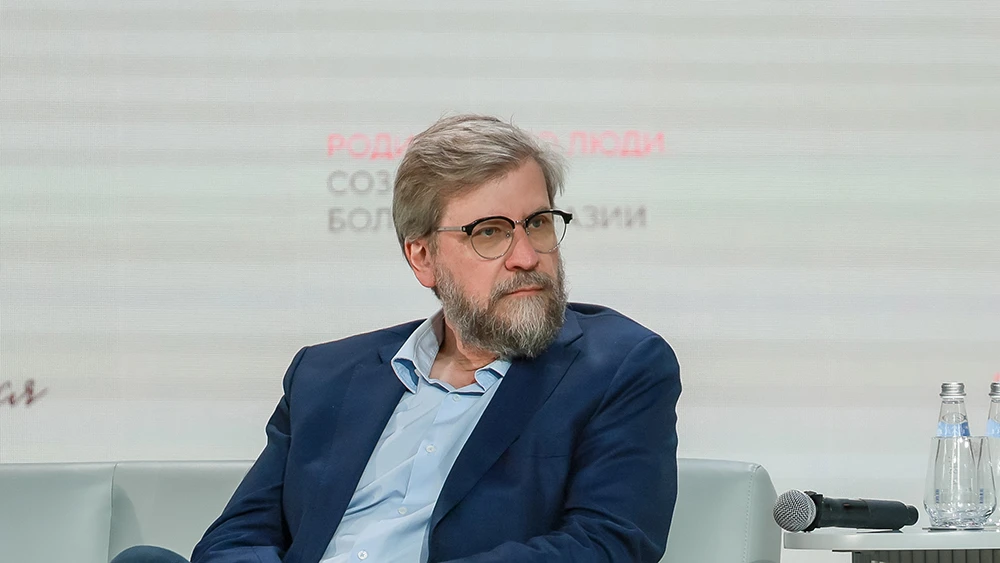
in Global Affairs", Fyodor Lukyanov. He discussed the geopolitical aspects
of Eurasian integration: how it affects countries' positions in the world and
which challenges must be overcome.
"Eurasia's
strength, in my view, lies in the fact that it is an enormous and entirely
self-sufficient territory. Everyone in the world needs it, whereas, broadly
speaking, it does not need anyone else. In other words, by working
collectively, we are capable of achieving anything. This conviction that we can
handle absolutely anything will certainly not be lost. And we genuinely need
nothing else," noted the speaker.
According
to him, Eurasia is not an enclosed space, but a major independent centre open
to cooperation with other countries. Fyodor Lukyanov is confident that even as
the world changes, Eurasia's internal potential is sufficient for its continued
development.
"Motherland
Is People" is part of the National Centre RUSSIA's original project
"What Does the Motherland Begin With?". The series consists of
several stages involving members of the Government of the Russian Federation,
heads of federal executive bodies, heads of Russian regions and opinion
leaders. The project is being implemented with the support of the Government of
the Russian Federation during the Year of Unity of the Peoples of Russia,
declared by the President of Russia, Vladimir Putin.
Event photobank

The first lecture in the "Symbols of the Times: World Expositions" series will be held at 18:00 on 9 September at the National Centre RUSSIA.
The first day of the annual working meeting of the Ministry of Science and Higher Education of the Russian Federation concludes at the National Centre RUSSIA on 27 August.