


A full house for science: science communicator Stanislav Drobyshevsky speaks at the National Centre RUSSIA branch in Primorye
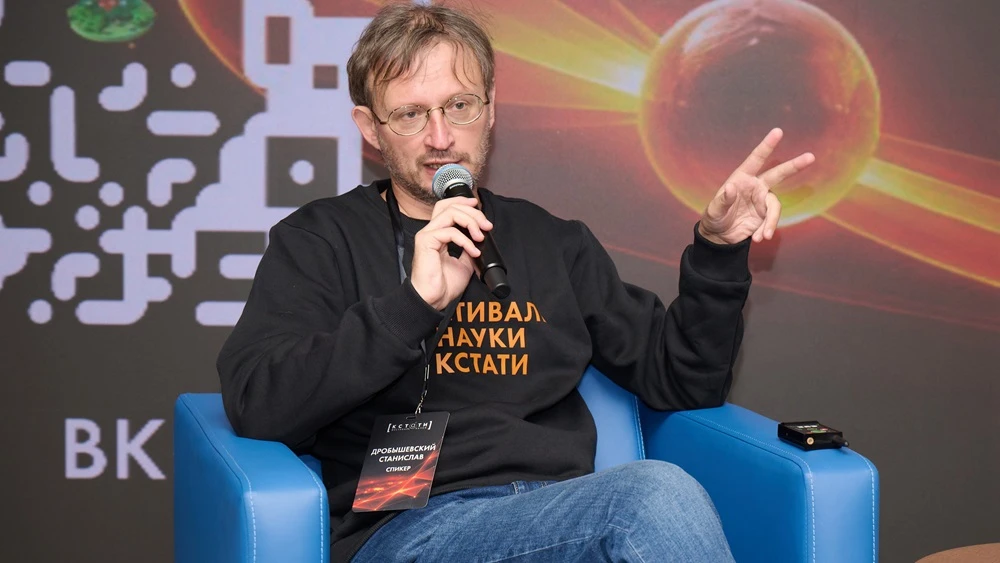
The "KSTATI" (By the Way) science festival in Vladivostok concluded with a lecture on the evolution and future of the human brain by anthropologist Stanislav Drobyshevsky at the National Centre RUSSIA in Primorye. The well-known science communicator's first visit to the region as an adult drew many of his fans to the event. The festival was organised by Vladivostok's Information Centre for Atomic Energy (ICAE) with the support of the Rosatom State Corporation.
Stanislav Drobyshevsky, a Candidate of Sciences in Biology, associate professor in the Department of Anthropology at the Faculty of Biology of Lomonosov Moscow State University and science editor of the science education website "Antropogenez.ru", is popular in Vladivostok — every seat was taken at the free event at the National Centre RUSSIA in Primorye. He came to give one of his best-known lectures, on how the human brain first emerged and developed. One puzzle, for example, concerns the relationship between brain size and function — in our ancestors, the development of intelligence depended directly on brain size, while scientists still have no explanation for why elephants have such large brains. The lecture was built around intriguing examples like this.
"You can't say this topic has no practical relevance. In fact, all these topics have practical relevance. That's the point of intelligence — it helps us meet basic needs and gives us all sorts of things to think about. And when the subject is the brain, something we all have in our heads, why wouldn't you want to learn a bit more about yourself? People are willing to listen to a talk on advanced maths, let alone one about the brain," said Stanislav Drobyshevsky.
During the lecture, the anthropologist also cited several intriguing experiments, including one that showed that newborn babies can distinguish their native language from an unfamiliar one. He takes this as a reason to talk to babies before they are born, ideally in several languages from the outset. As for the future of the human brain, Stanislav Drobyshevsky sees no prospect of its mass increasing further through natural processes and says that humanity's hope lies in modifying the brain artificially.
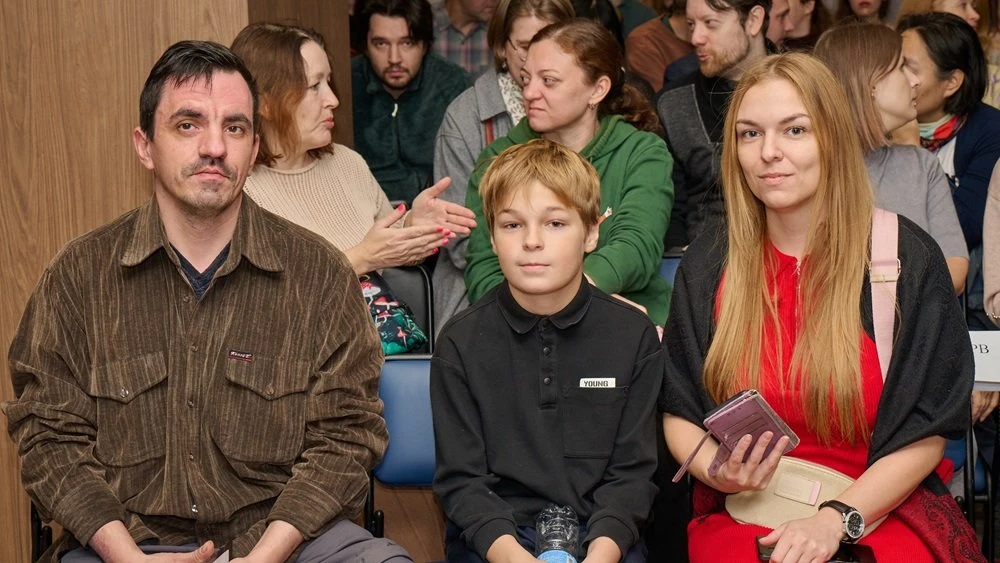
"I heard about Stanislav Drobyshevsky through friends and watched his talks online. When I found out that such a well-known science communicator was coming to town, I did everything I could to be there. I enjoyed the talk, especially his points that communication is the main function of our brains and that some current trends won't be passed on to future generations, because anyone who carries a particular trend would need to have a great many children for that to happen," said Viktoria Petrova, who attended the lecture with her son.
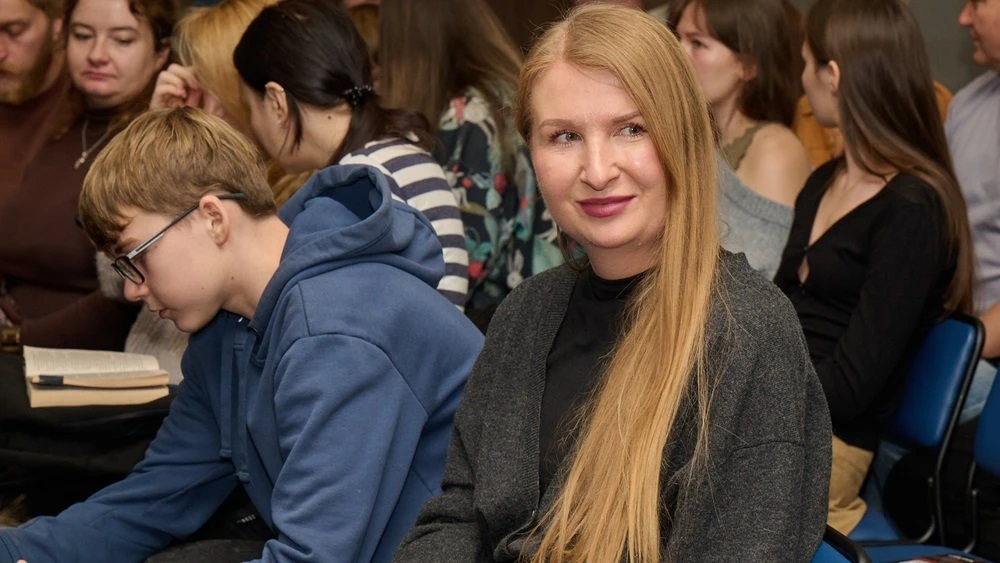
After the talk, audience members asked how much human hierarchies and politics differ from those in a troop of monkeys, when early humans switched from hunting to fishing and what to do if people in the future don't want to become more intelligent. The event organisers noted that sessions were popular on every day of the "KSTATI" science festival.
"At the science drama performance on the first day of the festival, people laughed and thanked the scientists who performed on stage. Seeing how creative and versatile the scientists were probably encouraged more people to come to their lectures the next day. Some people stayed for the lectures all day, which was lovely to see. There was a lot of laughter at the evening talk show. We hadn't expected a full house for Stanislav Drobyshevsky's lecture either, but it was great that so many people came from across the region. We hope they'll keep coming to our events, including smaller, more local ones," said the head of Vladivostok's ICAE, Anastasia Demenok.
Follow the National Centre RUSSIA in the Primorye Territory on MAX, Telegram, VKontakte and Odnoklassniki.
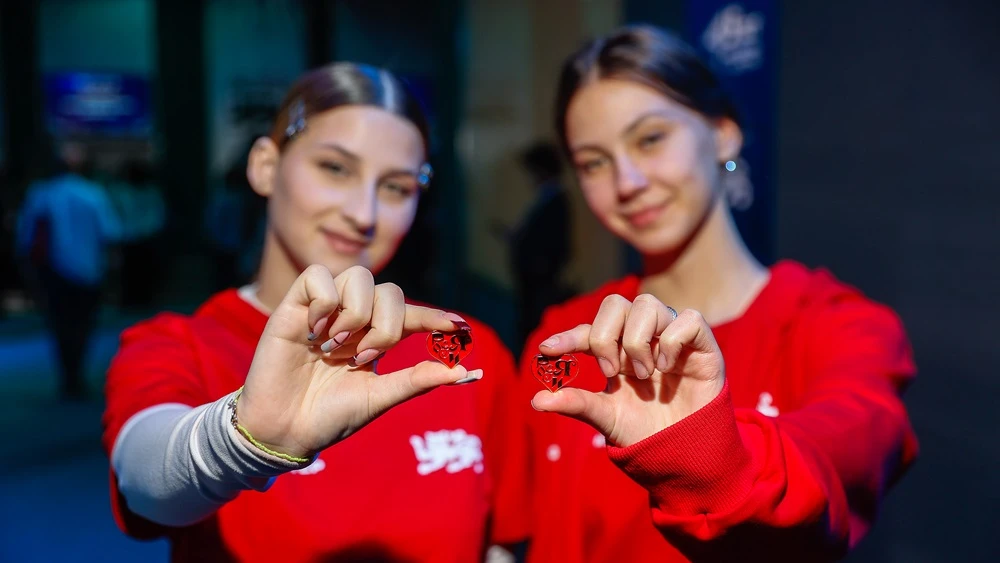
On Mother's Day, 29 November, volunteers at the National Centre RUSSIA turned the venue into a giant "greetings card".
Having another opportunity to express love and gratitude to those closest to us is an important part of family and social traditions.


