The person of the future and the cosmic dream: the National Centre RUSSIA discusses the relevance of Ivan Yefremov’s work today
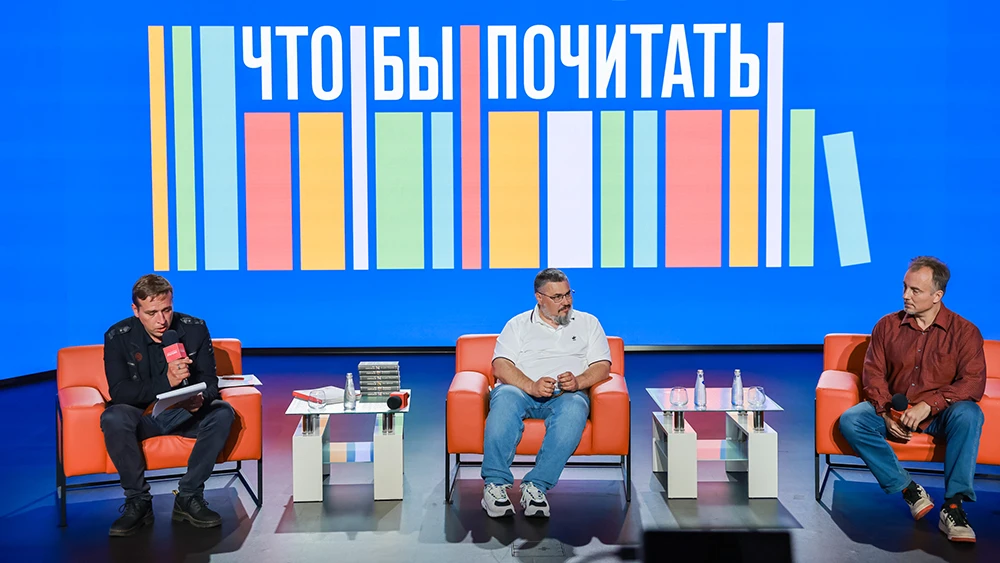
Soviet scientist and writer Ivan Yefremov looked to the future with optimism, dreaming of space exploration, a beautiful and meaningful life, and the preservation of the human soul in the digital age. The ideas and predictions of the great science fiction writer, author of the famous novels "The Razor’s Edge", "Thais of Athens" and others, were considered in relation to contemporary challenges, including the rapid development of artificial intelligence, at a meeting of the Literary Club "What to Read?!" held at the National Centre RUSSIA on 20 August.
"Ivan Yefremov was not only a writer but also a scientist and thinker, and he proposed a concept of the future that was quite rare for the 20th century. He saw it not as a catastrophe, but as an evolution of the human personality. Today, when we talk about what awaits us, we often imagine a threat: we see that artificial intelligence could replace humans, that technology could deprive us of freedom and that, ultimately, the planet might simply be unable to withstand our civilisation. Ivan Yefremov thought very differently: he saw the danger not in the machine, but in the moral immaturity of the person controlling it. Our main question today is therefore this: why was the writer convinced that people were capable of becoming better?" said the Literary Club host, Russian philologist, cultural studies scholar, writer, journalist, lecturer and renowned populariser of art and literature Nikolai Zharinov.
The host was joined in discussing Ivan Yefremov’s work and its relevance to today’s generations by Yevgeny Sazonov, Chief Editor of the Komsomolskaya Pravda media group, writer, documentary filmmaker and Associate Professor at the Russian State University for the Humanities, and Nikolai Smirnov, historian, writer and co-author of the book "Ivan Yefremov" from the "Lives of Remarkable People" series. The experts explored whether the writer imagined the person of the distant future as an unattainable ideal or as someone who still experienced ordinary human emotions, weaknesses and concerns. Particular attention was devoted to artificial intelligence and cybernetics. The speakers considered how Ivan Yefremov’s ideas about global information networks and "memory machines" relate to the contemporary challenges posed by neural networks, and whether people might lose their essence by delegating thought to algorithms.
Nikolai Smirnov explained the extent to which Ivan Yefremov’s image of the person of the future stemmed from a scientific worldview and the extent to which it reflected the ethical and social ideals of his era. He emphasised that, according to the writer’s ideas, a person should be an active creator, a mature individual and the "measure of all things". Humanity’s greatest achievement lies not in reaching space, but in people changing as individuals: learning self-mastery, living for knowledge and aligning their personal desires with the common good.
"Ivan Yefremov was an exceptionally well-rounded and harmoniously developed person. Various structures were then built upon this foundation, as though around the axis of a crystal: Yefremov the scientist, Yefremov the writer and so on. The sciences he pursued — geology and palaeontology — allowed him to understand that beauty, kindness, love and everything we value in a person are connected with millions of years of evolution, with what we call the struggle for life. It was this evolutionary understanding of life that helped him recognise humanity’s place in the Universe and identify promising paths towards the emergence of a new being endowed with such wonderful moral and spiritual qualities," said the historian, writer and co-author of the book "Ivan Yefremov" from the "Lives of Remarkable People" series, Nikolai Smirnov.
Yevgeny Sazonov noted that Ivan Yefremov’s vision of the future was concerned not so much with technology as with the harmonious development of people themselves, both physical and spiritual. In this respect, according to the expert, the writer’s legacy strongly resonates with the idea of unity and good-neighbourly relations: the path to a "golden age" lies not through inventions, but through the inner discipline of each individual, their responsibility, humanity and willingness to share knowledge with the entire world.
"Self-discipline and human will are more important than inventions. If we look at Ivan Yefremov’s early work, people triumph not because they possess great inventions. They achieve their goals and do the right thing because they have inner strength. It makes no difference what is placed in a person’s hands — a geological hammer or a spectrograph. They use whatever is available through their knowledge, will and ability to set goals. Most importantly, they are willing to share their knowledge with the entire world, and they do so. This is why Yefremov’s work is exceptionally relevant today: it provides an understanding of what humanity must do to bring about the golden age described in 'Andromeda Nebula'. In the novel, not only terrestrial but also extraterrestrial civilisations find common ground, become friends, share information, help one another, explore space and live fulfilling lives. This is Yefremov’s principal lesson for us today," explained the Chief Editor of the "Komsomolskaya Pravda" media group and author of the book "Pioneers of the Far East. True Russian Heroes: from Yerofey Khabarov to Vladimir Arsenyev, Ivan Yefremov and Grigory Fedoseyev", Yevgeny Sazonov.
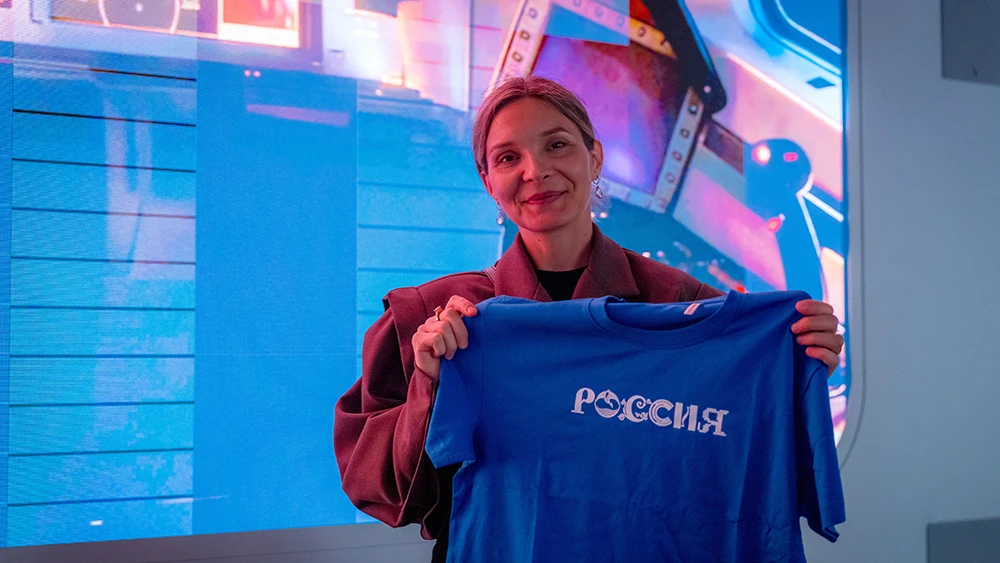
A highlight of the programme was the "Cosmic Dream" performance, a phygital production inspired by the work of one of the most enigmatic Soviet science fiction writers. The multimedia artwork was created and performed by Natalia Talandite, an actress and Artistic Director of the "Digital Mysteries" phygital theatre, in collaboration with director Dmitry Rass. By combining performing arts with digital technologies, the audience embarked on their own journey into a space where science fiction not only speaks about tomorrow, but also allows people to live in harmony with the world, science and themselves, just as Ivan Yefremov dreamed.
The Literary Club "What to Read?!" is an original educational project of the National Centre RUSSIA dedicated to the culture of reading and the public discussion of important contemporary issues. Meetings held as part of the club can be attended free of charge with advance registration on the russia.ru website. See the current programme in the "Events" section.
The National Centre RUSSIA exposition "See Yugra — Fall in Love with Russia!" in the Khanty-Mansi Autonomous Area — Yugra welcomed its 50,000th visitor.

Footwear can be more than part of an outfit: it can tell the story of a region, its culture and the skill of its craftspeople.