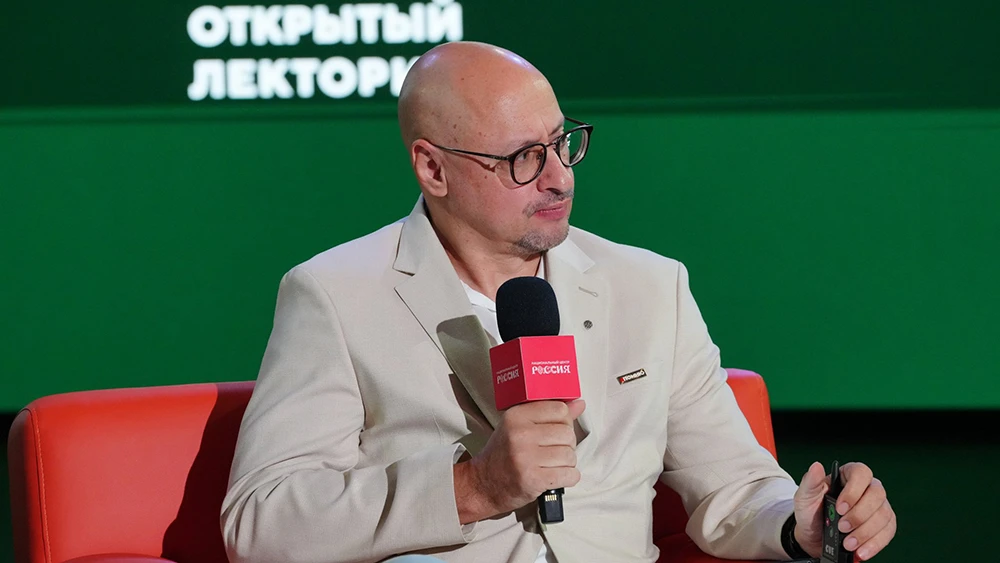
We are at the top, but what comes next: Stanislav Drobyshevsky on where human evolution is heading
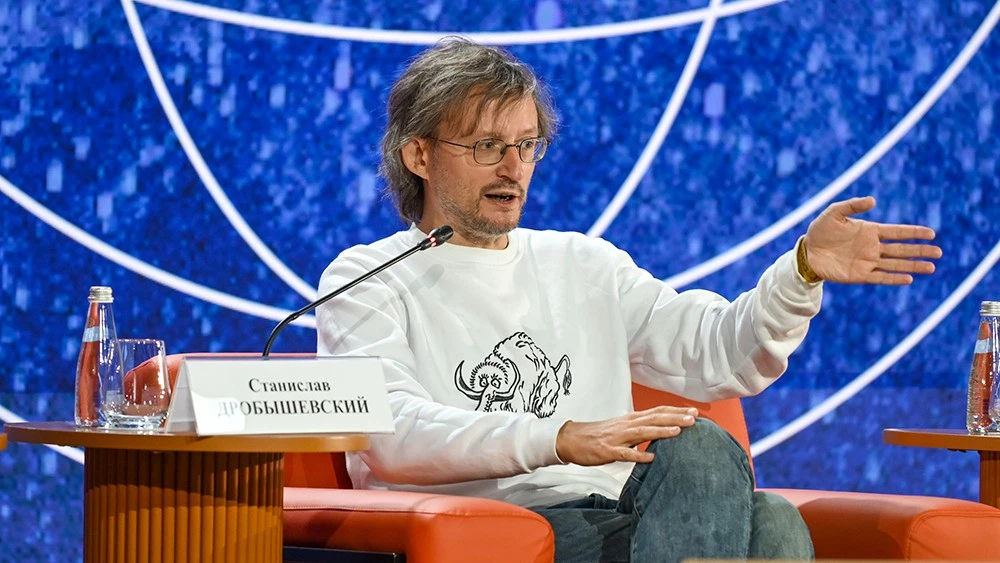
Evolution offers many examples of a species at the top giving way to another. Does this mean that humanity is also moving towards an inevitable end, or will we become the first species capable of consciously choosing its own path? Stanislav Drobyshevsky, Candidate of Biological Sciences, anthropologist, Associate Professor at Lomonosov Moscow State University, co-founder of the Antropogenez.ru portal and founder of the "Drobyshevsky Projects" public science popularisation movement, reflected on this question at the National Centre RUSSIA.
According to the scientist, evolution has always been a story of competition. Dinosaurs, fossil baboons, scorpions and our distant ancestors — every species that once dominated eventually either became extinct or gave way to a better-adapted one. Modern humans are different: we have eliminated external enemies and are no longer subject to natural selection in its classical sense. At the same time, however, we have found ourselves in a strange situation where the biological mechanisms that propelled us forwards for millions of years appear to have stopped working.
"While competition and various other challenges once drove ancient humans to reach the next level time after time, we are now at the top of the pyramid, and natural selection is no longer pushing us forwards, apart perhaps from some intraspecies 'conflicts' or 'little green men'. There is, of course, a wonderful alternative: to develop not through antagonistic relationships, but in a highly rational way, through a conscious desire to progress — since we call our species 'Homo sapiens'. In practice, however, we cannot say that such development is happening on a mass scale across all humanity. This is not evolution, but the individual development of particular people. There is no equivalent development of the entire species, and that is a genuine problem," Stanislav Drobyshevsky said.
Attempting to look several thousand years into the future, the expert acknowledged that it is impossible to predict the direction of human evolution, if only because doing so would require knowing the conditions in which we will find ourselves. Mutations, as Stanislav Drobyshevsky noted, are random by definition, and whether they will prove beneficial or harmful to humanity remains an open question.
"Where evolution might take us is a philosophical question. To answer it, we would first need to know what conditions will be like in, say, a million years — and who could possibly know that? We would also have to predict mutations. Mutations are random by definition. Whether or not they are favoured by natural selection is another matter altogether... Personally, I dream of us shaping evolution consciously instead of trusting the curve of natural selection to carry us where we need to go," the expert added.
The idea of conscious evolution may sound like science fiction, but Stanislav Drobyshevsky presents it as an alternative to biological inevitability if we do not want to share the fate of the dinosaurs and other species that have vanished into oblivion. Watch the full recording of the meeting, held as part of the "Conversations with Stanislav Drobyshevsky" series, on the russia.ru website in the "Livestreams and Videos" section.
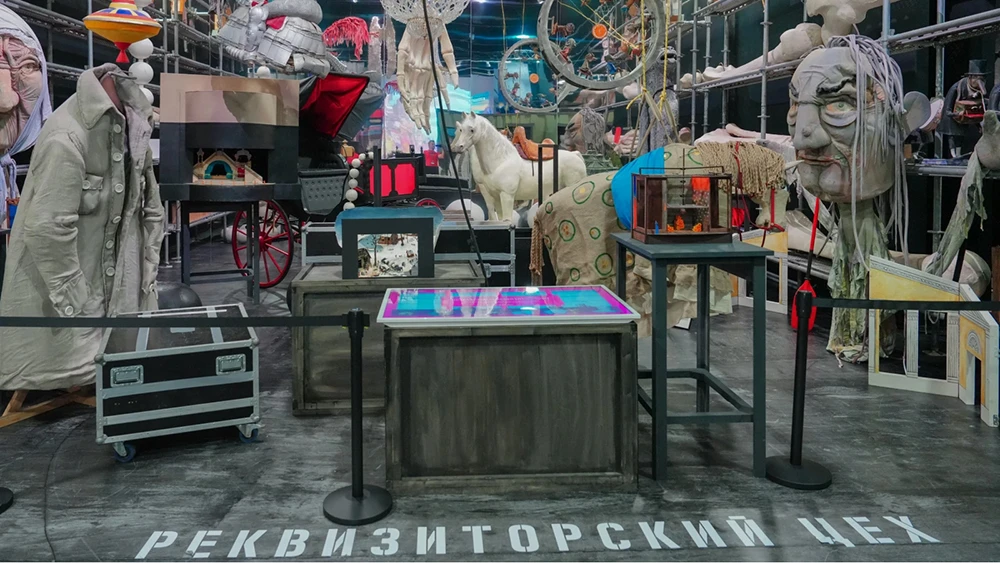
Svetlana Lavretsova shared the stories behind the unique exhibits presented by the theatre at the "Legacy. Theatre. The Greats" exposition at the National Centre RUSSIA.

The National Centre RUSSIA is joining the nationwide #RaiseTheFlag campaign and invites everyone to take part in the flash mob of the same name.