


Clean water according to the laws of nature: water filter workshop held at the National Centre RUSSIA
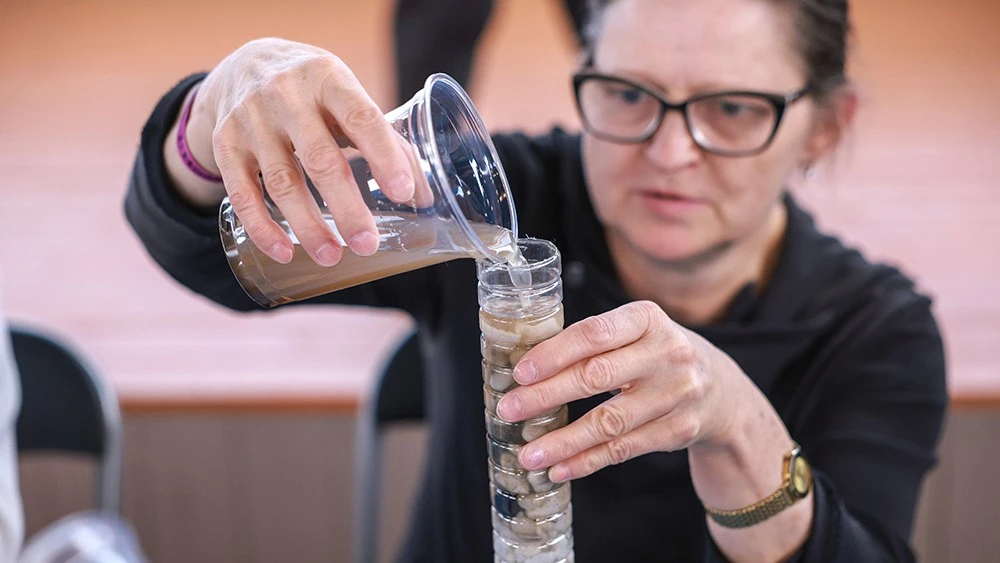
A workshop on building a water filter took place at the
"Geography Classroom" lecture hall of the National Centre RUSSIA.
Using simple natural materials and guided by the laws of nature, visitors to
the "Geography Lessons" exposition assembled their own purification
systems capable of turning dirty water into water suitable for drinking. The
practical skill was shared by Fail Gubaidulin, a leading specialist at
Lomonosov Moscow State University, researcher and physicist-engineer.
The session began with a short quiz about water. Guests who
answered correctly received unusual pencils containing plant seeds.

"This is not just a souvenir. Once the pencil becomes
too short to use, it can be planted in the ground, and after some time a real
plant will grow. In this way, we show that even ordinary objects can be given a
new life," explained Fail Gubaidulin.
The expert vividly demonstrated how much water each person
theoretically has access to — an entire "train" stretching almost the
length of the Earth's equator — and how little of that volume is actually
suitable for drinking. Only around one percent of all the water on the planet
is fresh and accessible for human use.
"It is important to remember that clean water is not
something to be taken for granted. We need to conserve it and know how to
purify it, even if all we have at hand are the simplest natural
materials," said Fail Gubaidulin.

The participants then moved on to the practical part of the
workshop and assembled individual filters. A plastic bottle with a hole made in
it and the bottom removed served as the base. Cotton wool was placed at the
outlet of the filter as the first layer, acting as a soft membrane that trapped
the finest particles. If cotton wool is unavailable, ordinary fabric can be
used instead. This was followed by a layer of crushed charcoal, then sand, and
finally small and larger stones. All of the materials were chosen because they
could realistically be found and prepared in outdoor conditions.

"We are assembling a multilayer filter that works
according to the same principles as natural water purification. At the bottom
is cotton wool, which acts as the finest barrier. Next comes charcoal, which
has an enormous porous surface. It essentially absorbs toxins and some
contaminants. Above that are sand and stones: the larger fractions trap
mechanical debris. Such a filter can be recreated in the forest or in the
mountains using whatever materials are available. Afterwards, the water can be
boiled to make it safe to drink," the expert explained.

Once the filters had been assembled, participants received
cups of murky "dirty" water and were invited to carry out an
experiment. Guests watched as the water gradually passed through each layer,
becoming noticeably clearer and cleaner.
"Today I made a filter for dirty water using a bottle,
activated charcoal, stones, sand and cotton wool. It turned out to be quite
simple, but very useful. At any moment, you might find yourself in a forest or
near a lake, realise you are thirsty and have no clean water available. In
situations like that, this knowledge can genuinely help. The water in our
experiment became cleaner, but I also remembered that it still needs to be
boiled afterwards," said young workshop participant Kirill Gogolevsky from
Balashikha.

The water filter workshop formed part of the educational programme of the "Geography Lessons" exposition at the National Centre RUSSIA. Visitors have already attended expert lectures on Russian cartography, the country's natural wealth, geographical discoveries and iconic tourist attractions across different regions of Russia. They have also taken part in practical first aid lessons, learned how to tie reliable camping knots, pack a hiking backpack properly and pitch a tent. More exciting events lie ahead. The full schedule is available on the russia.ru website in the "Events" section, as well as on social media channels of the National Centre RUSSIA.

Tomorrow, 22 June, at exactly 12:15 Moscow time, everyday life across our country will stop for one minute.
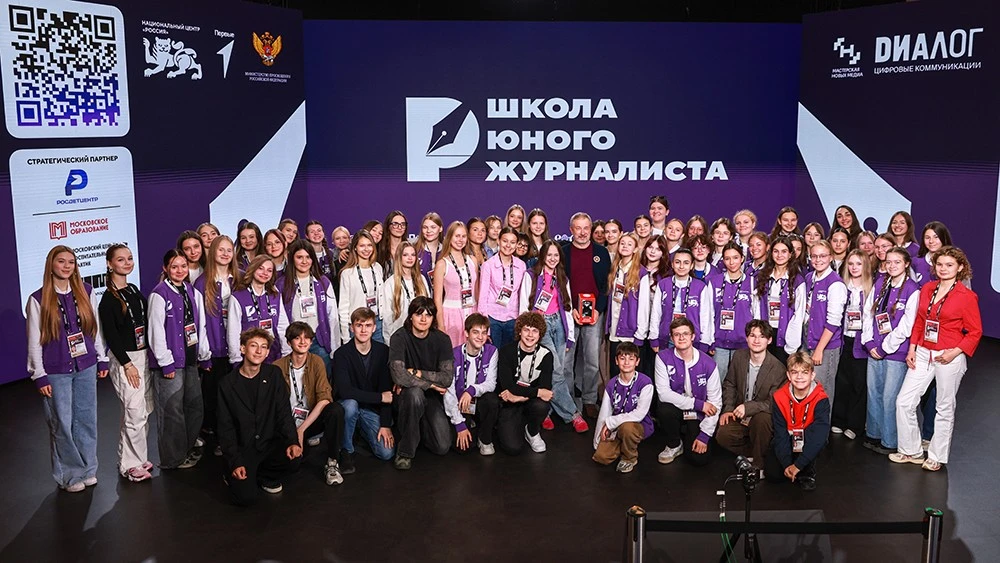
Why politics does not work without journalists, how to tell a calling from simply "an interesting job", and why a young reporter needs to read literature constantly were discussed by participants in the Young Journalists School.

The congress was attended by more than 250 delegates representing the inventor community from 70 constituent entities of our country.


