


Hidden riches of the Russian land at the "Geography Lessons" exposition
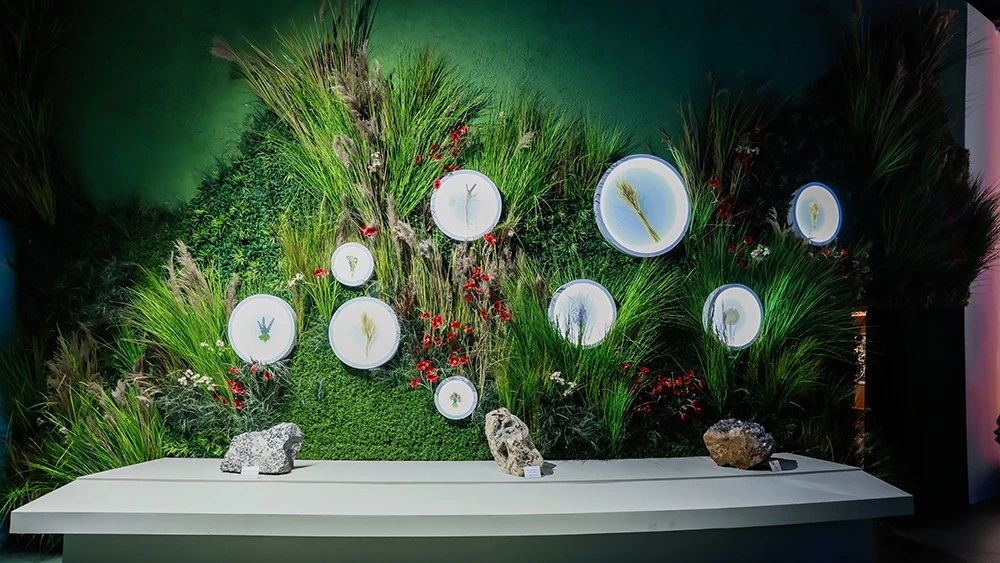
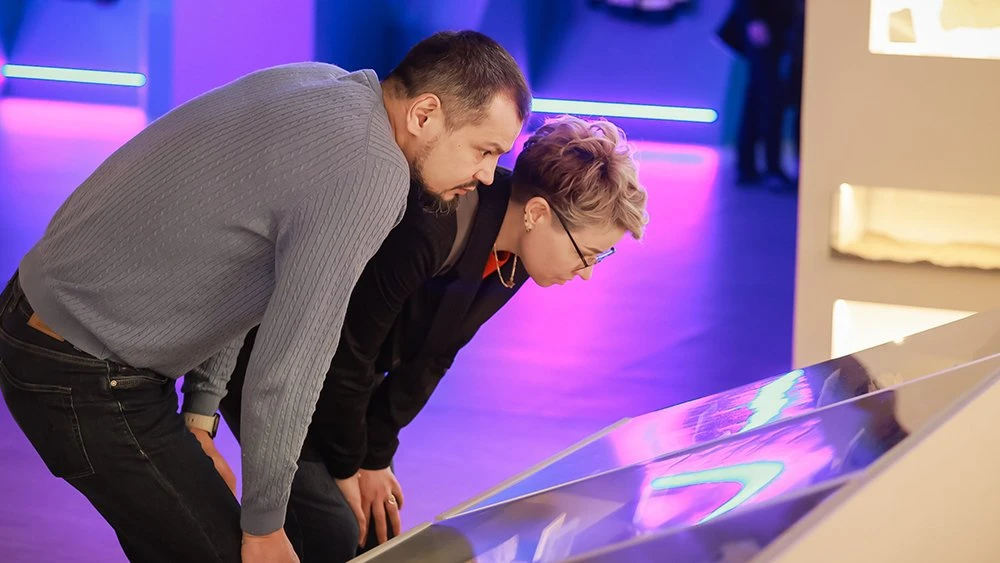
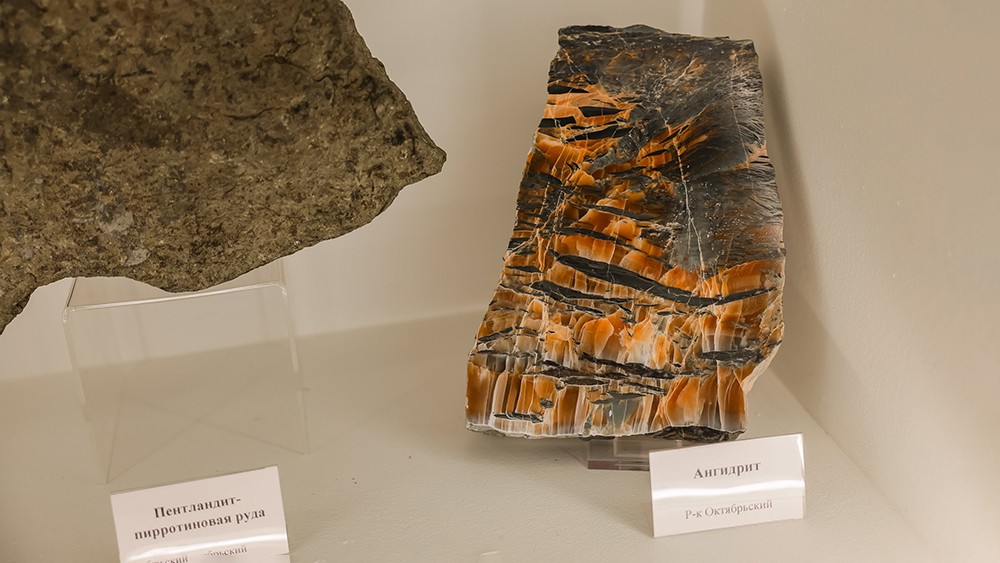
The "Geography Lessons" exposition at the National Centre RUSSIA comprises eight halls, each opening its own chapter in the great history of the country. One of the most impressive is "Resources. Gifts of Geography". Here, amidst geological maps and deposit diagrams, numerous samples of natural riches extracted from the depths or directly from the surface of our land are presented. For centuries, these minerals have fed, built, protected, and brought fame to Russia, and today they remain at the heart of its development and prosperity.
Black stone that gives birth to steel
One of the exhibits, brought from the Dolzhanskaya-Kapitalnaya mine in the Lugansk People’s Republic, hides what is arguably the main secret of modern civilisation. This is anthracite — the highest and most heat-consuming grade of coal, one of the pillars of modern metallurgy. It is used as fuel for blast furnaces in the smelting of iron and steel. Furthermore, anthracite serves as a raw material for the production of various chemical products and building materials, industrial water filtration, and other sectors. Thus, it could well be called an everyday hero: without this modest black stone, we would have no high-speed motorways, bridges, pipelines, or even the familiar poles along the roads.
Gems with a history
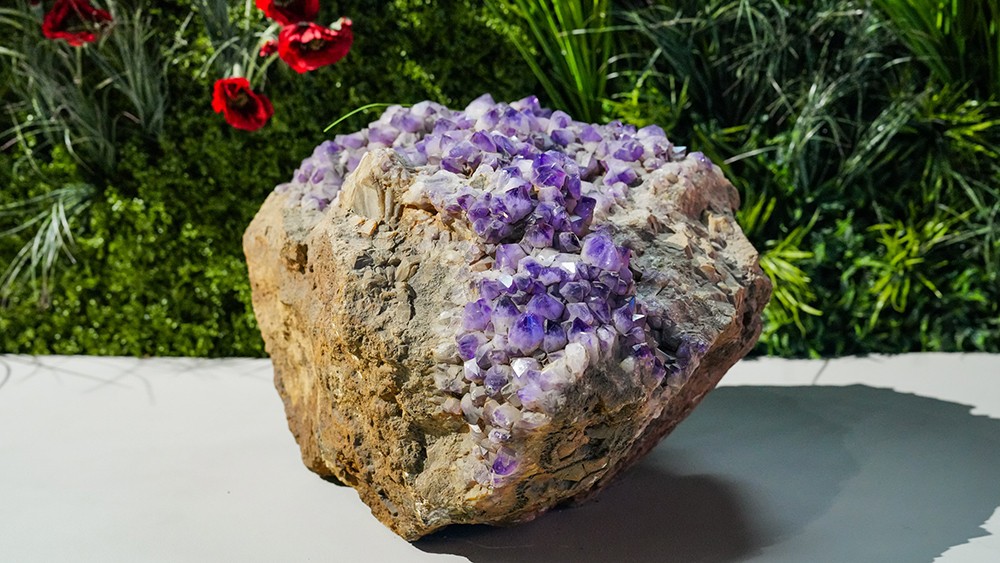
However, Russia is rich in more than just coal. The hall features samples that are difficult to look away from. There is snow-white halite, mined at Lake Syvash in the Kherson Region. There is mysterious amethyst from the Komsomolskoye deposit in the Donetsk People’s Republic. And here is charoite — a fabulously beautiful mineral mined at the world's only deposit, "Sirenevyi Kamen" ("Purple Srone"), located on the Chara River at the borders of the Irkutsk Region, the Republic of Sakha (Yakutia), and the Trans-Baikal Territory. The stone is actively used in jewellery making, but even in its raw state, it already looks like a jewel without any cutting.
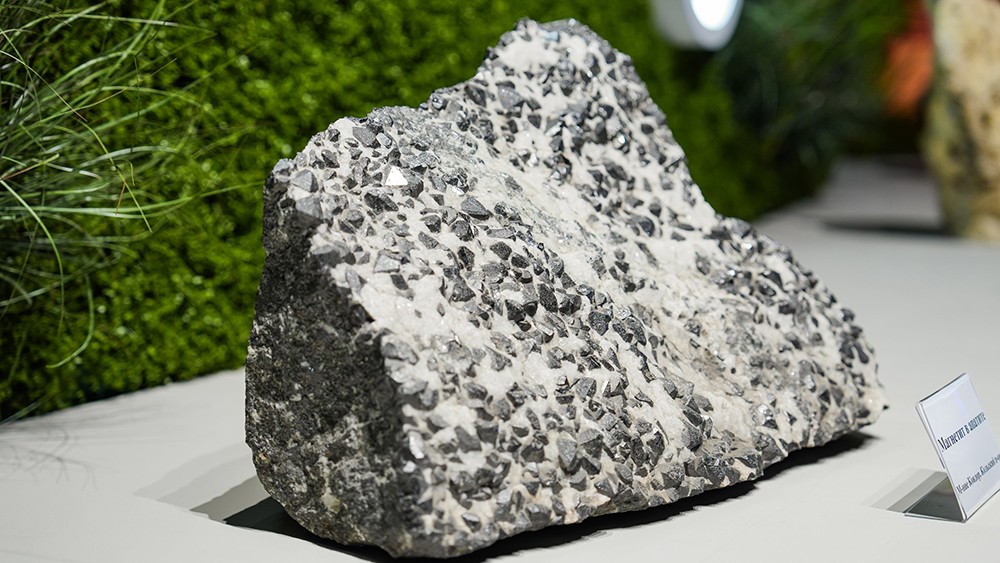
Amethyst from the Angaro-Katskoye deposit in the Angara region, a quartz geode in limestone from Golutvin near Moscow, magnetite in apatite from Kovdor — these samples amaze not only with their beauty but also with their size. They can be examined and walked around from all sides. And they must certainly be touched: the Moscow "Samotsvety" Museum, which provided these exhibits, does not simply allow this but encourages it. Indeed, touching a natural stone that has lain deep in the earth for centuries gives a sense of belonging to something ancient, majestic, and real.
Jade and the energy of the earth
A huge piece of jade is located directly on the floor in the "Resources. Gifts of Geography" hall. This stone has long been valued in the East no less than gold. In China, for example, Buddha figurines are carved from it, in the belief that the mineral brings health and harmony. Today, our neighbours still readily purchase this natural mineral mined in Russia. However, in our Russian tradition, gemstones have also always been endowed with special properties: people believed that stones provide strength, protect against misfortune, and heal the body and soul. One only needs to hold such a stone in one's hands to understand why. It radiates that very energy of the earth, which our ancestors considered living many years ago.
Would you like to learn more about the gemstones and minerals of your native land? Visit the "Geography Lessons" exposition at the National Centre RUSSIA. These and other amazing exhibits can be seen free of charge. The exposition is open until 9 July.

Music is capable of becoming the voice of nature and connecting ancient traditions with modern art.

The All-Russian "Memory Wall" campaign, timed to coincide with the 81st anniversary of Victory, has been launched at the National Centre RUSSIA.
Dance is capable of uniting people just like music and words: without translation, immediately at the level of feelings.


