


Arctic Day: what you can learn about the Russian North at the National Centre RUSSIA
The Arctic holds vast reserves of natural resources, shapes
climate processes and remains home to Indigenous peoples whose culture and way
of life have been connected to this land for centuries. Arctic Day is
celebrated in Russia on 28 February. The holiday marks the end of the calendar
winter and serves as a reminder that the North is a territory of the future for
the country, requiring special attention and continuous development.
The Arctic region is unique and remarkable. It is the
northern lights and tundra covered with Arctic lichens, polar bears and bowhead
whales. These are not merely symbols of the North, but a fragile ecosystem
whose condition largely determines the ecological balance of the entire planet.
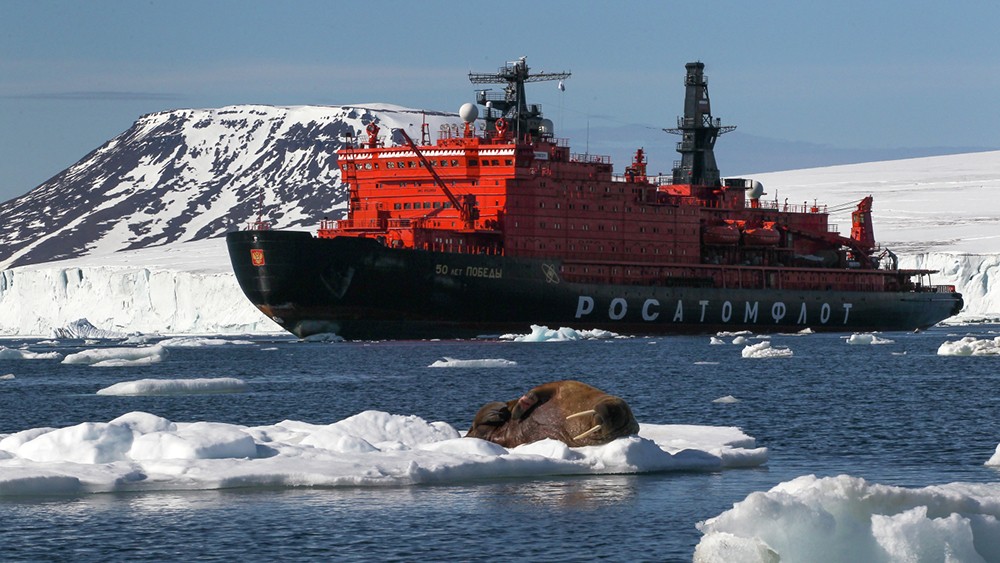
The Northern Sea Route begins here, the nuclear icebreaker fleet is developing,
and major energy and infrastructure projects are being implemented. All of this
contributes to strengthening Russia’s sovereignty and opening new opportunities
for science, logistics and the economy.
In order to preserve this unique region and continue its
development and exploration, Arctic Day was established in Russia in 2011. The
initiators included the Northern Federal University named after M. V.
Lomonosov, the Arctic Initiatives Centre, regional authorities and public
organisations. Today, lectures, educational initiatives, environmental
campaigns, exhibitions and themed programmes in museums and public spaces are
held on this day.
The National Centre RUSSIA has become one of the venues
where the Arctic is discussed through contemporary expositions, data and
personal stories. In 2025, the presentation of the "Arctic Dossier"
took place here — a national report on Russia’s contribution to restoring
Arctic ecosystems within the framework of the UN Decade on Ecosystem
Restoration. It became an important contribution by Russia to the global
environmental protection movement.
Deputy Prime Minister of the Russian Federation, Dmitry
Patrushev, speaking at the National Centre RUSSIA, emphasised that
environmental rehabilitation of the North is one of the state’s key priorities.
He noted that Russia, as the largest Arctic power, is establishing federally
protected natural areas within the Arctic zone covering approximately 40
million hectares. This makes it possible to preserve the region’s unique
biodiversity and maintain populations of rare animal and plant species.
The Arctic theme at the National Centre RUSSIA is presented
not only through business events and reports, but also through expositions
available to every visitor. At the exposition "Journey Across
Russia", the Arctic is represented in the thematic zone "Arctic and
the North-West". Here visitors can feel like the captain of a nuclear
icebreaker: take the helm, chart a route through frozen seas and understand how
navigation is organised in conditions of polar night and ice fields. Panoramic
screens displaying the northern lights create the atmosphere of the real North,
while multimedia installations tell the story about the nature, people and
technologies that make life and work in the Arctic possible.
Through
such expositions, guests of the National Centre RUSSIA have the opportunity to
literally "try on" the role of an explorer and pioneer of the North,
and to see how ecology, science, industry and everyday life in the Arctic zone
are interconnected.
A special place in the narrative about the Arctic is given
to technological achievements. In the materials of the National Centre RUSSIA
and the special project "25 Reasons for Pride", particular attention
is paid to flagship Arctic projects, such as universal nuclear icebreakers.
They have become symbols of Russia’s technological and industrial sovereignty
and a clear example of how the country is returning to the Arctic as a global
leader.
Thus, the National Centre RUSSIA becomes a place where the
Arctic is presented from multiple perspectives: as a home to unique ecosystems
and Indigenous peoples, as a territory of breakthrough technologies and energy
security, and as a space of responsibility and strategic planning.
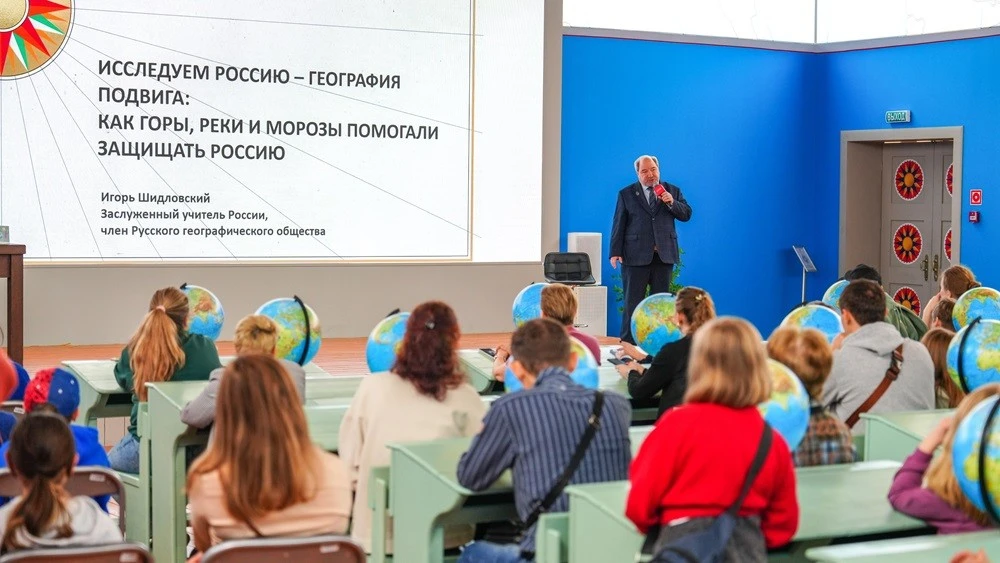
The National Centre RUSSIA hosted a meeting of the "Exploring Russia" project, "Geography of Heroic Feats: How Mountains, Rivers and Frosts Helped Defend Russia".
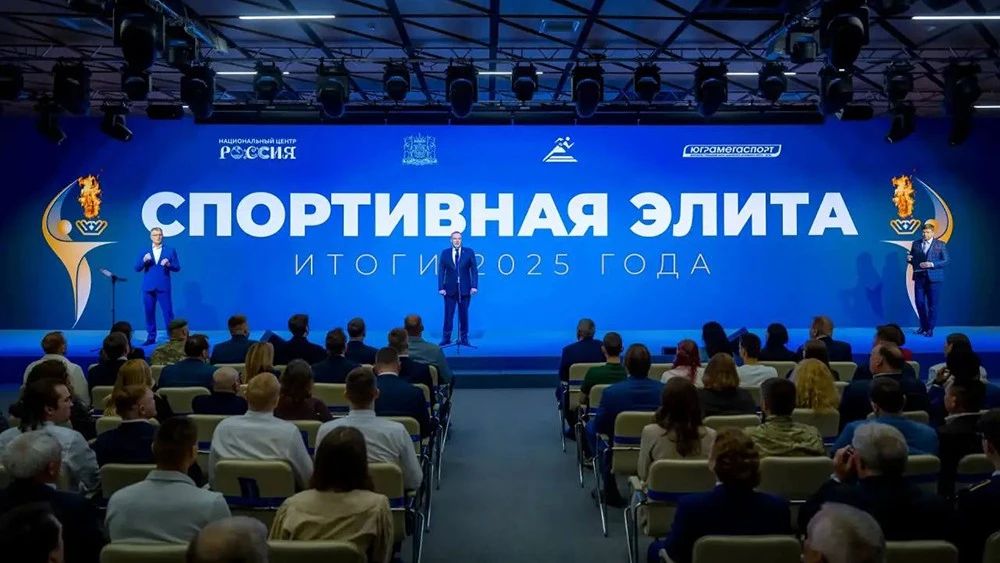
The 30th anniversary ceremony honouring the winners of the "Sports Elite of the Year" contest for 2025 was held at the National Centre RUSSIA in Yugra.
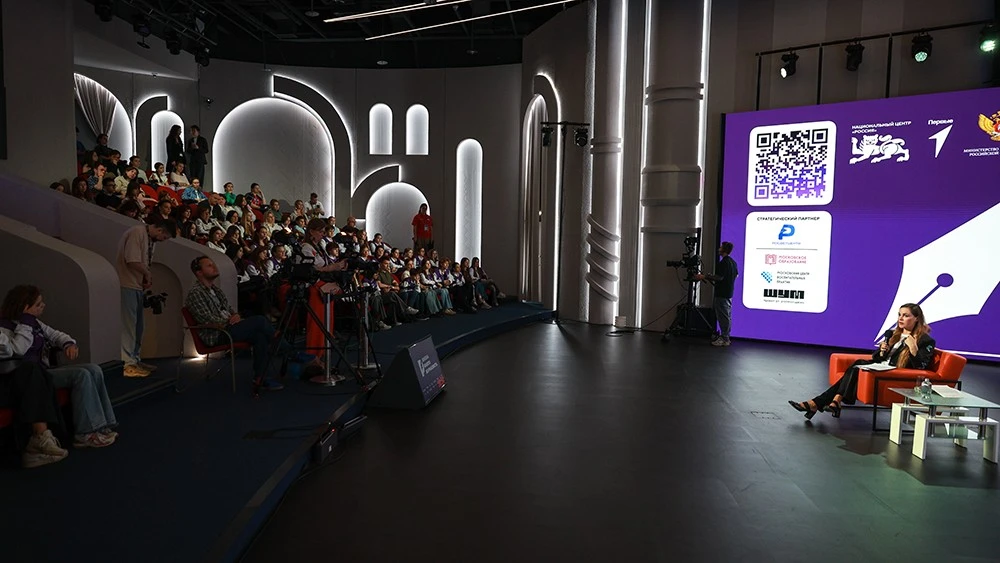
TV presenter and journalist Yekaterina Andreyeva met with participants of the "Young Journalists School" project at the National Centre RUSSIA.


