


Open Lecture Hall experts explain how to stay attentive to yourself in a world of endless feeds
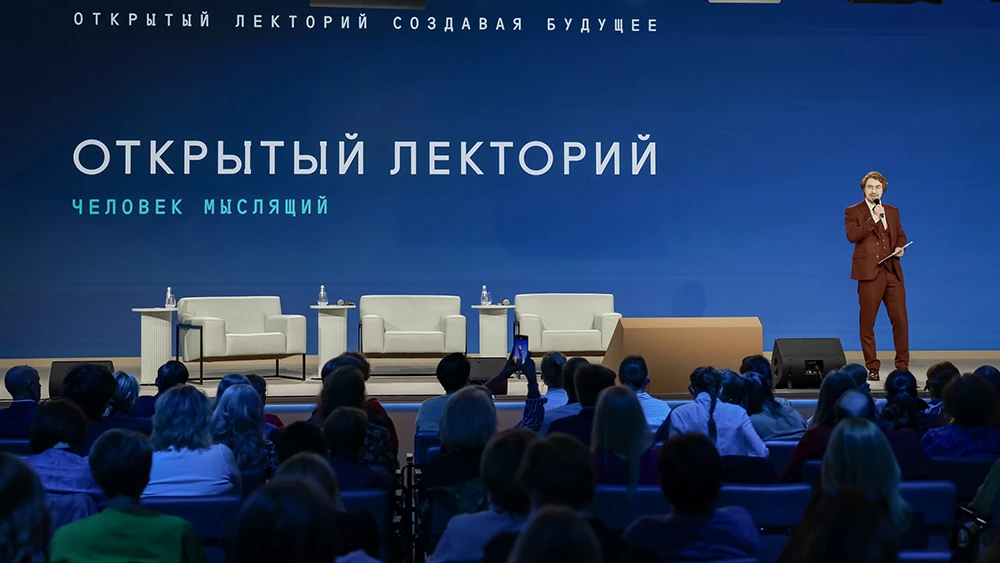
To avoid getting lost in a stream of notifications, troubling news and endless feeds, it is important to bring attention back to your own body, build healthy relationships with other people and notice the good around you — including through gratitude. On 26 September, Associate Professor at the University of Malaya Amirrudin Kamsin and psychologist Anetta Orlova spoke about how the digital environment affects emotional well-being and why love for oneself and others is becoming a prerequisite for creating a better future. They took part in the "The Creative Human" session of the Open Lecture Hall "Inventing the Future: Limits of the Human" at the National Centre RUSSIA.
Amirrudin Kamsin, the author of more than 100 academic publications and a researcher in digital technologies and artificial intelligence, chose to focus on the impact of new technologies on human well-being. The scientist explained why social media notifications, endless news feeds and the mechanics of digital services can intensify overload and anxiety. He noted that when developing technologies, it is important to consider not only user engagement but also emotional well-being.
"Digital anxiety does not arise only from what people say or do online, but also from the communication environment itself. Interfaces are not neutral: feeds, notifications, recommendations and engagement metrics constantly direct our attention, intensify emotional involvement and can create a sense of uncertainty," said Amirrudin Kamsin.
The expert noted that unlike familiar activities in the physical world, which have a natural endpoint — such as the last page of a newspaper or the end of a conversation — an endless feed provides no such boundary. Constantly updated and personalised content encourages people to keep scrolling in the hope of finding clarity or reassurance, yet new alarming messages may only intensify the sense of uncertainty.
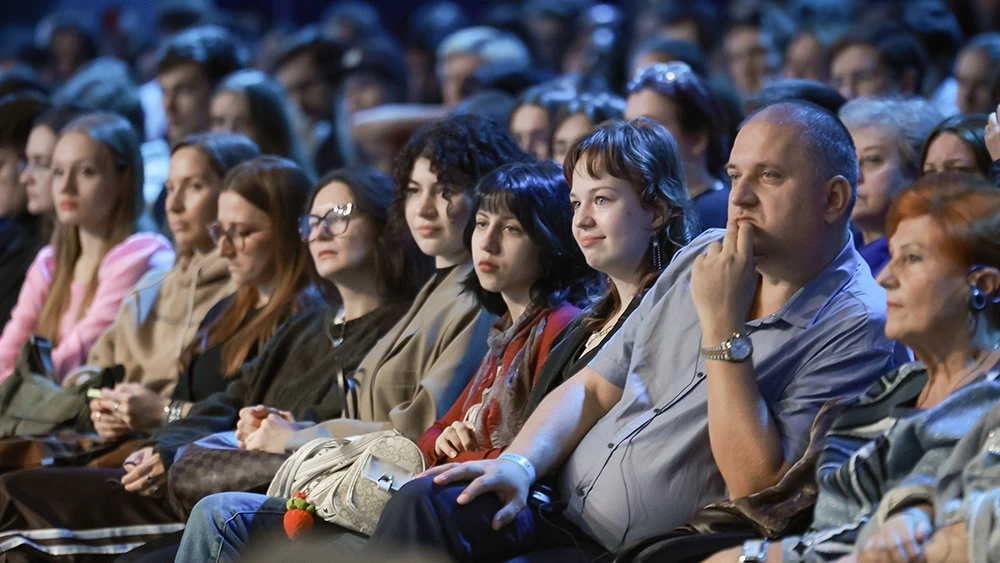
At the same time, Amirrudin Kamsin drew the audience's attention to what technology can offer humanity: "The digital environment provides access to education and medical information, helps people stay connected across geographical and cultural boundaries, creates new opportunities for people with disabilities and allows them to unlock their creative potential. Much depends on how exactly we interact with technology: on the context, business models, algorithms and values embedded in system design. The same mechanisms that currently hold our attention can be redirected for people's benefit."
Psychologist, Candidate of Sciences in Sociology, author of books on the psychology of relationships and regular expert on federal television channels Anetta Orlova joined the discussion on the relationship between technology and people. According to her, the digital environment is often used not only to solve specific tasks, but also as a way to escape difficulties and shift attention elsewhere. If this process is not managed, endless scrolling and content consumption can become a habitual avoidance strategy.
"We do not reach a final result and remain in a process that never ends with feedback. This constantly consumes energy: over time, apathy sets in, we put the phone down, but soon reach for it again because of anxiety. It is important to understand that the more time we spend on our phones, the more detached we become from our main source of support — our own body. The body is the home of our soul and the first system to respond to events in the outside world," the expert explained.
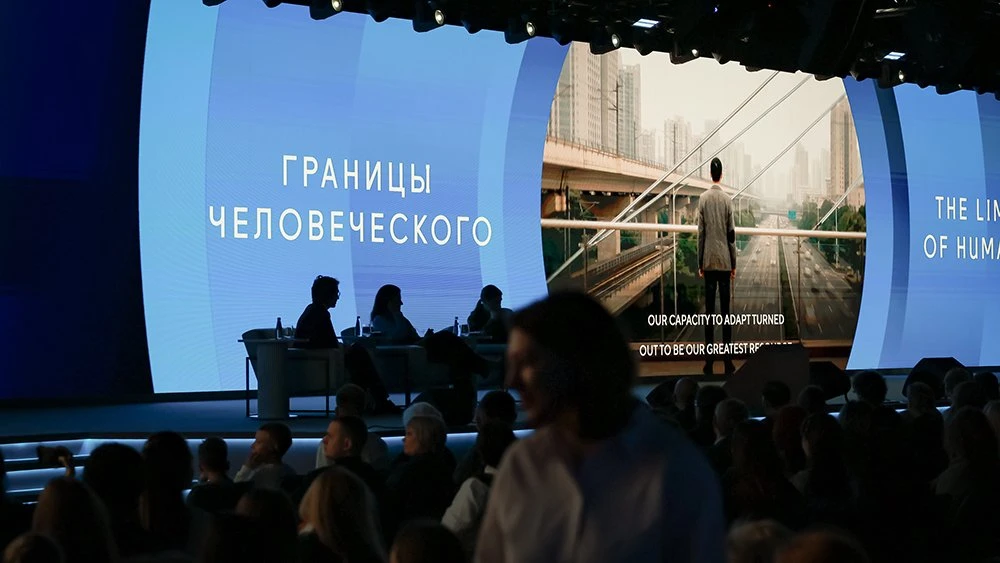
Anetta Orlova also focused on how people function amid high uncertainty, multitasking and constant acceleration. According to the expert, it is now more important than ever to notice the signals from one's own body. Ignoring physical needs and constantly mobilising willpower — for example, through late-night scrolling and disrupted sleep — can lead to exhaustion.
"We need to reclaim our bodies. At least once an hour, it is worth asking yourself: what is my face feeling? The face is our most social organ: we meet another person's gaze, and our communicative profile depends on what our own gaze is like. Tension often builds up in the jaw, chin and neck — it is important to notice and release it, because by ignoring the body's response, we leave it under severe strain. But support is not only the body; it is also the people around us. We need to create social ties and relationships: to think about what we are willing to bring to another person and what burden we are prepared to share with them. When we notice the good, create something, give someone a smile, gratitude or joy, the brain understands that we are not alone — and we feel better," the scientist emphasised.
Anetta Orlova added that she considers gratitude not only an important value and tradition in her family, but also a foundation of psychological well-being. According to her, the ability to feel grateful helps people notice the good and appreciate the support of others rather than focusing exclusively on negativity and concerns about violations of personal boundaries.
The Open Lecture Hall "Inventing the Future" is an original project of the National Centre RUSSIA. It brings together Russian and international experts, scientists and futurists to discuss positive scenarios for the future. The event, held on 26 September, is devoted to the theme "Limits of the Human" and to exploring how humanity can be preserved amid rapid technological change.
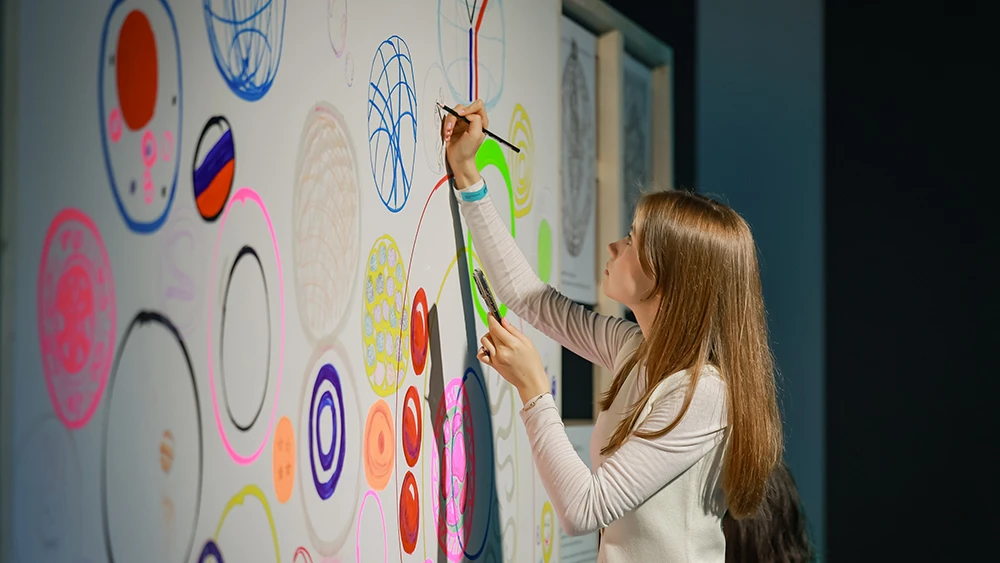
The interactive installation "Once Upon a Time, Giotto..." opened on 26 September in the business area of the National Centre RUSSIA as part of the Open Lecture Hall "Inventing the Future: Limits of the Human".
Participants can look forward to a packed day: three thematic blocks, leading experts from different countries, and an interactive illusionist show.
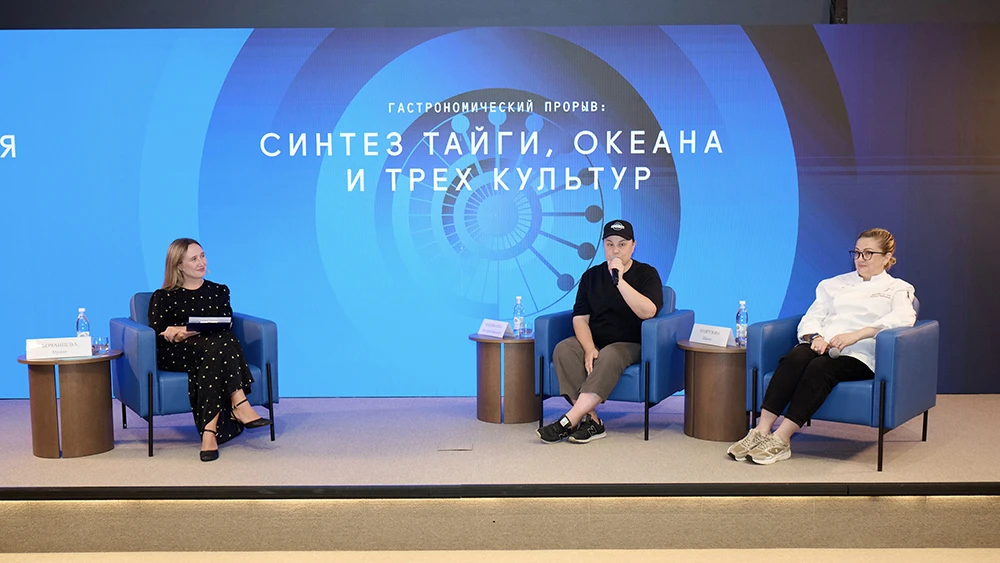
The Open Lecture Hall "Inventing the Future: Pacific Breakthrough" was held at the National Centre RUSSIA in the Primorye Territory.


