

Ethics, transparency and sovereignty: the future of AI through the eyes of the II Open Dialogue experts
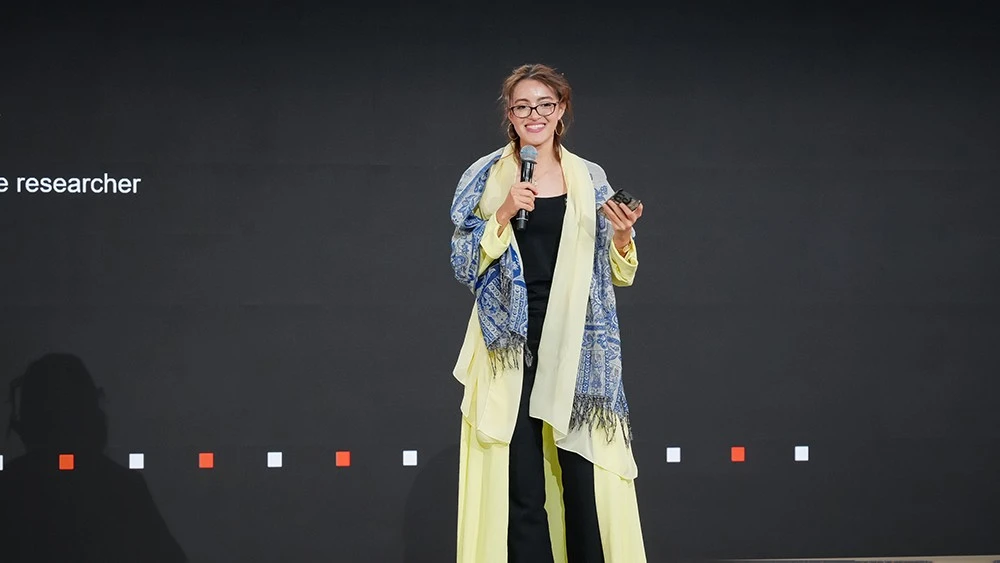
A panel pitching for the "Investments in Technology" track took place at the National Centre RUSSIA on the second
day of the II Open Dialogue "The Future of the World. A New Platform for
Global Growth". Alexey Shpilman, Director of AI Technology Development at
T-Technologies, spoke about how artificial intelligence and agent systems are
capable of transforming business processes: they accelerate the implementation
of ideas — from startups to large-scale corporate projects — and generally
change the rules of the game in the field of technological innovation.
"To implement AI, many processes need to be
restructured, and no one wants that. It is often treated as just another tool
to be integrated into existing systems and managed in the same way as other
tools. This slows down transformation, although the effect of full
implementation can be immense: for example, a task that previously took three days
is completed in 20 minutes," said Alexey Shpilman.

The expert identified four ethical rules for the use of AI
in education. He noted that the human must remain central: artificial
intelligence should be viewed only as a tool, and decisions must always be made
by a human. He also emphasised the need to ensure transparency — users must
understand how AI works and why it produces certain results. Furthermore,
according to the expert, data protection is critically important: personal
information, including data on students and teachers, must be secure, and the
procedure for its processing must be clearly defined. He also believes that
educators must be provided with knowledge of relevant AI technologies and
guaranteed protection of their personal data from misuse.
AI, according to him, opens new perspectives in science: it
can automate the formulation of hypotheses, the design of experiments, and data
processing. However, real experiments still require laboratories and human
involvement. The speed of technology adoption is becoming a decisive factor for
success: it is vital to take an active position in shaping the future.
In the second part of the session, the jury of the
"Investments in Technology" track heard and discussed four essays
that were recognised as the best following the first day.
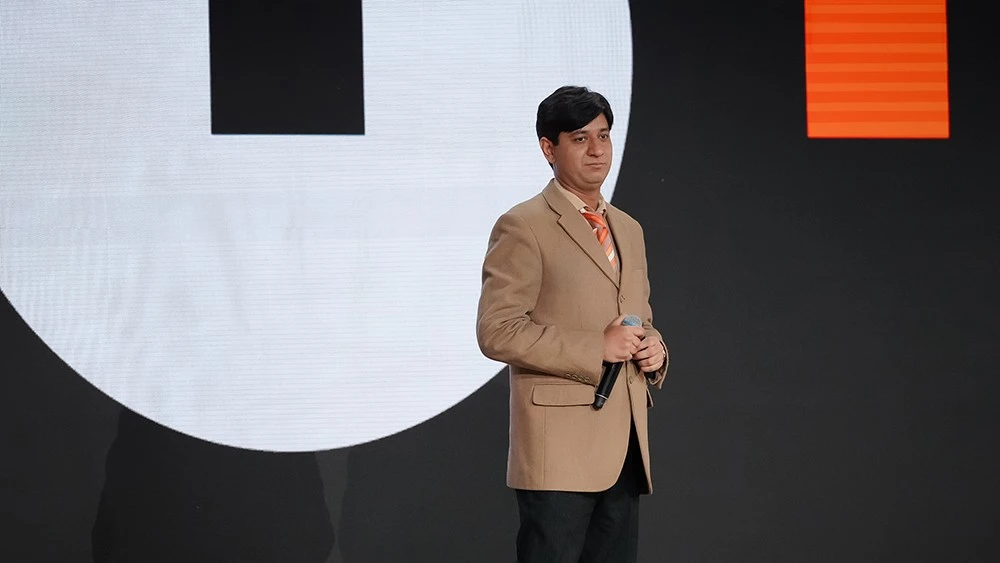
Professor Mahmood Anwar from Pakistan, Head of the
Department of Management Sciences at the Muslim Youth University, noted that
the implementation of AI in education requires not only technical solutions but
also a clear ethical foundation. He proposed a four-pillar model that includes
human agency, transparency, data protection, and the development of AI
literacy. Such an approach, in his opinion, reduces the risks of academic
dishonesty and algorithmic bias, increases inclusiveness, and makes education
more accessible and unique.
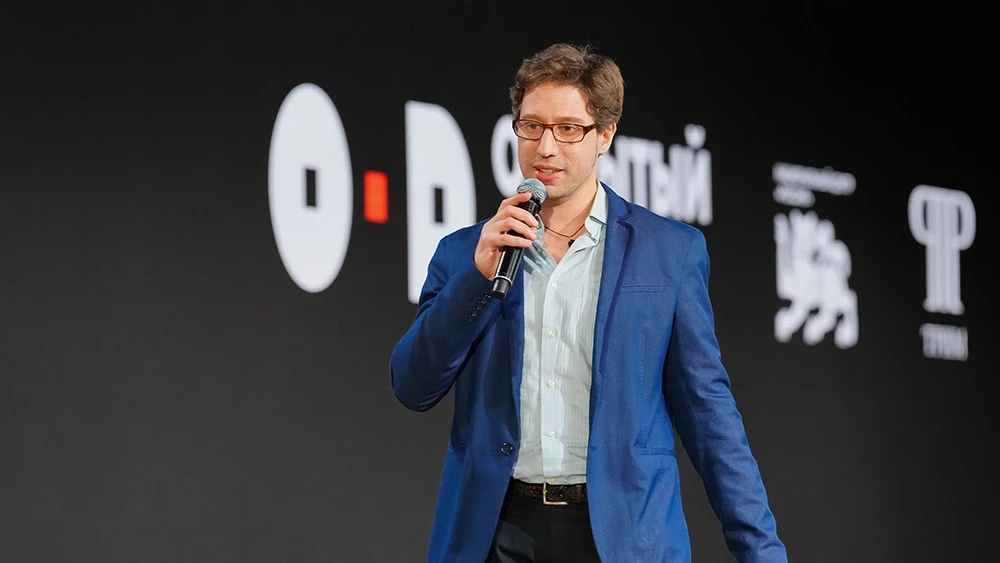
Ruslan Gafarov from Azerbaijan, Associate Partner at Digital
Space Ventures, proposed creating a platform for the development of humanoid
robots with a high level of AI through the efforts of the BRICS countries — to
avoid technological dependence on the West. His plan involves signing
intergovernmental agreements and launching an academy for robotics and AI,
followed by the production of 10,000 robots with the involvement of BRICS
technology centres and increasing output to 100,000 units, and, at the final
stage, approving certification standards and developing exports. According to
him, the implementation of the project will reduce the cost of purchasing
components, create millions of jobs, and form a second pole of technological
independence with great market potential.
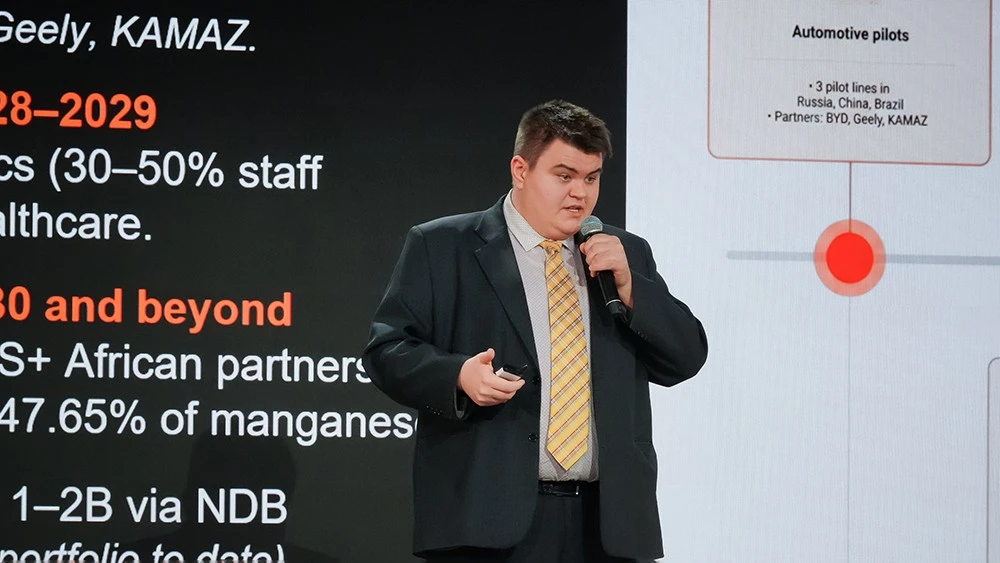
Sergei Kondratev, a postgraduate student at Lipetsk State
Technical University, proposed a concept of sovereign physical artificial
intelligence for the BRICS countries based on the integration of technology,
geopolitics, and demographics. His plan includes pilot projects in logistics
and healthcare, the involvement of African partners, and scaling across the
entire bloc. He expects that the implementation of the technology could
increase the combined GDP of the association's countries by 24% and preserve
jobs by automating routine tasks, while the participation of industrial
companies will accelerate the development of robotics and the resolution of
related technological tasks.
In her speech, Aya Arfaoui, a student at Mohammed V
University of Rabat from Morocco, raised the issue of the digital sovereignty
of developing countries. She noted that international institutions do not give
them sufficient influence in regulating the digital space, and decisions are
increasingly made by algorithms. The expert emphasised that the solution lies
in regional integration: creating a "growing core" of 10–15 countries
with a memorandum on digital sovereignty and data protection. According to her,
a union of at least 30 countries will allow for the formation of digital space
rules on an equal basis.
By the jury's decision, Aya Arfaoui was named the winner of
the "Investments in Technology" track. She will be invited as a
speaker to the final, concluding expert dialogue.
The final event of the II Open Dialogue "The Future of
the World. A New Platform for Global Growth" will take place on 29 April.
During the event, the best proposals put forward within all thematic tracks
will be combined into a single agenda. Based on this, the National Centre
RUSSIA will prepare an analytical report that will subsequently be presented at
international venues.
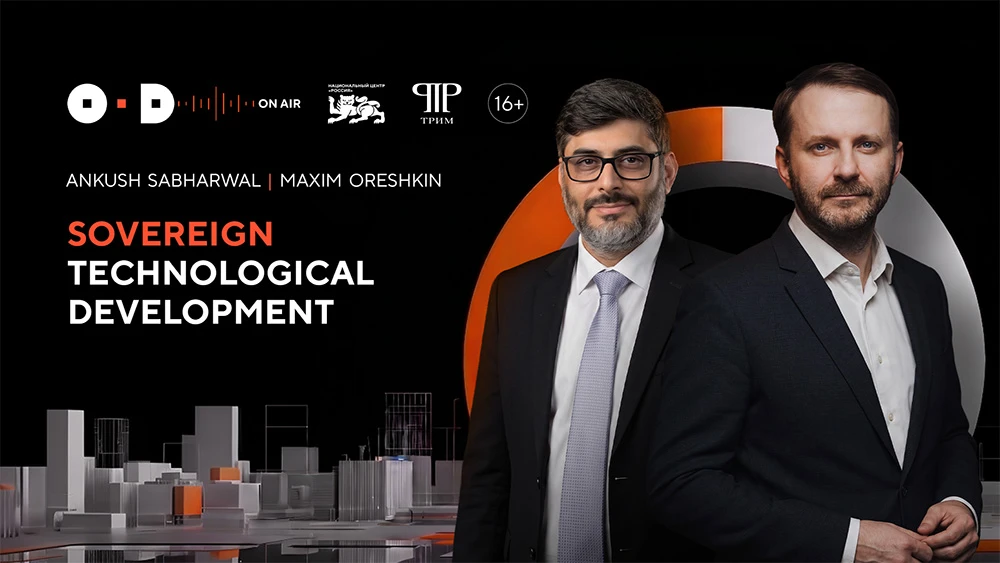
The new episode of the National Centre RUSSIA Open Dialogue podcast explores key questions of the digital age: who owns AI and data.

The new episode of the National Centre RUSSIA Open Dialogue podcast begins with the idea that artificial intelligence is no longer merely a digital tool.