T-shirts featuring presidential quotes, amber jewelry, and Gzhel porcelain: the most popular items at the National Centre RUSSIA Department Store in Harbin
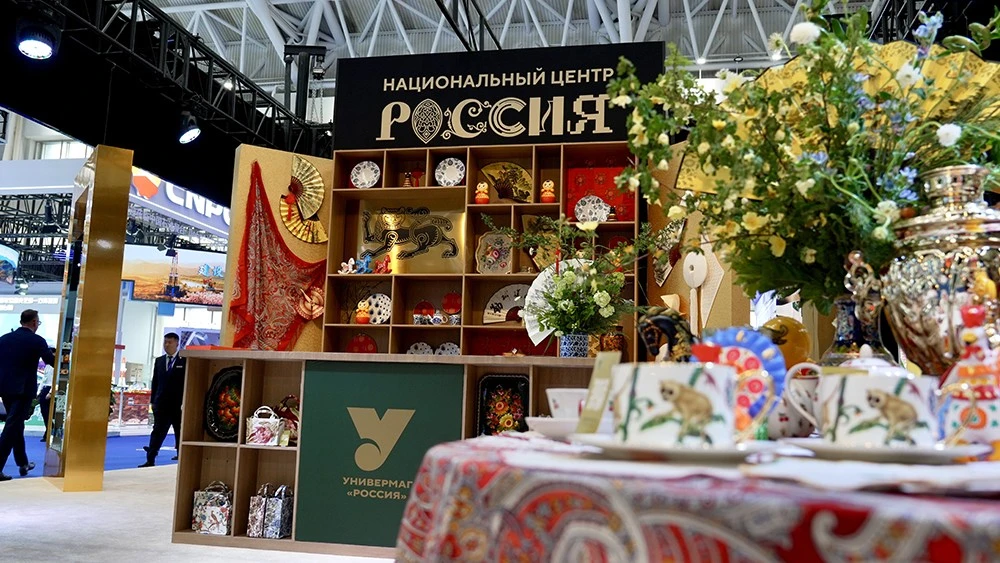
At the X Russia-China EXPO in Harbin, the stand of the flagship Department Store project of the National Centre RUSSIA has become one of the trade fair's main attractions. Visitors are sampling delicacies, admiring accessories and tableware, exploring traditional folk crafts, and, of course, choosing souvenirs there.
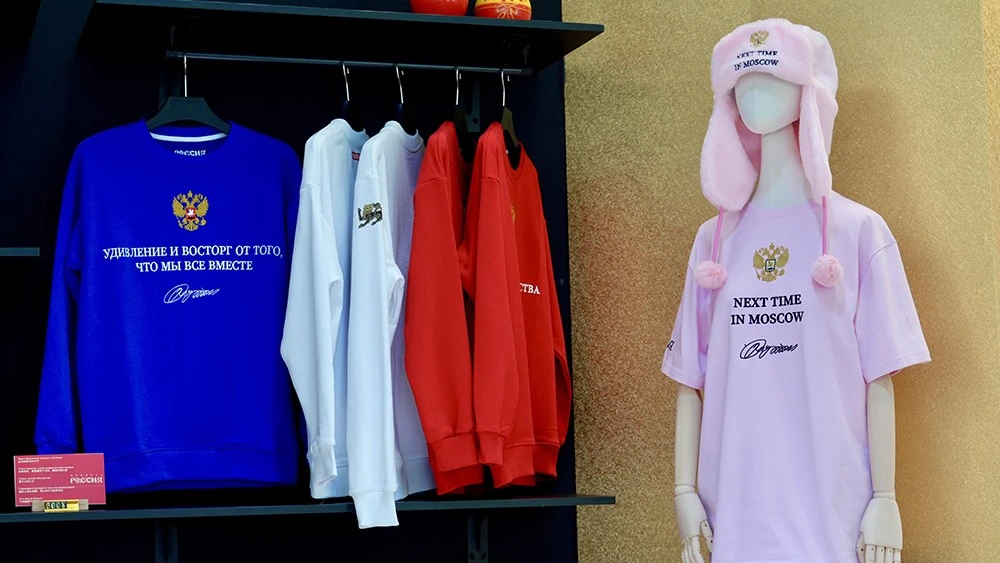
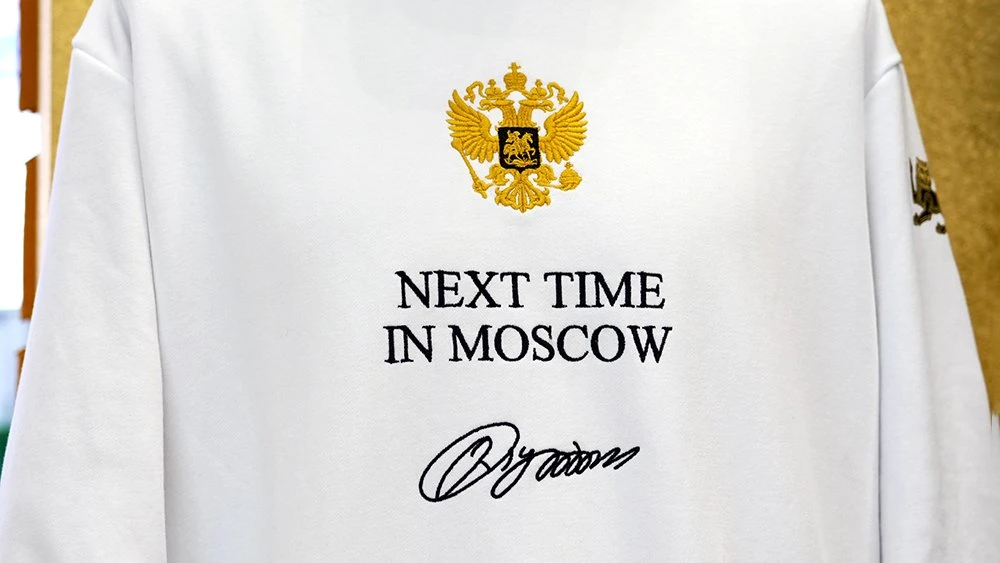
The clear favorite among visitors is the clothing collection featuring quotes by President of the Russian Federation Vladimir Putin, created especially for the National Centre RUSSIA. T-shirts, hoodies, baseball caps, and other clothing items attract attention not only because of their bold design, but also because of the messages they carry. Each item reflects the core values on which Russian society is built. The prints feature quotations about unity, patriotism, family, and responsibility for the country's future. International visitors carefully read the texts, ask for translations, take photographs, and ultimately choose the clothing as a symbol of respect and a desire to better understand Russia.
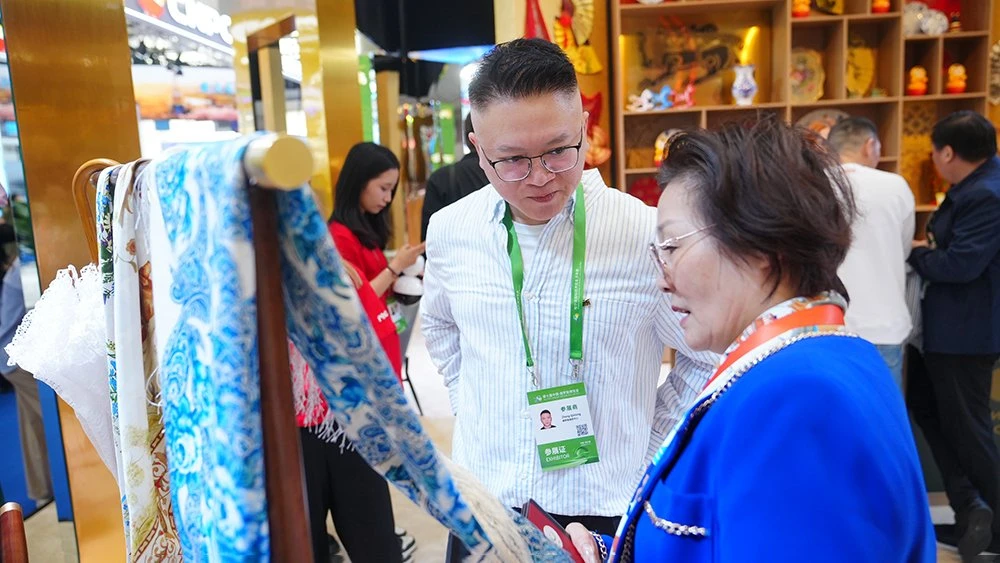
Scarves by designer Nina Ruchkina from the Sverdlovsk Region have also drawn strong interest from the public. For many visitors, this is their first introduction to a new generation of Russian fashion, where tradition is organically combined with contemporary visual culture. Each scarf is described as "the history of Russia on silk": through signature prints, they reveal historical themes, the country's multicultural identity, and its vast scale. Visitors spend a long time examining the patterns, trying them on, searching for familiar motifs in the ornaments, and often describe the scarves as ''collectible pieces you want to keep for years."
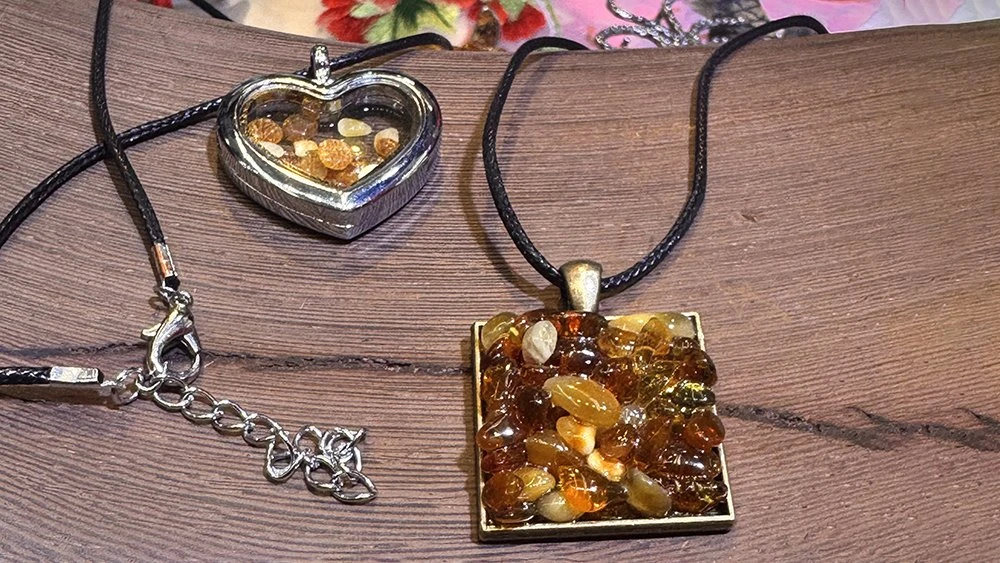
Amber jewelry created by a craftswoman from the Kaliningrad Region is also highly popular. For guests from China and other countries, the image of the Baltic coast is almost always associated with amber. Jewelry made from fossilised resin — in which time itself seems to have been preserved — attracts attention with its warm palette ranging from pale yellow to deep cognac tones. Each stone is unique, which gives every piece its own distinctive character.
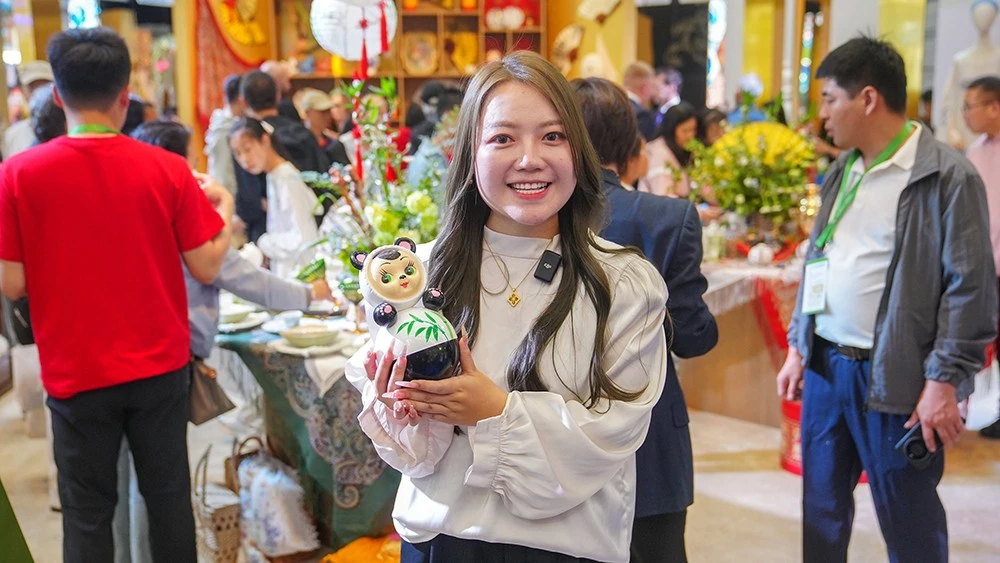
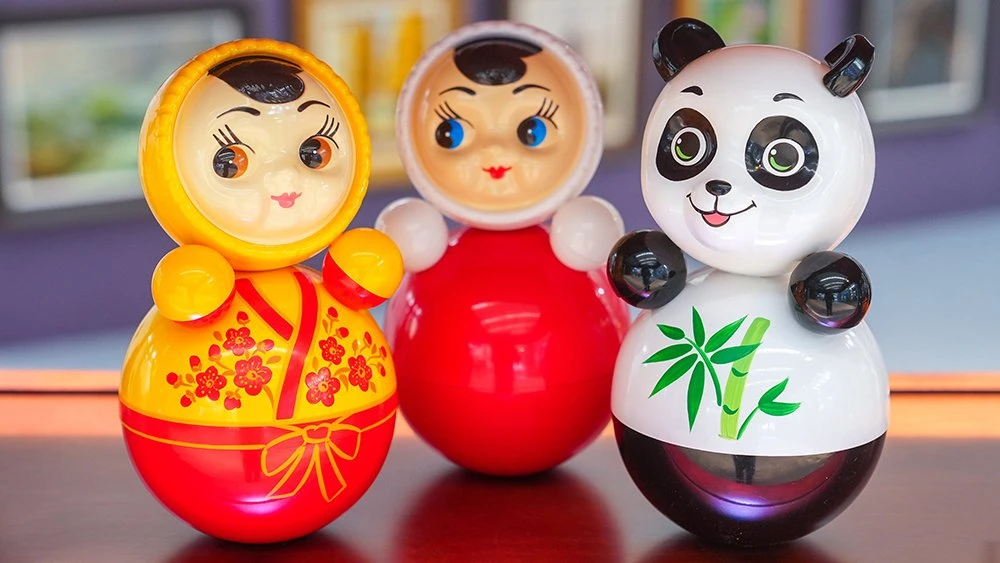
Roly-poly dolls produced by the Tambov factory "Kotovskaya Nevalyashka" are also among the most recognisable and sought-after souvenirs. Specially for the trade fair, the National Centre RUSSIA and the factory created a collection dedicated to friendship and respect for Chinese culture. One of the dolls is designed in the traditional red and yellow colors of the People's Republic of China, and its costume is decorated with an image of wild plum blossom — a symbol of renewal, resilience, and the ability to overcome hardship. Another doll appears as a child dressed in a costume of a panda, one of the key symbols of warm and harmonious relations between Russia and China. Visitors can also see a roly-poly doll in the form of a panda itself, as well as classic versions. Guests eagerly purchase these toys and often describe them as "the kindest souvenir" at the stand.
Among the tableware and serving pieces, two categories stand out in particular: products by Bashkir Porcelain and the famous Gzhel porcelain. Bashkir Porcelain is one of Russia's largest manufacturers of professional-grade tableware for restaurants and hotels. Visitors have been impressed by the combination of exceptional durability and elegant design. Made from hard porcelain fired at extremely high temperatures, the products are resistant to chips, scratches from cutlery, and sudden temperature changes, making them equally suitable for home use and professional interiors.
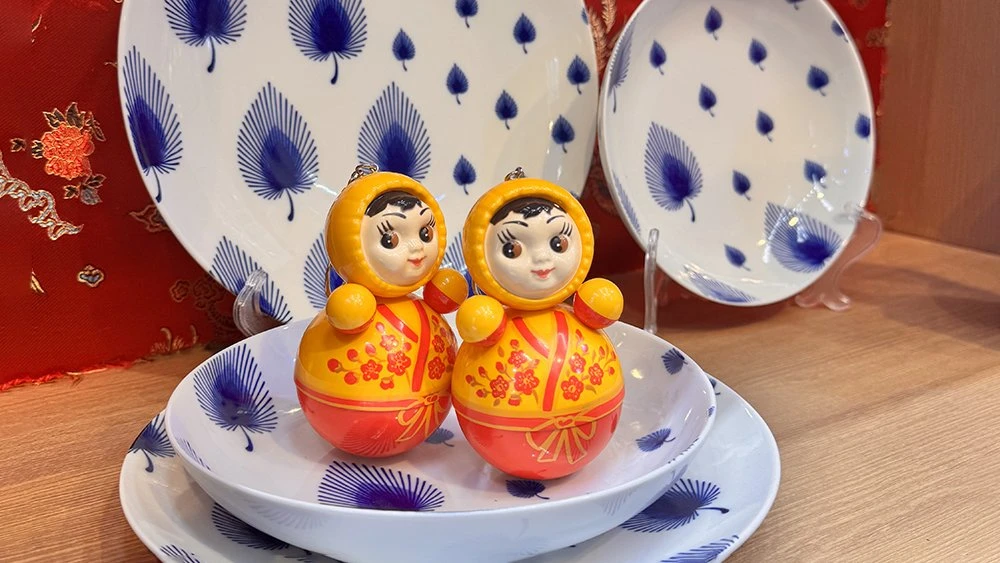
Gzhel porcelain painting appeals to visitors seeking not only functionality, but also a distinct aesthetic. This tableware embodies the beauty of traditional craftsmanship while also symbolising the cultural connection between Russia and China. The exclusive collection presented in Harbin by the Gzhel Porcelain Factory is painted in traditional blue tones and visually echoes the Chinese cobalt-blue qinghua style. This resemblance makes the tea sets and serving pieces especially appealing to Chinese audiences. Many visitors perceive them as "a dialogue between two tea-drinking traditions" and choose them as gifts highlighting the closeness between Russia and China.
Interest in these products is driven not only by their visual appeal. EXPO visitors choose items that carry ideas and stories: quotations reflecting values, designer scarves filled with the country's cultural code, amber as a "material of memory," roly-poly dolls as symbols of friendship, and porcelain uniting traditions from different cultures. Through these objects, many visitors discover a modern image of Russia — diverse, open to dialogue, and confidently looking toward the future.
The Russia–China EXPO is taking place in the city of Harbin from 17 to 21 May. For the first time, the National Centre RUSSIA is presenting its flagship Department Store project on a large scale in China. The stand's design symbolises the intertwining of Russian and Chinese cultures. Decorative elements — wooden shutters, tiled roofs, regional ornaments, natural materials, and beads — emphasise the richness of Russia's regional cultural heritage, while the patterns and compositions highlight the shared features of two great civilisations. The stand's décor, resembling a magical box, incorporates sketches inspired by The Little Humpbacked Horse by renowned Russian poet Pyotr Yershov, delicate handmade Kukar lace crafted by artisans from the Kirov Region, and green-glazed tiles inspired by the famous Yaroslavl majolica tradition.
A central feature of the stand is the model of the future National Centre RUSSIA building in Moscow on Krasnopresnenskaya Embankment, the construction of which was officially launched by President Vladimir Putin on 26 March 2026. At the trade fair in China, the architectural image of the protective covering is complemented by samples of tiles, mosaics, lace, and woodwork planned for use in the future interiors of the National Centre. Covering more than 200,000 square metres, the complex is set to become a world-class architectural landmark and a symbol of modern Russia.