


Geology and geography: meeting on developing educational programmes for young specialists held at the National Centre RUSSIA
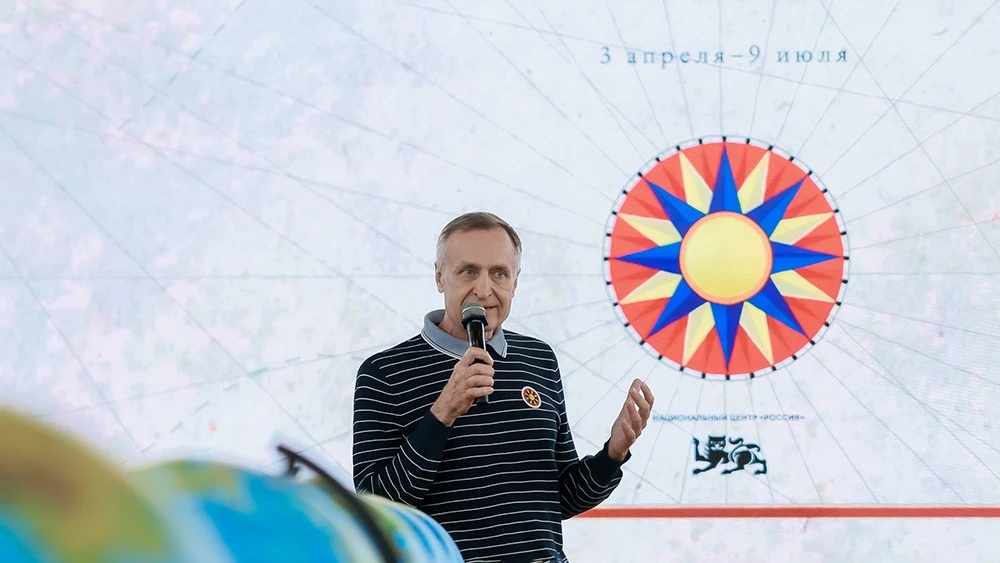
The meeting
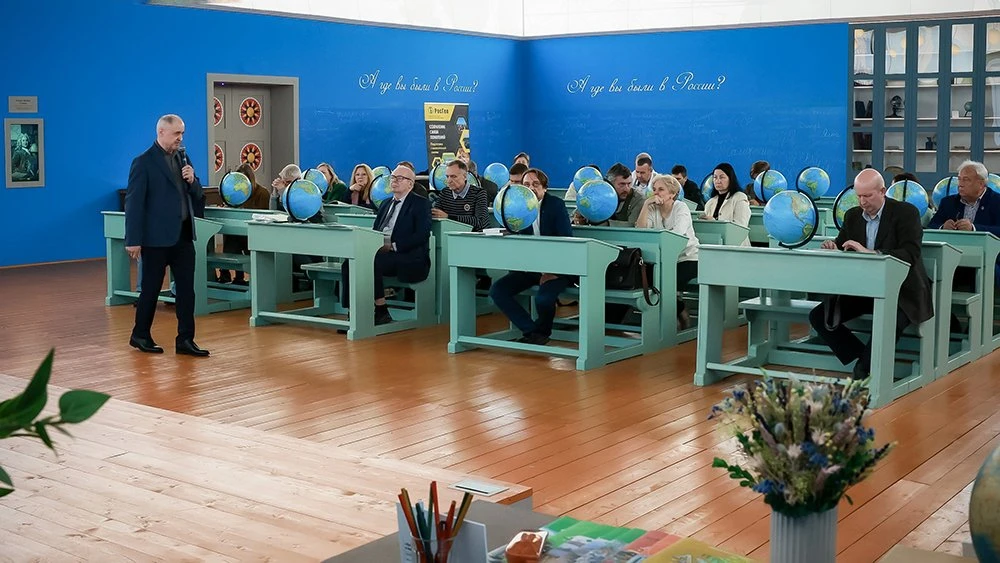
"The Role of Public, Scientific and Industrial Associations in Developing
Educational Programmes for Young People" was held at the National Centre
RUSSIA on 28 May. The event, dedicated to preserving the connection between
generations and training young geologists, became part of the business
programme of the "Geography Lessons" exposition. The meeting was organised
by the Russian Geological Society.
Participants
discussed how geological knowledge is taught today and how to help teenagers
learn more about the profession through educational projects, expeditions,
project work and other formats. President of the Russian Geological Society,
Scientific Director of FSBI VIMS and Professor Grigory Mashkovtsev noted that
the meeting was being held at the "Geography Lessons" exposition for
a reason: geography and geology are two sciences that go hand in hand.
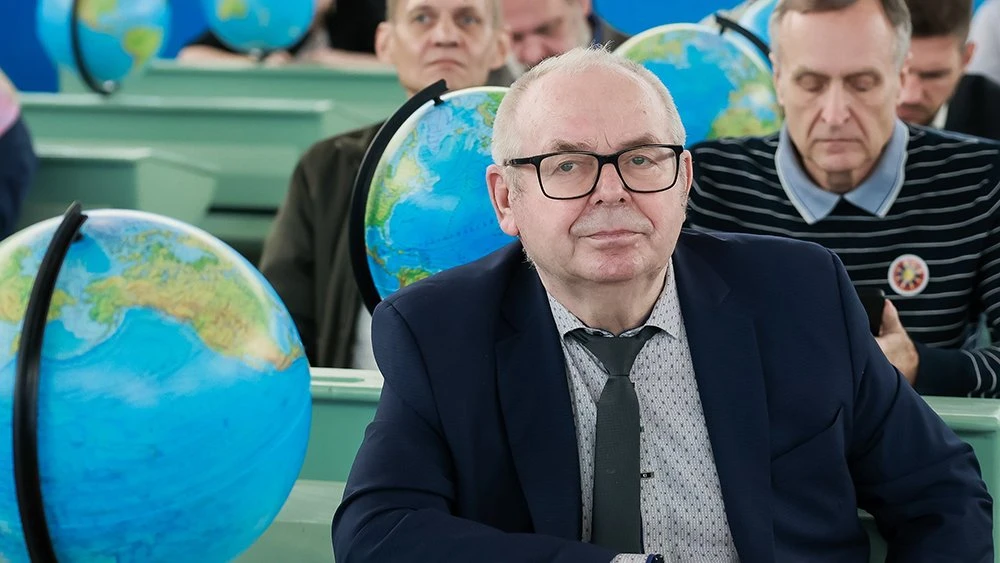
First Vice-President
of the Russian Geological Society Nikolai Serdyuk turned to the history and
development strategy of the organisation. He spoke about how geographical
discoveries gradually turned into geological achievements and noted the
importance of popularising geological knowledge not only among young people,
but also among all sections of the population.
"We
are trying to convey to the public that geology is not simply a mineral
resource base for the development of the national economy, but part of a single
process. For example, the creation of geoparks and geological trails helps
people learn more deeply about their regions," Nikolai Serdyuk said.
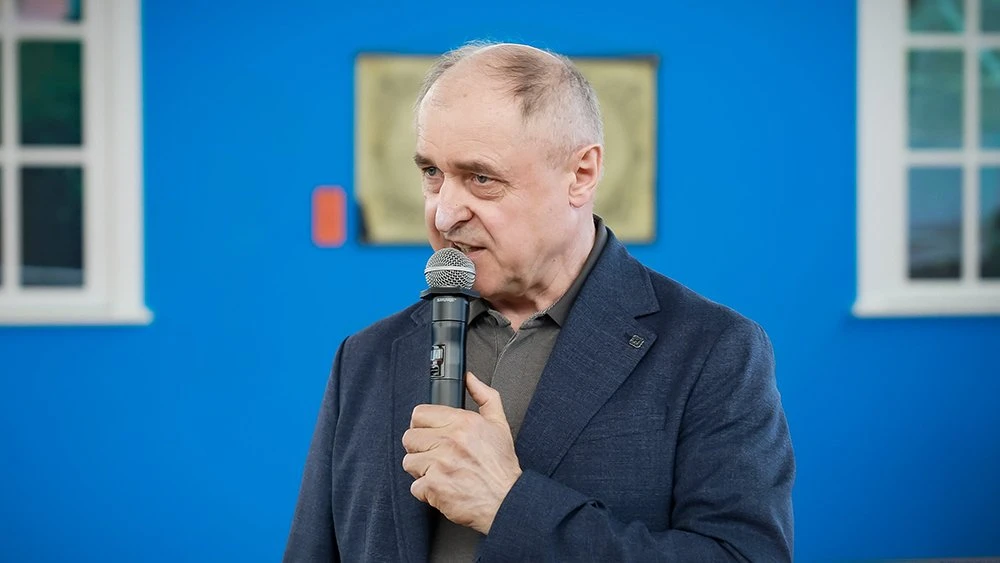
Head of the
History of Geology Group at the Geological Institute of the Russian Academy of
Sciences Ivan Vtorov gave a report on how geology was taught in secondary
school in different years. Drawing on historical experience, he suggested that
it would be reasonable to return this subject, as well as textbooks on it, to
the modern school curriculum. This proposal, he recalled, had already been
voiced at the IX All-Russian Congress of Geologists this year.
President
of the "Geological Guide" Foundation Vladimir Yeriklintsev presented
the public project "Planet Earth Through the Eyes of a Geologist: Deposits
— Routes — History". Its goal is to provide practical information about
the most interesting corners of Russia, including those that are extremely
difficult to reach. According to the expert, before the project appeared, no
one had linked geology with history so deeply, and all this is being done to
develop and support young people’s interest in science.
Honoured
Builder of the Russian Federation and Head of the Initiative Group for the
Creation of a Geopark in Zelenograd Alexander Raptovsky spoke about how he
collected stones across the Moscow Region and personally organised the
difficult transportation of multi-tonne boulders, including a 64-tonne granite
monolith. This is how the idea of the "Park of Amazing Stones" was
born — a beautiful and, at the same time, educational space from the point of
view of history and geology. The unique public area is planned to be created at
the junction of Moscow and the Moscow Region: it will include not only living
teaching aids, but also, for example, a museum with palaeontological exhibits.
The total volume of the collection is about 2,000 tonnes of stones from
different regions of the country. The author of the idea is especially proud
that guests from China, a country with millennia-old traditions of reverence
for stone, have shown interest in the project.
"The
reaction of the guests from China was overwhelming. According to them, this
collection of stones would be enough for three such parks. Later, I was asked
to give a personal tour to the Ambassador of the Republic, who had learned
about the collection and become very interested in it," Alexander
Raptovsky said.
Professor
at the Faculty of Geology of Moscow State University and Professor of the
Russian Academy of Sciences Pavel Plechov gave the audience a mini-lecture,
"Yellowstone: Three Levels of Truth", as an example of how lessons at
school can be structured. At the same time, he warned about the downside of
popularisation, noting that unprofessional simplification of information causes
harm.
"It is
harmful to tell schoolchildren incorrect things, because their eyes light up,
they remember it, and then come to university with a mess in their heads. That
is why popularisation should be carried out by people who understand what they
are talking about," Pavel Plechov emphasised.
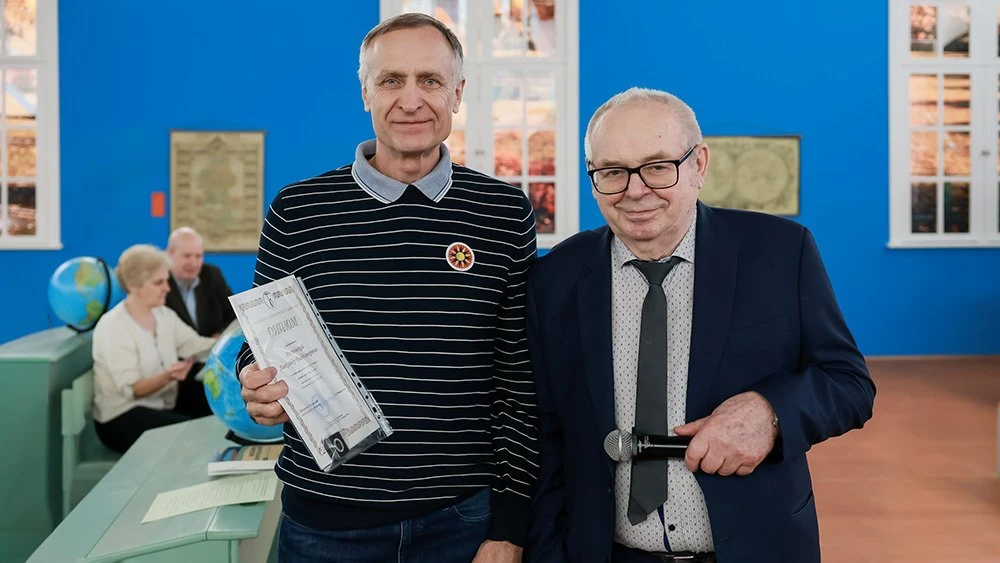
At the end
of the meeting, an awards ceremony was held. Among others, Head of the
Laboratory of Cultural and Educational Projects at the National Centre RUSSIA
Olesya Malevannaya received a letter of thanks from the Russian Geological
Society.
The future building of the National Centre RUSSIA will change perceptions of urban public spaces and become one of the main symbols of the capital.
As part of the Open Lecture Hall "Inventing the Future: Ecotourism", the geographical readings "Mosaic of the Peoples of the Far East" were also held.
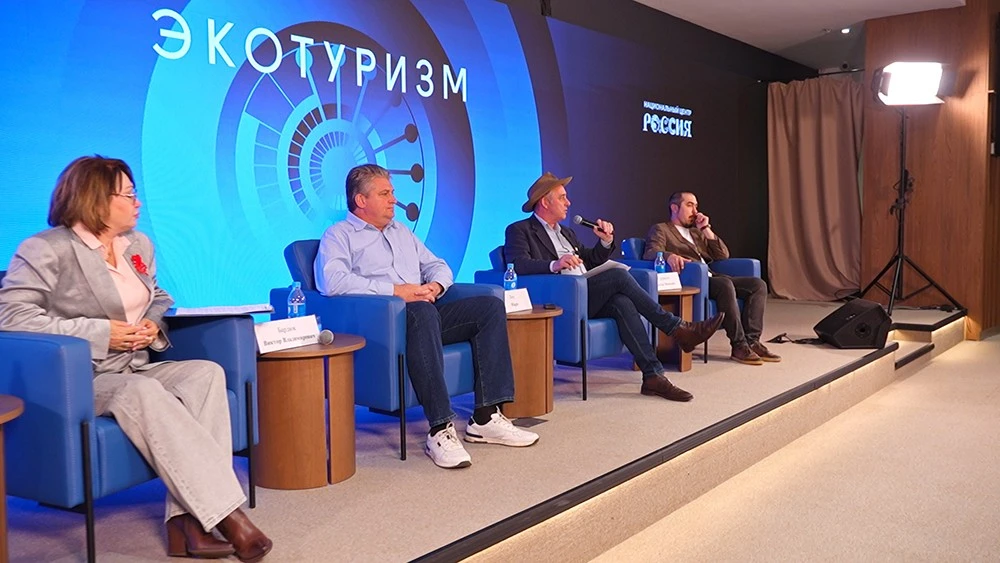
The Open Lecture Hall "Inventing the Future: Ecotourism", an original project by the National Centre RUSSIA, was held in Vladivostok for the first time.


