


Young journalists learn the secrets of war reporting from Alexander Sladkov
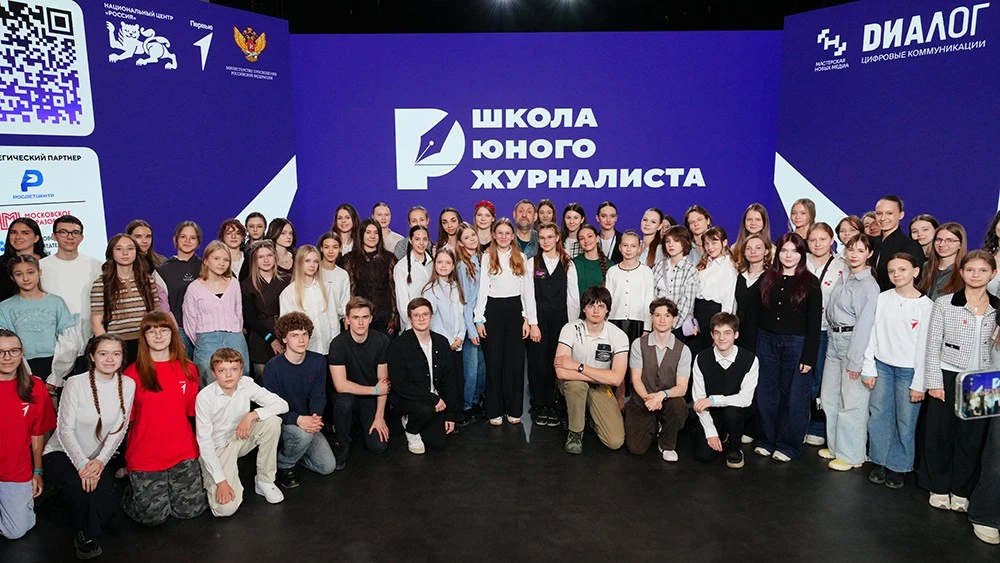
As part of the Young Journalists School, a workshop was held
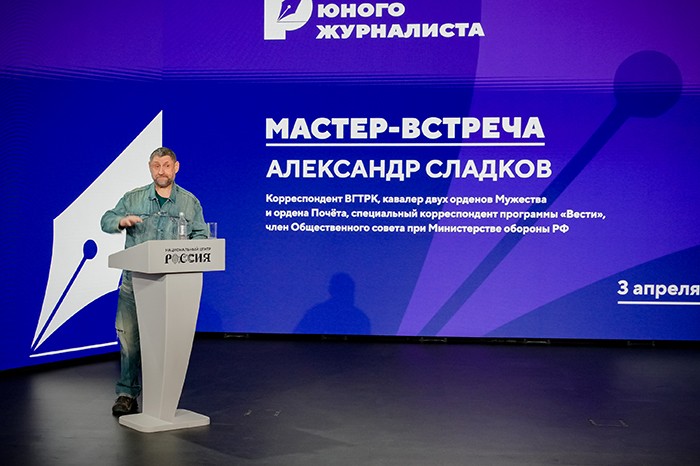
on 3 April at the National Centre RUSSIA with reporter, military correspondent
of VGTRK, recipient of two Orders of Courage and the Order of Honour, and
special correspondent of the programme "Vesti", Alexander Sladkov.
Participants had the opportunity to speak with a professional with 30 years of
experience working in conflict zones.
"Some people look for adventure and pay for it, but
journalism itself is an adventure. When it comes to working in war zones, it
can be easier for a woman. Most of those fighting are men, so they may find it
easier to trust a woman, to share something, to reveal details. And if she also
knows what she wants to say in her report, such people are always respected —
those who come prepared and know what they need to do," said Alexander
Sladkov.
The speaker explained how military journalism has changed
from the 1990s to the present day and outlined the key differences between a
war correspondent and a regular reporter. Participants learned first-hand what
it means to gather information and maintain objectivity in extreme conditions,
as well as how to build trust with soldiers and local residents.
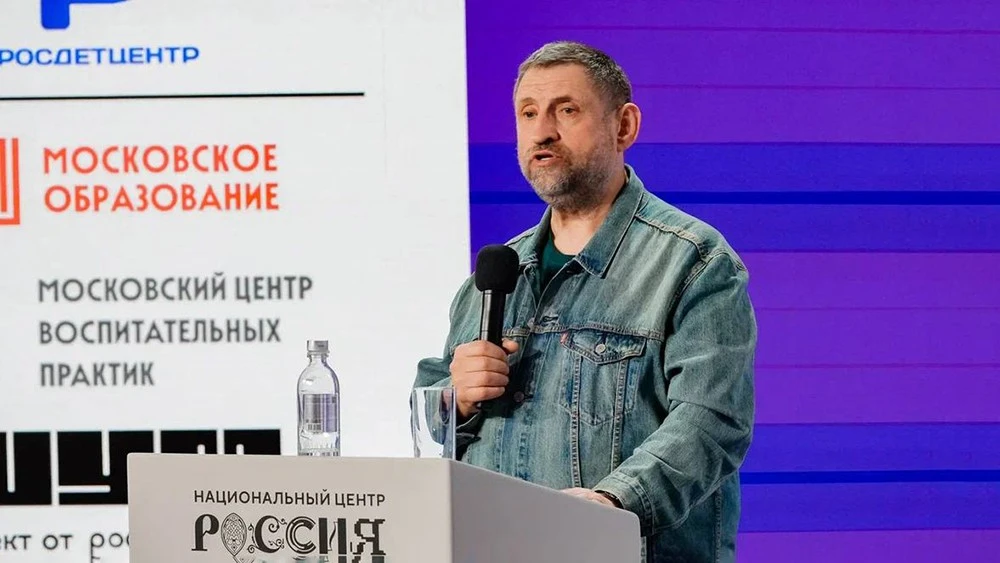
During the meeting, he spoke about his personal journey —
from military service and his first steps at the newspaper Vremya (Time) and
Radio Rossii (Radio Russia) to reporting from conflict zones and his transition
to the Rossiya TV channel. He also reflected on the importance of specialised
education for journalists and what can only be gained through experience.
Alexander Sladkov shared stories from his long career, including assignments in
Chechnya, Yugoslavia, Afghanistan and other regions.
The war correspondent also shared key principles of
professional discipline with the young journalists, particularly the importance
of organising a working archive: "Keep everything you record on your phone
— photos of friends, personal videos, important footage, even re-recorded
documents. Store materials on hard drives: this kind of discipline will be
useful in your work, even if you work in radio or television and photography is
not your main format. Many correspondents neglect this — I think almost all of
them do not keep their materials, and that is a mistake."
According to the expert, it is important to learn from an
early age to identify children’s aptitudes for particular professions and take
a more systematic approach to their development. He noted that the Young
Journalists School is one of the elements of such a system.
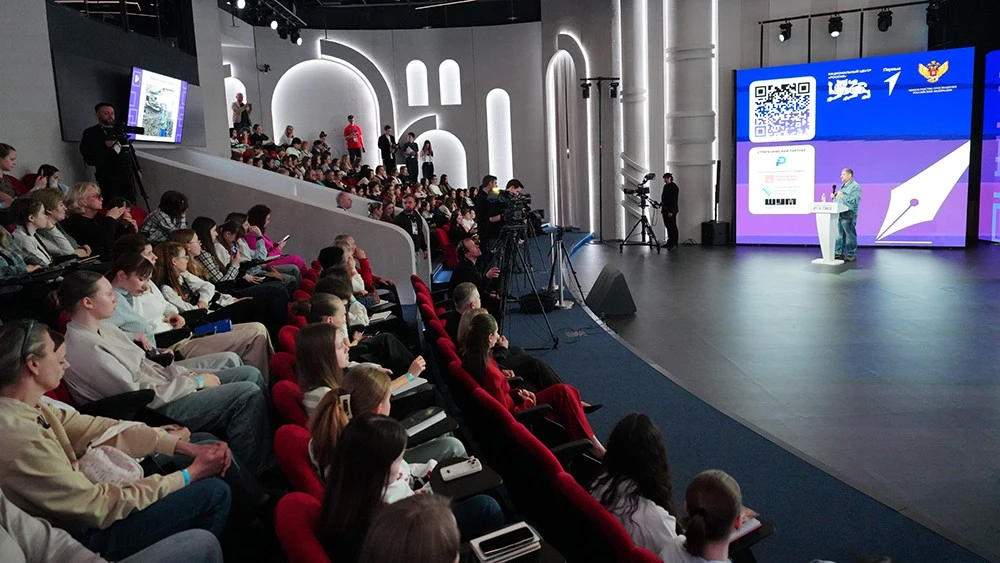
"Projects like the Young Journalists School are
especially important today. Young people need an entry point into the
profession. If today we can detect illnesses in a child even before birth, why
not also identify their aptitudes for a future profession? In sport, long
muscle fibres are linked to endurance, while short fibres are linked to
strength and explosive effort. A similar approach can be applied to other
fields: some people are predisposed to journalism, others to aviation or other
demanding professions. It is important to recognise this from childhood in
order to guide a child’s development in the right direction. And this work is
already underway. The Young Journalists School is one of the elements of this
selection system," said Alexander Sladkov.
Participants actively asked questions, including how to
maintain empathy in such a challenging profession, how to balance official
broadcasting with a personal blog, which military habits helped in editorial
work and which had to be abandoned. They were also interested in stories that
remain "behind the scenes", the role of the team during difficult
assignments, and the speaker’s dream of making a film in peacetime.
The multi-format project "Young Journalists
School" was created to help teenagers acquire relevant professional skills
and competencies, and to build a talent pool of future media professionals. It
is implemented by the National Centre RUSSIA in cooperation with the Movement
of the First, with the support of the Ministry of Education of the Russian
Federation.
Event photobank

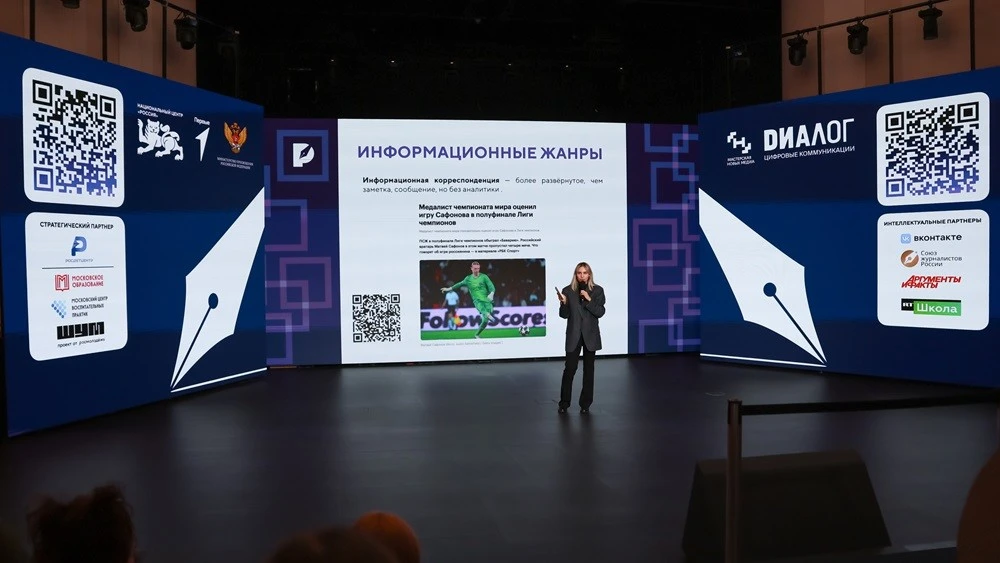
The session was conducted by Sofia Kovalevich, Programme Director and teacher at the Young Journalists School.
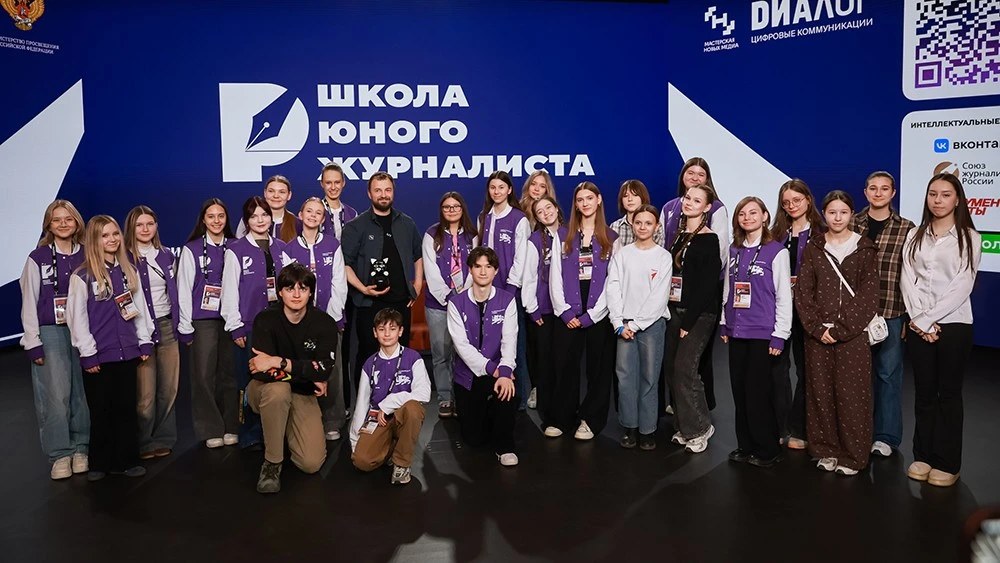
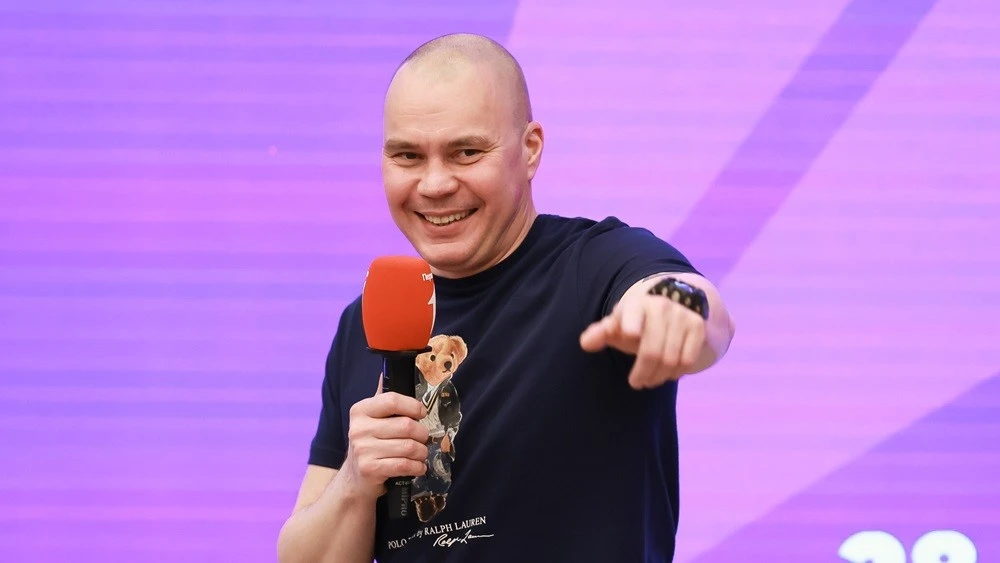
A master-meeting between participants of the Young Journalists School and Andrei Medvedev, Deputy Director General of VGTRK.


