


A frame as a story: young journalists learned to work with composition and light

A session of the Young Journalists School titled "Photojournalism: Composition, Light, Moment. How to Tell a Story in a Single Frame" was held at the National Centre RUSSIA. It was led by photographer and journalist Natalia Yemelyanova. The participants learned how reportage photography differs from staged photography, why a journalist needs to train their eye, and how a single frame can tell an entire story.
At the beginning of the session, the expert spoke about the first steps in photography. The young journalists learned about the photograph by Joseph Niepce, which was exposed for around eight hours, how the camera obscura worked, and how exposure time gradually shortened to several minutes. The conversation then turned to Russia and the emergence of photo reportage. The participants learned about Karl Bulla and his sons, who created a visual chronicle of city life, public events and everyday life at the turn of the 20th century.

"First and foremost, we see photography as a way to preserve memories of our lives. We capture moments we want to return to. But photography is not limited to that. It helps document reality and learn about events without words. At the same time, every viewer will still have their own perception. Two people may look at the same frame but notice different details. That is its beauty. Photography not only shows something, but also makes you think about what is depicted," said Natalia Yemelyanova.
The meeting also covered the concept of the language of the frame. Using works by classic photographers and archival photographs from TASS as examples, the participants analysed shot sizes, the rule of thirds, focal emphasis, angle, perspective, diagonals, rhythm and framing. Through examples of backlight and key light, the young journalists saw how lighting creates volume, separates the subject from the background and sets the mood of a scene. They then discussed the main techniques of composition and the concept of the "decisive moment" introduced by Henri Cartier-Bresson. Looking at classic photographs, the participants searched for the point where emotion, action, light and composition come together, and considered how a shot would differ if it had been taken a second earlier or later.
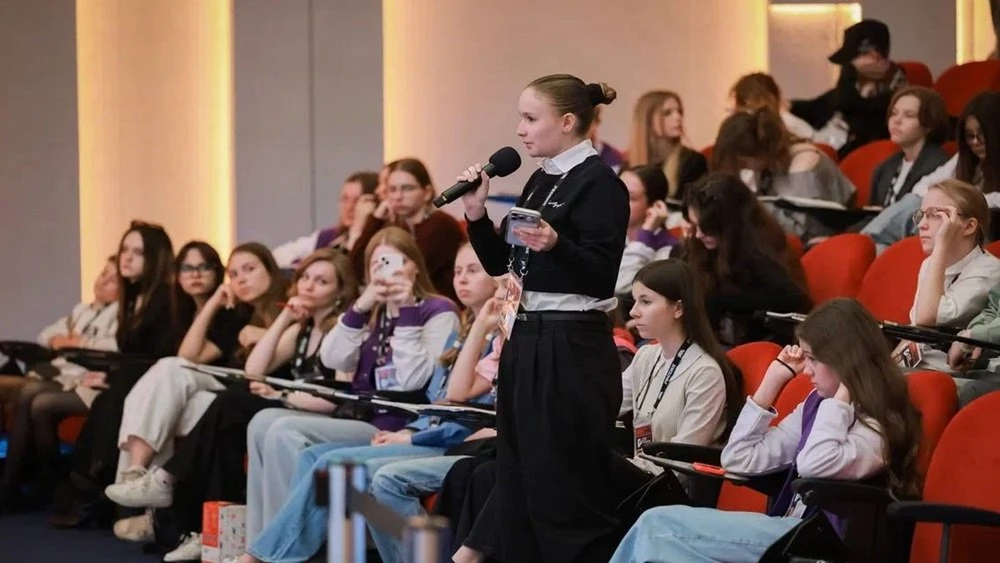
"In a good photographer’s frame, several techniques always come together. It is rarely just one. Framing, perspective, diagonals, rhythm and work with light can all be present in a single photograph. That is why it is so important to train your eye. The more you analyse other people’s photographs, the faster you begin to notice these techniques in real life and manage to capture the moment," Natalia Yemelyanova emphasised.
The expert also explained how shutter speed, aperture, ISO and white balance work. She showed which situations call for a fast shutter speed to "freeze" movement, and when a slower shutter speed helps convey dynamics. The participants received recommendations on mobile photography and editing apps, and discussed how to work carefully with colour without overloading the frame with effects.
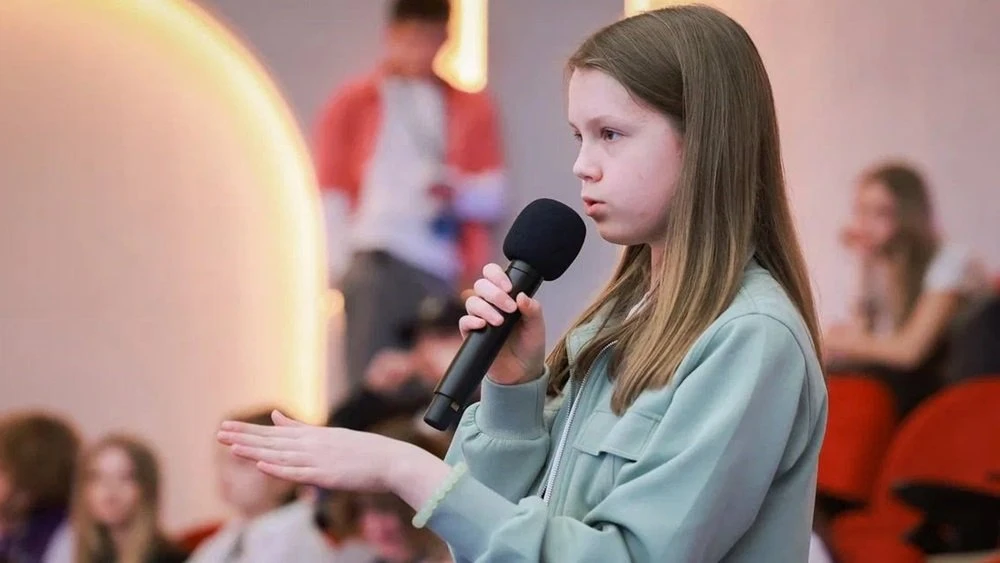
During the practical part of the session, the participants split into three groups. One group worked on shots conveying the scale of an event, the second focused on action and interaction between people, and the third looked for a vivid emotion in one subject against the background of others. Natalia Yemelyanova reviewed each frame, noting successful choices and strengths.
"In your photographs today, I can already see a sense of the moment, attention to detail and boldness in choosing a shooting point. Exercises like these help you understand which techniques feel closer to you and in which direction you want to develop your style. In photography, as in journalism, it is impossible to grow without practice," the speaker said at the end of the meeting.
The Young Journalists School is a multi-format project of the National Centre RUSSIA. It helps teenagers gain basic professional skills, better understand the modern media environment and take their first steps towards a future profession. The project is implemented by the National Centre RUSSIA together with the Movement of the First, with support from the Ministry of Education of the Russian Federation.

The participants discussed how content plans work in new media, which formats help retain an audience and how platform algorithms operate.
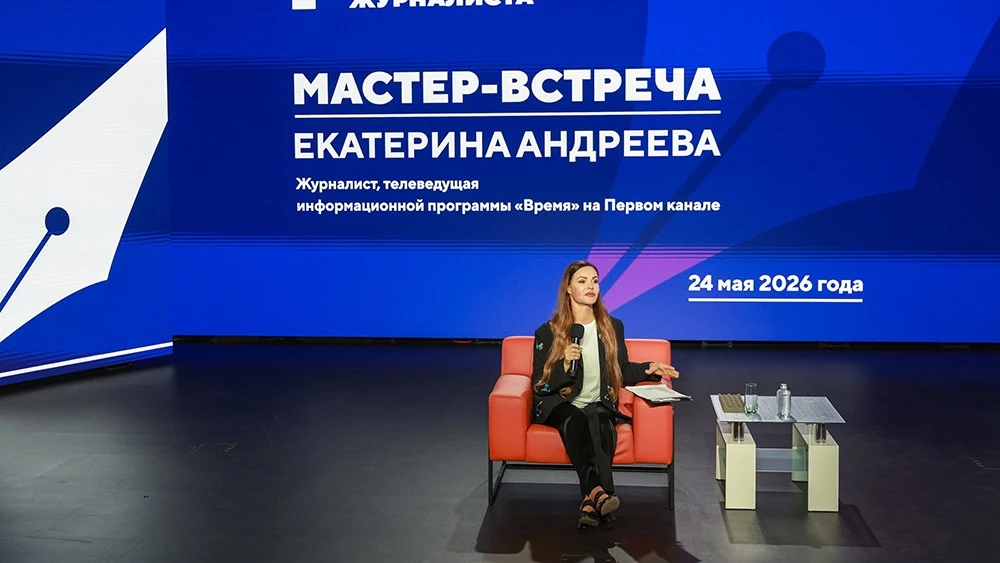
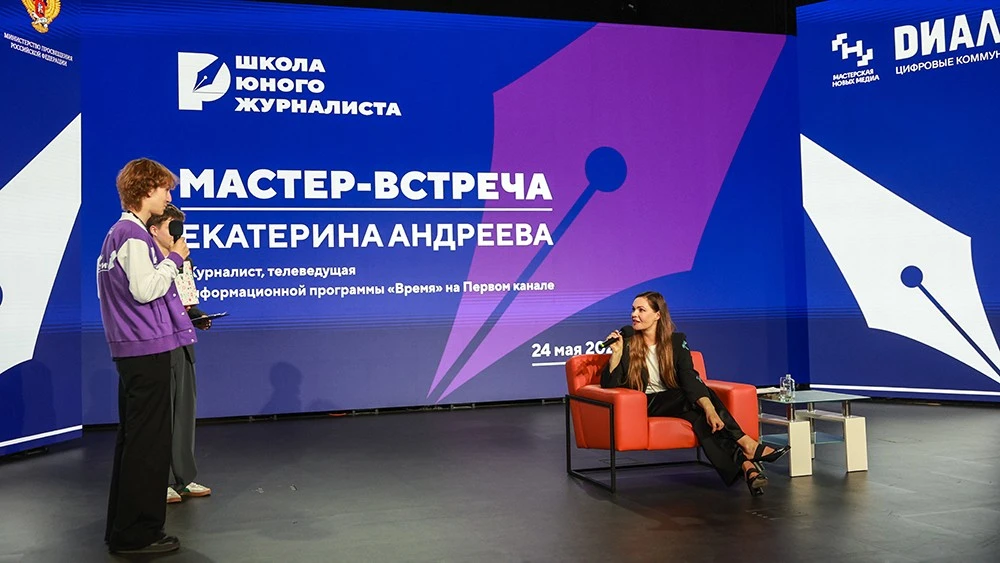
Participants in the “Young Journalists School” project know how to ask a question in a way that makes it interesting to answer.


