


How national brands are becoming popular discussed at panel discussion organised by the National Centre RUSSIA in Tashkent
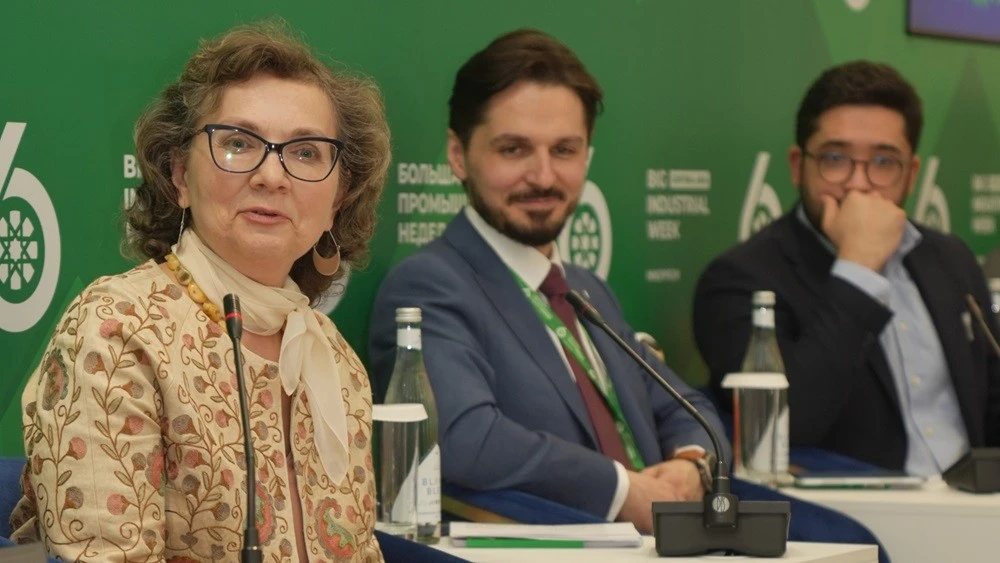
These days, local brands, traditional crafts, and cultural initiatives are becoming important tools for developing international cooperation, strengthening ties between countries, and promoting national identity in a modern format. Such a conclusion was made by participants of the panel session "Dialogue of Generations: A Fashionable Trend towards Tradition", which was organised by the National Centre RUSSIA. The discussion took place on 20 April as part of the International Industrial Trade Fair "INNOPROM. Central Asia".
"We strive to ensure that every guest who comes to us leaves with a sense of pride in their country, their homeland, and the people involved in these achievements. And our conversation will be dedicated to the future — as are the activities of the National Centre, which are largely forward-looking," said Natalia Virtuozova.
Tatyana Kotyukova, Candidate of Historical Sciences and Leading Research Scholar at the Institute of World History of the Russian Academy of Sciences, noted that the Russian lands and the territories of Central Asia have historically never been alien to each other, and the Great Silk Road had played a key role in this interaction. Through it, trade and cultural ties had developed for centuries, changing in different time periods — from embassies and caravan trade to industrial exchange in the 19th century, and systemic interaction during the Soviet period. She drew attention to the underestimated role of the merchant class as a flexible and mobile intermediary, which through practical trade, language skills, and entrepreneurial initiative effectively formed the basis of mutual understanding and economic ties. Tatyana Kotyukova also noted that it is in such "practical" formats — from fairs to crafts — that the potential for developing cooperation lies up to day.
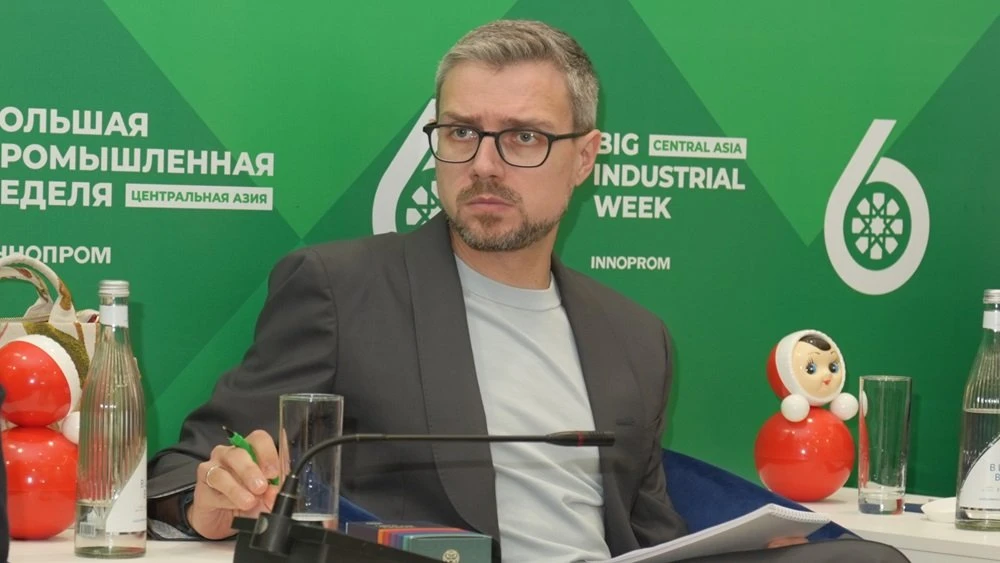
Mikhail Khomich, Director at the Agency for Strategic Initiatives to Promote New Projects, shared that attitudes towards local brands are changing today not only in Russia but also in other countries: the trend towards authenticity and cultural code is strengthening, and regions are increasingly learning to promote their products without being embarrassed by their origins. He pointed out the fact that Russian and Uzbek brands demonstrate similar growth dynamics and successful market entry with proper packaging and promotion, including through marketplaces, with various initiatives helping to identify and scale strong local brands.
Azizbek Mannopov, First Deputy Chairman of the Art and Culture Development Foundation under the Administration of the President of the Republic of Uzbekistan, shared his experience of implementing large-scale cultural projects and their impact on the development of the urban environment, tourism, and the creative economy. He spoke about the international biennale held in the city of Bukhara, which became not only a significant cultural event but also gave a tangible impetus to the city's development, and opened up new opportunities for international cooperation.
"The first international biennale of contemporary art took place last autumn in Bukhara and became one of the largest events in the Central Asian region: more than 70 artists and performers took part in it, and the exposition covered most of the historic part of the city — from the Magoki-Attari Mosque to the Po-i-Kalyan complex. The event gave a serious boost to tourism development — the number of guests almost doubled, and many began to linger in the city longer than planned. During the event, about three thousand specialists from various creative fields were involved, while all facilities were created on the territory of Uzbekistan with the participation of local artisans. Simultaneously, cultural cooperation with Russia is also developing: joint expositions are being realised, including at the Tretyakov Gallery, the Kazan Kremlin, and the New Jerusalem Museum, and a project with the Hermitage is also being prepared," noted Azizbek Mannopov.
An events programme is also taking place at the stand of the National Centre RUSSIA, within which the Kirov Region is demonstrating the unique painting technique applied to the Dymkovo toy. Denis Pestrikov, Deputy Chairman of the Government of the Kirov Region, spoke in detail about the region's experience in promoting this key cultural symbol. According to him, systematic work is underway in the region to integrate the imagery of the craft into the urban environment and modern projects — from the design of public spaces and architectural solutions to playgrounds and designer objects. He noted that this experience is being implemented in partnership with the National Centre RUSSIA, and is already developing within the framework of interregional and international cooperation, including with Uzbekistan. The Dymkovo toy is thus seen not only as a traditional craft but also as a topical element of the cultural code used in creative industries, industrial design, and regional promotion projects.
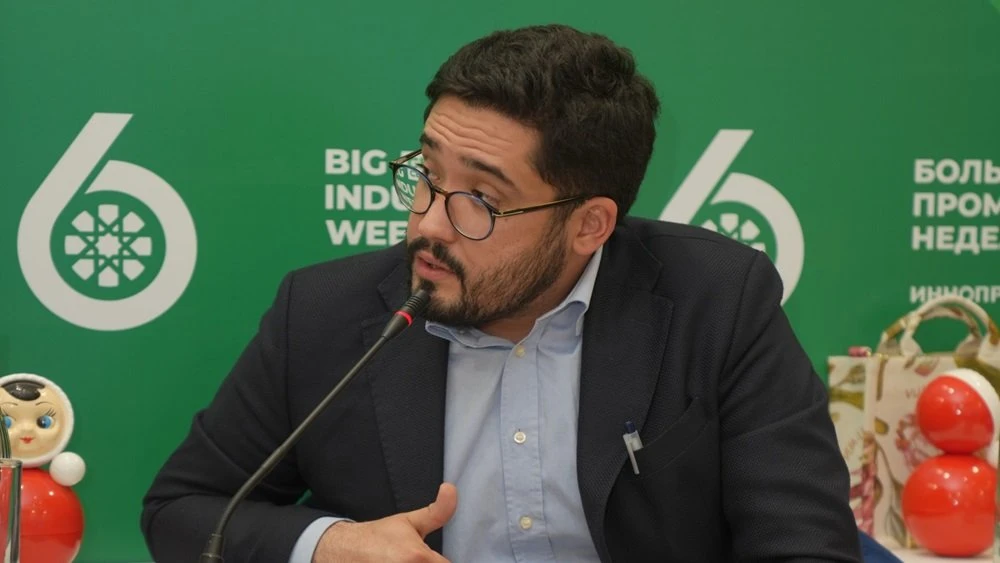
Anton Yefimov, Vice-Governor of the Orenburg Region, noted that the region's participation in the trade fair is not only promotional but also strategic, combining the promotion of traditional crafts with the development of trade and economic ties. According to him, special attention is being paid to expanding the presence of Orenburg products abroad and strengthening cooperation with key partners.
"We came to Uzbekistan to present the calling card of the Orenburg Region — the down shawl. Despite the industrial format of the trade fair, it invariably attracts particular attention. This is especially important for us: not everyone has the opportunity to come to Orenburg and purchase the product on site, so we strive to expand the geography of its presentation. Trade and economic cooperation is also developing. Uzbekistan is our second foreign trade partner, and there is still growth potential in the import sector. That is why we are here — to strengthen interaction and open up new areas of joint work," said Anton Yefimov.
Rustam Dzhabbarov, Scientific Secretary of the Centre for Islamic Civilisation in Uzbekistan, noted that Russia and Uzbekistan are linked by a shared history, culture, literature, and much more, as well as many years of mutual cooperation and support. According to him, our countries have helped each other in different periods. In particular, Russian scientists participated in the opening of the Ulugbek Observatory, in the study of the country's history, and made a significant contribution to the study of the region and its historical heritage. He expressed hope that in the future, cooperation and friendship between the countries will continue in the same way.
The National Centre RUSSIA presented its flagship project — the National Centre RUSSIA Department Store — abroad for the first time. Anyone interested can explore Russian-made products, as well as visit the business and events programme as part of the "INNOPROM. Central Asia" trade fair in Uzbekistan. The event will run until 22 April.
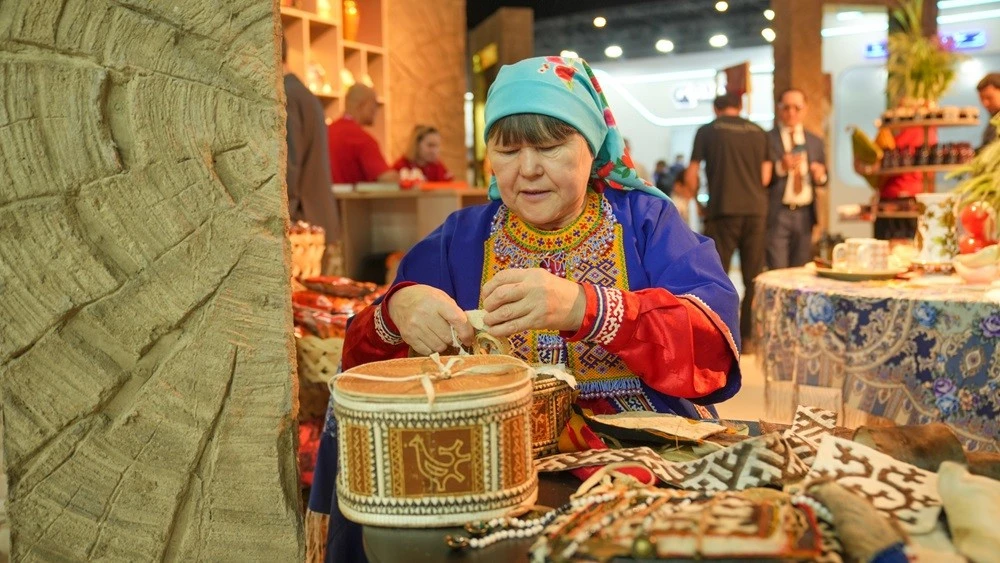
Guests not only observed the process but also asked the craftswomen about the meanings and the everyday life of the Khanty and Mansi peoples.
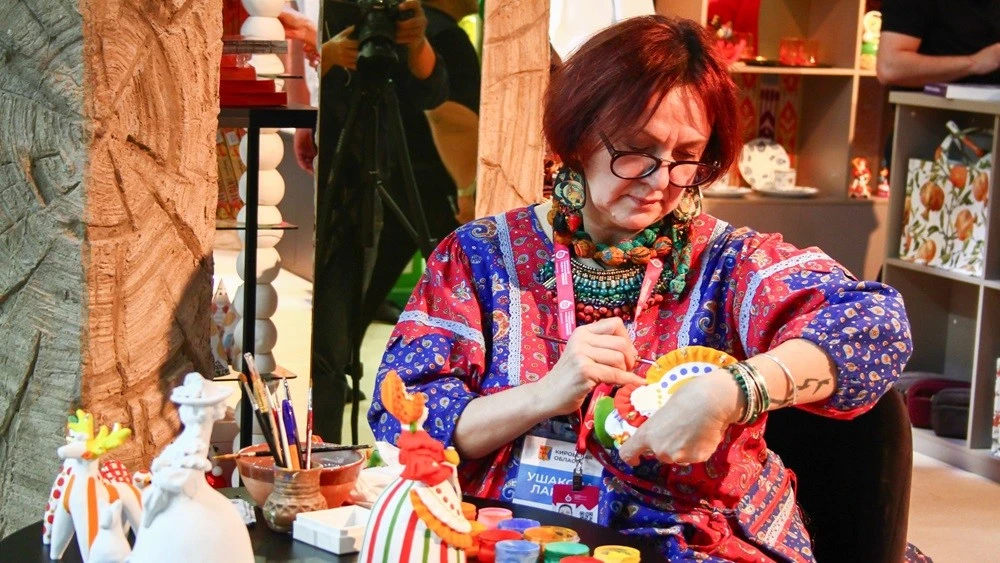
At the stand of the National Centre RUSSIA Department Store, a demonstration of Dymkovo toy painting took place.
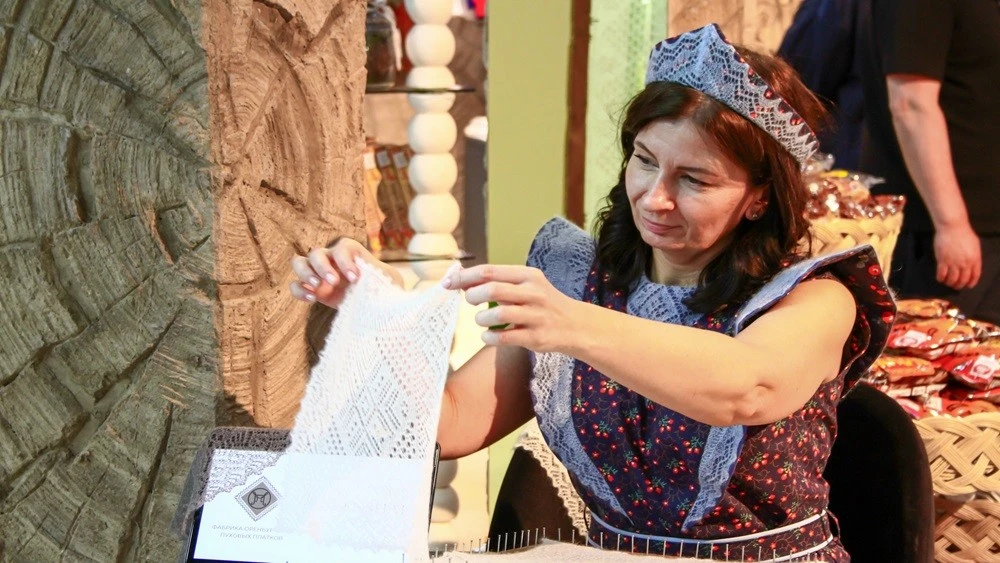
Orenburg craftswomen have made their art famous worldwide, and the down shawl has become part of Russia's cultural code.


