


Competitor, assistant or enemy: young journalists learn how neural networks influence modern media
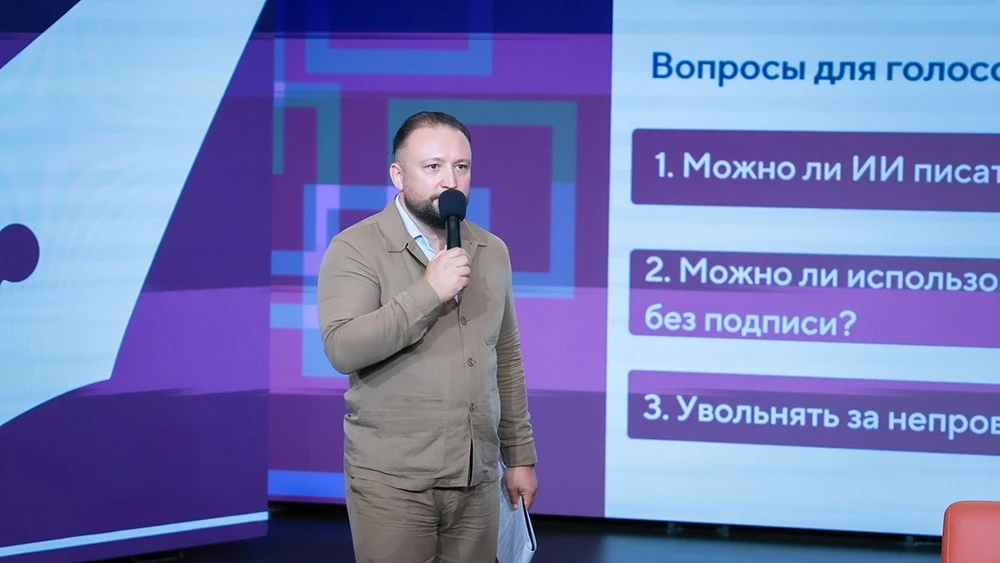
News lives for five minutes, while headlines change faster than you can finish reading a text. In this reality, artificial intelligence technologies are no longer just a fashionable tool, but part of a journalist’s everyday work. Participants in the Young Journalists School of the National Centre RUSSIA explored exactly how neural networks are changing the media industry and what this means for their future profession during the lesson "How Neural Networks Are Changing Media: Competitor, Assistant or Enemy?". The expert was Vadim Ampelonsky, Development Director at Synergy Corporation, a journalist and specialist in strategic communications.
From the very beginning, the speaker suggested looking at the topic philosophically: not only to examine "how a neural network works", but also to talk about the future of the profession. He said that he had started his career at a print newspaper and had seen the media change completely over two decades.
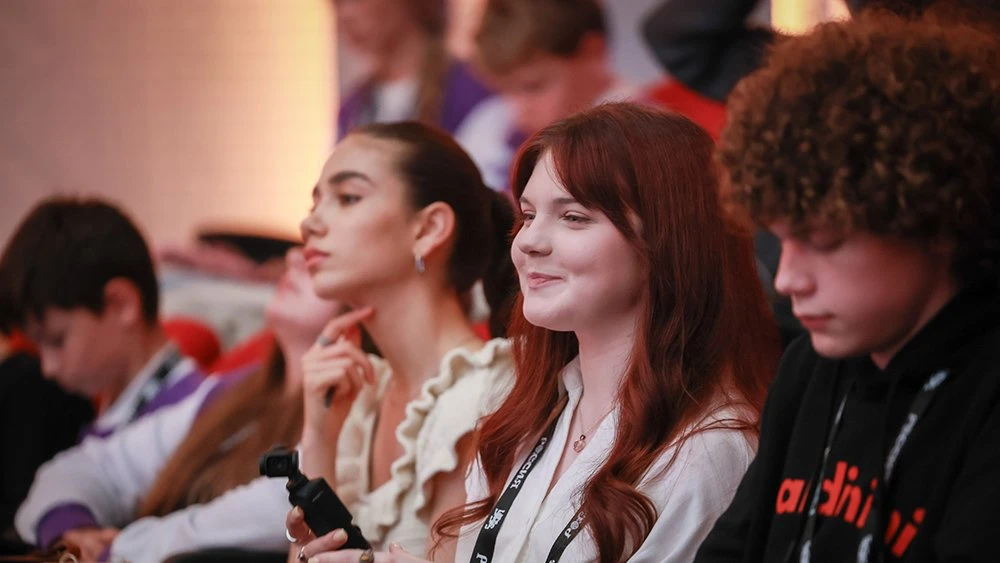
"When I came into journalism, my first newspaper was printed on paper and sold in the metro in the evening. Back then, we used to say that a newspaper lived for one day. Today, news lives for five minutes: news feed algorithms completely update the agenda in a matter of minutes. This speed is already forcing us to master neural networks, because without them it is becoming increasingly difficult for a journalist to keep up with events," Vadim Ampelonsky shared.
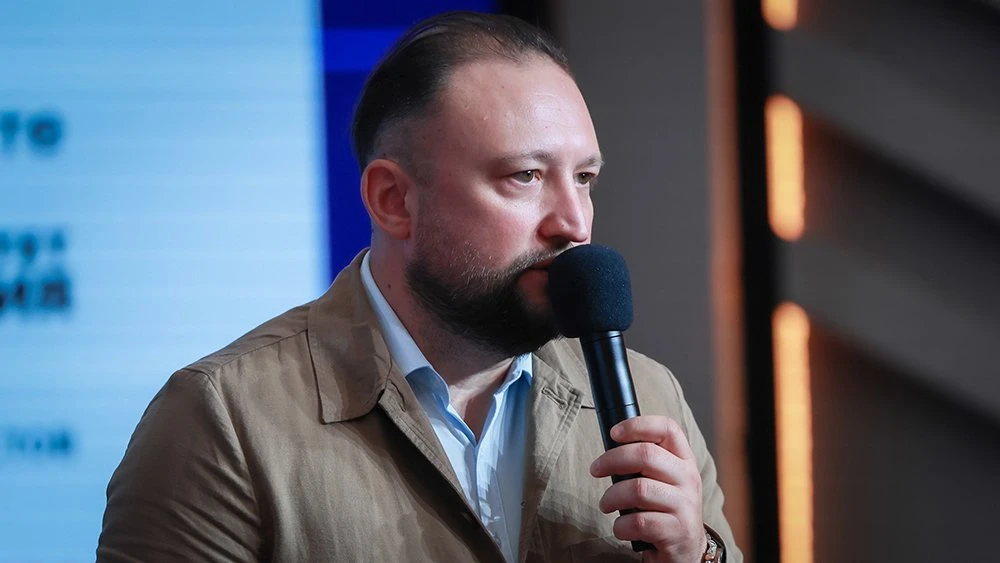
The main question of the lesson was direct: what are neural networks becoming for journalists — competitors, assistants or enemies? Together with the speaker, the children explored what artificial intelligence can already do: from generating news stories and live sports updates to creating illustrations and videos. They also discussed the new skills emerging among journalists, first of all the ability to formulate a precise request to a neural network. According to the expert, competent prompt engineering is becoming a mandatory part of the professional toolkit. Together with Vadim Ampelonsky, the participants drew up a list of what AI cannot do.
"A neural network will never replace a person in communication with other people. A journalist constantly talks to protagonists, eyewitnesses, experts and their audience. Any automated comment or template response is always felt as something artificial. True trust emerges only in human-to-human communication," Vadim Ampelonsky said.
The expert also recalled other limits of AI: neural networks do not create genuine exclusive content and work only with what is already available in open sources, while investigations and the search for hidden information remain the journalist’s task. Another problem is the "hallucinations" of neural networks. Vadim Ampelonsky gave an example from his own practice, when AI helped prepare a draft comment but also "invented" non-existent surveys. The story became another reminder that without critical thinking, scepticism and fact-checking, even the most advanced neural network can let a professional down.
During the practical part, the children compared a "dry" news story and an emotional report about flooding in a small town, discussed which text they would want to forward to friends and where the hand of a living author was especially noticeable. The participants then tried acting as reporters: using the news hook that the word "preddveriye" had become one of the most difficult words in the Unified State Exam in Russian, they wrote their own stories and compared them with a text generated by the Alisa neural network.
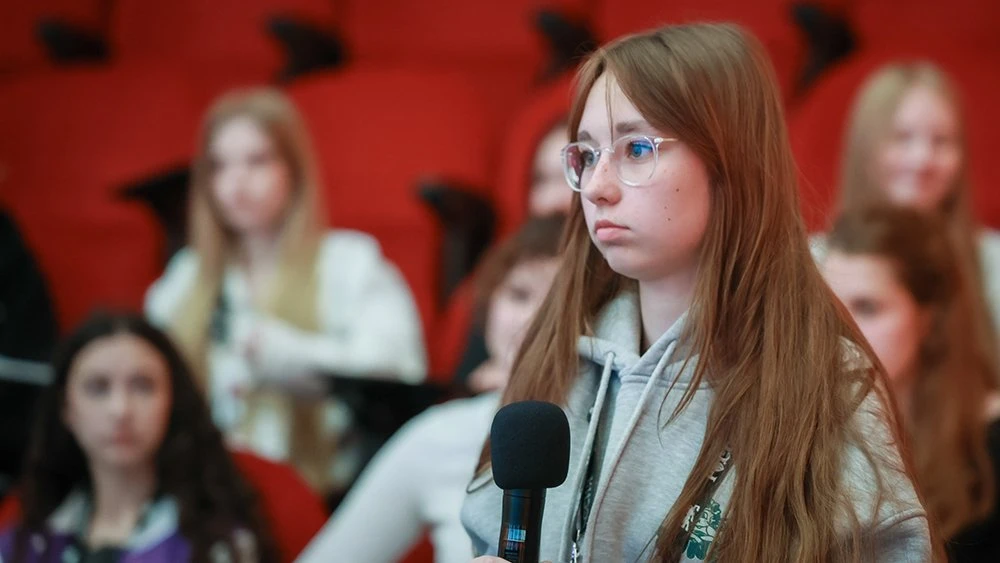
Another block of the discussion was devoted to deepfakes. Using examples and a story about a political crisis in Gabon, the participants discussed how fake or questionable videos can influence the situation in an entire country, and examined the basic signs of deepfakes and ways to verify them.
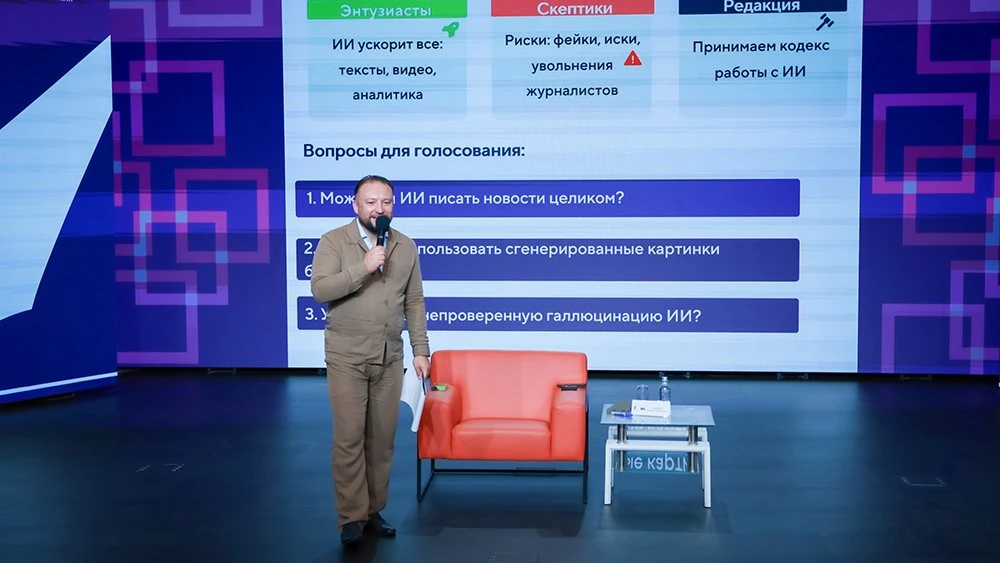
At the end of the lesson, the children split into three teams. The "enthusiasts" defended the position that AI will save journalism and remove routine work; the "sceptics" gathered arguments about risks, from fake news to the loss of trust; and the "editorial team" came up with its own rules for using neural networks, so that technologies help journalists work faster and better, remain safe for the audience and do not replace a journalist’s professional responsibility.
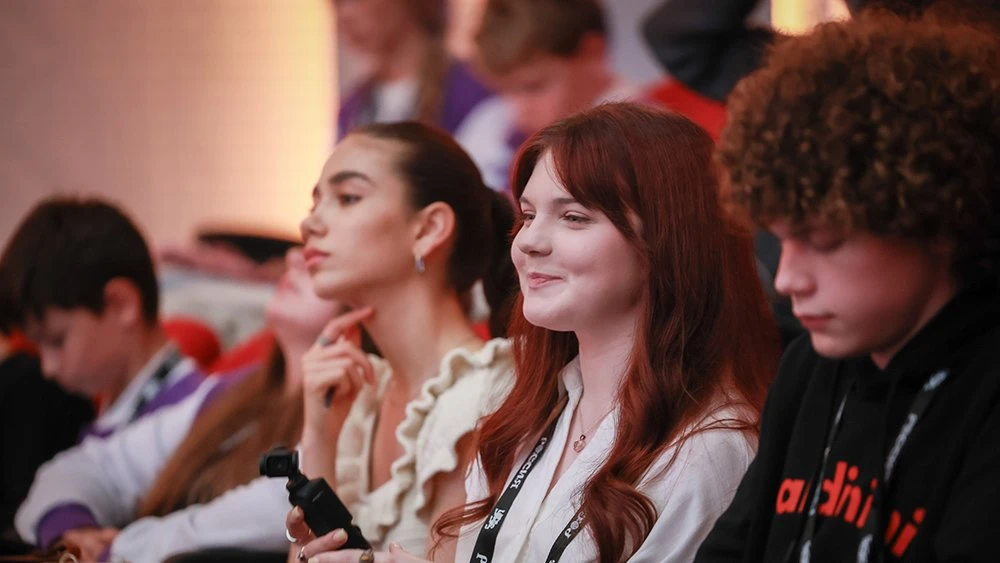
The Young Journalists School is a multi-format project of the National Centre RUSSIA. It helps teenagers gain basic professional skills, become familiar with leading Russian media and practising journalists, learn to work with information and take their first steps in their future profession. The project is implemented by the National Centre RUSSIA jointly with the Movement of the First, with the support of the Ministry of Education of Russia. The intellectual partner of the Young Journalists School is Synergy University.
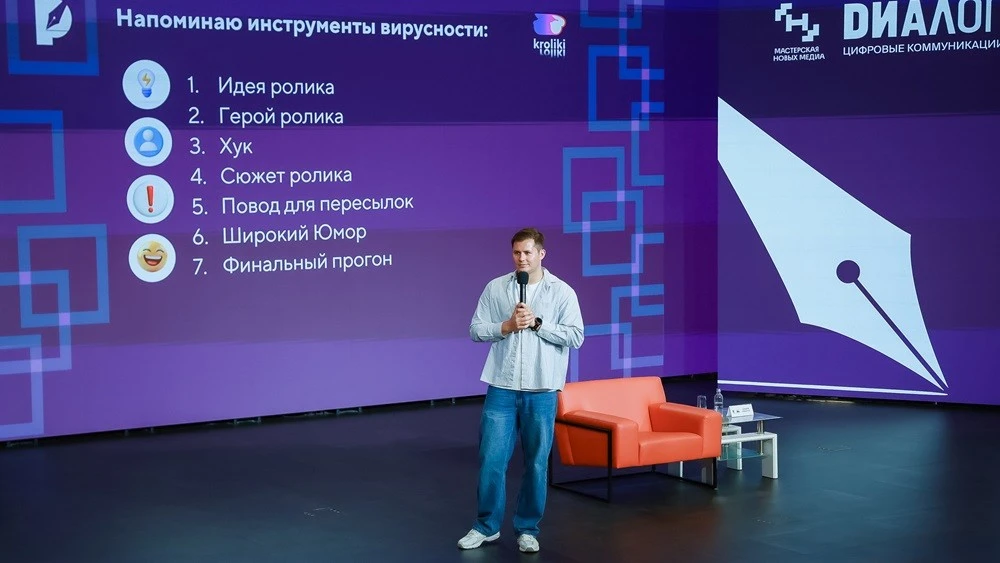
Nikita Kushchenko, Founder and Head of the Kroliki Content Centre, spoke about journalism of the future.

A meeting with popular foreign bloggers was held at the National Centre RUSSIA on International Blogger Day.
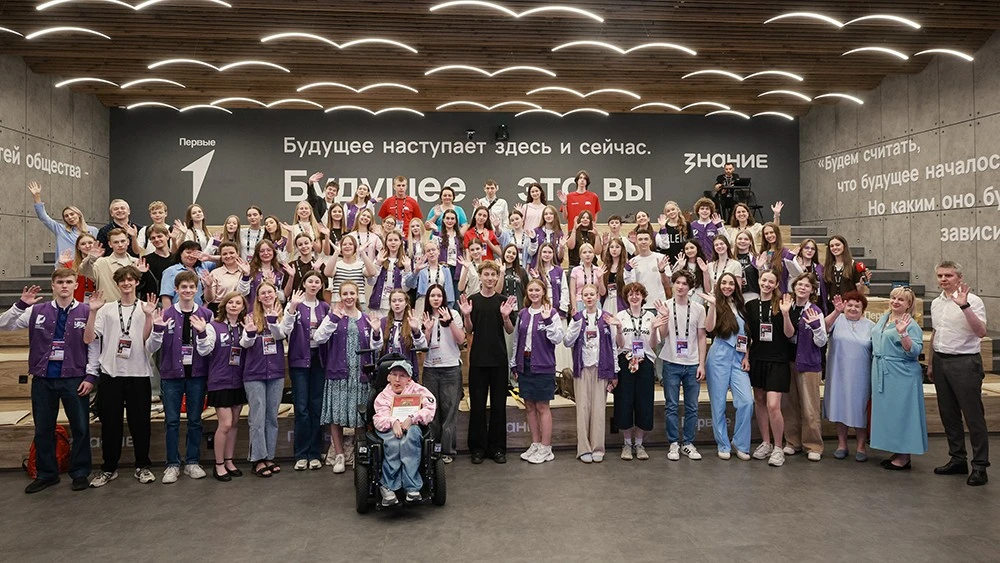
One of the most motivating meetings as part of the Young Journalists School project was held on 13 June at the National Centre RUSSIA.


