


Konstantin Kosachev: Russia always starts with diplomacy — and will bring the world back to the need for dialogue

At the Znanie.State forum held at the National Centre RUSSIA, the Deputy Chairman of the Federation Council of the Federal Assembly of the Russian Federation, Konstantin Kosachev, addressed state and municipal officials. He discussed how diplomacy is changing under conditions of global pressure, why international law is increasingly applied through "double standards", and which principles ensure national sovereignty and the security of citizens.
The senator noted that diplomacy as a genre is aimed at achieving sustainable agreements in which each side considers the outcome of negotiations beneficial. However, in his words, in recent years classical diplomacy has largely ceased to be in demand — and not due to Russia’s actions.
"Diplomacy is defined by the fact that, as a result of the negotiation process, the parties reach an agreement that becomes advantageous for each of them. Each side believes it has achieved its goals. But today diplomacy has almost lost its effectiveness — and there is not the slightest share of responsibility for this on the part of our country," Konstantin Kosachev emphasised.
He recalled that Russia had consistently proposed diplomatic solutions regarding the security architecture in Europe, but these initiatives were rejected.

"In June 2008, we put on paper a concept of European security — indivisible and collective. It was rejected. In December 2021, we again proposed to the United States, NATO, and OSCE countries an adapted concept of a single and indivisible security architecture in Europe — and once again received a refusal. After the possibilities of diplomacy were exhausted, we chose the path we are now following," he said.
Speaking about foreign policy challenges, Konstantin Kosachev drew attention to the role of interstate associations and stressed that the development of BRICS, the SCO, and other formats should not turn into the creation of alternative ‘hard blocs’ based on the logic of the Cold War.
"In response to the question of whether BRICS, the SCO, or other associations should be developed as military blocs or rigid economic counterweights, my answer is no. This would be a repetition of the unsuccessful experience of inter-bloc confrontation of the Cold War era — lost decades," he stated.
The senator noted that the real intellectual challenge lies in creating a model of international relations that would be convenient and effective for all, and that multipolarity must be supported by practical instruments — alternative mechanisms to those of a unipolar world.

During the discussion, he also addressed the link between sovereignty and a state’s internal stability. According to him, citizens expect three basic things from the state: ensuring sovereignty, security, and conditions for development. The senator recalled the importance of the 2020 constitutional amendments and emphasised that Russia has strengthened the legal foundations that make it possible to protect national interests and the interests of its citizens.
Answering a question about the future of the UN, Konstantin Kosachev noted that the organisation is indeed perceived as ineffective, but that its liquidation would be a mistake: "There is no person on the planet who would call the UN effective. But if we imagine that we dissolve it — will humanity become better off? It will not. There will simply be no second chance to create anything like it again."
Znanie.State is a large-scale educational project of the Russian society Znanie for state and municipal officials, enabling them to gain a deeper understanding of the history, culture, economy, and geopolitics of Russia. The project has been implemented since 2022 and includes lectures and federal broadcasts from the multimedia studios of the Russian society Znanie. Over more than two years, more than 30,000 lectures have been delivered across all regions of Russia as part of the Znanie.State project, reaching an audience of over four million people.
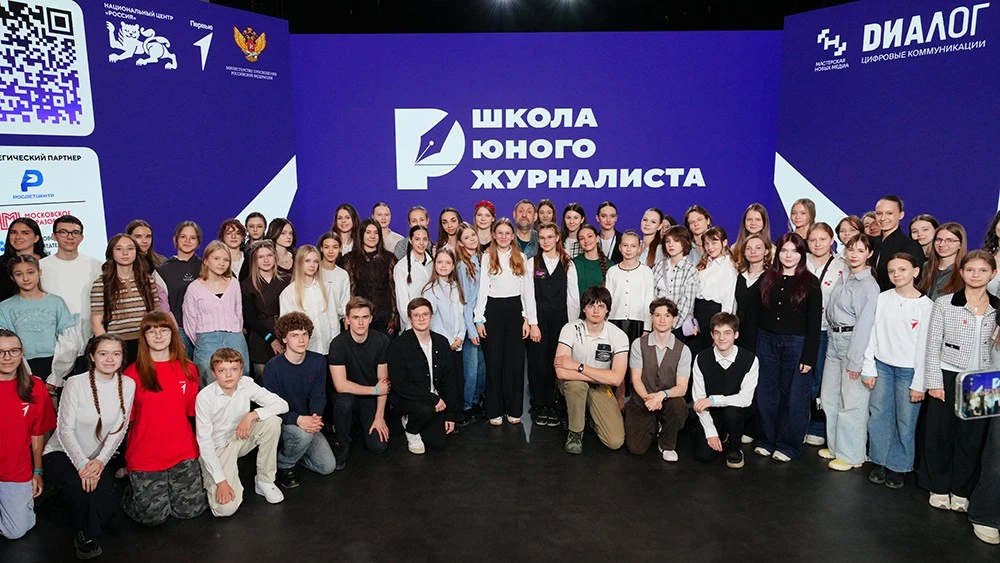
The war correspondent also shared key principles of professional discipline with the young journalists.
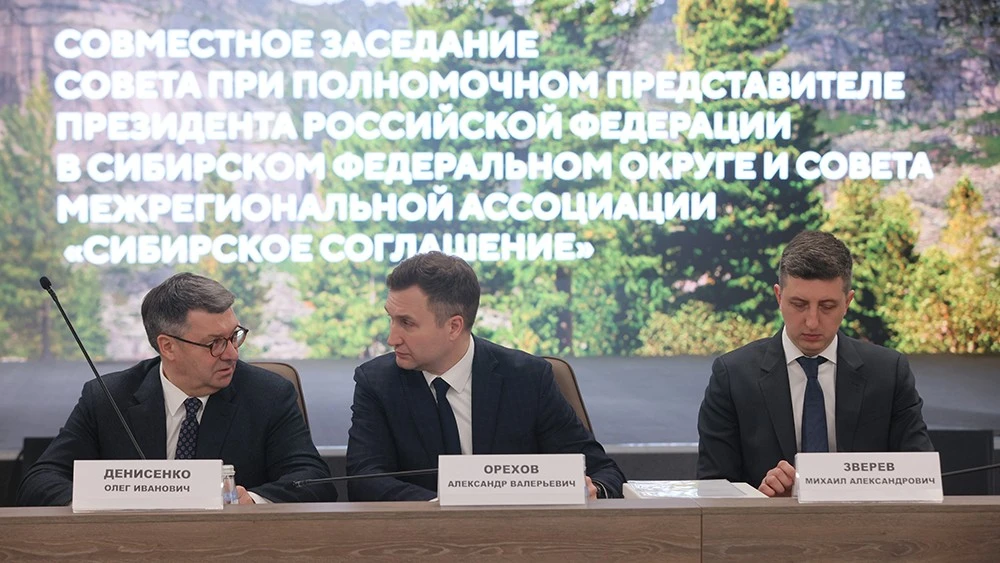
A meeting of the Tourism Council under the Plenipotentiary Representative of the President of the Russian Federation in the Siberian Federal District was held at the National Centre RUSSIA in Krasnoyarsk.
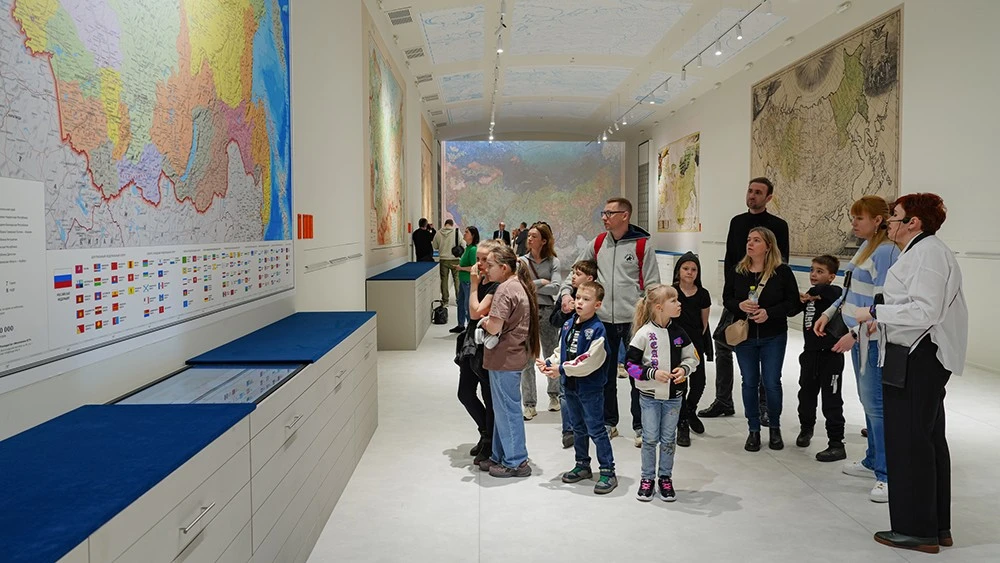
Authentic treasures from leading museums and archives across the country can be seen at the exposition "Geography Lessons".


