


Space becomes closer: a space-themed exposition at the "Geography Lessons" exposition
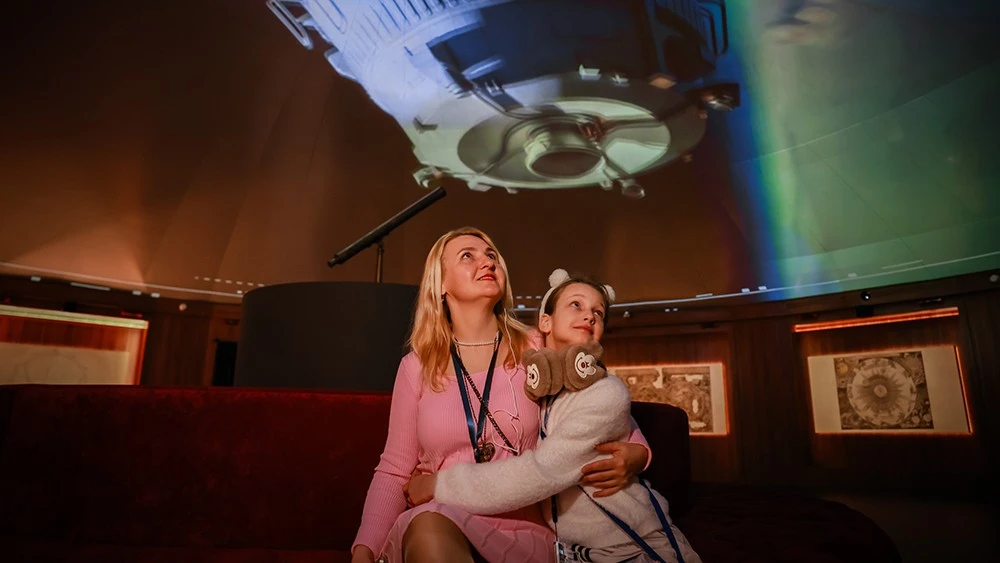
Watching the night sky, recognising familiar constellations, and discovering what the first human spaceflight looked like — all of this is part of the exposition "Aspiration. Guiding Star" at the "Geography Lessons" exposition. In this hall, visitors are immersed in outer space and explore the mysteries of the universe.
Soft lighting and a large dome-shaped screen create a special atmosphere, turning the space into an immersive planetarium. Visitors can sit comfortably on a circular sofa and observe the starry sky and satellite trajectories.
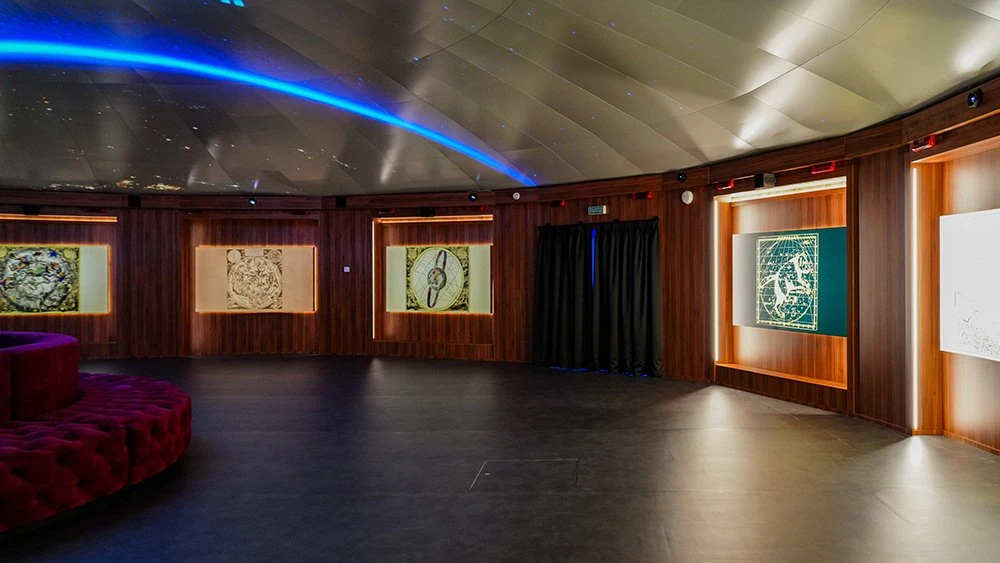
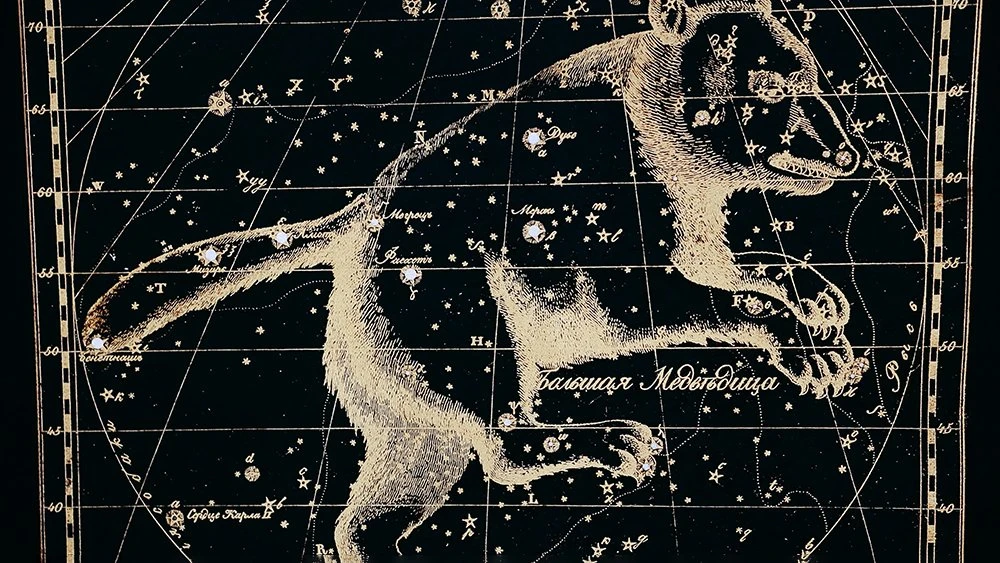
Since ancient times, people have looked to the stars to navigate space and time. The Sumerians, Babylonians, Egyptians, and Greeks created early star maps, recording the positions of bright stars and constellations on stone, clay tablets, and parchment. The exposition presents historical star charts that eventually evolved into precise astronomical atlases.
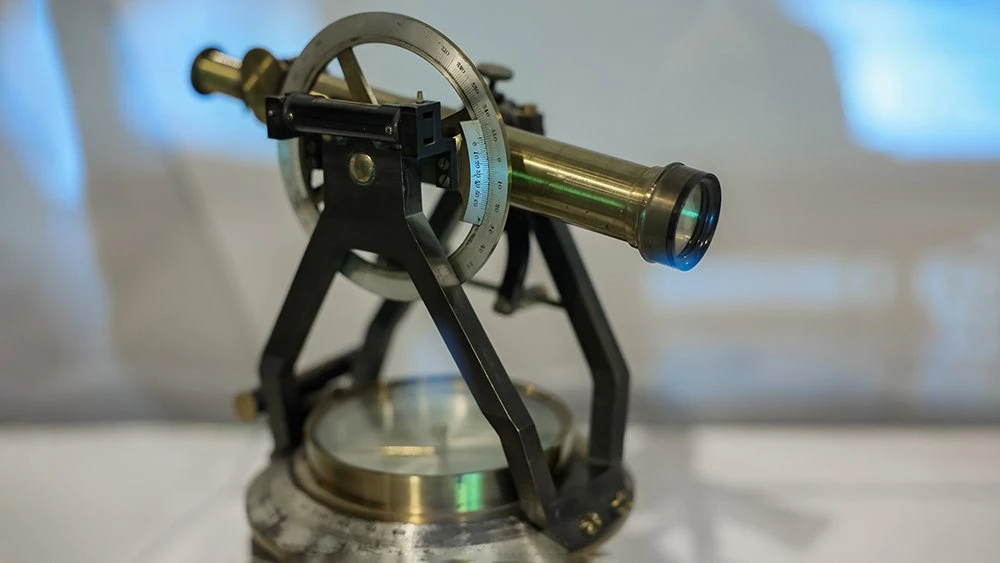
The exposition also explores the development of optical instruments used to study the sky — from early viewing devices to telescopes. Visitors can learn about the first observations of Galileo Galilei, who built a telescope with significant magnification, and trace the evolution of this instrument through refracting, reflecting, and combined telescopes. It also explains how radio telescopes detect radio waves from distant objects such as stars, galaxies, pulsars, and black holes.
The space also features materials on the launch of the world’s first artificial satellite, PS-1, in 1957, as well as the development of Soviet and Russian satellite systems and their role in navigation, communication, and Earth monitoring. Visitors can watch archival footage of the first human spaceflight: on 12 April 1961, Yuri Gagarin, aboard the spacecraft Vostok, ushered in the era of crewed space missions. The exposition also covers the modern work of the International Space Station and scientific experiments involving the cultivation of plants and crystals in microgravity.
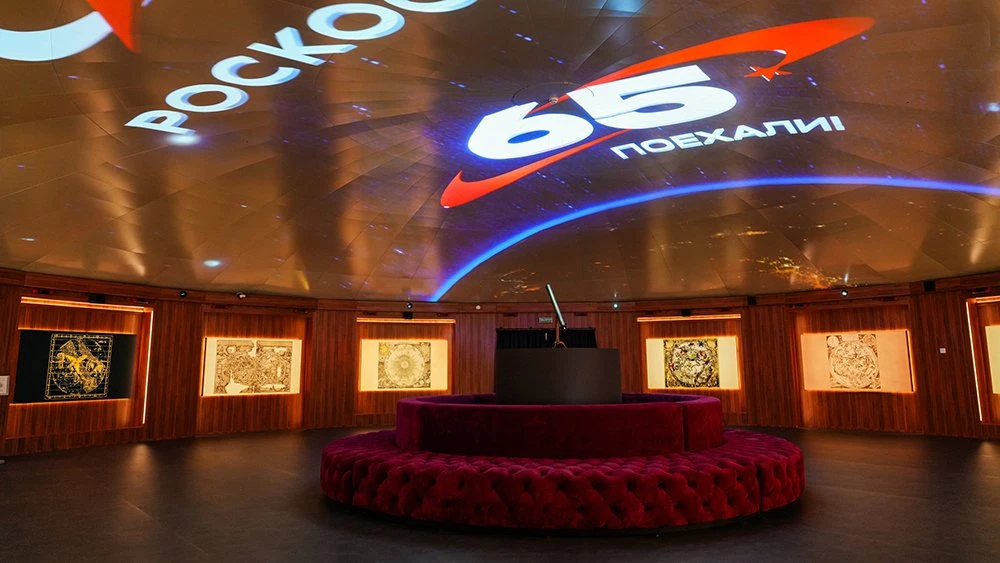
Created in collaboration with the Roscosmos State Corporation, the exposition demonstrates how geography and astronomy intersect — from ancient methods of navigation by the stars to modern satellite-based geospatial technologies.

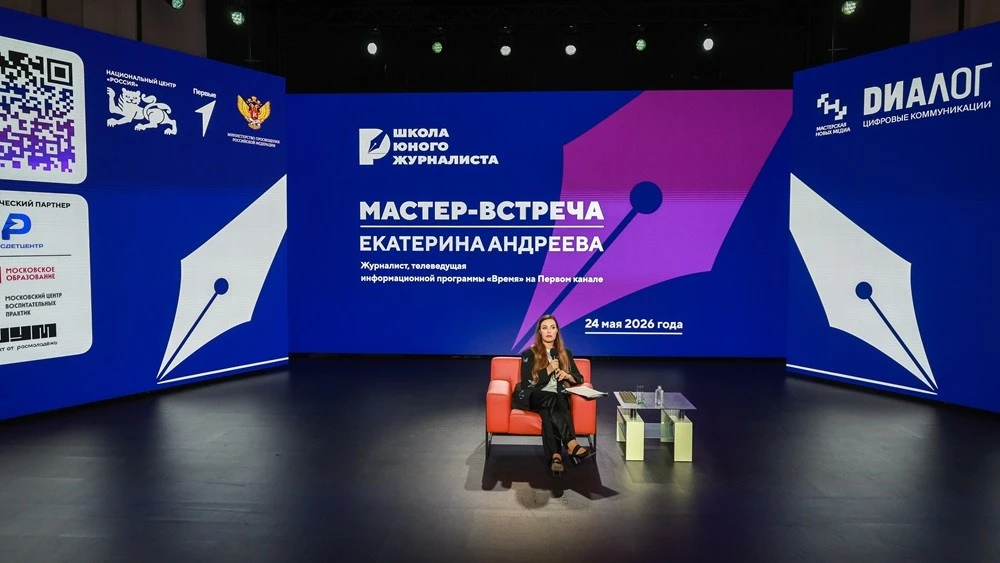
The expert shared with the students not only professional secrets, but also her personal success story.
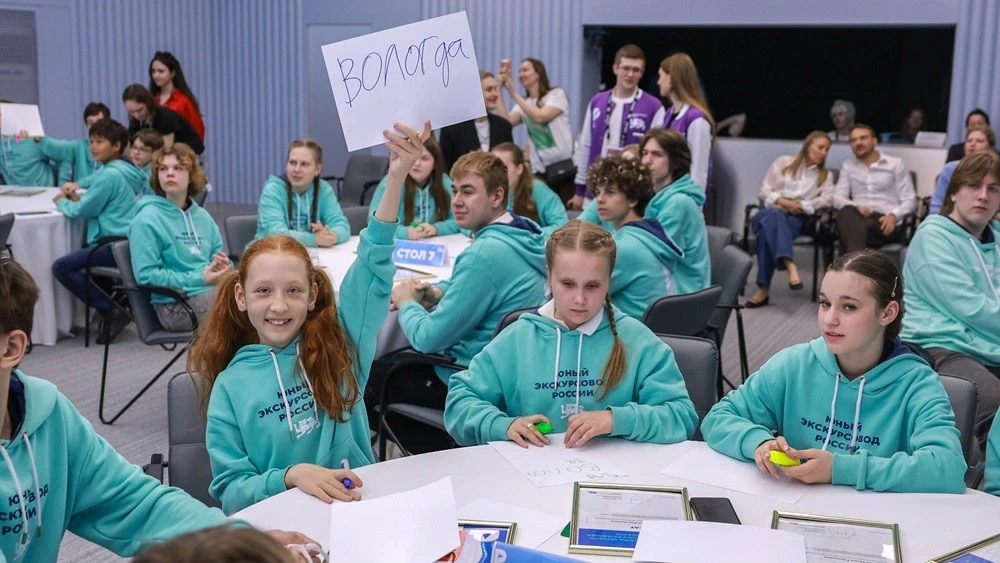
The results of the 2025-2026 season of the Young Tour Guides School of Russia project were summed up at the National Centre RUSSIA.


