


Loving the Russian way: at the National Centre RUSSIA, experts discuss how the language of emotions and family relationships is changing
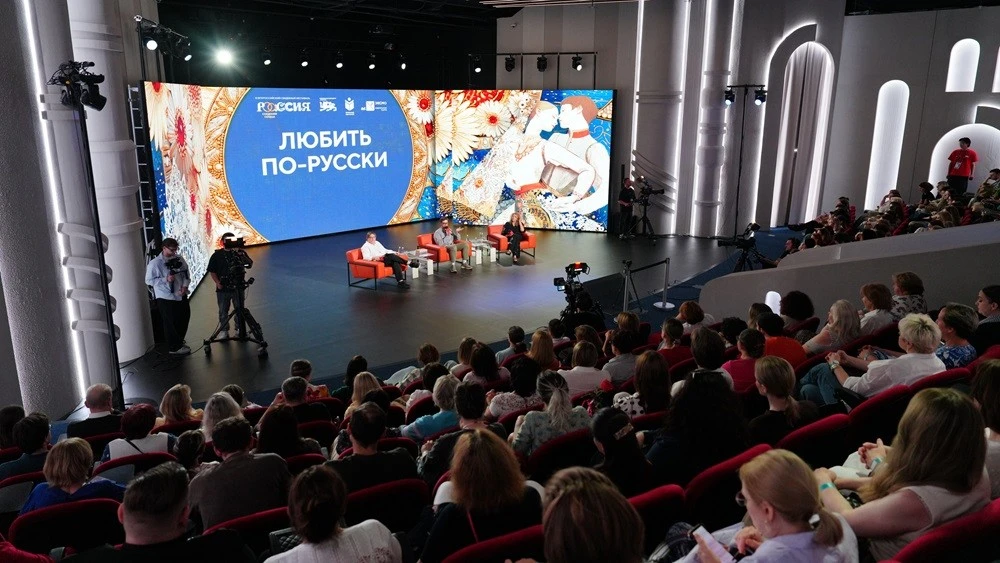
What do a grandmother and grandfather meeting at a dance in a community centre, declarations of love written on thin letter paper, and today's swipes on dating apps have in common? Why do some couples argue over unwashed dishes, while others manage to turn conflict into a growing point? These were the questions explored by participants of the Open Lecture Hall held at the National Centre RUSSIA, during a session titled "Loving the Russian Way", timed to coincide with the III All-Russian Wedding Festival. The experts were family psychologist, psychoanalytic and systemic therapist Marina Nakhalova, and editor-in-chief of the Psychologies website and literary critic Alexander Akulinichev. The event was hosted by art critic and historian Yelizaveta Likhacheva.
"There is no such thing as love 'the Russian way' as a distinct type of love. There is a human feeling that does not depend on language or nationality. However, family relationships, the ways of entering into marriage, and expectations of a partner – here there is indeed a cultural specificity. At the same time, Russia is far less 'Domostroy'-oriented than is sometimes claimed: in our tradition, women gained the right to property and an active role in family life early on," noted Yelizaveta Likhacheva.
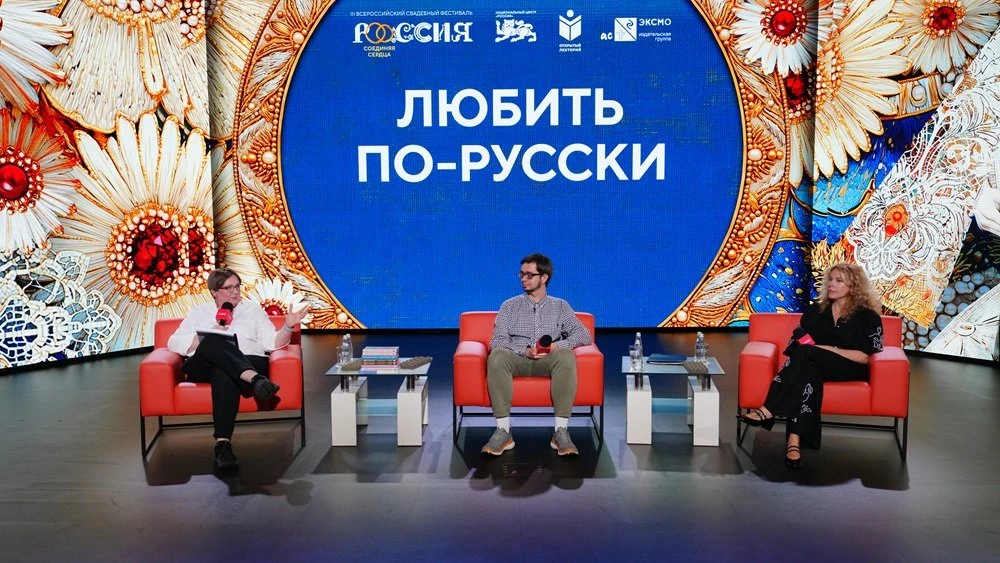
From the very first minutes, the evening was built around personal stories. Guests shared how their parents, grandparents and great-grandparents had met. Marina Nakhalova drew attention to the role family histories play in shaping perceptions of marriage: "The story of a parents' relationship is one of the foundational stories in a child's psyche. It is important not only to know where mum and dad come from, but also to hear their account of how they met, what they felt, and what decisions they made. Recognising that parents had a life of their own 'before us' and have such a life 'after us' often gives adult children a sense of grounding and freedom: they understand their place in that story and find it easier to build their own relationships."
The experts also discussed the ways the role of women in relationships is changing. Until recently, initiative was traditionally expected from men, but now, according to the experts, more and more young women are openly expressing their feelings and plans.
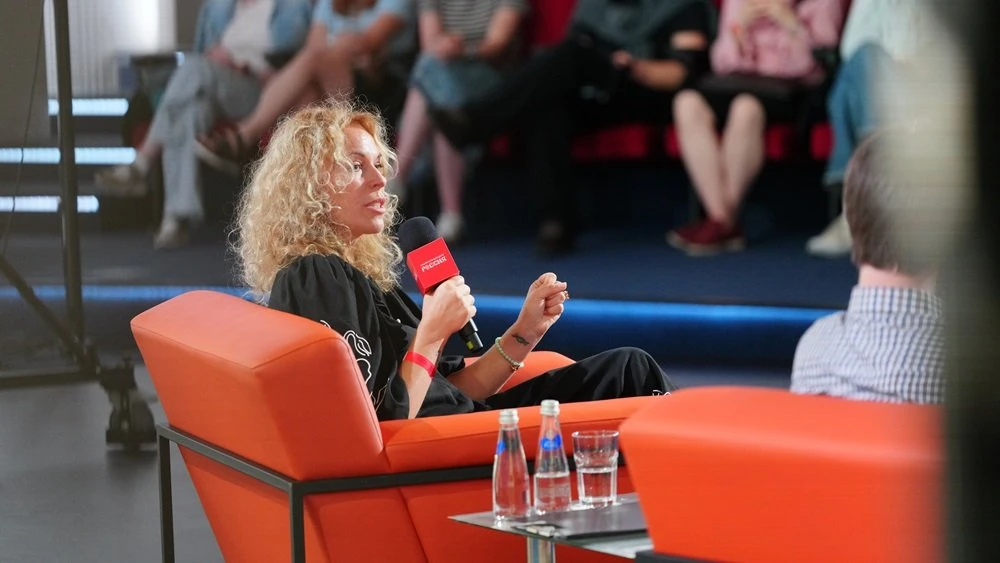
"Today, women have significantly more freedom – in choosing a profession, in managing their time, and in choosing a partner. Every couple has to find their own balance between traditional expectations and new possibilities. There are no ready-made universal models here, and that is not a problem, but an opportunity to build a partnership that suits you," noted Alexander Akulinichev.
Marina Nakhalova added that women had long tended to compete with one another. But this is now changing: "I see another trend: women's clubs, trainings, retreats, joint trips – these are attempts to restore a sense of sisterhood, to return support and grounding to women. This new state is only just forming; the old models no longer work, and the new ones are still being sought, so roles in relationships continue to shift and be redistributed."
From the stories of how couples met, the discussion moved on to what happens after 'that very' first message or glance. The conversation turned to emotional intelligence within a couple: the ability to recognise one's own feelings, name them, and notice what lies behind a partner's reaction – not just in words, but in tone, pauses and gestures.
"In the past, many people entered relationships out of loneliness or a desire to 'escape' their parental home, whereas today a generation has grown up of children who are very much loved, often overprotected. They, on the contrary, need to maintain their boundaries and not lose themselves in their partner. They experience intimacy differently, imagine shared life differently – and come to a psychologist to figure out how to build relationships without losing themselves," noted the psychologist.
From emotions, the discussion logically moved to language – a section on communication skills. They spoke about how to create a space within a couple where both everyday and difficult topics can be discussed without fear of judgment.
"I am in favour of not playing with form, but speaking about content. You can call for loving 'the Russian way', 'the English way', 'the French way' – the ways of expressing love may differ. But for me, the main thing is not the form, but the essence. If people build their relationships in a way they consider right, and find ways of expressing love to each other that outsiders might find strange, then I believe they are entitled to do so in their own space, to consider it normal for themselves and to enjoy it, as long as no one else is harmed," said Marina Nakhalova.
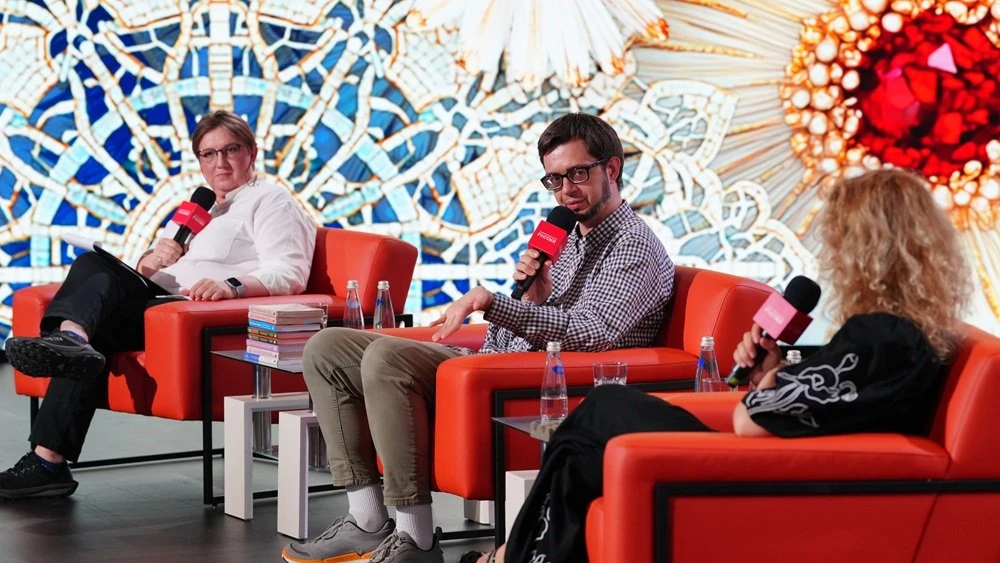
The participants also discussed how perceptions of love and family are influenced by the constant stream of advice and 'perfect' stories on social media. Alexander Akulinichev noted that in such situations, it is especially important to learn to rely on one's own feelings and experience. According to him, conscious digital detox and work on inner grounding can help with this.
"We constantly see: here is a 'proper' family, here is an 'ideal' couple, here are people who flew off to the Maldives together and everything worked out well for them. This stream creates pressure – as if we are constantly being told how to live. The best thing we can do is to significantly limit this informational noise, take a critical approach to what we see on social media, and cultivate our own inner grounding. At some point, it is important to honestly say to oneself: 'I live like this, and this is my conscious choice' – and stop comparing every action of yours with other people's stories," said Alexander Akulinichev.
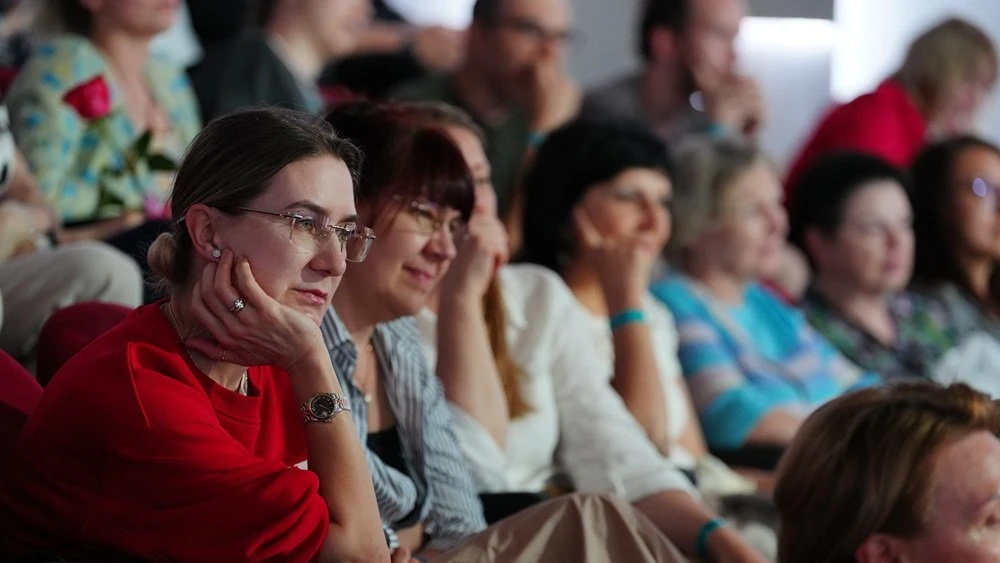
Special attention was paid to the psychology of family relationships: what emotional intelligence really is, how to create space at home for honest dialogue, and in which cases the help of a psychologist is truly necessary. Alexander Akulinichev also shared a selection of fiction and popular science books that depict healthy family models. The topic of how to avoid falling for an unqualified psychologist was also raised. The audience actively asked questions about jealousy, everyday life, child-rearing and how to keep the warmth alive after years of marriage. The best questions were rewarded with commemorative books from the EKSMO publishing house. The main participants were adults aged 25 to 50, including young couples.
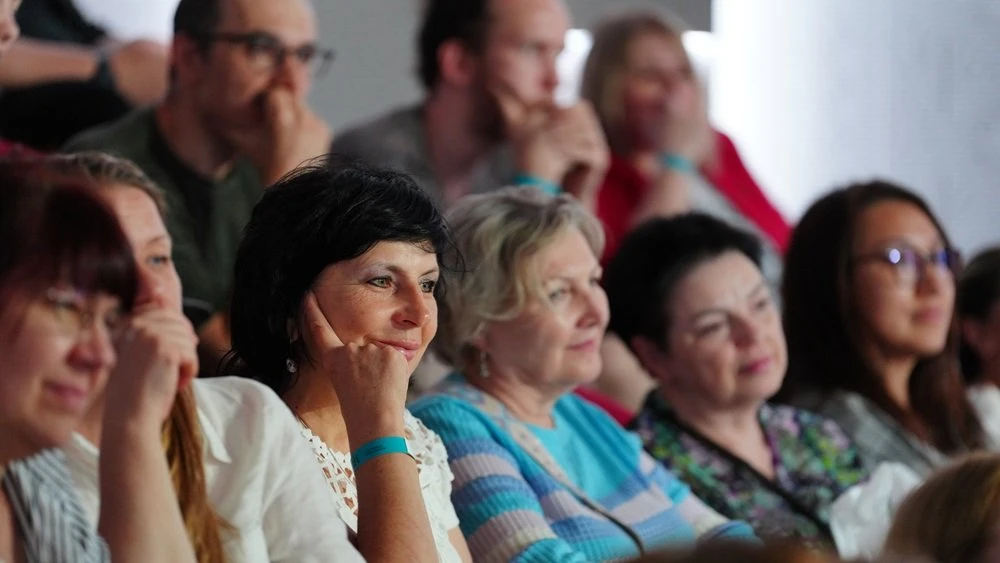
On the eve of the III All-Russian Wedding Festival, the "Loving the Russian Way" conversation offered guests an opportunity to combine personal experience with psychological knowledge – in order to better understand each other, to treat their feelings with greater care, and to build relationships that will later be spoken of with warmth in family stories.
More than 100 couples from across Russia, dressed in national costumes, will marry on the Day of Family, Love and Fidelity, 8 July, at the III All-Russian Wedding Festival "Russia. Uniting Hearts". The festival's educational programme, which will take place on 9 July and is open to all, will help explore the newlyweds' wedding traditions and prepare for family life. The festival will conclude with a grand performance, "Khorovod. Wedding", in which the newlyweds, their guests and other participants will take part.
The III All-Russian Wedding Festival is organised by the National Centre RUSSIA in partnership with the Moscow Government and the Moscow Civil Registry Office (ZAGS). In the Year of the Unity of Russia's Peoples, declared by President Vladimir Putin, the festival's main theme is "United in Love" – unity of hearts, culture, traditions and values.
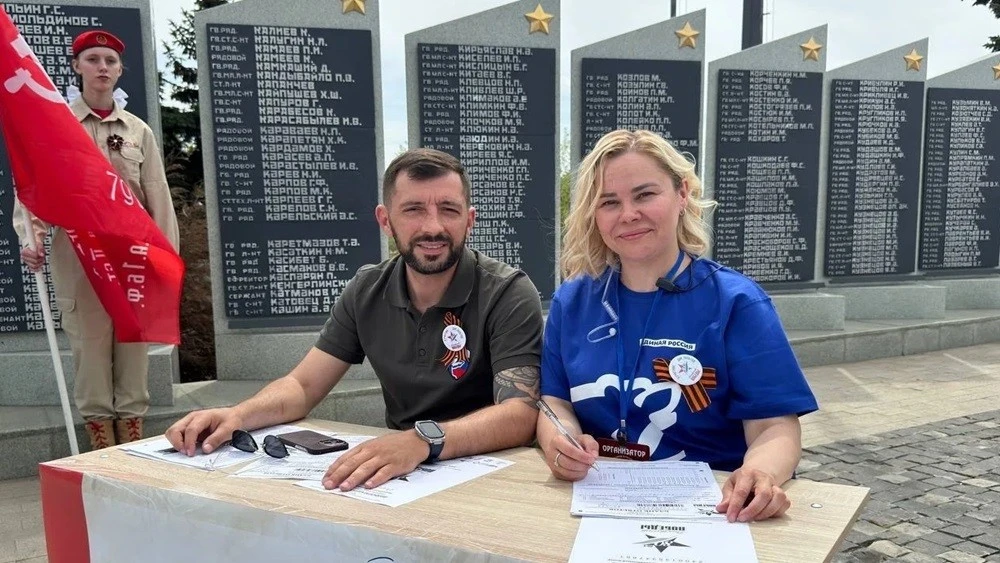
The III All-Russian Wedding Festival, which will take place on 8-9 July at the National Centre RUSSIA, will unite truly loving hearts.
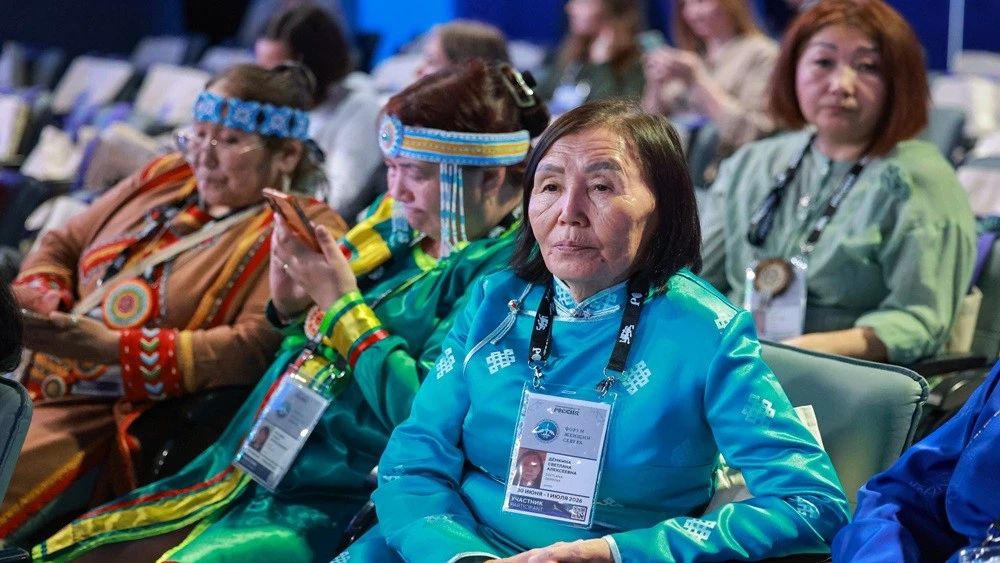
The forum has brought together more than 800 participants, including leaders of public organisations, social workers, teachers, doctors and entrepreneurs from 28 regions of the country.
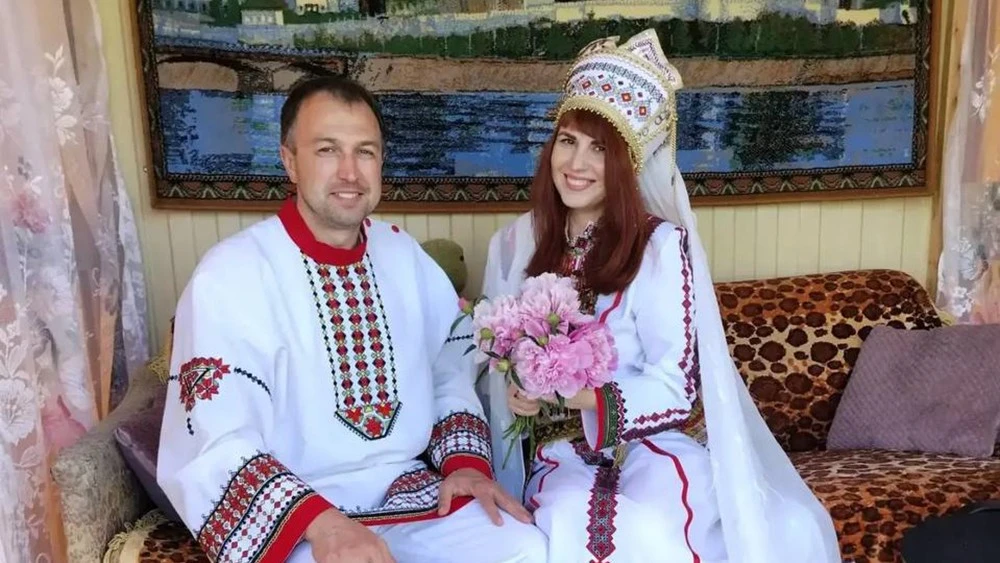
Participants in the wedding festival have chosen either exact replicas of traditional costumes or individual elements inspired by ethnic styles for their wedding attire.


