The Magic of Mikhailov lace: secrets of a unique craft revealed at the National Centre RUSSIA stand in Harbin
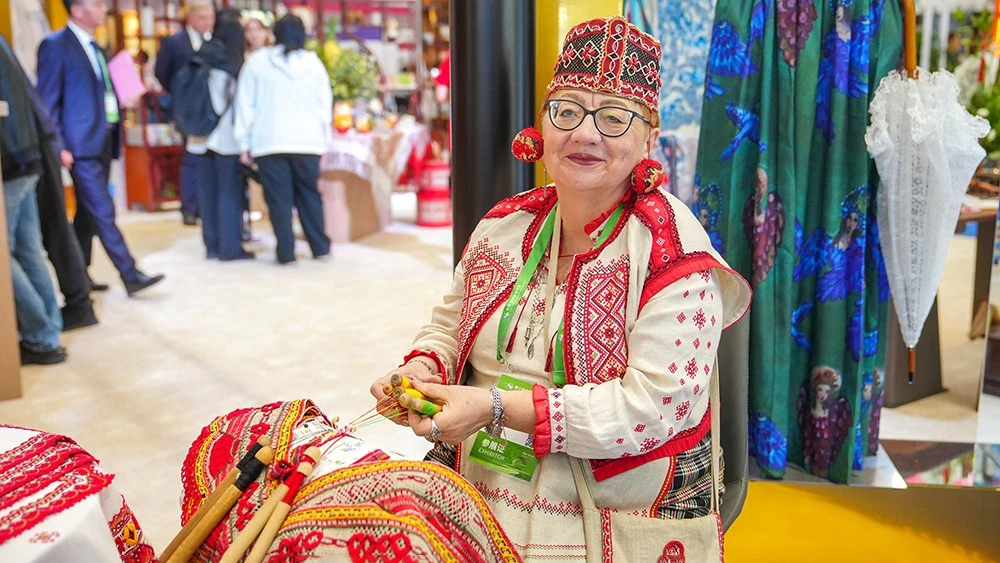
Mikhailov lace is created without sketches or ready-made patterns. To spectators, the process looks like magic; for the lacemaker, it is the result of years of practice and precise calculation. Visitors to the National Centre RUSSIA stand at the 10th Russia-China EXPO in Harbin had the chance to witness this for themselves.
People's Artist of Russia, member of the Union of Artists of Russia, and member of the Expert Artistic Council under the Governor of the Ryazan Region, Tatyana Presnova presented the technique of "numerical" colour lace-making and held a series of demonstration masterclasses.
"I am demonstrating counted, coloured Mikhailov lace. What makes it different from lace traditions in other Russian regions, such as Vologda, Yelets, or Mtsensk? Those styles are mainly based on floral ornamentation and involve the use of a crochet hook. In our lace-making, we do not use a hook; instead, we work with geometric ornamentation, and counted coloured Mikhailov lace has no equivalent anywhere else. In the past, lacemakers worked without a technical drawing known as a 'skolok' — everything was created according to the number of pins and the number of interlacings. That is why it is called counted coloured Mikhailov lace," explained Tatyana Presnova.
According to the craftswoman, red has always remained the dominant colour in traditional Mikhailov lace, complemented by shades inspired by nature: yellow, green, blue, white, and small accents of black that enhance the interplay of colours. Only natural materials are used in the process — linen, linen threads, embroidery floss — and the fabric itself is also natural linen.
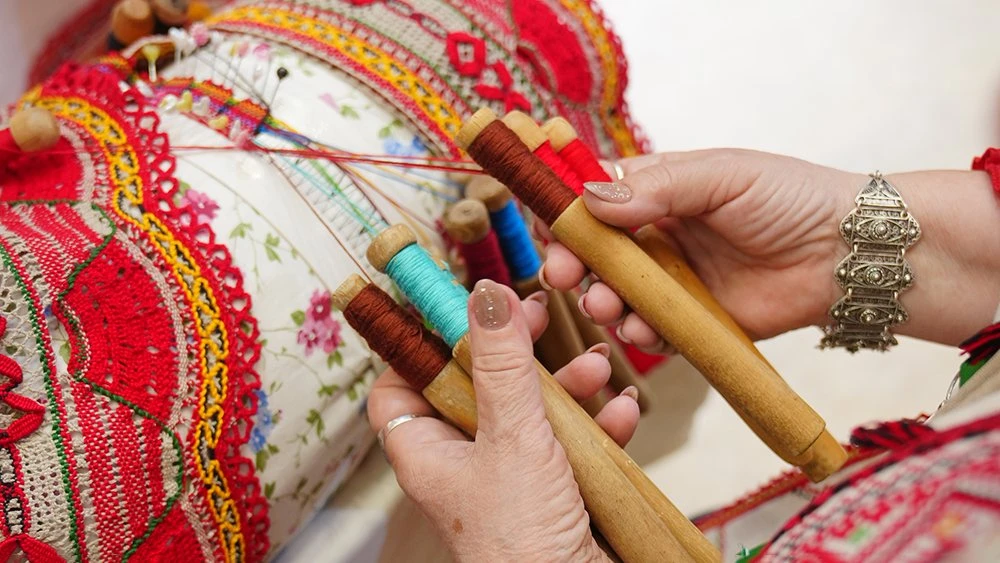
"The most important thing here is calculating the proportions correctly. We decorate fabric with lace, so it is essential that the ornament remains clearly visible and that the lace is dense and durable in wear. In the past, people started weaving with woollen threads; today we weave using one, two, or three strands. That is why we have the largest bobbins in the world — they are what allow us to create this kind of pattern and this density of lace," Tatyana Presnova emphasised.
Visitors also learned that the tradition of "numerical" Mikhailov lace originated in the town of Mikhailov in the Ryazan Governorate and surrounding district, becoming a distinct phenomenon in Russian decorative art. By the 19th century, it had already spread beyond Russia's borders. Lace from the Mikhailov district was sold both domestically and internationally, and in 1886 the first Russian school of lace-making and embroidery opened in the village of Podlesnoye.
Today, the tradition continues: master lacemakers still work in Mikhailov, while the Truzhenitsa (Female Hard Worker) factory preserves and expands the range of traditional products.
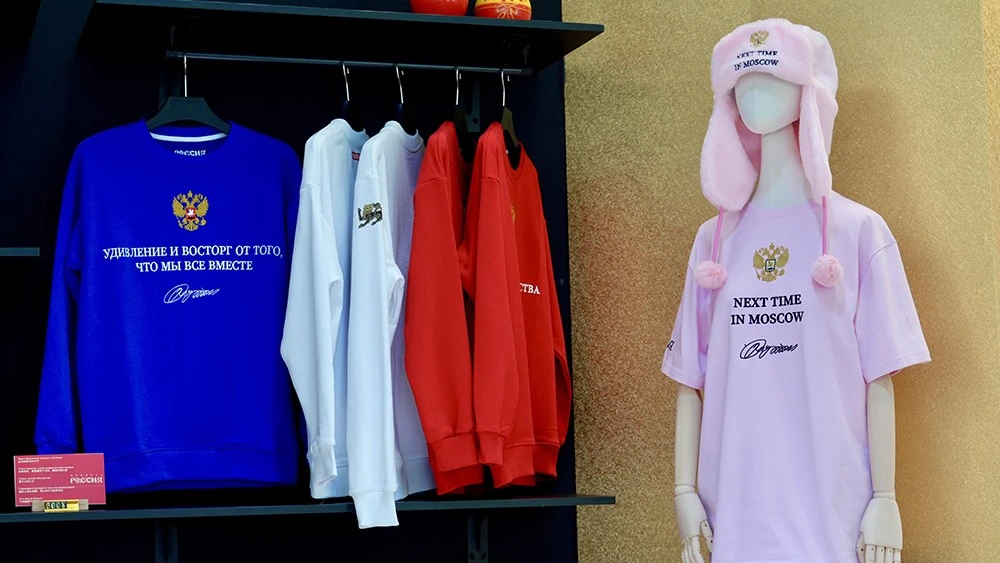
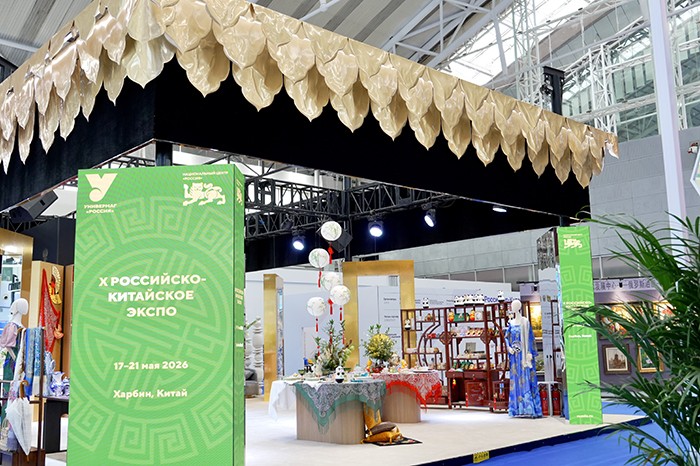
The 10th Russia-China EXPO is taking place from 17 to 21 May. For the first time, the National Centre RUSSIA has presented its flagship Department Store project in China. Visitors are introduced to outstanding products by Russian manufacturers, collections of traditional folk crafts, and special items featuring quotes by President of the Russian Federation Vladimir Putin.
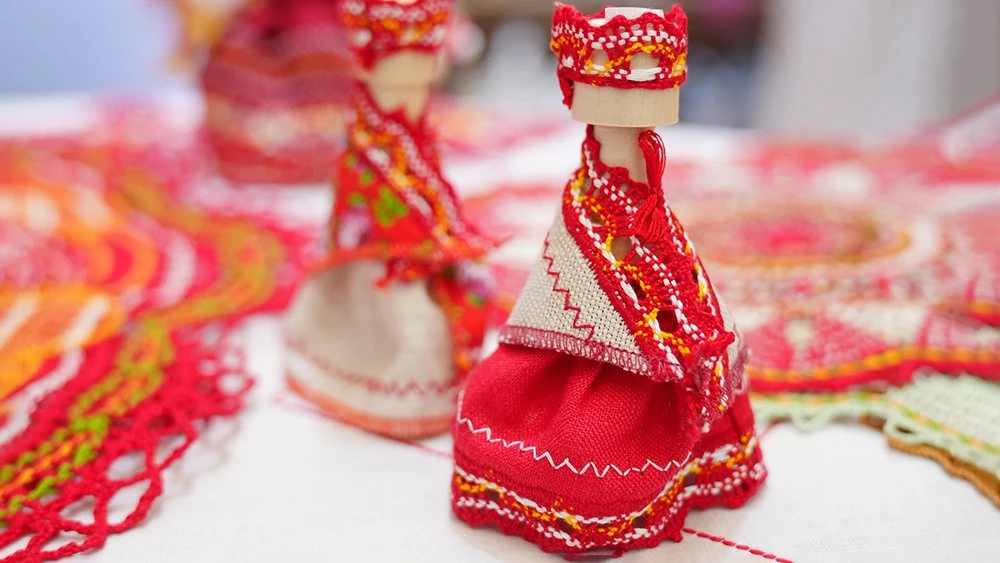
The stand's design symbolises the intertwining of Russian and Chinese cultures. Decorative elements — wooden shutters, tiled roofs, regional ornaments, natural materials, and beads — highlight the richness of Russia's regional cultural heritage, while the patterns and compositions reflect the shared traditions of two great civilisations. Like a magical casket, the stand's décor incorporates illustrations inspired by The Little Humpbacked Horse written by renowned Russian poet Pyotr Yershov, delicate handmade Kukar lace crafted by artisans from the Kirov Region, and green-glazed tiles inspired by the famous Yaroslavl majolica tradition.
A central feature of the stand is the model of the future National Centre RUSSIA building in Moscow on Krasnopresnenskaya Embankment, the construction of which was officially launched by President Vladimir Putin on 26 March 2026. At the exposition in China, the architectural image of the protective covering is complemented by samples of tiles, mosaics, lace, and woodwork planned for use in the future interiors of the National Centre. Covering more than 200,000 square metres, the complex is set to become a world-class architectural landmark and a symbol of modern Russia.
Event photobank

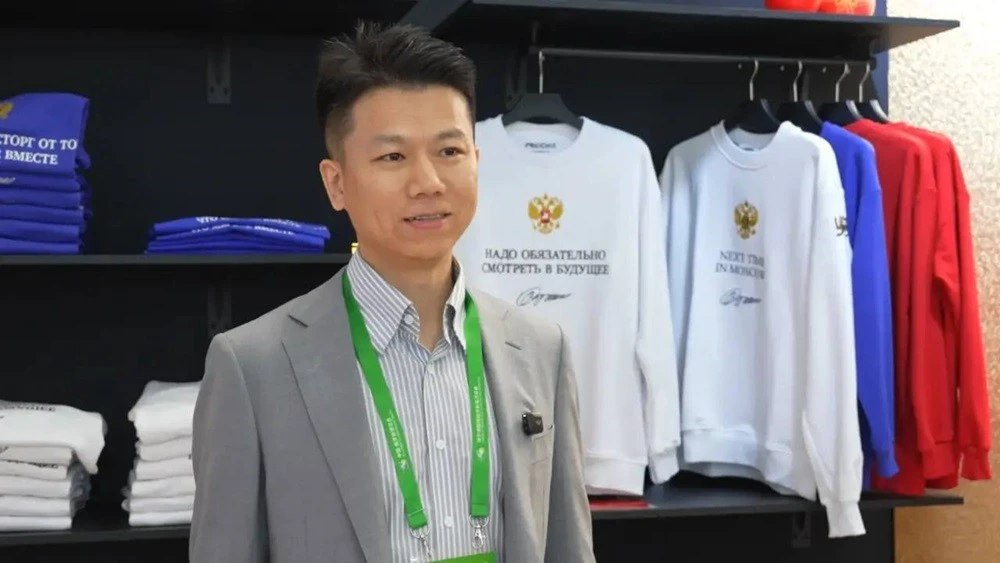
The guest travelled to Harbin from Beijing and admitted that the National Centre RUSSIA stand became a real discovery for him.
The educational video project "8 Steps Across the Map of Russia" has taken its second step: a new episode titled "The Exploration of Siberia" has been posted on the website of the National Centre RUSSIA.